umi to gyogyo
how Japan eats from the ocean
海と漁業(うみとぎょぎょう)
In one line
The shortest answer that works
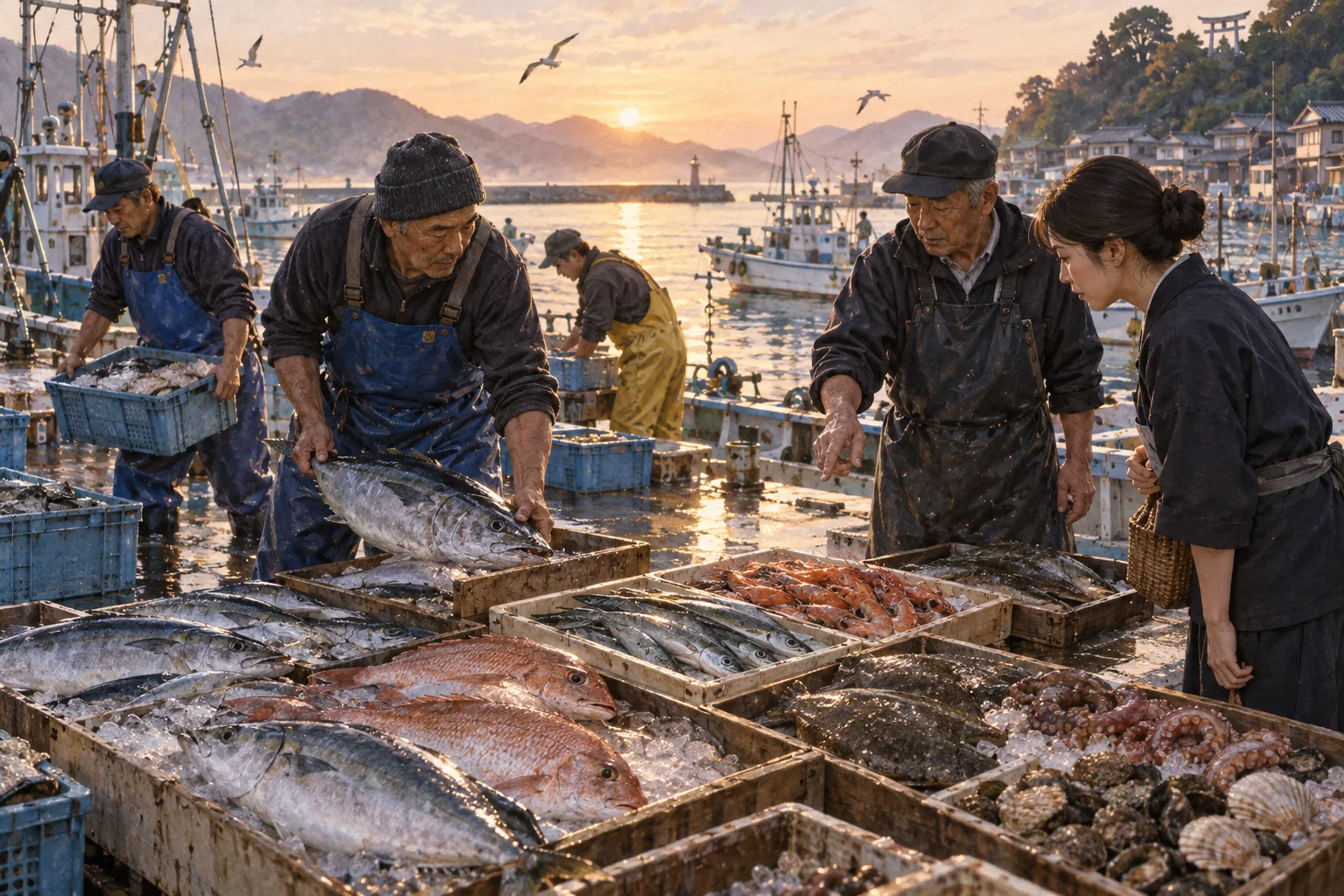
Umi to gyogyo, or the sea and fishing, are what shaped Japan's diet, as nowhere is far from the coast.
海と漁業とは、どこにいても海が遠くない日本で、この国の食べるものを決めてきたものです。
In 30 seconds
The standard explanation
Japan is surrounded by sea where warm and cold currents meet, which makes the surrounding waters unusually rich in species. Fish became the main protein long before meat did, and coastal towns are built around ports and morning markets. Stocks of several important species have fallen, and management of them is now a live issue.
日本は暖流と寒流がぶつかる海に囲まれており、そのため周辺の海は種類が非常に豊かです。肉よりずっと早くから魚が主なたんぱく源になり、沿岸の町は港と朝市を中心に築かれました。いくつかの重要な魚の資源量は減っており、その管理は今まさに課題になっています。
As a short speech
A full paragraph you can read aloud
Japan is a long chain of islands where a warm current from the south meets a cold one from the north, and that meeting makes the surrounding waters exceptionally rich. Add mountains that made grazing difficult and a Buddhist discouragement of meat that lasted centuries, and you get a country where fish, not livestock, became the main source of protein.
That is visible everywhere: in the size of the fish section in an ordinary supermarket, in the morning markets of coastal towns, in the fact that a standard set meal is built around a grilled fish. The picture today is more complicated.
Consumption of fish per person has been falling for years while meat has risen, the fishing population is aging, and several important stocks have declined enough that catch limits and management rules have become a serious and contested subject. Japan also draws criticism abroad over whaling and over bluefin tuna, and both arguments are followed closely here.
日本は南から来る暖流と北から来る寒流がぶつかる場所に連なる島々で、その出会いが周りの海を並外れて豊かにしています。そこに、放牧を難しくする山地と、何世紀も続いた仏教による肉食の忌避が加われば、家畜ではなく魚が主なたんぱく源になる国ができあがります。
それはどこにでも見えます。ふつうのスーパーの鮮魚売り場の大きさ、沿岸の町の朝市、定食の中心に焼き魚が据わっていること。今日の姿はもっと複雑です。一人あたりの魚の消費量は長年減り続け、代わりに肉が増えました。
漁業に携わる人は高齢化し、いくつかの重要な魚の資源は、漁獲の上限や管理の規則が真剣かつ議論を呼ぶ主題になるほど減っています。日本は捕鯨とクロマグロをめぐって海外から批判も受けており、その議論は国内でも注視されています。
Questions people actually ask
And how to answer them.
Do Japanese people still eat a lot of fish?
Less than the image suggests. Per-person fish consumption has been declining for years and meat now exceeds it. Fish remains central to how Japanese food is presented and to older generations' diets, but the trend is clear.
思われているほどではありません。一人あたりの魚の消費量は長年減っていて、今では肉が上回っています。魚は日本の食の見せ方や年配の世代の食事では中心にありますが、流れははっきりしています。
Why are the waters around Japan so rich?
Because a warm current running north meets a cold current running south off the northeast coast, and that boundary brings nutrients up and supports an unusually wide range of species. The same boundary also makes fog and shapes the climate.
北へ向かう暖流と南へ向かう寒流が東北の沖でぶつかり、その境目が栄養を持ち上げて、非常に幅広い種類の生き物を支えるからです。同じ境目が霧を生み、気候にも影響します。
Phrases you can use
- Warm and cold currents meet here.ここで暖流と寒流がぶつかります。
- Fish was the main protein for centuries.何世紀も魚が主なたんぱく源でした。
- Fish consumption is actually falling.魚の消費量は実は減っています。
- Several stocks are under pressure.いくつかの資源は厳しい状況にあります。
Words you need
- current (ocean)海流
- catch / haul漁獲
- fishing port漁港
- fish stock水産資源
Watch
From YouTubeBackground (Japanese)
東北の沖では、南からの黒潮と北からの親潮がぶつかり、潮目と呼ばれる豊かな漁場をつくります。長く日本の食卓を支えてきた魚ですが、一人あたりの消費量は2000年代以降に減り続け、肉が上回りました。築地市場は2018年に豊洲へ移転しました。クロマグロについては国際的な管理機関のもとで漁獲の上限が定められています。捕鯨をめぐる立場の違いは国際的な議論の対象であり、日本は2019年に国際捕鯨委員会を脱退しています。