umi no hi
Marine Day, the third Monday of July
海の日(うみのひ)
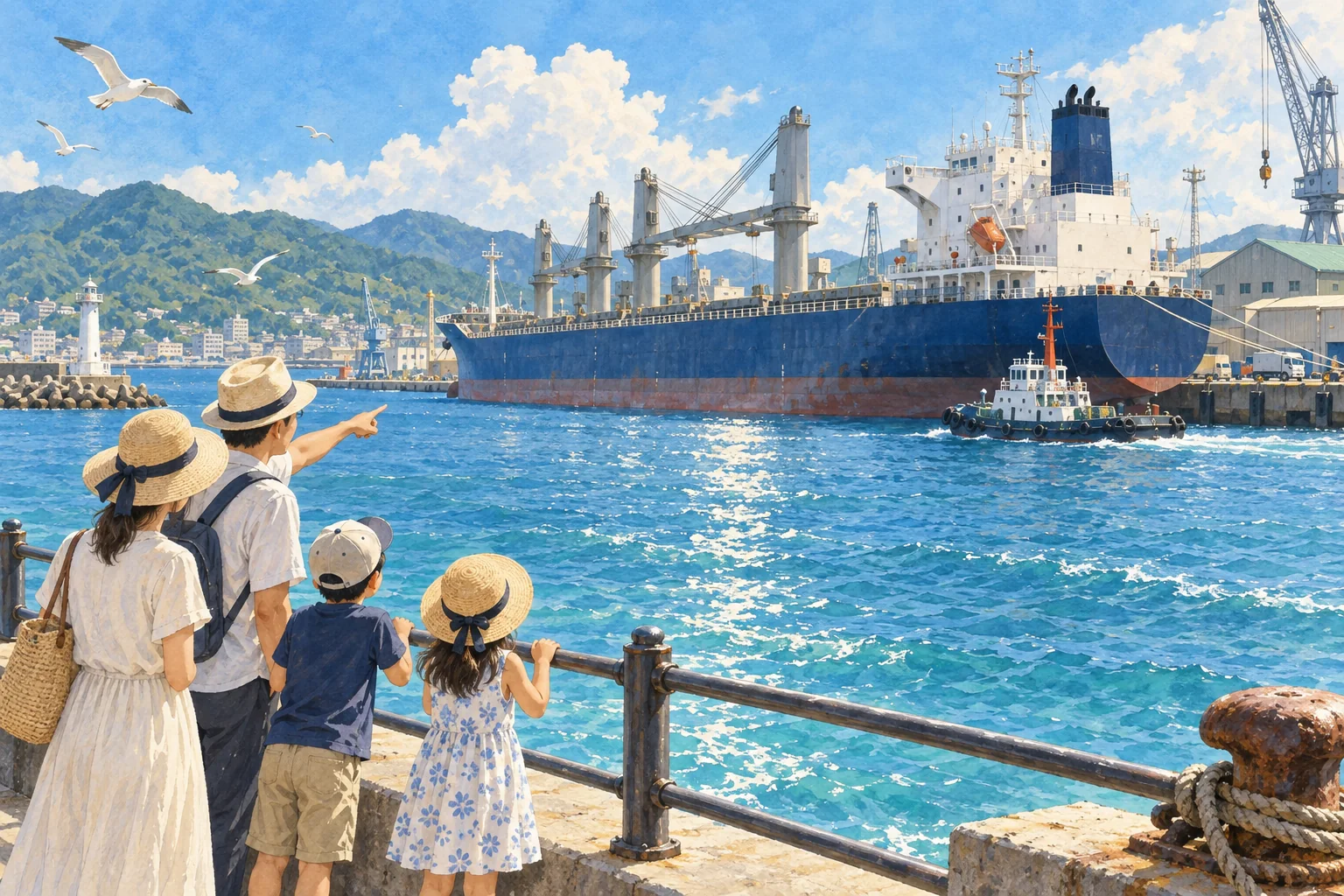
In one line
The shortest answer that works
Marine Day, on the third Monday of July, is a holiday of thanks for the sea.
海の日は7月の第3月曜日の祝日で、海の恵みに感謝する日です。
In 30 seconds
The standard explanation
Marine Day falls on the third Monday of July. The law calls it a day to give thanks for the sea's blessings and to hope for the prosperity of a maritime nation. It became a public holiday only in 1996, originally fixed on July 20th, and moved to a Monday from 2003. For most people it marks the start of the summer beach season.
海の日は7月の第3月曜日です。法律では、海の恩恵に感謝し、海洋国日本の繁栄を願う日とされています。祝日になったのは1996年で、はじめは7月20日に固定され、2003年から月曜に移りました。多くの人にとっては、海水浴の季節の始まりを告げる日です。
As a short speech
A full paragraph you can read aloud
Marine Day is on the third Monday of July, and it is a holiday whose reason for existing is easy to guess wrong. Japan is an island country, so you would assume a sea holiday is ancient. It is not. It became a public holiday in 1996, and before that July 20th had been a commemorative day, not a day off, since 1941.
The date comes from an event in 1876, when the Meiji Emperor returned to Yokohama aboard a steamship after a tour of the north. In 2003 it was moved to a Monday under the system that shifts several holidays to create three-day weekends, which means the original date no longer matters. In practice this is the day the beach season opens.
Sea bathing areas officially open around then, schools break up shortly after, and the weather forecast that week is watched closely. If you are explaining it, the interesting angle is not the sea itself but that Japan added a maritime holiday only in the 1990s, and then almost immediately detached it from its date.
海の日は7月の第3月曜日で、存在の理由を取り違えやすい祝日です。日本は島国なので、海の祝日は古くからあるだろうと思われます。違います。祝日になったのは1996年で、それ以前、7月20日は1941年から記念日ではありましたが休みではありませんでした。
日付は1876年の出来事に由来します。明治天皇が北を巡ったあと、汽船で横浜に帰着した日です。2003年には、三連休を作るために祝日を月曜へ動かす仕組みによって月曜に移されました。もとの日付は、もう意味を持ちません。
実際のところ、この日は海水浴の季節が開く日です。海水浴場がこのころ開き、まもなく学校が夏休みに入り、その週の天気予報が注目されます。説明するなら、面白いのは海そのものより、日本が海の祝日を作ったのが1990年代で、しかもすぐに日付から切り離したことのほうです。
Questions people actually ask
And how to answer them.
Why is the date different every year?
It moves under the system that shifts certain holidays to a Monday so people get a three-day weekend. Marine Day, Coming of Age Day, Respect for the Aged Day and Sports Day all work this way.
三連休を作るために、いくつかの祝日を月曜に移す仕組みによって動きます。海の日、成人の日、敬老の日、スポーツの日がこの扱いです。
Do people actually go to the sea?
Many do, since it coincides with the opening of beaches and the start of school holidays. Beaches, aquariums and coastal roads are all busy that weekend, which is worth knowing if you are traveling.
行く人は多いです。海開きや夏休みの始まりと重なるからです。その連休は海も水族館も海沿いの道路も混みます。旅行の予定を立てるなら覚えておくとよいです。
Is there a Sea Day ceremony?
There are events run by ports, maritime bodies and the coast guard, including ship tours that are open to the public. They are local rather than national, and most people are unaware of them.
港や海事関係の団体、海上保安庁などが行事を開き、船の一般公開などもあります。全国的というより地域ごとのもので、多くの人は知りません。
A common misunderstanding
MYTHAn island nation like Japan must have had a sea holiday for centuries.
FACTIt became a public holiday in 1996. The date marked the Meiji Emperor's return by ship in 1876, and since 2003 the holiday floats to the third Monday of July anyway.
Phrases you can use
- It's a day of thanks for the sea.海の恵みに感謝する日です。
- It only became a public holiday in 1996.祝日になったのは1996年です。
- It moves to the third Monday of July.7月の第3月曜に動きます。
- The beaches officially open around then.そのころに海開きがあります。
- That weekend the coast is packed.その連休は海沿いがとても混みます。
Words you need
- maritime海の、海事の
- blessing, bounty恩恵
- beach opening海開き
- steamship汽船
- three-day weekend三連休
Watch
From YouTubeBackground (Japanese)
7月20日は1941年から海の記念日とされていたが、祝日ではなかった。1995年の祝日法改正により1996年から海の日として国民の祝日になり、2003年のいわゆるハッピーマンデー制度で7月の第3月曜日に移された。日付の由来は、1876年(明治9年)に明治天皇が東北と北海道の巡幸を終え、汽船の明治丸で横浜に帰着した日とされる。2016年に8月11日の山の日が加わってからは、海と山の祝日が夏に並ぶ形になった。なお2020年と2021年は、オリンピックの開催に合わせて日付が特例で移動している。