sashimi
raw fish served without rice
刺身(さしみ)
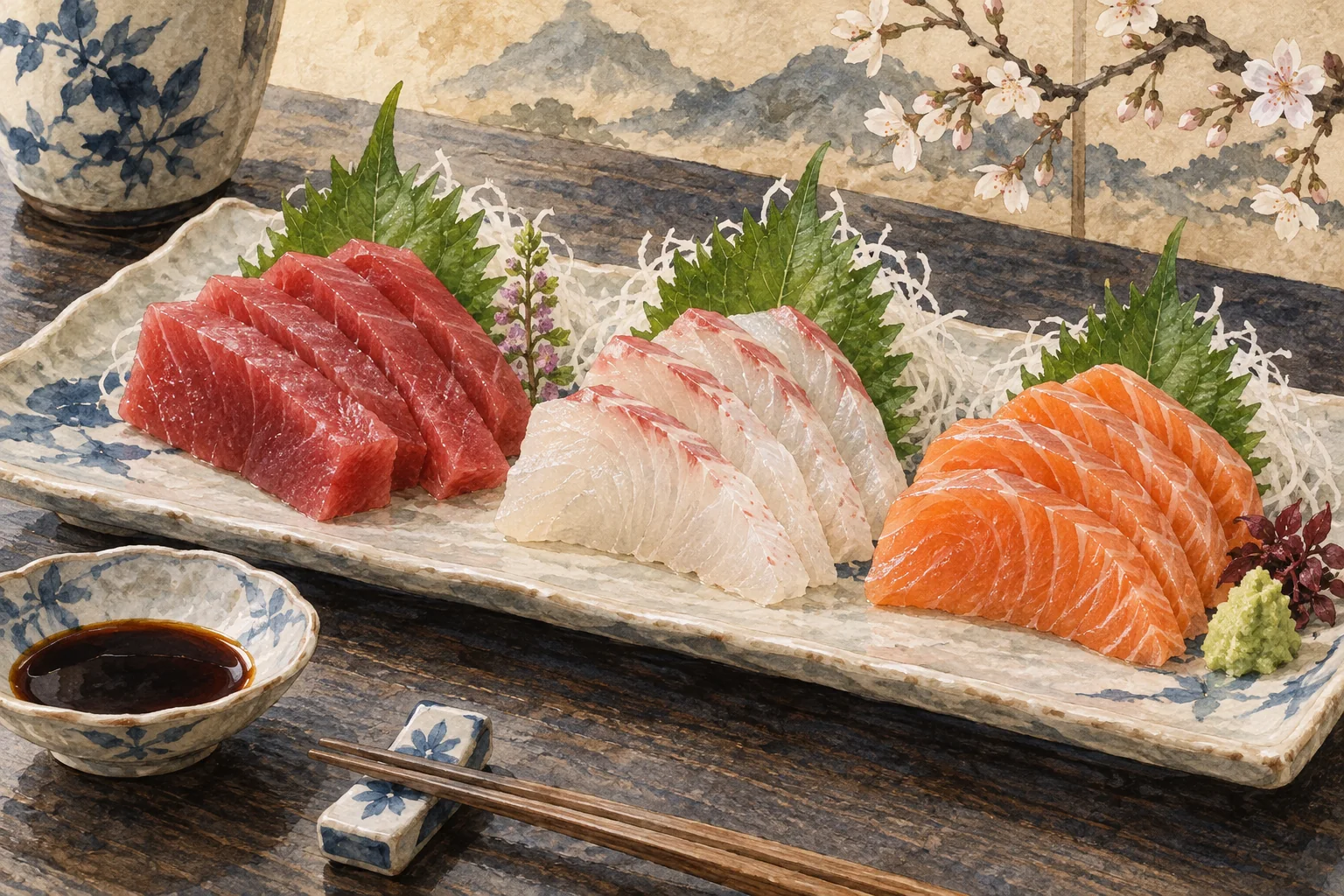
In one line
The shortest answer that works
Sashimi is raw fish or seafood sliced and served on its own, without rice.
刺身とは、生の魚や魚介を切って、ご飯なしでそのまま出したものです。
In 30 seconds
The standard explanation
Sashimi is raw fish, sliced and eaten with soy sauce and wasabi. The difference from sushi is simple: sushi involves vinegared rice, sashimi does not. The cut matters as much as the fish, because the angle and thickness of the slice change the texture, and different fish are cut in different ways.
刺身は生の魚を切ったもので、醤油とわさびで食べます。寿司との違いは単純で、寿司には酢飯があり、刺身にはありません。魚と同じくらい切り方が大事です。包丁を入れる角度と厚みで歯ざわりが変わり、魚によって切り方が異なります。
As a short speech
A full paragraph you can read aloud
Sashimi is raw fish or shellfish, sliced and served without rice, which is the whole difference between sashimi and sushi. It sounds like the simplest food in the world, and that is exactly why it is difficult: there is nowhere to hide. Everything depends on the fish and the knife.
A chef chooses the thickness and the angle for each species, cutting soft fish thicker and firm white fish almost transparently thin, and the blade is drawn through in one stroke rather than sawed. Eat it with a little soy sauce, and put the wasabi on the fish rather than stirring it into the dish, which purists frown on because it dulls the wasabi and upsets the balance.
The white shredded radish underneath is not decoration; it is there to eat between pieces. One thing worth knowing is that much of the fish served raw in Japan has been frozen at very low temperature, which is a food safety measure against parasites, not a sign of poor quality.
刺身は生の魚や貝を切って、ご飯なしで出したもので、それが寿司との違いのすべてです。世界で最も単純な料理に聞こえますが、まさにそれゆえに難しい。隠すところがないからです。すべては魚と包丁で決まります。
料理人は魚ごとに厚みと角度を選び、やわらかい魚は厚めに、身の締まった白身はほとんど透けるほど薄く引き、刃は挽くのではなく一度で引き切ります。醤油を少しつけて食べ、わさびは皿の中で溶かさず、魚のほうに載せます。溶かすとわさびの香りが鈍り、味の釣り合いも崩れるので、こだわる人には好まれません。
下に敷かれた白い大根の千切りは飾りではなく、間に食べるためのものです。知っておくとよいのは、日本で生で出される魚の多くが、寄生虫対策として非常に低い温度で一度凍らされていることです。質が悪いしるしではありません。
Questions people actually ask
And how to answer them.
Isn't frozen fish worse than fresh?
Not with modern equipment. Freezing at very low temperatures kills parasites and, done quickly, does little to the texture. Japan's health ministry recommends freezing as one way to prevent parasite infections from raw fish, and top restaurants use frozen tuna without hesitation.
今の設備ではそうとは限りません。非常に低い温度で凍らせれば寄生虫は死に、素早く凍らせれば食感もほとんど変わりません。厚生労働省も、生の魚による寄生虫の食中毒を防ぐ方法の一つとして冷凍を勧めていますし、一流の店も冷凍のまぐろをためらいなく使います。
Should I mix the wasabi into the soy sauce?
It is better not to. Put a small amount directly on the fish and dip the fish lightly, fish side down. Mixing dulls the wasabi and makes it hard to control how much soy sauce you take.
混ぜないほうがよいです。わさびは少量を魚に直接のせ、魚の側を下にして軽く醤油をつけます。混ぜるとわさびの香りが鈍り、醤油の量も加減しにくくなります。
Can I eat the white shredded stuff?
Yes, that is daikon radish and it is meant to be eaten. It refreshes the mouth between different fish. The shiso leaf and the small flowers are also edible, though many people leave the flowers.
食べられます。あれは大根で、食べるためのものです。違う魚の間で口をさっぱりさせます。大葉や小さな花も食べられますが、花は残す人も多いです。
A common misunderstanding
MYTHSashimi is a kind of sushi.
FACTSushi is defined by vinegared rice. Sashimi has no rice at all, so it is a separate dish that happens to use the same fish.
Phrases you can use
- Sashimi has no rice. Sushi does.刺身にはご飯がなく、寿司にはあります。
- Put the wasabi on the fish, not in the sauce.わさびは醤油ではなく魚にのせます。
- The shredded radish is there to eat.大根の千切りは食べるためのものです。
- A lot of raw fish here has been frozen for safety.生の魚には、安全のために一度凍らせたものも多くあります。
Words you need
- raw生の
- to slice切る
- soy sauce醤油
- in season旬の
Watch
From YouTubeBackground (Japanese)
「刺身」の名の由来には、切り身にすると魚の種類が分からなくなるため、尾びれを刺して示したからという説があります。「切る」を避けたのは、武家の言葉として忌まれたためとも言われます。関西では「造り」「お造り」と呼ぶことが多くあります。魚には旬があり、同じ種でも時期によって脂の乗りが変わります。アニサキスなどの寄生虫による食中毒を防ぐため、厚生労働省はマイナス20度で24時間以上の冷凍や、目で見て取り除くことなどを勧めています。