wasabi
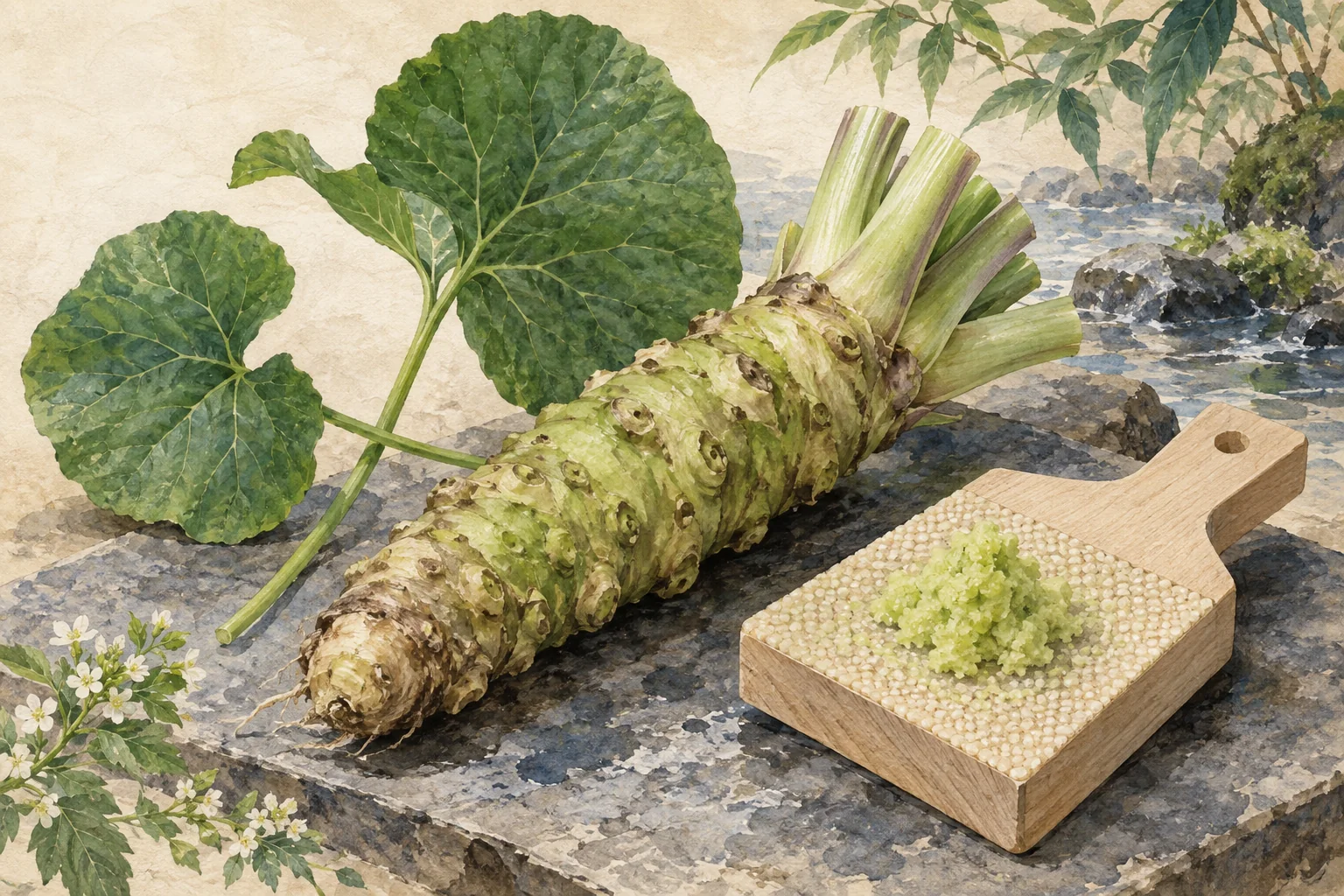
Japanese horseradish grated from a fresh root
わさび(わさび)
In one line
The shortest answer that works
Wasabi is a fresh root grated to order; most green paste sold abroad as wasabi is something else.
わさびとは、生の根茎をその場ですりおろしたもので、海外で売られている緑の練り物の多くは別のものです。
In 30 seconds
The standard explanation
Wasabi is the grated root of a plant that grows in cold running water, and it is difficult and slow to cultivate. Its heat rises into the nose rather than burning the tongue, and it fades within minutes of grating. Most of the paste served outside Japan, and a good deal inside it, is horseradish with mustard and coloring.
わさびは、冷たい流れる水の中で育つ植物の根茎をすりおろしたもので、栽培は難しく時間もかかります。辛さは舌を焼くのではなく鼻へ抜け、すりおろしてから数分で弱まります。日本の外で出される練りわさびの多くは、そして日本の中でもかなりの部分は、西洋わさびに辛子と着色料を合わせたものです。
As a short speech
A full paragraph you can read aloud
Wasabi is one of the most misunderstood Japanese ingredients, because most people outside Japan have never tasted it. The plant grows in cold, clean running water, takes well over a year to reach a usable size, and is grated fresh, traditionally on a sharkskin grater that produces a fine paste.
The heat is volatile: it rises into the nose, it does not linger like chili, and it begins to fade within minutes, which is why a good restaurant grates it in front of you or just before serving. What is sold in tubes and served in most sushi shops abroad is made from horseradish, a different plant, colored green and sharpened with mustard.
That is not fraud in itself, since the labeling in Japan distinguishes products containing real wasabi from those that do not, but it does mean many people have a confident opinion about a taste they have never encountered. If you get the chance to try the fresh root, notice how sweet it is underneath the heat. That part does not survive the tube at all.
わさびは、日本の材料の中でもとりわけ誤解されています。日本の外にいる人の多くが、本物を口にしたことがないからです。この植物は冷たくきれいな流れの中で育ち、使える大きさになるまで一年以上かかります。すりおろすのは食べる直前で、伝統的には鮫皮のおろし器を使い、きめの細かい状態にします。辛さは飛びやすい性質のものです。
鼻へ抜け、唐辛子のように残らず、数分で弱まり始めます。よい店が目の前で、あるいは出す直前におろすのはそのためです。チューブで売られているもの、そして日本の外の寿司屋で出されるものの多くは、別の植物である西洋わさびを緑に着色し、辛子で辛みを補ったものです。それ自体が偽りというわけではありません。
日本の表示では、本わさびを使ったものとそうでないものを区別しています。ただ、口にしたことのない味について、多くの人がはっきりした意見を持っている、ということではあります。生の根茎を試す機会があれば、辛さの下にある甘みに気づいてみてください。そこはチューブにはまったく残りません。
Questions people actually ask
And how to answer them.
How can I tell if it is the real thing?
Fresh wasabi is pale green with visible fiber, not smooth and bright. It is usually grated to order, it is expensive, and the heat vanishes quickly. In shops, Japanese labels distinguish products using real wasabi from those that do not.
生のわさびは淡い緑で、繊維が見え、なめらかで鮮やかな緑ではありません。ふつうは注文ごとにおろし、値段も高く、辛さはすぐに消えます。店では、本わさびを使った製品とそうでない製品を、日本語の表示で見分けられます。
Should I mix it into the soy sauce?
At a good sushi counter, no. The chef has usually already placed the right amount between the fish and the rice, and some sushi lovers see mixing a lump into your dish as a beginner move. With sashimi, placing a little on the fish is fine.
よい寿司屋のカウンターでは、しません。多くの場合、板前が魚とご飯のあいだに適量を挟んでいます。小皿で溶くのを、慣れていない人のやり方と見る寿司好きもいます。刺身なら、魚の上に少し載せるのは問題ありません。
Why does it hurt my nose and not my tongue?
The compounds released by grating are volatile, so they travel up the nasal passage as vapor instead of staying on the tongue like chili oil. That is also why the sensation passes so quickly.
すりおろしたときに出る成分が揮発しやすいので、唐辛子の油のように舌に残らず、気体となって鼻へ抜けていきます。感覚がすぐに消えるのも同じ理由です。
A common misunderstanding
MYTHThe green paste served with sushi everywhere is wasabi.
FACTMost of it is horseradish with mustard and coloring. Genuine wasabi is grated from a fresh root, costs a great deal more, and tastes sweeter and less harsh.
Phrases you can use
- Could I have it without wasabi, please?わさび抜きでお願いできますか。
- Is this freshly grated?これはおろしたてですか。
- A little goes a long way.少しで十分に効きます。
- The heat goes up your nose.辛さが鼻に抜けます。
- You don't need to mix it into the soy sauce.醤油に溶かなくても大丈夫です。
Words you need
- to grateすりおろす
- pungentつんとする
- a root根茎
- volatile揮発しやすい
- a substitute代わりのもの
Watch
From YouTubeBackground (Japanese)
わさびは冷たい清流を引いた沢で育て、収穫までに一年以上かかります。静岡県や長野県、島根県などが産地として知られ、山あいの棚状の沢で作られます。すりおろすと辛み成分が生まれ、時間とともに弱まるため、使う直前におろします。鮫皮のおろし器を使うのは、細かくおろすほど辛みが立つからです。市販の練りわさびには、本わさびを使ったものと西洋わさびを主とするものがあり、日本では表示で見分けられます。寿司屋では、わさびを入れないことをさび抜きと言い、子ども連れの客がよく注文します。