kaiten-zushi
conveyor belt sushi
回転寿司(かいてんずし)
In one line
The shortest answer that works
Kaiten-zushi is sushi served on a conveyor belt, cheap and easy to order without speaking.
回転寿司とは、ベルトで回ってくる寿司の店で、安く、言葉を使わずに頼めます。
In 30 seconds
The standard explanation
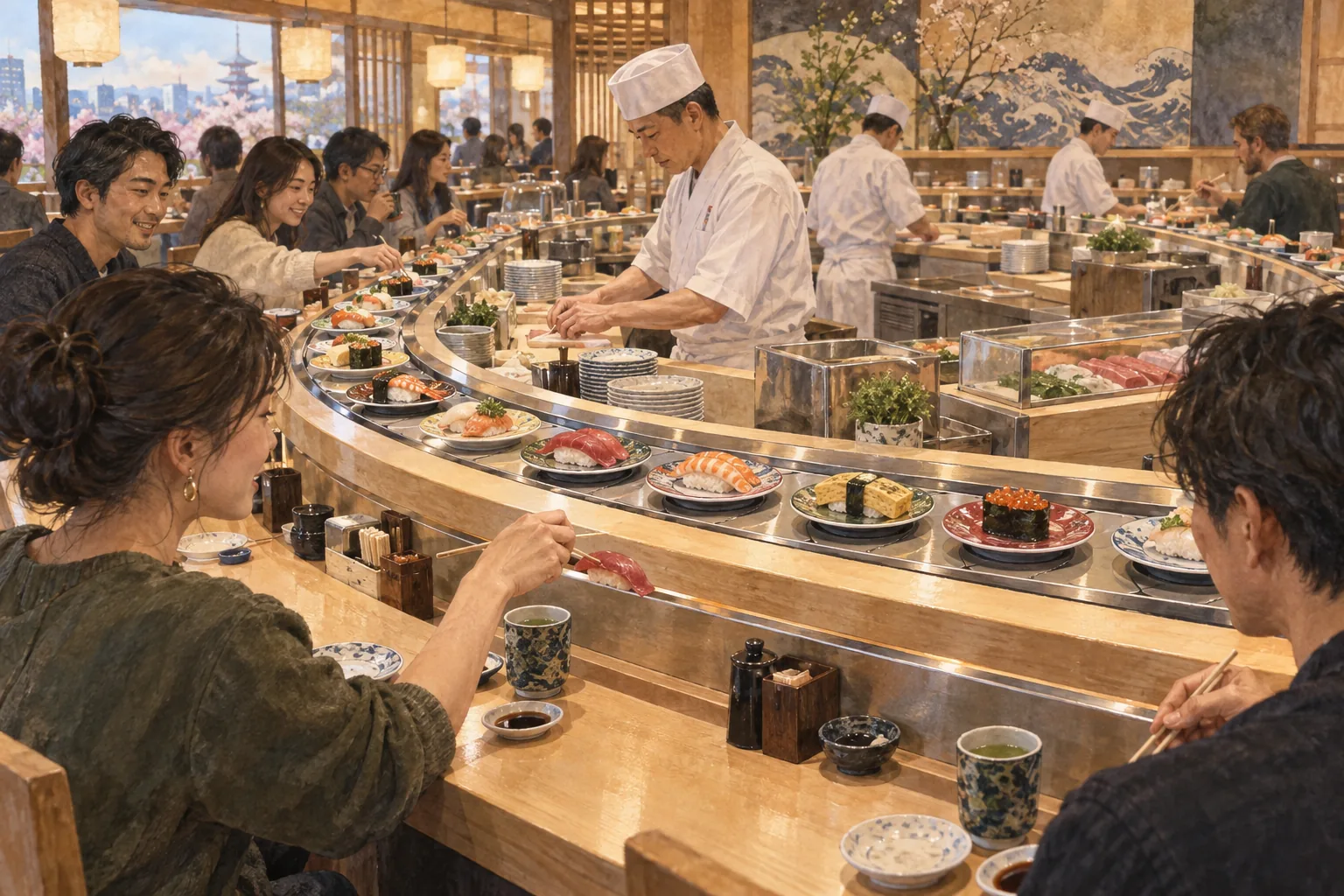
Kaiten-zushi is conveyor belt sushi. Plates circulate past the counter and you take what you want, with the plate color showing the price. Most chains now also have a touch screen for ordering, which sends your plates directly to your seat. At the end staff count the plates, or a scanner does.
回転寿司はベルトで寿司が回ってくる店です。皿がカウンターの前を流れ、好きなものを取ります。皿の色が値段を表します。今はタッチパネルで注文でき、頼んだ皿が席まで直接届く店がほとんどです。会計では店員が皿を数えるか、読み取り機が数えます。
As a short speech
A full paragraph you can read aloud
Kaiten-zushi is conveyor belt sushi, and it is one of the easiest restaurants in Japan for a visitor to use, because you can eat a full meal without speaking. Plates move past your seat on a belt, you take what looks good, and the color or pattern of the plate tells you the price, listed on a board.
Most chains now also have a touch screen where you can order in English, and your order arrives on a separate express lane that stops in front of you. When you are done, staff count your stacked plates or scan them electronically.
A few points of manners: do not take a plate, inspect it and put it back, do not touch plates you are not taking, and stack your empties rather than spreading them out. The format was invented in Osaka in the late 1950s, and the story is that the founder got the idea from watching bottles move along a belt in a brewery.
回転寿司はベルトで寿司が回ってくる店で、訪れた人にとって日本でとくに使いやすい飲食店です。ひと言も話さずに食事を終えられるからです。皿がベルトに載って席の前を流れ、よさそうなものを取ります。
皿の色や模様が値段を表し、その一覧が掲示されています。今はほとんどの店にタッチパネルがあり、英語でも注文でき、頼んだものは別の速い列で運ばれて目の前に止まります。食べ終わると、店員が重ねた皿を数えるか、読み取り機で数えます。
作法をいくつか。皿を取って見てから戻さないこと、取らない皿に触れないこと、空いた皿は広げずに重ねること。この形式は1950年代の終わりに大阪で生まれ、創業者がビール工場でベルトを流れる瓶を見て思いついたと伝えられます。
Questions people actually ask
And how to answer them.
Is the sushi on the belt fresh?
At a well-run shop, yes. Plates are tracked and removed after a set time, and many chains now send most orders by the express lane rather than leaving them circulating. If the belt looks sparse it usually means everything is made to order.
きちんとした店なら新しいものです。皿は管理されていて、一定の時間が過ぎたものは下げられます。多くの店は今、回し続けるのではなく特急のレーンで届ける形にしています。ベルトに皿が少ないのは、たいてい注文してから握っている印です。
How do I get green tea?
There is powdered green tea in a container at the counter and a hot water tap at your seat. Put a spoonful in the cup, fill it with hot water and stir. It is free, and the tap water is very hot, so be careful.
カウンターに粉茶の容器があり、席に給湯の蛇口があります。茶碗に一杯入れて湯を注ぎ、かき混ぜてください。無料です。湯はとても熱いので気をつけてください。
Do I need to tip or say anything at the end?
Tipping is not expected in Japan. Press the call button or raise a hand, staff will count your plates and give you a slip, and you pay at the front. Many chains now scan the plates automatically as you stack them.
日本ではチップは求められません。呼び出しボタンを押すか手を挙げれば、店員が皿を数えて伝票をくれるので、前の会計で払います。重ねた皿を自動で読み取る店も増えています。
Phrases you can use
- The plate color shows the price.皿の色が値段を表します。
- You can order on the screen in English.画面から英語で注文できます。
- Don't put a plate back on the belt.取った皿をベルトに戻さないでください。
- Stack your empty plates.空いた皿は重ねてください。
Words you need
- conveyor beltベルトコンベア
- touch screenタッチパネル
- to stack重ねる
- bill / check会計
Watch
From YouTubeBackground (Japanese)
回転寿司は1958年、大阪で白石義明が始めた店が最初とされ、ビール工場のベルトコンベアから着想を得たと伝えられます。皿の色で価格を分ける仕組みは、注文のやりとりを省くための工夫です。近年は衛生と効率のため、回し続けるのをやめて注文分だけを届ける方式に切り替える店が増えました。皿にICタグを入れて自動で会計する仕組みも広がっています。一方で、他人の食べ物に触れる迷惑行為が問題になり、各社が対策を進めました。