sangaku shinko
worship of mountains
山岳信仰(さんがくしんこう)
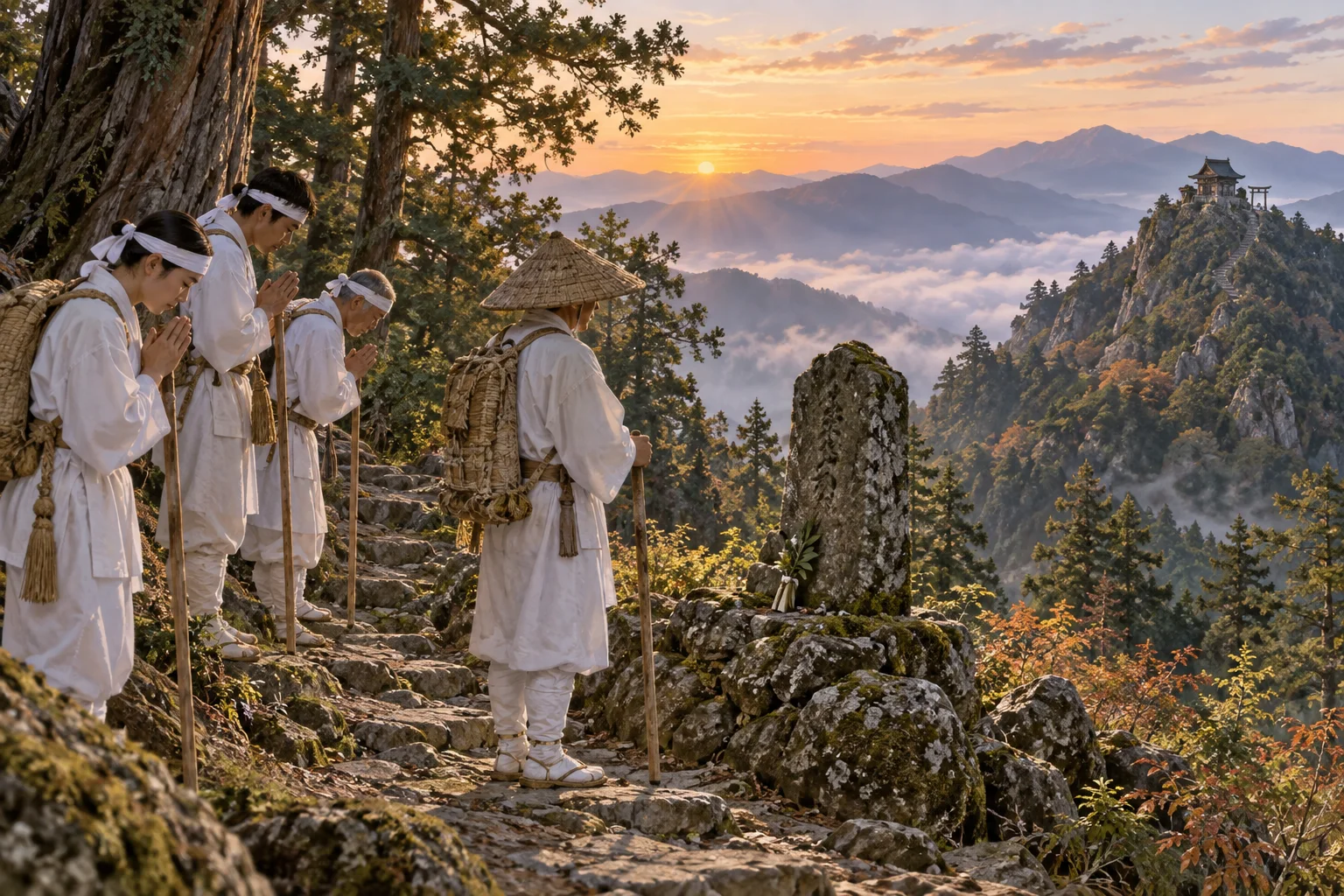
In one line
The shortest answer that works
Sangaku shinko is the belief that mountains themselves are sacred, so climbing one is an act of worship.
山岳信仰とは山そのものを聖なるものとする信仰で、登ること自体が参拝になります。
In 30 seconds
The standard explanation
Japanese mountain worship treats the mountain as a deity or as the home of one, rather than as scenery. Shrines stand at the foot and at the summit, and pilgrims climb a marked route as a religious act. It blended with Buddhism into shugendo, a tradition of ascetic practice in the mountains carried out by practitioners called yamabushi.
日本の山岳信仰は、山を景色としてではなく神そのもの、あるいは神の住まう場として扱います。麓と山頂に社があり、巡礼者は定められた道を登ることを宗教の行いとして行います。仏教と結びついて修験道となり、山伏と呼ばれる行者が山で修行する伝統を生みました。
As a short speech
A full paragraph you can read aloud
In Japan, mountains are not simply landscape. Many are treated as deities in themselves or as the dwelling of one, which is why a shrine will often stand both at the foot and on the summit, and why climbing a particular mountain is understood as a form of worship rather than recreation.
This belief is old and it blended with Buddhism from the continent to produce shugendo, a tradition of ascetic training in the mountains. Its practitioners, the yamabushi, wear a distinctive robe with large pom-pom tassels and a small black cap, carry a conch shell trumpet, and undertake long circuits through the peaks.
Three mountains in the north, and a range in the Kii peninsula that is now a World Heritage site, are the best-known centers. One thing visitors should know is that a few sacred mountains still bar women from the summit area, a restriction that is debated in Japan and that catches people out.
日本では山は単なる景色ではありません。多くの山が、それ自体が神である、あるいは神の住まう場であるとして扱われます。だから麓と山頂の両方に社があることが多く、ある山に登ることは娯楽ではなく参拝の一形態として理解されます。
この信仰は古く、大陸から来た仏教と結びついて修験道を生みました。その行者である山伏は、大きな房のついた独特の装束と小さな黒い頭巾を着け、法螺貝を持ち、峰々を長く巡る行を行います。
東北の三つの山と、今は世界遺産になっている紀伊半島の山域が、よく知られた中心です。訪れる人が知っておくべきことがひとつあります。いくつかの聖なる山では、今も女性が山頂の区域に入ることを認めていません。この制限は日本でも議論があり、知らずに訪れて驚く人がいます。
Questions people actually ask
And how to answer them.
Are some mountains really closed to women?
A small number still restrict the summit area, most notably one peak in the Kii mountains. Most sacred mountains, including Fuji, have been open to women since the Meiji period. Check before planning a climb, and expect the rule to be signposted.
ごく少数ですが、山頂の区域を制限している山があり、紀伊山地のある峰がよく知られています。富士山を含む多くの聖なる山は明治以降、女性に開かれています。登る計画を立てる前に確かめてください。決まりは掲示されています。
Is this Shinto or Buddhism?
Both, mixed. Mountain worship predates the arrival of Buddhism, then absorbed it, and shugendo is explicitly a fusion. The separation of the two religions imposed in the Meiji period damaged many of these sites and traditions.
両方が混ざったものです。山岳信仰は仏教が入る前からあり、のちにそれを取り込みました。修験道ははっきりと両者の融合です。明治期に行われた神仏の分離は、こうした場所と伝統の多くを損ないました。
Phrases you can use
- The mountain itself is the deity.山そのものが神です。
- Climbing it is a form of worship.登ること自体が参拝です。
- There's a shrine at the summit.山頂に社があります。
- A few peaks still restrict access.今も立ち入りを制限している峰があります。
Words you need
- sacred mountain霊山
- ascetic practitioner行者
- pilgrimage route参詣道
- summit shrine山頂の社
Watch
From YouTubeBackground (Japanese)
修験道は役小角を開祖と伝え、神道と仏教、山の信仰が混ざり合って成立したとされます。山伏が吹く法螺貝は、山中で合図を送る道具でもありました。山形の出羽三山、奈良と和歌山にまたがる大峯は代表的な霊場で、「紀伊山地の霊場と参詣道」は2004年に世界遺産に登録されました。明治の神仏分離令によって修験道は大きな打撃を受け、多くの寺社が形を変えました。富士山の女人禁制も明治期に解かれています。