shinrin no kuni
how much of Japan is forest
森林の国(しんりんのくに)
In one line
The shortest answer that works
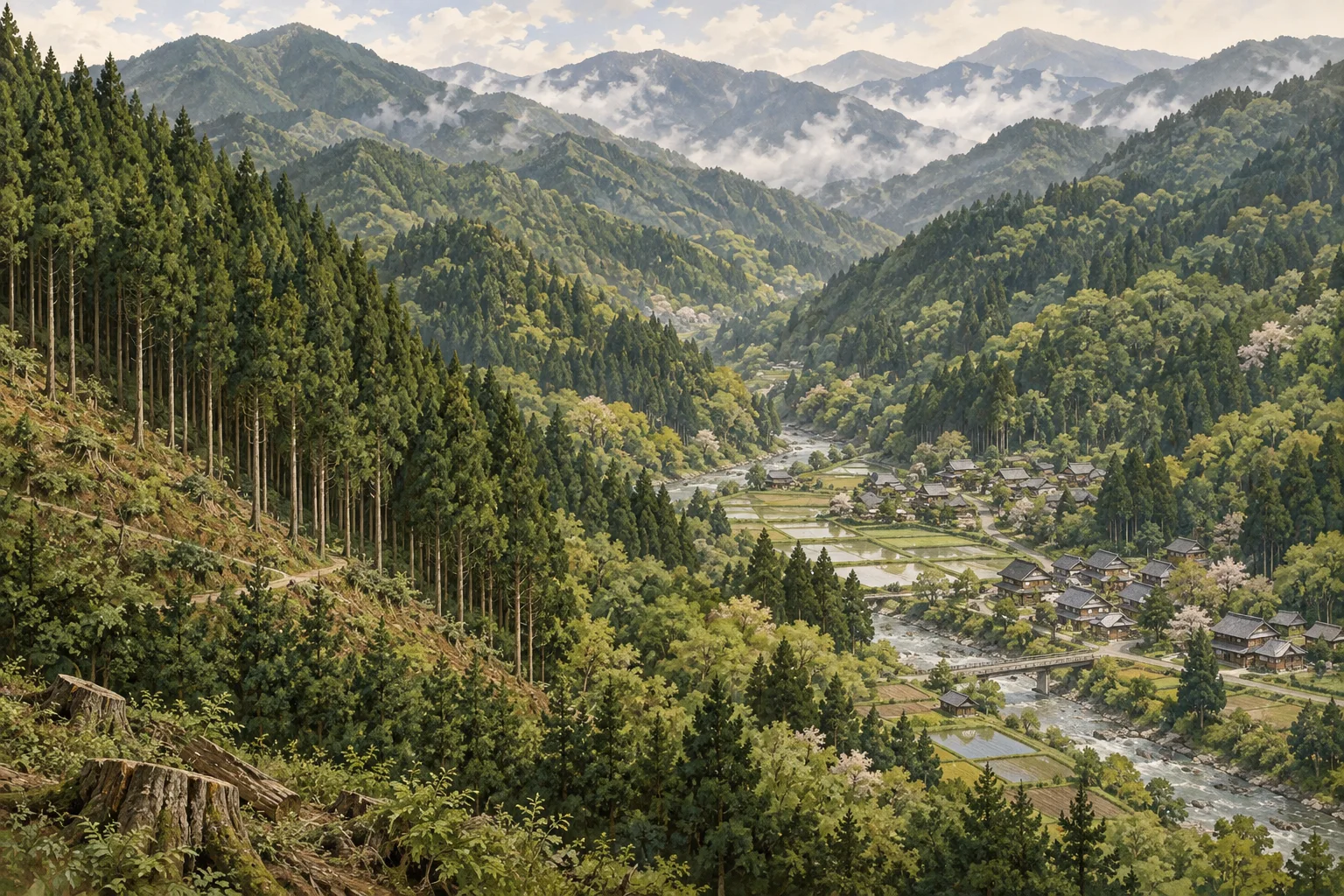
Shinrin no kuni, or forest country, is Japan: about two thirds forested, much of it planted after the war.
森林の国とは、国土のおよそ三分の二が森林で、その多くが戦後に人の手で植えられた日本のことです。
In 30 seconds
The standard explanation
Roughly two thirds of Japan's land area is forest, one of the highest proportions among developed countries. Around forty percent of that is planted rather than natural, largely cedar and cypress put in after the war. Cheap imported timber then made much of it uneconomic to harvest.
日本の国土のおよそ三分の二は森林で、先進国のなかでも高い割合です。そのうちおよそ四割は自然林ではなく人が植えた人工林で、多くは戦後に植えられたスギとヒノキです。その後、輸入材が安くなり、その多くは伐っても採算が合わなくなりました。
As a short speech
A full paragraph you can read aloud
A fact that surprises people about a country known for dense cities is that about two thirds of Japan is forest, which puts it near the top among developed nations. The reason is partly terrain, since the steep mountain interior was never easy to farm or build on, and partly deliberate policy.
After the war, timber was needed for reconstruction, and huge areas were planted with cedar and cypress in straight, single-species stands. Those trees matured decades later into a market flooded with cheaper imported timber, so much of the plantation was left uncut.
The consequences are still being worked through: mature cedar releases the pollen behind the country's hay fever problem, unthinned plantations hold little undergrowth and shed soil, and forestry villages lost their economic base. Policy now pushes thinning, domestic timber use in public buildings, and replanting with lower-pollen varieties, but a forest turns over on a scale of decades, not budget years.
人口の密集した都市で知られる国について人が驚く事実があります。日本のおよそ三分の二は森林であり、先進国のなかでも上位に入るということです。理由の一つは地形です。険しい山地は、耕すことも建てることも容易ではありませんでした。もう一つは政策です。
戦後、復興のために木材が必要とされ、広大な面積にスギとヒノキが、まっすぐな単一の樹種の林として植えられました。その木が育ったころ、市場は安い輸入材であふれており、人工林の多くは伐られないまま残されました。その帰結は今も続いています。
育ったスギは、この国の花粉症の背景にある花粉を出します。間伐されない林は下草に乏しく、土が流れます。林業の集落は経済の柱を失いました。今の政策は、間伐、公共の建物での国産材の利用、花粉の少ない品種への植え替えを進めていますが、森が入れ替わる尺度は年度ではなく数十年です。
Questions people actually ask
And how to answer them.
Is Japan's forest natural?
Partly. Around forty percent is planted forest, mostly cedar and cypress, and the rest is natural or semi-natural woodland, including the beech forests of the north and the evergreen broadleaf forest of the south.
一部はそうです。およそ四割は人工林で、多くはスギとヒノキです。残りは自然林や二次林で、北のぶな林や南の照葉樹林が含まれます。
Why import timber if there is so much forest?
Steep terrain makes harvesting expensive, forest roads are limited, and ownership is fragmented into small plots. Imported timber was long cheaper, though domestic use has risen in recent years.
急な地形のために伐り出す費用が高く、林道が限られ、所有が細かく分かれているからです。輸入材のほうが長く安く、近年は国産材の利用が増えてきました。
What is forest bathing?
Shinrin-yoku, a term coined in Japan in 1982 by the forestry agency, meaning spending unhurried time among trees for health. Research into its effects has been carried out here and the phrase has spread internationally.
森林浴です。1982年に林野庁が使い始めた言葉で、健康のために森でゆっくり過ごすことを指します。その効果についての研究は日本で進められ、この言葉は国外にも広がりました。
A common misunderstanding
MYTHJapan's forests are ancient untouched wilderness.
FACTAround forty percent is planted forest from the postwar decades, and most of the rest has been cut and regrown at some point. Old-growth forest survives mainly in limited protected areas.
Phrases you can use
- Two thirds of the country is forest.国土の三分の二が森林です。
- This is a planted cedar forest.これはスギの人工林です。
- It needs thinning.間伐が必要です。
- The timber is domestic.国産の木材です。
- Let's take a walk among the trees.森を歩きましょう。
Words you need
- forest cover森林率
- planted forest人工林
- thinning間伐
- domestic timber国産材
- forest bathing森林浴
Watch
From YouTubeBackground (Japanese)
林野庁によれば、日本の森林面積は国土のおよそ三分の二を占め、そのうち人工林が約四割です。人工林の多くは戦後から高度経済成長期にかけて植えられたスギとヒノキで、現在は伐採の適期を迎えています。輸入材との価格差や、急峻な地形、小さく分かれた所有が、国産材の利用を難しくしてきました。森林浴という言葉は1982年に林野庁が提唱したもので、その後、健康への効果が研究され、海外にも広まりました。