jugai
crop damage by deer, boar and bears
獣害(じゅうがい)
In one line
The shortest answer that works
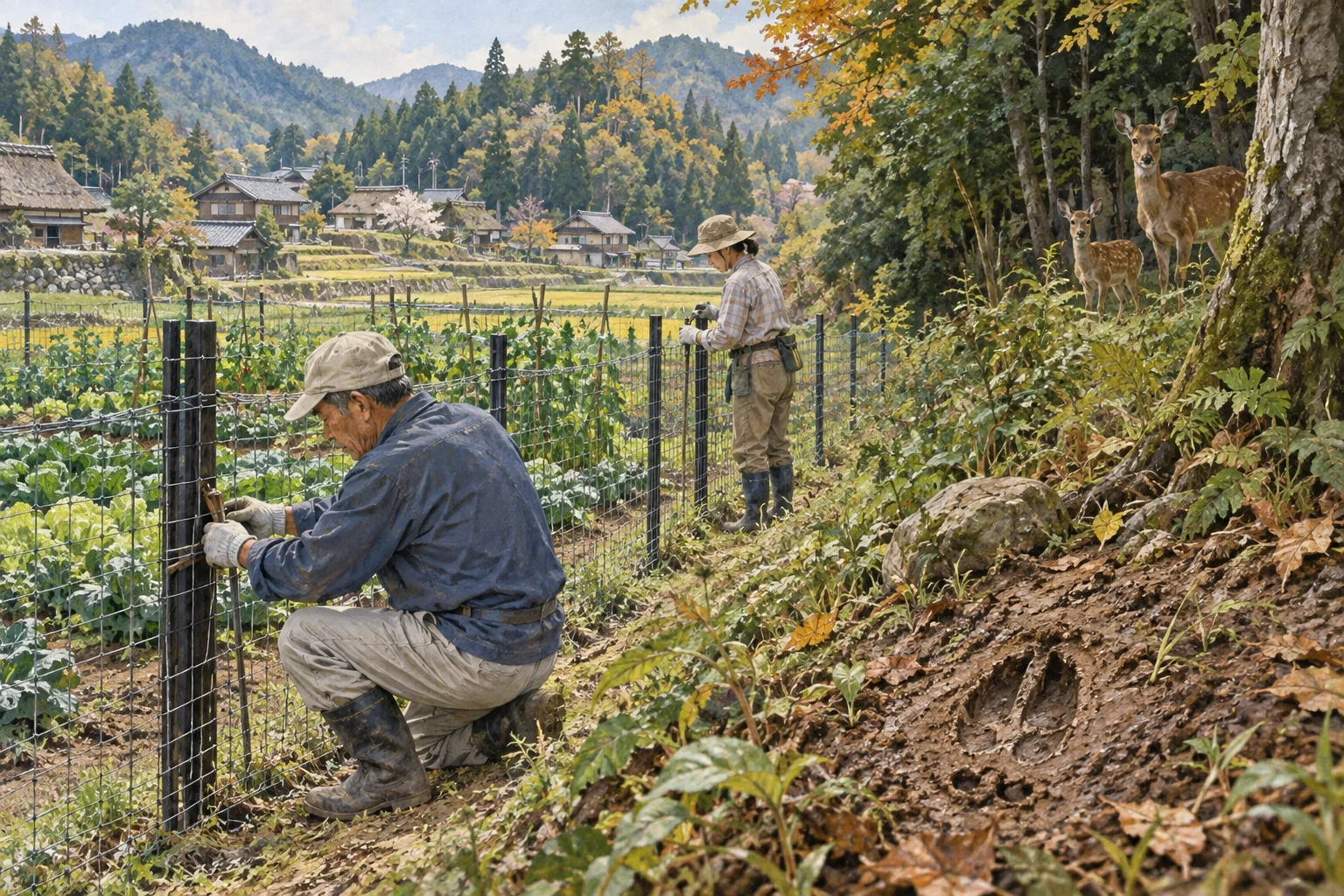
Jugai, or wildlife damage, is crop loss caused by deer, wild boar and bears in rural Japan.
獣害とは、鹿、猪、熊が日本の農村で農作物に与える被害のことです。
In 30 seconds
The standard explanation
Wild deer and boar strip crops across rural Japan, and bear sightings near settlements have risen. The causes include fewer hunters, abandoned farmland between villages and forest, and warmer winters. Municipalities fund electric fences, culling and, increasingly, use of the meat as game.
鹿と猪は日本各地の農村で作物を食い荒らし、人里近くでの熊の目撃も増えています。狩猟者の減少、集落と森のあいだの耕作放棄地、暖かい冬などが背景にあります。自治体は電気柵、捕獲、そして近年は捕った肉をジビエとして活用する取り組みに支援を出しています。
As a short speech
A full paragraph you can read aloud
Wildlife damage is a bigger issue in rural Japan than visitors realize. Deer and wild boar eat crops, strip bark from planted forest and damage embankments, and the annual crop damage comes to more than fifteen billion yen. Bear encounters near settlements have increased, and in poor mast years, when acorns and beech nuts fail, bears come down to villages and injuries occur.
Several causes combine. The hunting population aged and shrank, so culling pressure fell. Farmland between the forest and the village was abandoned as rural populations declined, removing the buffer that once kept animals at a distance. Warmer winters are thought to have improved survival.
The responses are electric fencing around fields, organized culling with licensed hunters, buffer clearing, and promotion of venison and boar as game meat, called jibie, which gives the culling an economic outlet. This is an honest part of the Japanese countryside that sits awkwardly beside the image of harmony with nature, and it is discussed openly in local news.
野生動物による被害は、訪れる人が思うより農村で大きな問題です。鹿と猪は作物を食べ、植えた林の樹皮をはぎ、畦や土手を壊します。農作物の被害額は年に百五十億円を超えます。人里近くでの熊との遭遇も増え、どんぐりやぶなの実が不作の年には、熊が集落まで下りてきて人身の被害が出ます。
原因はいくつも重なっています。狩猟者が高齢化して減り、捕獲の圧力が下がりました。人口の減少で森と集落のあいだの農地が耕作放棄地になり、動物を遠ざけていた緩衝の帯が失われました。冬が暖かくなり、生き延びる個体が増えたとも考えられています。
対策は、畑を囲む電気柵、免許を持つ狩猟者による計画的な捕獲、緩衝帯の草刈り、そして鹿肉や猪肉をジビエとして売り出すことです。捕獲に経済的な出口を作る試みでもあります。これは、自然との調和という印象とは座りの悪い、日本の農村の正直な一面であり、地元の報道では率直に語られています。
Questions people actually ask
And how to answer them.
Are bears actually dangerous to visitors?
In mountain areas, yes, and injuries occur each year. Carry a bell or talk while walking, avoid dawn and dusk on forest trails, and check local notices, which are posted at trailheads.
山間部では危険であり、毎年けが人が出ています。鈴を持つか話しながら歩き、森の道では明け方と夕暮れを避け、登山口に出ている地元の掲示を確かめてください。
Why not just protect the animals?
The debate is about numbers rather than protection in principle. Deer populations in some regions have grown enough to damage forest regeneration and alpine plants, which harms other species too.
議論の焦点は、保護するかどうかではなく数です。地域によっては鹿が増えすぎ、森の更新や高山植物を損なうまでになっており、それはほかの生きものにも影響します。
Is gibier common on menus?
It is growing. Venison and boar appear at restaurants in mountain regions and at some city restaurants, supported by processing facilities built with public funds to make culling economically viable.
増えています。山間の地域の店や、都市の一部の店で鹿肉や猪肉が出されます。捕獲を経済的に成り立たせるため、公的な支援で処理施設が整えられてきました。
Phrases you can use
- The field is fenced against boar.畑は猪よけの柵で囲んであります。
- There was a bear sighting yesterday.昨日、熊の目撃がありました。
- Carry a bell on the trail.山道では鈴を持ってください。
- The deer stripped the bark.鹿が樹皮をはぎました。
- This venison is local.この鹿肉は地元のものです。
Words you need
- wildlife damage獣害
- wild boar猪
- electric fence電気柵
- culling捕獲
- game meatジビエ
Watch
From YouTubeBackground (Japanese)
農林水産省の統計では、野生鳥獣による農作物の被害額は年間百五十億円を超える規模が続いており、鹿と猪が大きな割合を占めます。狩猟免許の所持者は長く減少し高齢化しましたが、近年は若い世代や女性の取得が増えています。耕作放棄地が集落と森の境をあいまいにしたことが、動物が人里に近づく一因とされます。捕獲した個体を食肉として活用するための処理施設が各地に整備され、ジビエの流通も広がってきました。