rokuyo
the six-day luck cycle on calendars
六曜(ろくよう)
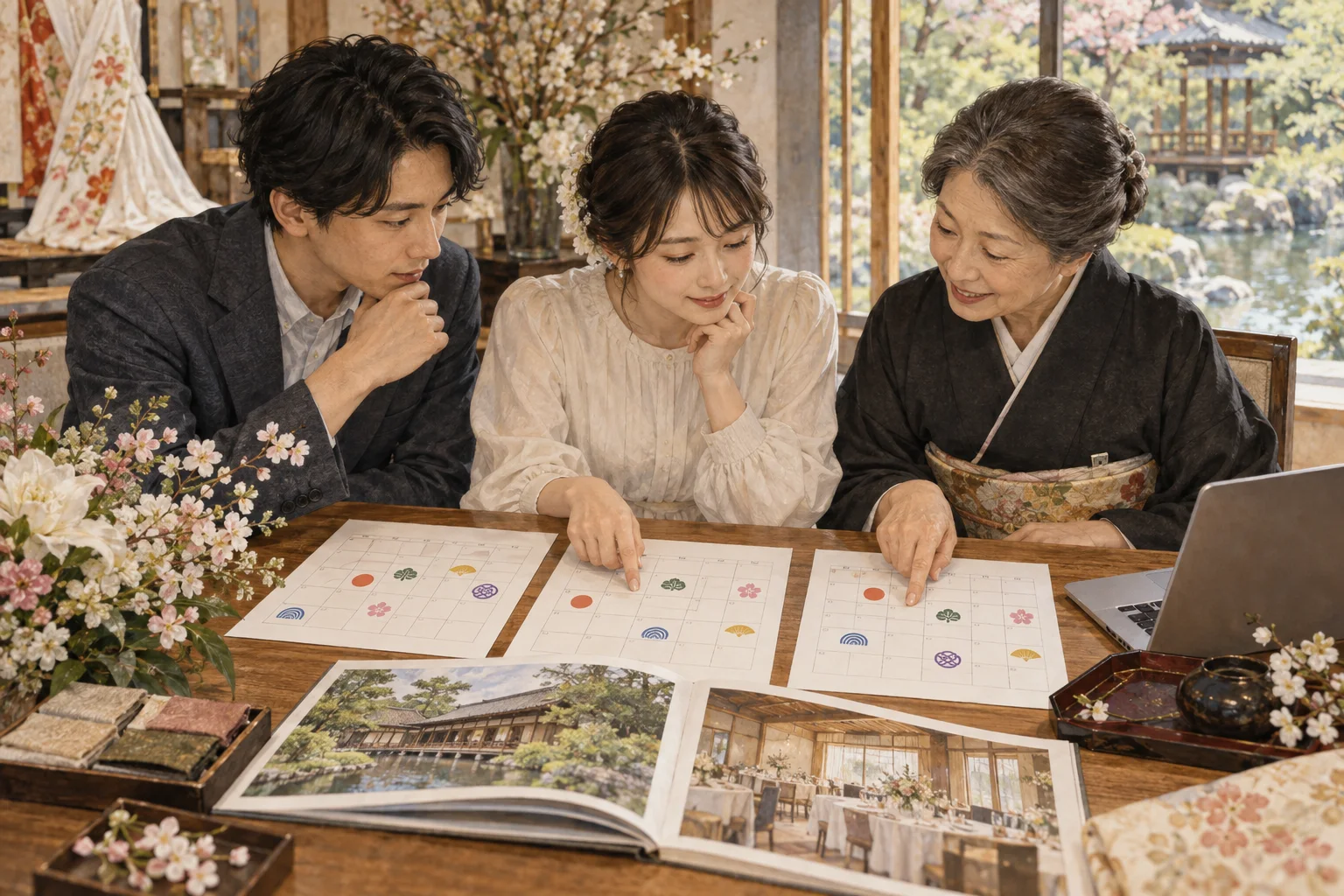
In one line
The shortest answer that works
Rokuyo is a six-day cycle of lucky and unlucky days printed on Japanese calendars.
六曜とは、日本の暦に印刷されている、吉凶を表す六日周期のことです。
In 30 seconds
The standard explanation
Rokuyo is a cycle of six day-labels that appears in small print on Japanese calendars: taian, butsumetsu, tomobiki, sakigachi, sakimake and shakko. Taian is auspicious and is chosen for weddings; butsumetsu is inauspicious and avoided. Despite the characters used, it has no basis in Buddhism.
六曜とは、日本の暦に小さく印刷される六つの日の名の巡りです。大安、仏滅、友引、先勝、先負、赤口。大安は吉とされ結婚式に選ばれ、仏滅は凶とされ避けられます。使われている字にもかかわらず、仏教とは関係がありません。
As a short speech
A full paragraph you can read aloud
Rokuyo is a cycle of six labels that rotates through the days and is printed in small characters on almost every Japanese calendar. The two that matter in practice are taian, the most auspicious day, and butsumetsu, the least. Weddings are booked on taian and wedding halls charge more for it; couples who marry on butsumetsu can get a substantial discount.
Tomobiki, which can be read as pulling a friend along, is avoided for funerals, and many crematoriums close that day as a result. Here is the part worth knowing: despite butsumetsu containing the character for Buddha, rokuyo has no basis in Buddhist doctrine.
It came from Chinese divination and spread widely in Japan only in the modern period. Buddhist organizations have at times stated that it has nothing to do with them, and some public bodies have removed it from official calendars, while wedding and funeral businesses keep it alive.
六曜は六つの名が日を巡っていく仕組みで、日本のほとんどの暦に小さな字で印刷されています。実際に効いているのは二つです。最も吉とされる大安と、最も凶とされる仏滅です。結婚式は大安に予約され、式場は大安の料金を高く設定します。
仏滅に式を挙げる二人は、かなりの割引を受けられます。友引は「友を引く」と読めるため葬儀を避け、その結果として多くの火葬場がこの日を休みにしています。知っておく値打ちがあるのはここです。仏滅に仏の字が入っているにもかかわらず、六曜は仏教の教義とは何の関係もありません。
中国の占いから来たもので、日本で広く普及したのは近代に入ってからです。仏教の団体が、自分たちとは無関係だと表明したこともあり、公の暦から六曜を外した自治体もあります。一方で、婚礼と葬儀の業界がこれを生かし続けています。
Questions people actually ask
And how to answer them.
Do people really plan around it?
For weddings and funerals, yes, quite widely. For ordinary life, far less. Many people could not name all six labels but will still check whether a wedding date is taian, often because an older relative will ask.
婚礼と葬儀については、かなり広く気にされます。日常ではずっと少なくなります。六つの名をすべて言える人は多くありませんが、結婚の日取りが大安かどうかは確かめます。たいてい、年長の親族が尋ねるからです。
Is it Buddhist?
No, despite the characters. It derives from Chinese divination and entered popular use in Japan in the modern era. Buddhist bodies have publicly distanced themselves from it, and using the Buddha character in butsumetsu is a later association.
字にもかかわらず違います。中国の占いに由来し、日本で一般に広まったのは近代です。仏教の団体は公に距離を置いてきましたし、仏滅に仏の字を当てたのも後のことです。
A common misunderstanding
MYTHRokuyo is part of Japanese Buddhism.
FACTIt comes from Chinese divination and has no doctrinal basis in Buddhism. Buddhist organizations have said so, while the wedding and funeral industries continue to use it.
Phrases you can use
- Weddings are booked on the lucky day.結婚式は大安に予約します。
- It costs less on the unlucky day.仏滅は料金が安くなります。
- Crematoriums often close on tomobiki.火葬場は友引に休むことが多いです。
- It isn't Buddhist, despite the name.名前に反して仏教とは関係ありません。
Words you need
- auspicious day吉日
- inauspicious縁起が悪い
- calendar暦
- divination占い
Watch
From YouTubeBackground (Japanese)
六曜は先勝、友引、先負、仏滅、大安、赤口の順に繰り返し、旧暦の月の初めで順番が切り替わるため、新暦の暦の上では規則性が見えません。「友引」はもとは勝負のつかない日を意味する語だったとされ、友を引くという解釈は後からの当て字です。結婚式場は大安の料金を高く、仏滅を安く設定することが多く、費用を抑えたい人が仏滅を選ぶこともあります。差別や迷信につながるとして、公の刊行物から六曜を削除した自治体もあります。