kaso
lucky and unlucky directions in a house
方位と家相(ほういとかそう)
In one line
The shortest answer that works
Kaso is Japanese house divination, judging a building by the direction its rooms and entrances face.
家相とは、部屋や玄関がどの方角を向くかで建物の吉凶を見る、日本の家の占いです。
In 30 seconds
The standard explanation
Kaso judges a house by direction: where the entrance, kitchen, bathroom and stairs sit relative to the center, and especially whether anything unclean falls on the northeast or southwest. It grew from Chinese geomancy but developed separately in Japan and is not the same as the feng shui sold today. Belief varies widely. Some families consult a specialist before building; many ignore it entirely, and builders are used to both.
家相は方角で家を見ます。玄関、台所、水回り、階段が家の中心に対してどこにあるか、特に不浄とされるものが北東や南西に来ていないかを見ます。中国の地相の考えから生まれましたが日本で別に発展し、今売られている風水とは同じではありません。信じ方には幅があります。建てる前に専門家に見てもらう家庭もあれば、まったく気にしない家庭も多く、工務店はどちらにも慣れています。
As a short speech
A full paragraph you can read aloud
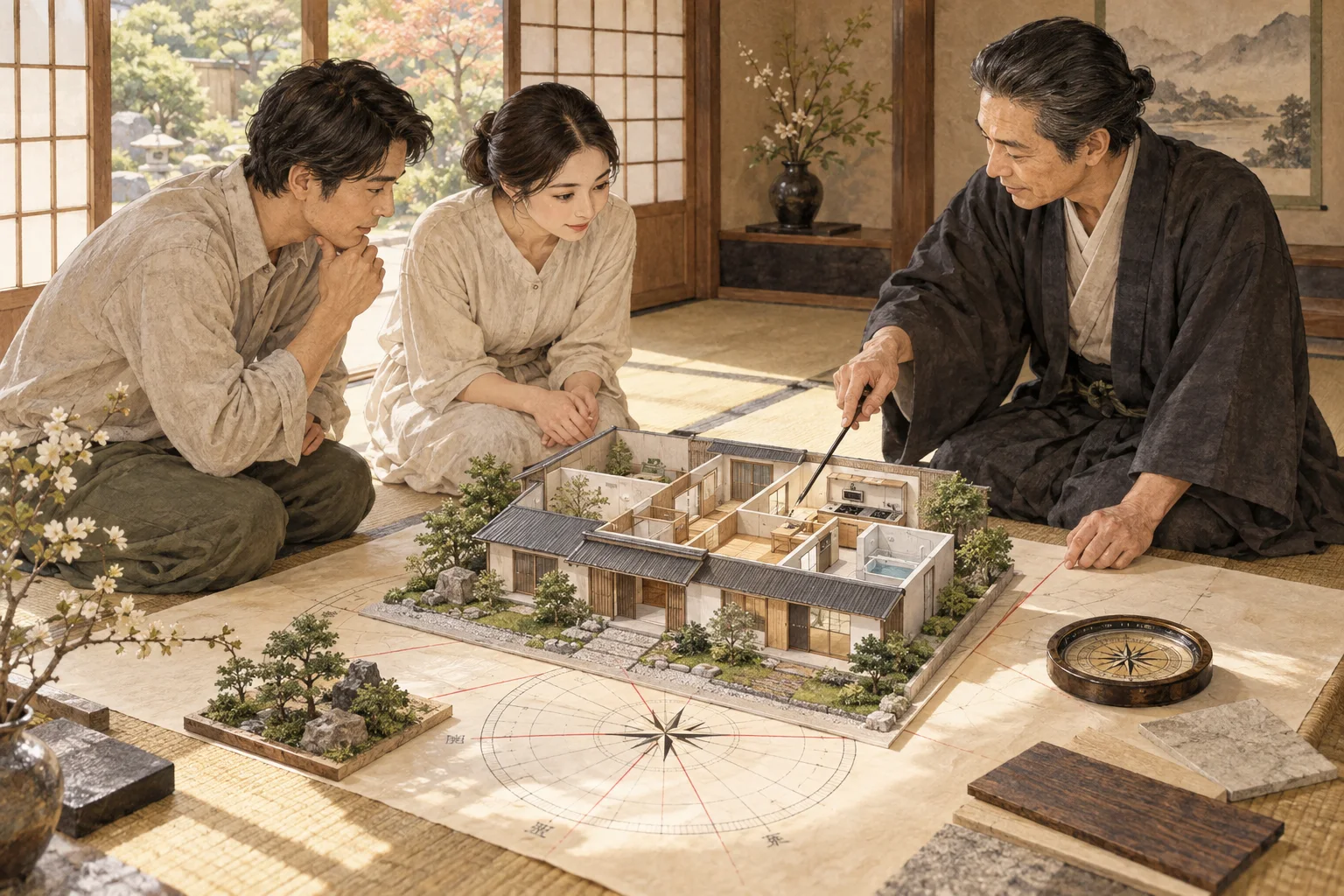
If you talk to someone in Japan who is building a house, direction may come up in a way that sounds superstitious and is treated quite practically. Kaso is house divination. It reads a building by where things sit relative to its center: the entrance, the kitchen, the bath and toilet, the stairs, and the position of missing corners in the floor plan.
The strongest rule concerns the northeast, called the demon gate, and the southwest, called the back demon gate, where a toilet, bath or kitchen is traditionally avoided. The system descends from Chinese geomancy that arrived with the continental calendar and city planning, but it developed in Japan along its own lines and is not the same thing as the feng shui found in modern bookstores, which came later and from a different tradition.
How much this matters depends entirely on the household. Some families pay a specialist to check a plan and will move a bathroom to satisfy it; others treat it as folklore. Builders and real estate agents know the vocabulary either way, and a plan advertised as kaso-friendly is a selling point to some buyers.
日本で家を建てる人と話すと、迷信のように聞こえながら、かなり実務的に扱われる形で方角の話が出てくることがあります。家相は家の占いです。家の中心に対して何がどこにあるかで建物を読みます。玄関、台所、風呂とトイレ、階段、そして間取りの欠けた角の位置です。
最も強い決まりは北東と南西に関するもので、北東を鬼門、南西を裏鬼門と呼び、そこにトイレや風呂や台所を置くことは伝統的に避けられます。この体系は、大陸の暦や都市づくりとともに伝わった中国の地相の考えに由来しますが、日本では独自の筋道で発展し、現代の書店にある風水とは別のもので、風水は後から別の系統で入ってきました。
これをどれだけ重んじるかは家によってまったく違います。専門家に間取りを見てもらい、それに合わせて浴室の位置を動かす家庭もあれば、言い伝えとして扱う家庭もあります。工務店や不動産業者はどちらにしてもこの語彙を知っていて、家相のよい間取りという宣伝は、一部の買い手には売りになります。
Questions people actually ask
And how to answer them.
Is kaso the same as feng shui?
They share an origin in Chinese geomancy but are not the same. Kaso developed in Japan over centuries with its own rules about the demon gate and the placement of water. The feng shui popular in Japanese bookstores since the 1990s is a later import, often focused on colors and objects rather than on the structure of a plan.
中国の地相という起源は共有しますが、同じではありません。家相は日本で何世紀もかけて発展し、鬼門や水回りの配置について独自の決まりを持ちます。1990年代以降に日本の書店で人気の風水は後から入ったもので、間取りの構造より色や物の置き方に重きを置くことが多いです。
Do builders actually take it into account?
They will if the client asks. Avoiding a toilet on the northeast corner is easy enough at the planning stage, and many builders offer to have a plan checked. Nobody is obliged to follow it, and plenty of houses ignore it entirely, especially in cities where the plot shape decides everything.
施主が求めれば考慮します。北東の角にトイレを置かないことは設計の段階なら容易で、間取りを見てもらう手配を用意している工務店も多いです。従う義務は誰にもなく、まったく気にしない家も多く、特に都市では敷地の形がすべてを決めます。
What about renting an apartment?
Most renters never think about it, though a few will avoid a room where the entrance faces an unlucky direction. Real estate agents will not raise it unless you do. Practical concerns such as which way the balcony faces for sunlight and laundry matter far more to most people.
借りる人のほとんどは考えませんが、玄関の向きを理由に避ける人も少しはいます。不動産業者はこちらが言わない限り持ち出しません。ベランダがどちらを向いていて日当たりと洗濯物にどう影響するかといった実際的なことのほうが、多くの人にはずっと重要です。
A common misunderstanding
MYTHJapanese people follow feng shui when they build a house.
FACTThe Japanese system is kaso, which grew separately from Chinese geomancy, and adherence ranges from paying a specialist to ignoring it completely.
Phrases you can use
- The northeast corner is considered unlucky.北東の角は縁起が悪いとされます。
- They moved the bathroom because of the direction.方角のために浴室の位置を変えました。
- Some people have the plan checked.間取りを見てもらう人もいます。
- It isn't the same as feng shui.風水とは別のものです。
- Honestly, most people don't bother.正直なところ、たいていの人は気にしません。
Words you need
- direction方角・方位
- floor plan間取り
- unlucky direction凶の方角
- geomancy地相・風水
- specialist / diviner鑑定する人・易者
Watch
From YouTubeBackground (Japanese)
家相は、家の中心から見た方位によって間取りの吉凶を判断する日本の占いで、中国から伝わった陰陽道や地相の考えをもとに、江戸時代に体系化が進んだとされます。北東を鬼門、南西を裏鬼門と呼び、これらの方位に不浄とされる水回りを置くことを避ける考えが広く知られています。平安京や江戸の都市計画で鬼門の方角に寺社を配したとする説明もよく語られます。間取りの欠けや張り、階段や玄関の位置も判断の対象になります。現代の風水は1990年代以降に書籍やテレビを通じて広まったもので、色や小物の配置を重視する点が家相とは異なります。新築の際に家相を見てもらうかどうかは家庭によって大きく異なり、都市部では敷地の形や採光を優先して考慮しない例も多くあります。