onmyodo
the court's system of divination and calendar making
陰陽道(おんみょうどう)
In one line
The shortest answer that works
Onmyodo was an official system of divination and calendar making at the old Japanese court.
陰陽道とは、かつての朝廷で暦と占いを担った、公の体系です。
In 30 seconds
The standard explanation
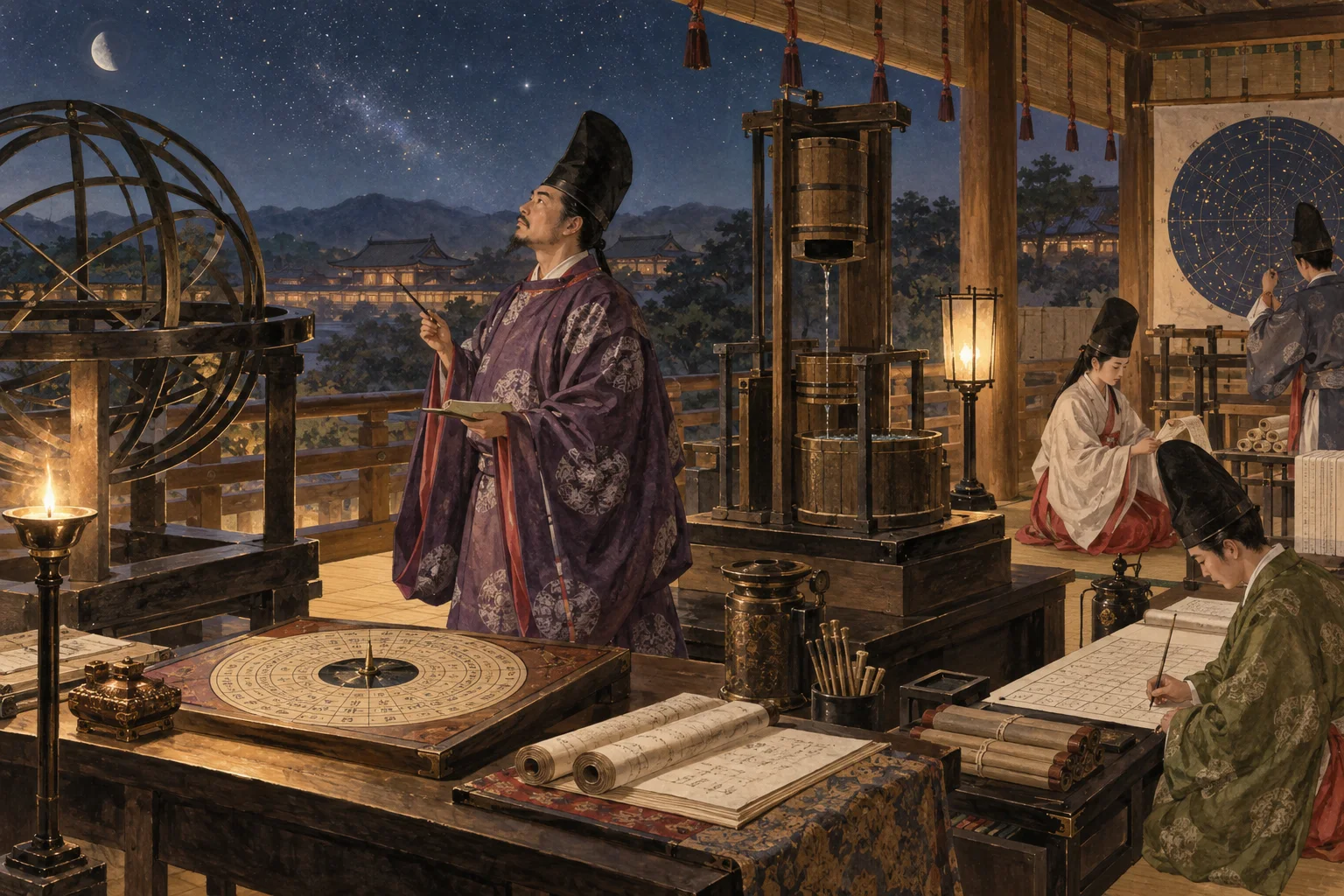
Onmyodo came from Chinese yin-yang and five-phase thought and became a government office in Japan. Its officials made the calendar, watched the sky, chose lucky days and directions, and performed rites against misfortune. It shaped court life for centuries, was abolished as an official system in 1870, and survives in scattered habits about days and directions.
陰陽道は、中国の陰陽五行の考えが日本に入り、役所の仕事になったものです。官人は暦を作り、天を観測し、吉日や方角を選び、災いを避ける祭りを行いました。長く宮廷の暮らしを律し、公の制度としては1870年に廃されましたが、日取りや方角の習慣として今も残っています。
As a short speech
A full paragraph you can read aloud
Onmyodo is easy to mistake for folk superstition, but in its own time it was the state science. It came from Chinese yin-yang and five-phase theory, and by the eighth century Japan had a government bureau staffed by specialists who produced the calendar, recorded eclipses and comets, chose auspicious days for ceremonies, and advised on which directions were unsafe to travel.
Court diaries of the Heian period are full of nobles changing route or staying home because a direction was blocked, which tells you how seriously it was taken. The most famous specialist, Abe no Seimei, lived around the year 1000 and became a legend, and a shrine in Kyoto stands where his house is said to have been.
The office was abolished in 1870 under the new Meiji government, shortly before Japan switched to the Western calendar. What survives is fragmentary: the lucky and unlucky days printed on Japanese calendars, and the care some people still take over the direction a house faces.
陰陽道は、今の目から見ると民間の迷信に見えますが、当時にあってはむしろ国の学問でした。中国の陰陽五行の考えをもとにし、八世紀には専門の官人を置く役所が朝廷にありました。彼らは暦を作り、日食や彗星を記録し、儀式の吉日を選び、どの方角が塞がっているかを助言しました。
平安時代の貴族の日記には、方角が悪いために道を変えたり家にとどまったりする記述が数多くあり、どれほど重く受け取られていたかがわかります。もっとも名の知られた陰陽師、安倍晴明は一〇〇〇年前後の人で、のちに伝説の人物になりました。
屋敷があったとされる場所には、京都の晴明神社が建っています。役所は明治政府のもとで1870年に廃され、その数年後には西洋の暦が採用されました。今に残るのは断片です。暦に刷られる吉凶の日と、家の向きを気にする人がいることです。
Questions people actually ask
And how to answer them.
Is it the same as feng shui?
They share Chinese roots but are not the same. Onmyodo was an official bureau concerned with calendars, astronomy and rites, while feng shui as sold in Japan today arrived much later and focuses on placement and interior arrangement.
中国に共通の源はありますが、同じではありません。陰陽道は暦と天文と祭祀を担う役所の体系でした。今の日本で売られている風水はずっと後に入ったもので、置き方や部屋の整え方が中心です。
Does anything from it survive today?
In fragments. Notes on lucky days and directions in traditional almanacs, and worries about unlucky directions in house building, come from related thinking. The six-day luck cycle used to pick wedding and funeral dates is often lumped in, though it has a separate history.
断片として残っています。暦に載る日や方角の吉凶、家を建てるときに方角を気にする習慣は、近い考え方から来ています。結婚式や葬儀の日取りに使われる六曜も一緒にされがちですが、成り立ちは別です。
Why does it keep appearing in manga and games?
Because Abe no Seimei makes a good character: a court official who reads the stars and fights unseen things. Novels from the 1980s revived him, films and comics followed, and the shrine in Kyoto now has a steady stream of young visitors.
安倍晴明が物語の人物として魅力的だからです。星を読み、目に見えないものと対する宮廷の官人。1980年代の小説が火をつけ、映画や漫画が続きました。京都の晴明神社には、今も若い参拝者が絶えません。
A common misunderstanding
MYTHOnmyodo was a kind of magic practiced outside the law.
FACTAt its core it was a government office. Its officials produced the official calendar, recorded astronomical events and advised the court, and the office existed until 1870. Unofficial practitioners also existed outside it.
Phrases you can use
- It was a government bureau, not folklore.民間の言い伝えではなく、役所の仕事でした。
- They decided the calendar.暦を決めていました。
- Some directions were considered unsafe.塞がっているとされる方角がありました。
- The office was abolished in 1870.この役所は1870年に廃されました。
- That shrine is named after a diviner.あの神社は陰陽師の名にちなんでいます。
Words you need
- yin and yang陰陽
- the five phases五行
- court diviner陰陽師
- calendar making造暦
- unlucky direction方塞がり
Watch
From YouTubeBackground (Japanese)
陰陽道は、中国の陰陽五行説と暦法が日本に入り、律令の役所である陰陽寮のもとで独自に発展した体系です。官人は暦の作成、天文の観測、吉凶の判断、祭祀を担いました。平安時代の貴族の日記には、方角が悪いとして行き先を変える方違えの記述が多く見られます。安倍晴明は一〇〇〇年前後に活躍した陰陽師で、京都の晴明神社は屋敷跡と伝えられる場所に建っています。陰陽寮は明治政府のもとで1870年に廃止され、1873年には太陽暦が採用されました。