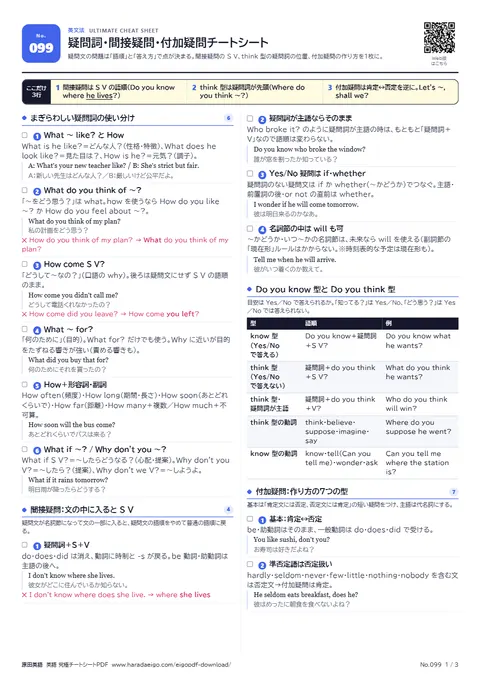
まずはこの3つ
- 間接疑問は S V の語順(Do you know where he lives?)
- think 型は疑問詞が先頭(Where do you think 〜?)
- 付加疑問は肯定↔否定を逆に。Let's 〜, shall we?
まぎらわしい疑問詞の使い分け6
- 1What 〜 like? と HowWhat is he like?=どんな人?(性格・特徴)、What does he look like?=見た目は?、How is he?=元気?(調子)。A: What's your new teacher like? / B: She's strict but fair.A:新しい先生はどんな人?/B:厳しいけど公平だよ。
- 2What do you think of 〜?「〜をどう思う?」は what。how を使うなら How do you like 〜? か How do you feel about 〜?。What do you think of my plan?私の計画をどう思う?✕How do you think of my plan? → What do you think of my plan?
- 3How come S V?「どうして〜なの?」(口語の why)。後ろは疑問文にせず S V の語順のまま。How come you didn't call me?どうして電話くれなかったの?✕How come did you leave? → How come you left?
- 4What 〜 for?「何のために」(目的)。What for? だけでも使う。Why に近いが目的をたずねる響きが強い(責める響きも)。What did you buy that for?何のためにそれを買ったの?
- 5How+形容詞・副詞How often(頻度)・How long(期間・長さ)・How soon(あとどれくらいで)・How far(距離)・How many+複数/How much+不可算。How soon will the bus come?あとどれくらいでバスは来る?
- 6What if 〜? / Why don't you 〜?What if S V?=〜したらどうなる?(心配・提案)。Why don't you V?=〜したら?(提案)、Why don't we V?=〜しようよ。What if it rains tomorrow?明日雨が降ったらどうする?
間接疑問:文の中に入ると S V4
疑問文が名詞節になって文の一部に入ると、疑問文の語順をやめて普通の語順に戻る。
- 1疑問詞+S+Vdo・does・did は消え、動詞に時制と -s が戻る。be 動詞・助動詞は主語の後へ。I don't know where she lives.彼女がどこに住んでいるか知らない。✕I don't know where does she live. → where she lives
- 2疑問詞が主語ならそのままWho broke it? のように疑問詞が主語の時は、もともと「疑問詞+V」なので語順は変わらない。Do you know who broke the window?誰が窓を割ったか知っている?
- 3Yes/No 疑問は if・whether疑問詞のない疑問文は if か whether(〜かどうか)でつなぐ。主語・前置詞の後・or not の直前は whether。I wonder if he will come tomorrow.彼は明日来るのかなあ。
- 4名詞節の中は will も可〜かどうか・いつ〜かの名詞節は、未来なら will を使える(副詞節の「現在形」ルールはかからない。※時刻表的な予定は現在形も)。Tell me when he will arrive.彼がいつ着くのか教えて。
Do you know 型と Do you think 型
目安は Yes/No で答えられるか。「知ってる?」は Yes/No、「どう思う?」は Yes/No では答えられない。
| 型 | 語順 | 例 |
|---|---|---|
| know 型(Yes/No で答える) | Do you know+疑問詞+S V? | Do you know what he wants? |
| think 型(Yes/No で答えない) | 疑問詞+do you think+S V? | What do you think he wants? |
| think 型・疑問詞が主語 | 疑問詞+do you think+V? | Who do you think will win? |
| think 型の動詞 | think・believe・suppose・imagine・say | Where do you suppose he went? |
| know 型の動詞 | know・tell(Can you tell me)・wonder・ask | Can you tell me where the station is? |
付加疑問:作り方の7つの型7
基本は「肯定文には否定、否定文には肯定」の短い疑問をつけ、主語は代名詞にする。
- 1基本:肯定↔否定be・助動詞はそのまま、一般動詞は do・does・did で受ける。You like sushi, don't you?お寿司は好きだよね?
- 2準否定語は否定扱いhardly・seldom・never・few・little・nothing・nobody を含む文は否定文→付加疑問は肯定。He seldom eats breakfast, does he?彼はめったに朝食を食べないよね?
- 3Let's 〜, shall we?勧誘の Let's は shall we。※Let me 〜 なら will you? がふつう。Let's take a break, shall we?ちょっと休もうか。
- 4命令文, will you?命令文には will you? が基本(won't you? は勧めの響き。would / could you? も可)。否定の命令文 Don't 〜 も will you?。Pass me the salt, will you?塩を取ってくれる?
- 5I'm 〜, aren't I?I am の否定疑問は aren't I(amn't I は普通使わない)。I'm right, aren't I?私が正しいよね?
- 6There is 〜, isn't there?There 構文は there で受ける。主語の everyone・nobody は they、this・that・nothing は it で受ける。Nobody called, did they?誰からも電話はなかったよね?
- 7I think S V は後ろに合わせるI think・I suppose の文は、後ろの S V に付加疑問を合わせる。※I don't think 〜 なら肯定の付加疑問。I don't think he's coming, is he?彼は来ないと思うけど、来るのかな?
答え方で差がつく:否定疑問と Do you mind2
- 1否定疑問は事実で答える英語の Yes / No は質問の形ではなく中身で決まる。する・好き→Yes、しない・好きでない→No。日本語の「はい/いいえ」と逆になる。A: Don't you like cats? / B: No, I don't.A:猫は好きじゃないの?/B:うん、好きじゃない。
- 2Do you mind 〜? には Nomind=「嫌がる」。OK なら No, not at all./Of course not./Certainly not.。Yes は「嫌です」。※口語では Sure, go ahead. も OK の意味だが、Sure. だけはあいまい。A: Do you mind if I open the window? / B: Not at all.A:窓を開けてもいい?/B:どうぞ。
感嘆文・修辞疑問2
- 1What+(a)+形容詞+名詞名詞があれば What、なければ How+形容詞・副詞。複数・不可算の名詞なら a はつけない。What beautiful flowers these are!なんてきれいな花だろう!How fast he runs!彼はなんて速く走るんだ!✕How a kind man he is! → What a kind man he is!
- 2修辞疑問=答えを求めない答えを求めず、反語・驚きを表す疑問。Who knows?=Nobody knows.(誰にもわからない)、What's the use of -ing?=It's no use -ing(〜しても無駄だ)。Who would have thought he would become a doctor?彼が医者になるなんて誰が想像しただろう(驚き)。
ここでハマる!疑問文のひっかけ7
- ✕Do you know what time is it?○Do you know what time it is?間接疑問は S V の語順
- ✕Do you think where he went?○Where do you think he went?think 型は疑問詞を文頭へ
- ✕Who do you think he will win?○Who do you think will win?who が will win の主語。he は不要
- ✕Everyone enjoyed it, didn't he?○Everyone enjoyed it, didn't they?everyone は they で受ける
- ✕She hardly studies, doesn't she?○She hardly studies, does she?hardly は否定扱い→肯定の付加疑問
- ✕Let's go, will we?○Let's go, shall we?Let's の付加疑問は shall we
- ✕I wonder if will he come.○I wonder if he will come.if 節も S V の語順。名詞節なので will は残る
会話問題で出る疑問の決まり文句8
- What do you do?★★★お仕事は何ですか今していることではなく職業をたずねる。What are you doing? と区別
- What day is it today? / What's the date today?★★★今日は何曜日?/今日は何日?day=曜日、date=日付。答え方を問う会話問題で頻出
- What brings you here?★★★どうしてここに来たの?無生物主語の疑問文。直訳は「何があなたをここへ連れてくるのか」
- Why not?★★★もちろん・いいね/(否定文に)どうしてだめなの?提案への返事なら賛成。Let's 〜. への応答で出るAShall we eat out tonight?BWhy not?A:今夜は外食しない?/B:いいね。
- What's the matter (with you)?★★★どうしたの?=What's wrong?。相手の様子を気づかう
- How about -ing? / What about -ing?★★★〜するのはどう?about は前置詞→後ろは -ing か名詞
- What do you say to -ing?★★★〜するのはどう?この to は前置詞。to+原形にしたら誤り
- Who's calling, please?★★★(電話で)どちら様ですか電話で Who are you? はぶっきらぼう。電話の会話問題の定番
語順の正体
疑問文の語順(V+S)は「相手に問いかけている」というサイン。文の中に取り込まれて、もう相手に直接たずねていない間接疑問では、そのサインが要らなくなるので普通の S V に戻る。think 型だけ疑問詞が前に出るのは、たずねたい中心が「疑問詞の答え」だから。
確認テスト
- 1Do you know where ?正解は she lives。間接疑問は S V
- 2do you think is the best singer in Japan?正解は Who。think 型。who は is の主語
- 3Let's take a short break, ?正解は shall we。Let's 〜, shall we?
- 4Nobody was late, ?正解は were they。nobody→they。否定文→肯定
- 5There is little time left, ?正解は is there。little は否定扱い
- 6do you like your new school?正解は How。How do you like 〜?=気に入った?
- 7beautiful flowers these are!正解は What。複数名詞→What(a なし)
- 8A: Don't you like coffee? B: I prefer tea.正解は No, I don't.。好きでない→No
- 9A: Would you mind if I sat here? B: Please go ahead.正解は Not at all.。mind=嫌がる→Not at all=どうぞ
- 10How come late again?正解は you are。How come+S V
- 11整序:駅への行き方を教えてくれますか。Can you tell me (the station / to / how / get / to)?
疑問詞・間接疑問を一覧にまとめ、A4 3枚で印刷できる無料PDFにしました。Web版は赤シート・覚えたチェック・カード・4択テストつき。