 ワークシート
 ぬりえ
 迷路
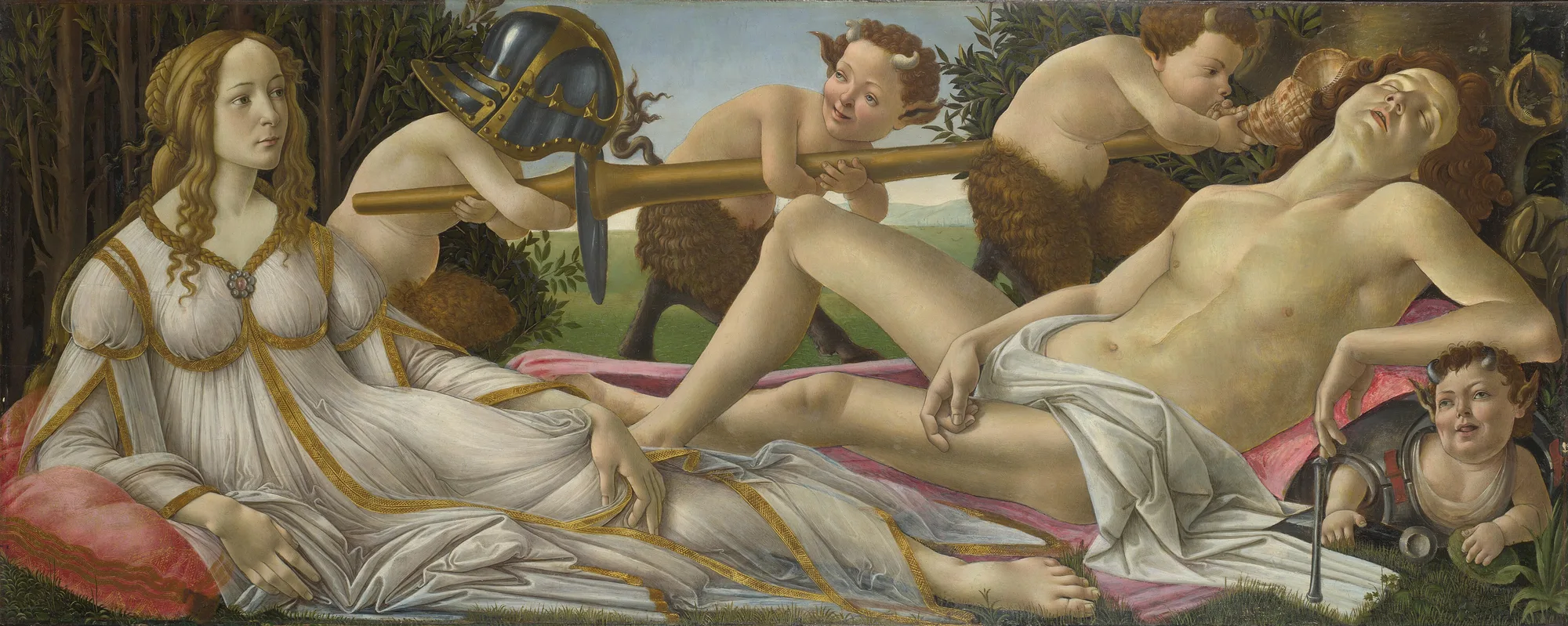
耳元でほら貝をふいても起きない!いたずらっ子に囲まれ、ぐっすりねむる戦いの神。Even a conch blown in his ear won't wake him! The god of war, fast asleep among pranksters.
 美術館アンテナ:サンドロ・ボッティチェリの作品に会える展覧会
この作品のお話
Story左で目を覚ましているのは愛と美の女神ヴィーナス。右で、よろいをぬいでぐっすりねむっているのは戦いの神マルスです。そのまわりで、ヤギの足をした子どもの姿の「サテュロス」たちが、マルスのかぶとをかぶったり、槍をかついだり、ほら貝を耳元でふいたりと、いたずらし放題。それでもマルスは起きません。
On the left, Venus, the goddess of love and beauty, is awake. On the right, Mars, the god of war, has taken off his armor and is fast asleep. Around them, little satyrs with goat legs play tricks. One wears his helmet, two carry his lance, and another blows a conch shell into his ear. Still, Mars does not wake up.
フィレンツェの画家ボッティチェリが1485年ごろに描いた絵です。横に長い形から、結婚のお祝いに作られた家具や壁の板にはめこまれていたと考えられています。愛(ヴィーナス)が戦い(マルス)をおだやかにしずめる、つまり「愛は争いに勝つ」という意味がこめられていると考えられ、新しい夫婦への願いにぴったりのテーマでした。
The Florentine painter Botticelli painted this around 1485. Its long shape suggests it was set into furniture or a wall panel, probably made for a wedding. The picture seems to say that love, Venus, calms war, Mars. In other words, love wins over fighting. It was a perfect wish for a newly married couple.
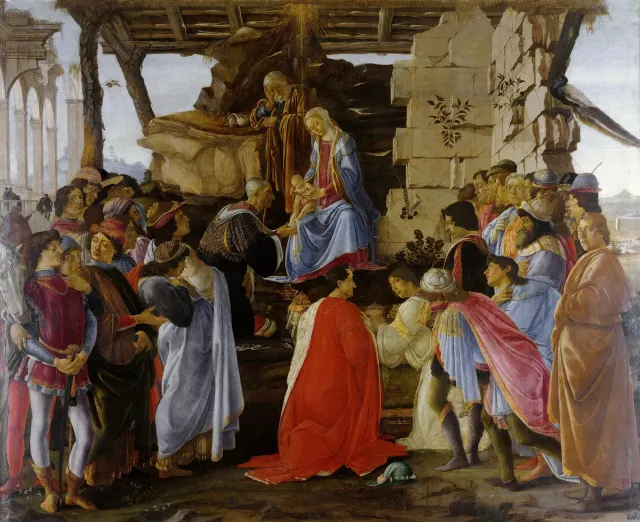
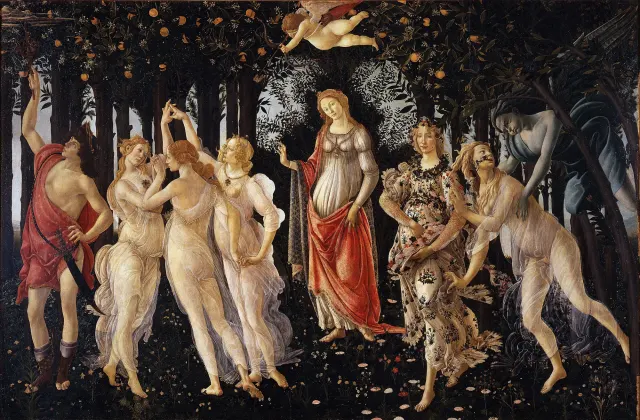
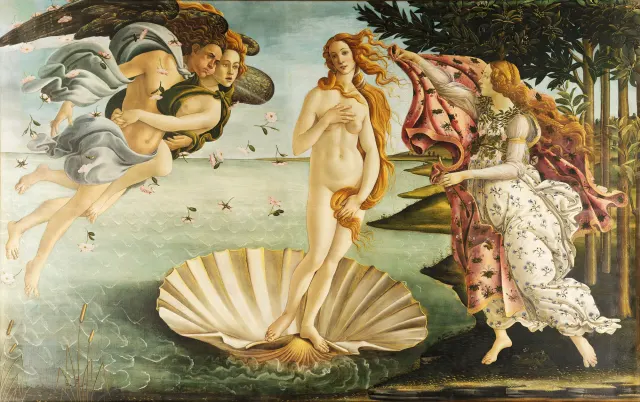
ボッティチェリは『ヴィーナスの誕生』や『春(プリマヴェーラ)』で知られる画家で、この絵も同じころの神話画です。19世紀にイギリスで再評価が進み、この絵は1874年にロンドンのナショナル・ギャラリーが購入しました。いたずらっ子たちのユーモアで、今も見る人を楽しませています。
Botticelli is famous for The Birth of Venus and Primavera, and this mythological painting is from the same period. In the 19th century, he became popular again in Britain, and the National Gallery in London bought this picture in 1874. The playful satyrs still make visitors smile today.
左のヴィーナスは起きています。右のマルスはねむっています。ヤギの足の小さな子どもたちが、かぶとや槍で遊んでいます。1人は大きな貝を耳元でふいています。でもマルスは起きません!
Venus is awake on the left. Mars is asleep on the right. Little satyrs with goat legs play with his helmet and spear. One blows a big shell into his ear. But Mars doesn't wake up!
英語のレベルは上の「やさしい/ふつう」で切りかえられます。
えっ!?な裏ネタ
Secretsマルスの頭の上には、ハチがとびまわる巣が描かれています。イタリア語でハチは「ヴェスパ」。そこから、フィレンツェのヴェスプッチ家がこの絵を注文したのではないか、という説があります。
Above Mars's head, wasps fly around a nest. In Italian, a wasp is a 'vespa'. So one theory says the Vespucci family of Florence ordered this painting.
高さ約70センチ、横約170センチという横長の形は、長いすの背もたれや、壁にはめこむ板の絵によくある形です。結婚する夫婦の部屋をかざったのではないかと考えられています。
It is about 70 cm high and 170 cm wide. This long shape is typical of paintings set into the back of a bench or into a wall. It probably decorated the room of a married couple.
サテュロスは、ヤギの足と角をもつ森の精霊です。ここでは4人が、かぶとをかぶる・槍をかつぐ・ほら貝をふく・よろいにもぐるの大さわぎ。戦いの道具がすっかりおもちゃになっています。
Satyrs are forest spirits with goat legs and horns. Here four of them make a big fuss: one wears the helmet, one carries the lance, one blows a conch, and one crawls into the armor. The tools of war have become toys.
ボッティチェリの描くヴィーナスは、フィレンツェ一の美女とうたわれたシモネッタ・ヴェスプッチがモデルだと言われることがあります。ただし、それを示す確かな記録はなく、伝説の1つです。
People sometimes say Botticelli's Venus was modeled on Simonetta Vespucci, a famous beauty of Florence. But there is no reliable record of this. It is a legend.
ここを見て!
Look Closer1目覚めているヴィーナスVenus, wide awake
白いドレスのヴィーナスは、しっかり目を開けて、ねむるマルスを見つめています。
Venus in a white dress is wide awake and watches the sleeping Mars.
2ねむるマルスSleeping Mars
口を少し開けて、ぐっすりねむる戦いの神。
The god of war sleeps deeply with his mouth a little open.
3ほら貝をふくサテュロスSatyr with a conch
マルスの耳元で、ほら貝を思いきりふいています。
He blows a conch shell right into Mars's ear.
4ハチの巣Wasp nest
木の幹のあなにハチの巣。注文主の名前のヒントかもしれません。
A wasp nest in a tree trunk. It may hint at the name of the family who ordered it.
英語で名画を語ろう
Talk about Art in EnglishThe satyr tries to wake Mars up with a conch shell.
サテュロスはほら貝でマルスを起こそうとしています。
💡 wake up は「目覚める」、wake 人 up で「人を起こす」。代名詞なら wake him up の語順。
英語で説明すると… Describe it
これは横長の絵です。左では、白いドレスの女性が草の上に横たわっています。右では、男性がぐっすりねむっています。2人のあいだでは、ヤギの足の小さな子どもたちがかぶとや槍で遊んでいます。1人は男性の耳元で貝をふいています。
This is a long painting. On the left, a woman in a white dress is lying on the grass. On the right, a man is fast asleep. Between them, some little satyrs with goat legs are playing with his helmet and lance. One of them is blowing a shell into the man's ear.
考えてみよう Think & Talk
- ヴィーナスはマルスを見ながら、何を考えていると思いますか?What do you think Venus is thinking as she watches Mars?
- 愛は本当に争いを止められると思いますか?それはなぜ?Can love really stop fighting? Why or why not?
この作品の英単語
WordsMars is asleep.
マルスはねむっています。
Mars has taken off his armor.
マルスはよろいをぬいでいます。
Wasps fly around a nest.
ハチが巣のまわりを飛んでいます。
The satyrs play tricks on Mars.
サテュロスたちはマルスにいたずらをしています。
ミニクイズ
QuizQ. サテュロスがマルスの耳元でふいているのは?What is a satyr blowing into Mars's ear?
大きなほら貝をふいていますが、マルスは起きません。
He is blowing a big conch shell, but Mars doesn't wake up.
ウソ?ホント? 絵の右上には、ハチの巣が描かれている。There is a wasp nest at the top right.
注文主ヴェスプッチ家のしるしという説があります。
One theory says it is a sign of the Vespucci family.
ウソ?ホント? この絵では、マルスが起きていてヴィーナスがねむっている。In this painting, Mars is awake and Venus is asleep.
反対です。ヴィーナスが起きていて、マルスがねむっています。
It's the other way around. Venus is awake, and Mars is asleep.
 画像の出典とライセンス / Image credit
- PDVenus and Mars National Gallery.jpg(Wikimedia Commons)
ライセンス:Public domain(パブリックドメイン)/作者・撮影者の表記:Sandro Botticelli
この作品は、作者の死後長い年月がたち著作権の保護期間が終わった「パブリックドメイン」の作品です。画像は平面の作品を忠実に写したもので、新しい著作権は生じません(Wikimedia Commons の PD-Art の考え方)。 所蔵:ナショナル・ギャラリー(The National Gallery)。画像は表示のために縮小・WebP 形式に変換しています。