 ワークシート
 ぬりえ
 迷路
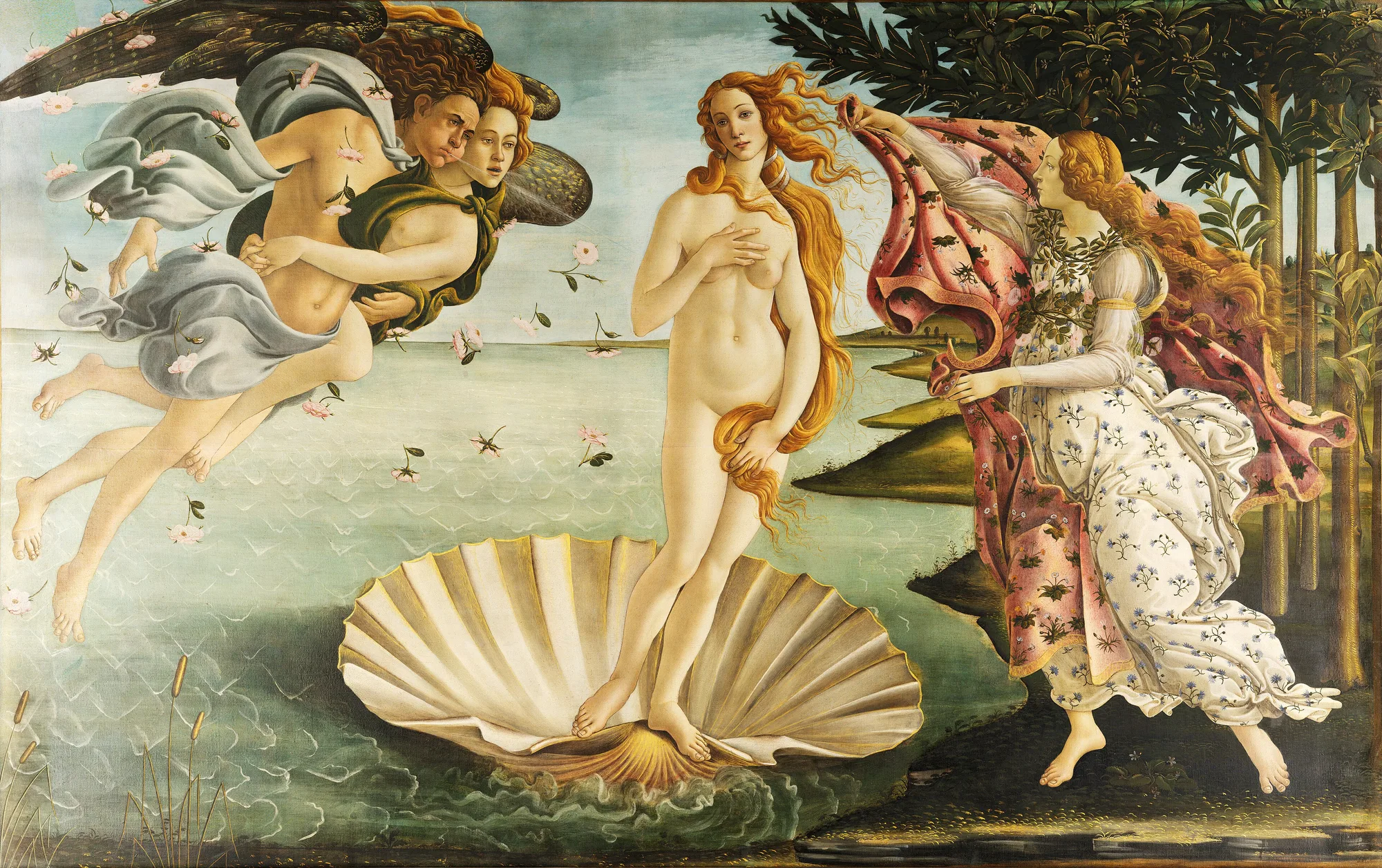
海の泡から生まれた女神が、貝に乗って岸へ。ルネサンスいちばんの「登場シーン」。Born from sea foam, a goddess rides a shell to shore. The Renaissance's greatest entrance.
 美術館アンテナ:サンドロ・ボッティチェリの作品に会える展覧会
この作品のお話
Storyこの絵は、ローマ神話の愛と美の女神ヴィーナス(ギリシャ神話のアフロディテ)が、海の泡から生まれ、大きなホタテ貝に乗って岸にたどり着く場面です。1484〜1486年ごろ、フィレンツェの画家ボッティチェリが描きました。今はフィレンツェのウフィツィ美術館で、いちばん人気の作品の一つです。
This painting shows Venus, the Roman goddess of love and beauty. In Greek myths, she is called Aphrodite. She was born from the sea foam and arrives on the shore on a big scallop shell. Botticelli, a painter from Florence, painted it around 1484–1486. It is one of the most popular works in the Uffizi Gallery in Florence.
左では、西風の神ゼフュロスが、もう一人の風の精と抱き合いながら息を吹きかけ、女神を岸へ送っています。まわりにはバラの花がまいます。右では、春の女神ホーラとも三美神の一人とも考えられる女性が、花がらのマントを広げて女神をむかえます。古代の神話を、ほぼ等身大で大きく描いた、当時としては新しい作品でした。
On the left, Zephyr, the west wind, blows Venus to the shore. Another wind spirit holds on to him. Roses fall around them. On the right, a woman waits with a flowered cloak. She may be the Hora of Spring or one of the Three Graces. At that time, it was new to paint an old myth this large, with figures almost life-size.
ボッティチェリは死後、長いあいだ忘れられていましたが、19世紀のイギリスの画家たちに再発見され、一気に人気が出ました。今ではポスターや広告、映画など、数えきれないほどパロディされています。ヴィーナスのモデルは、フィレンツェ一の美女シモネッタ・ヴェスプッチだという言い伝えもあります。
After he died, Botticelli was forgotten for a long time. In the 19th century, British painters rediscovered him, and he became very popular. Today it has been parodied countless times in posters, ads and films. There is a legend that the model was Simonetta Vespucci, the most beautiful woman in Florence.
これは愛の女神ヴィーナスです。大きな貝に乗って海からやって来ます。風が彼女を陸へ吹き送ります。ボッティチェリが描きました。イタリアの硬貨で、彼女の顔を見ることができます!
This is Venus, the goddess of love. She comes out of the sea on a big shell. The wind blows her to land. Botticelli painted her. You can see her face on a coin in Italy!
英語のレベルは上の「やさしい/ふつう」で切りかえられます。
えっ!?な裏ネタ
Secretsイタリアの10ユーロセント硬貨には、この絵のヴィーナスの顔がきざまれています。1ユーロ硬貨のレオナルド『ウィトルウィウス的人体図』とならんで、イタリアの名画がおさいふの中にあるのです。
Italy's 10-euro-cent coin shows the face of this Venus. Together with Leonardo's Vitruvian Man on the 1-euro coin, Italian masterpieces are in people's pockets every day.
ヴィーナスの髪や、木の葉のふちなどには、金がぬられていて、光が当たるとかすかにかがやきます。神々しさを出すための、ぜいたくな工夫です。美術館で本物を見ると、写真ではわからないこの光に気づくかもしれません。
Gold was used on Venus's hair and on the edges of the leaves. It shines softly in the light. It was a rich way to make the scene look divine. In the museum, you may notice a glow that photos cannot show.
よく見ると、ヴィーナスの首は長すぎ、左肩はなで肩すぎて、腕のつき方も不自然です。ボッティチェリは正しい体の形よりも、流れるような線の美しさを大切にしたのです。このポーズは、古代の「恥じらいのヴィーナス」の像をお手本にしています。
Look closely: Venus's neck is too long and her left shoulder slopes too much. Her arm is joined in a strange way. Botticelli cared more about beautiful flowing lines than correct anatomy. Her pose is based on ancient statues of a modest Venus.
ボッティチェリは本名ではありません。本名はアレッサンドロ・フィリペーピ。兄が「ボッティチェッロ(小さなたる)」というあだ名で呼ばれていて、それが一家のあだ名になったと言われます。
Botticelli is not his real name. He was Alessandro Filipepi. His older brother was nicknamed 'Botticello', meaning 'little barrel'. The nickname is said to have passed to the family.
ここを見て!
Look Closer1ヴィーナスの顔Venus's face
少しかしげた首、遠くを見るような目。風になびく長い髪には金がぬられています。
Her head tilts a little and her eyes look far away. Her long hair, touched with gold, flows in the wind.
2ホタテ貝Scallop shell
女神は大きなホタテ貝のふちに立っています。貝は海から生まれた女神のシンボルです。
The goddess stands on the edge of a big scallop shell. The shell is a symbol of her birth from the sea.
3西風の神The west wind
ほおをふくらませて息を吹く西風の神ゼフュロス。まわりにはピンクのバラがまっています。
Zephyr puffs his cheeks and blows. Pink roses fly around him.
4春の女神ホーラ?The Hora of Spring?
花がらの服を着た女性が、マントを広げてヴィーナスをむかえます。季節の女神の一人、春のホーラとも、三美神の一人とも考えられています。
A woman in a flowered dress opens a cloak to welcome Venus. She may be the Hora of Spring, a goddess of the seasons, or one of the Three Graces.
英語で名画を語ろう
Talk about Art in EnglishVenus is standing on a scallop shell.
ヴィーナスはホタテ貝の上に立っています。
💡 どこに立っているかを言う表現。on は「接して上に」。in the water なら「水の中に」。
英語で説明すると… Describe it
これは海辺の女神の絵です。まん中で、女神が大きな貝の上に立っています。左では二人の風の神が風を吹いています。右では、女の人が彼女のためにマントを広げています。
This is a painting of a goddess by the sea. In the center, she is standing on a big shell. On the left, two wind gods are blowing. On the right, a woman is holding a cloak for her.
考えてみよう Think & Talk
- 岸に着いたら、ヴィーナスは何をすると思いますか?What do you think Venus will do when she reaches the shore?
- ボッティチェリは美しい線のために体の形を変えました。それはよい考えだと思いますか?Botticelli changed the body to make beautiful lines. Is that a good idea?
この作品の英単語
WordsVenus stands on a big shell.
ヴィーナスは大きな貝の上に立っています。
The wind god blows her to the shore.
風の神が彼女を岸へと吹き送ります。
The shell is coming to the shore.
貝が岸へ近づいています。
Her pose is very graceful.
彼女のポーズはとても優雅です。
ミニクイズ
QuizQ. ヴィーナスが乗っているものは?What is Venus standing on?
海の泡から生まれた女神は、大きなホタテ貝に乗って岸へ着きます。
The goddess, born from sea foam, reaches the shore on a scallop shell.
ウソ?ホント? ボッティチェリは画家の本名である。Botticelli was the painter's real name.
本名はアレッサンドロ・フィリペーピ。「小さなたる」という意味のあだ名です。
His real name was Alessandro Filipepi. Botticelli is a nickname meaning 'little barrel'.
ウソ?ホント? ボッティチェリは、19世紀に再び注目されるまで長く忘れられていた。Botticelli was forgotten for a long time until the 19th century.
イギリスの画家たちに再発見され、人気が高まりました。
British painters rediscovered him, and he became popular again.
 画像の出典とライセンス / Image credit
- PDSandro Botticelli - La nascita di Venere - Google Art Project - edited.jpg(Wikimedia Commons)
ライセンス:Public domain(パブリックドメイン)/作者・撮影者の表記:Sandro Botticelli/提供元:Adjusted levels from File:Sandro Botticelli - La nascita di Venere - Google Art Project.jpg, originally from Google Art Project. Compression Photoshop level 9.
この作品は、作者の死後長い年月がたち著作権の保護期間が終わった「パブリックドメイン」の作品です。画像は平面の作品を忠実に写したもので、新しい著作権は生じません(Wikimedia Commons の PD-Art の考え方)。 所蔵:ウフィツィ美術館(Uffizi Gallery)。画像は表示のために縮小・WebP 形式に変換しています。