 ワークシート
 ぬりえ
 迷路
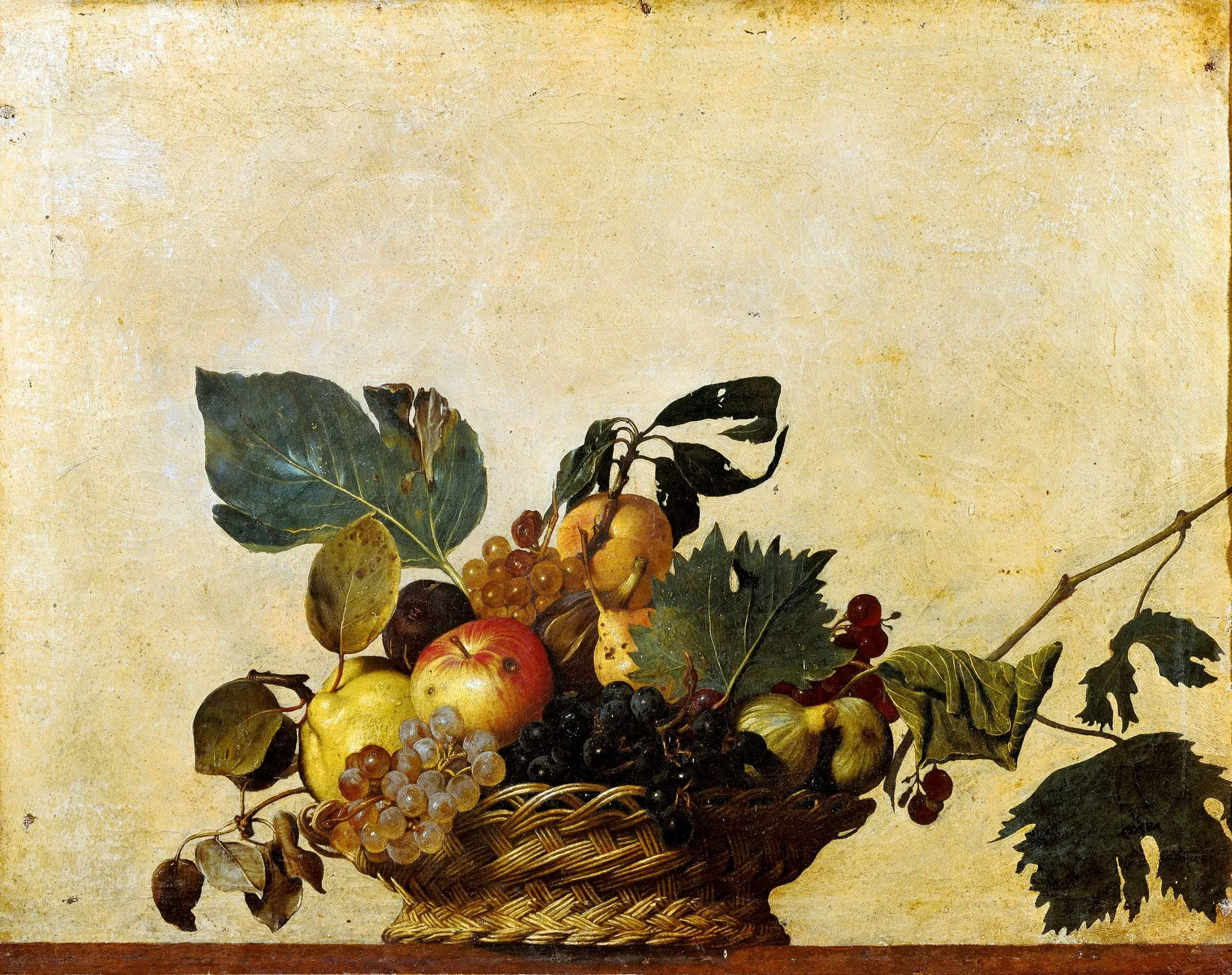
虫食いのリンゴまで本物そっくり!主役は果物かごだけ。Even the wormy apple looks real! The only star here is a basket of fruit.
この作品のお話
Story「果物籠」は、イタリアの画家カラヴァッジョが1599年ごろに描いた絵です。人も風景も描かれていません。主役は、リンゴやブドウ、イチジクなどが入ったかご一つだけ。何もない明るい黄土色の背景の前に、かごがぽつんと置かれています。果物や花は、それまで大きな絵の「脇役」でした。果物だけで一枚の絵にした、イタリアで最も早い例の一つです。
Basket of Fruit was painted by the Italian artist Caravaggio around 1599. There are no people and no landscape. The only star is a basket of apples, grapes, figs and other fruit. It sits alone in front of a plain, pale yellow background. Before this, fruit and flowers were usually just small details in bigger pictures. This is one of the earliest Italian paintings made only of fruit.
この絵は、ミラノの大司教フェデリコ・ボッロメーオ枢機卿のもので、1607年には彼のコレクションに入っていました。カラヴァッジョは「よい花の絵を描くのは、人物の絵と同じくらい手間がかかる」と語ったと記録されています。よく見ると、葉は虫に食われてしおれ、リンゴには穴があいています。美しいものもやがて衰える、というメッセージを読みとる研究者もいます。
The painting belonged to Cardinal Federico Borromeo, the Archbishop of Milan. It was in his collection by 1607. Caravaggio is recorded as saying that a good picture of flowers took as much work as a picture of people. Look closely. The leaves are eaten by insects and drying up, and the apple has a hole. Some scholars see a message here: even beautiful things fade.
ボッロメーオは1618年、集めた絵をミラノのアンブロジアーナ図書館に寄付しました。これが今のアンブロジアーナ絵画館のはじまりで、この絵は400年以上たった今もそこにあります。果物だけで勝負したこの絵は、イタリアの静物画の出発点の一つとされ、1990年代に使われたイタリアの10万リラ紙幣にも描かれました。
In 1618, Borromeo gave his paintings to the Ambrosian Library in Milan. This was the start of the Pinacoteca Ambrosiana, and the painting is still there more than 400 years later. This bold picture of fruit is seen as one of the starting points of Italian still-life painting. It even appeared on an Italian 100,000-lira banknote used in the 1990s.
これは果物かごの絵です。人は一人もいません。赤いリンゴを見てください。虫が食べた小さな穴があります!古くて茶色くなった葉もあります。カラヴァッジョは、果物をありのままに描いたのです。
This is a picture of a fruit basket. There are no people in it. Look at the red apple. It has a small hole from a worm! Some leaves are old and brown, too. Caravaggio painted the fruit just as it was.
英語のレベルは上の「やさしい/ふつう」で切りかえられます。
えっ!?な裏ネタ
Secrets調査で、この絵はすでに使われたキャンバスの上に描かれていたことがわかりました。下には「グロテスク」と呼ばれる、草花や不思議な生き物をからめた飾り模様があり、カラヴァッジョの友人プロスペロ・オルシの作風に似ているそうです。画家の節約術だったのかもしれません。
Studies showed that this picture was painted on a canvas that had already been used. Underneath is a 'grotesque' pattern of plants and strange creatures. It looks like the style of Caravaggio's friend Prospero Orsi. Maybe the artist was saving money!
ボッロメーオ枢機卿は、自分のコレクションを紹介する本の中で「この隣に同じようなかごをもう一つ置きたかったが、これほどの美しさに届く者がいなかったので、ひとつだけのままだ」という意味のことを書いています。大司教も認めた、ひとりぼっちの名品です。
Cardinal Borromeo wrote a book about his collection. In it, he said he had wanted to place a similar basket next to this one. But no one could match its beauty, so it stayed alone. Even the archbishop thought it was one of a kind.
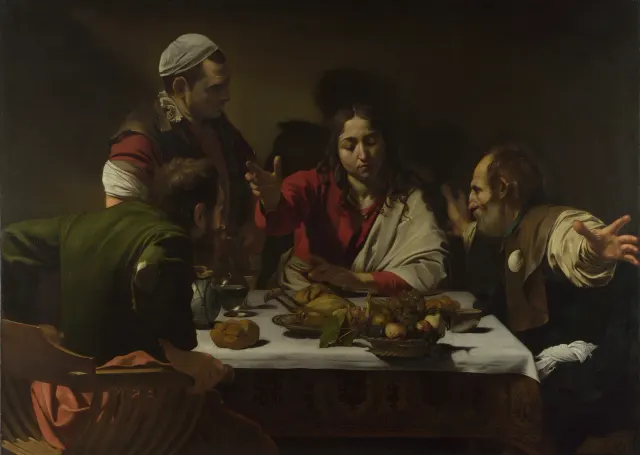
ロンドンにあるカラヴァッジョの「エマオの晩餐」にも、テーブルの端から落ちそうな果物かごが描かれています。研究者の中には、かごやマルメロ(洋ナシに似た果物)まで同じものではないかと指摘する人もいます。このミュージアムで2枚を見くらべてみましょう。
Caravaggio's Supper at Emmaus in London also shows a fruit basket about to fall off a table. Some scholars think the basket, and even the quince, may be the same ones. Compare the two paintings in this museum!
かごの底は、手前の台の端から少しはみ出しています。まるで絵の中から、こちらへ落ちてきそうです。本物がそこにあるように見せる「だまし絵(トロンプ・ルイユ)」のしかけです。背景に何も描かないことで、かごがいっそう浮かび上がって見えます。
The bottom of the basket hangs over the edge of the ledge. It looks as if it could fall out of the picture toward us. This is a trompe-l'oeil trick, which makes things look real. The empty background makes the basket stand out even more.
ここを見て!
Look Closer1虫食いのリンゴWormy apple
赤いリンゴには、小さな虫食い穴があります。完ぺきな果物ではなく、ありのままの姿を描くのがカラヴァッジョ流です。
The red apple has a small wormhole. Caravaggio painted the fruit as it really looked, instead of making it perfect.
2しおれた葉Dying leaf
左の葉は黄色く変わり、茶色い斑点が出ています。新鮮な葉と枯れかけた葉が、一つのかごの中にまざっています。
The leaf on the left has turned yellow, with brown spots. Fresh leaves and dying leaves are mixed in the same basket.
3はみ出すかごBasket on the edge
かごの底が台の端からはみ出しています。今にも絵の外へ飛び出してきそうです。
The bottom of the basket hangs over the edge of the ledge. It seems ready to come out of the picture.
英語で名画を語ろう
Talk about Art in EnglishBasket of Fruit is one of the earliest still lifes in Italian art.
「果物籠」は、イタリア美術で最も早い静物画の一つです。
💡 果物・花・器など動かない物の絵。複数形は still lifes(lives ではない)。
英語で説明すると… Describe it
これは静物画です。真ん中に、果物でいっぱいのかごがあります。赤いリンゴが1つと、緑と紫のブドウ、そして大きな緑の葉があります。背景は何もなく、うすい黄色です。
This is a still life. In the center, there is a basket full of fruit. There is a red apple, along with green and purple grapes and some big green leaves. The background is plain and pale yellow.
考えてみよう Think & Talk
- カラヴァッジョはなぜ、虫食い穴や枯れかけた葉まで描いたのだと思いますか?Why do you think Caravaggio painted the wormhole and the dying leaves?
- あなたが好きな物で静物画を描くとしたら、何を置きますか?If you painted a still life of your favorite things, what would you put in it?
この作品の英単語
WordsThis painting is a still life of fruit.
この絵は果物の静物画です。
The grapes look ripe and sweet.
ブドウは熟していて甘そうです。
Even beautiful leaves fade in time.
美しい葉も、時がたてば色あせます。
The basket stands right on the edge of the ledge.
かごは台のすぐ端に置かれています。
ミニクイズ
QuizQ. 調査でわかった、この絵のキャンバスのひみつは?What did studies find out about the canvas of this painting?
すでに「グロテスク」という飾り模様が描かれたキャンバスを使い回していました。
Caravaggio reused a canvas that already had a 'grotesque' pattern on it.
ウソ?ホント? この絵には人が一人も描かれていない。There are no people in this painting.
主役は果物かごだけです。果物だけで一枚の絵にした、イタリアで最も早い例の一つです。
The basket of fruit is the only subject. It is one of the earliest Italian paintings of fruit alone.
ウソ?ホント? かごの果物は、すべて傷ひとつない完ぺきな姿で描かれている。All the fruit in the basket looks perfect, without a single mark.
リンゴには虫食い穴があり、葉はしおれています。ありのままの姿を描いています。
The apple has a wormhole and the leaves are dying. Caravaggio painted things as they really are.
 画像の出典とライセンス / Image credit
- PDCanestra di frutta (Caravaggio).jpg(Wikimedia Commons)
ライセンス:Public domain(パブリックドメイン)/作者・撮影者の表記:Caravaggio/提供元:Own work, user:Lafit86
この作品は、作者の死後長い年月がたち著作権の保護期間が終わった「パブリックドメイン」の作品です。画像は平面の作品を忠実に写したもので、新しい著作権は生じません(Wikimedia Commons の PD-Art の考え方)。 所蔵:アンブロジアーナ絵画館(Pinacoteca Ambrosiana)。画像は表示のために縮小・WebP 形式に変換しています。
カラヴァッジョのほかの作品