 ワークシート
 ぬりえ
 迷路
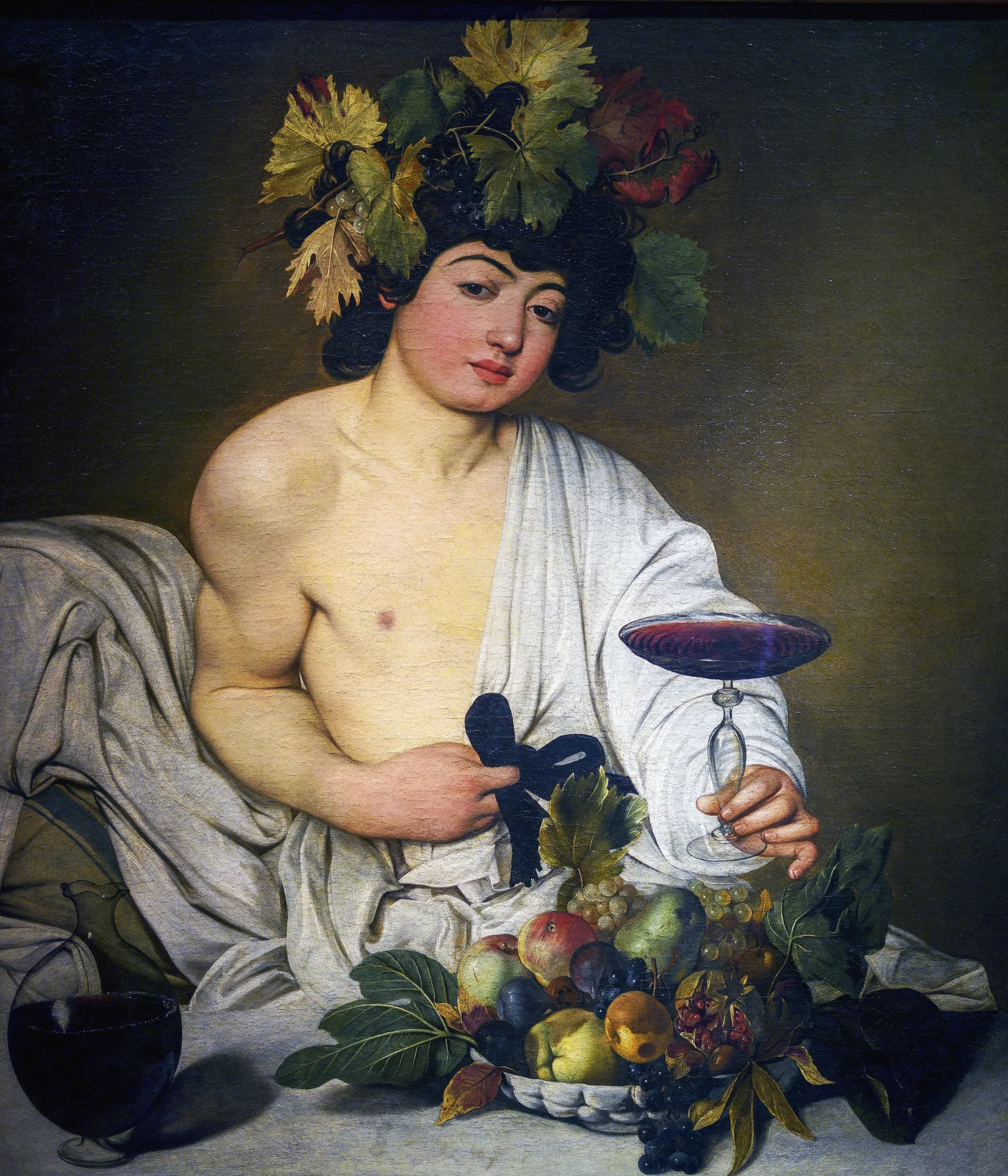
「一杯どうぞ」とさし出すグラス。ガラスびんに画家の顔がかくれている!?He offers you a glass. Is the painter's face hidden in the glass jug?
この作品のお話
Storyブドウの葉のかんむりをつけた若者が、白い布を体にまとい、ワインのグラスをこちらへさし出しています。ローマ神話のぶどう酒の神バッカスです。描いたのはイタリアの画家カラヴァッジョ。1598年ごろの作品で、今はフィレンツェのウフィツィ美術館にあります。
A young man with a crown of grape leaves, wrapped in a white cloth, holds out a glass of wine toward us. He is Bacchus, the Roman god of wine. The Italian painter Caravaggio made this picture around 1598. It is now in the Uffizi Gallery in Florence.
このころカラヴァッジョは、ローマのデル・モンテ枢機卿の屋敷に住み、その援助を受けていました。神さまを、近所の若者をモデルにしたような生身の姿で描いたのが、カラヴァッジョらしさです。手前のくだものかごには虫食いのリンゴや割れたザクロもあり、若さや楽しみはいつまでも続かない、という意味がこめられているとも考えられています。
At this time, Caravaggio lived in the palace of Cardinal del Monte in Rome, who supported him. Painting a god as a real young man, like someone from the neighborhood, was typical of Caravaggio. The fruit bowl in front includes a worm-eaten apple and a split pomegranate. They may mean that youth and pleasure do not last forever.
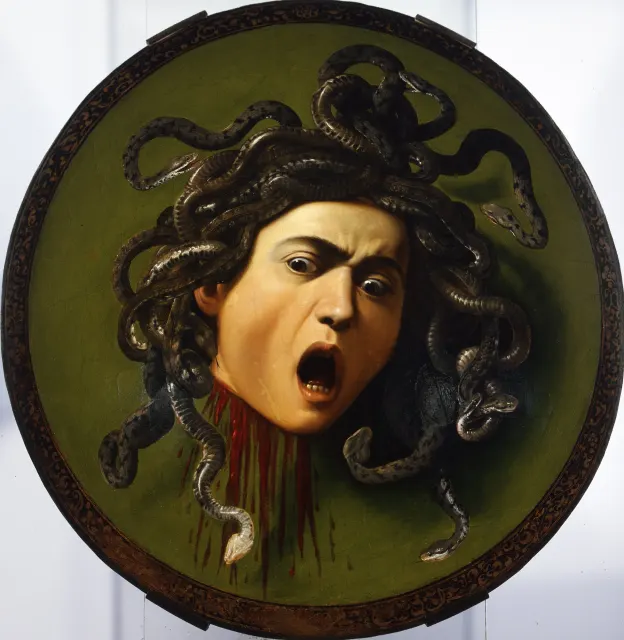
絵はデル・モンテ枢機卿からフィレンツェのメディチ家に贈られたと考えられ、同じく贈られた『メドゥーサ』とともにフィレンツェに残りました。その後長く忘れられていましたが、1913年にウフィツィ美術館の倉庫で見つかり、カラヴァッジョの作品として再び注目されるようになりました。
The painting is thought to have been a gift from Cardinal del Monte to the Medici family in Florence, together with the Medusa, and both stayed in Florence. Later it was forgotten for a long time. In 1913, it was found in the storerooms of the Uffizi, and people began to admire it again as a work by Caravaggio.
これはぶどう酒の神バッカスです。頭に葉っぱをのせています。グラスをさし出しています。テーブルにはくだもののかごがあります。いたんだくだものもまじっています!
This is Bacchus, the god of wine. He has leaves on his head. He holds out a glass. There is a bowl of fruit on the table. Some of the fruit is bad!
英語のレベルは上の「やさしい/ふつう」で切りかえられます。
えっ!?な裏ネタ
Secrets左下のガラスびんの表面には、肉眼ではほとんど見えない小さな人の顔が映っています。2009年、赤外線を使った調査の結果として、イーゼルの前で筆を持つ若いカラヴァッジョの姿だと発表されました。ただし、反対する専門家もいます。
On the surface of the glass jug at the lower left, there is a tiny face that is almost impossible to see with the naked eye. In 2009, researchers using infrared images announced that it shows young Caravaggio with a brush at his easel. However, some experts do not agree.
バッカスはグラスを左手で持っています。そのため、カラヴァッジョは鏡に映ったモデル(または自分)を見ながら描いたので、左右が逆になったのでは、という説があります。
Bacchus holds the glass in his left hand. Because of this, some think Caravaggio painted while looking at the model, or himself, in a mirror, so left and right were switched.
グラスのワインの表面をよく見ると、うすく輪のような波紋が描かれています。グラスを持つ手がかすかに動いたしゅん間をとらえたかのようです。こんな細かいところまで、カラヴァッジョは見のがしませんでした。
Look closely at the surface of the wine in the glass. You can see faint rings, like ripples. It is as if the painter caught the moment the hand moved slightly. Caravaggio did not miss even tiny details like this.
グラスを持つ指先を見ると、爪の先が黒ずんでいるように見えます。神さまなのに、身近にいるふつうの若者のようです。理想化せず、目の前の人をありのままに描くカラヴァッジョらしさがよく分かる部分です。
Look at the fingers holding the glass. The tips of the nails seem dark and dirty. He is a god, but he looks like an ordinary young man. It shows how Caravaggio painted people as they really were, without making them perfect.
ここを見て!
Look Closer1ブドウの葉のかんむりA crown of grape leaves
黄や緑のブドウの葉と黒ブドウのかんむり。ほおは少し赤くそまっています。
A crown of yellow and green leaves and dark grapes. His cheeks are a little pink.
2さし出すグラスThe offered glass
うすいガラスのグラスに赤いワイン。表面には小さな波紋が見えます。
Red wine in a thin glass. You can see small ripples on its surface.
3くだものかごThe fruit bowl
リンゴ、梨、ブドウ、ザクロ。よく見ると、いたみかけたくだものもあります。
Apples, pears, grapes and pomegranates. Look closely: some fruit is going bad.
4ガラスのワインびんThe glass wine jug
左下のワインびん。表面に小さな人の姿が映っているといわれます。
The wine jug at the lower left. A tiny figure is said to be reflected on it.
英語で名画を語ろう
Talk about Art in EnglishBacchus raises a glass of wine as if to say 'Cheers!'
バッカスは「乾杯!」と言うようにワインのグラスをかかげています。
💡 raise a glass to ~ で「〜に乾杯する」。スピーチの定番表現です。
英語で説明すると… Describe it
これはテーブルについた若い男性の絵です。白い布をまとい、葉っぱのかんむりをつけています。手には赤ワインのグラスを持っています。手前には、くだものでいっぱいのかごがあります。
This is a painting of a young man at a table. He is wearing a white cloth and a crown of leaves. In his hand, he is holding a glass of red wine. In the foreground, there is a bowl full of fruit.
考えてみよう Think & Talk
- この若者は神さまに見えますか?それはなぜ?Does he look like a god to you? Why or why not?
- 画家はなぜ、かごにいたんだくだものを入れたのだと思いますか?Why do you think the painter put rotten fruit in the bowl?
この作品の英単語
WordsBacchus offers us a glass of wine.
バッカスは私たちにワインのグラスをさし出しています。
There is a tiny reflection on the jug.
びんに小さな映りこみがあります。
Some of the fruit in the bowl looks a little rotten.
かごのくだものの中には、少しくさりかけて見えるものもあります。
Small ripples move across the wine.
ワインの表面に小さな波紋が広がっています。
ミニクイズ
QuizQ. 左下のガラスびんに見つかったといわれるものは?What is said to be found on the glass jug at the lower left?
赤外線調査で、画家本人ともいわれる小さな人の姿が見つかったと発表されました。
An infrared study reported a tiny figure, possibly the painter himself.
ウソ?ホント? この絵は1913年に、ウフィツィ美術館の倉庫で見つかった。This painting was found in the Uffizi storerooms in 1913.
長く忘れられていましたが、倉庫で再発見されました。
It had been forgotten for a long time until it was found again.
ウソ?ホント? バッカスは右手でグラスを持っている。Bacchus holds the glass in his right hand.
左手で持っています。鏡を使って描いたという説もあります。
He holds it in his left hand. Some think the painter used a mirror.
 画像の出典とライセンス / Image credit
- PDBacchus by Caravaggio 1.jpg(Wikimedia Commons)
ライセンス:Public domain(パブリックドメイン)/作者・撮影者の表記:Caravaggio
この作品は、作者の死後長い年月がたち著作権の保護期間が終わった「パブリックドメイン」の作品です。画像は平面の作品を忠実に写したもので、新しい著作権は生じません(Wikimedia Commons の PD-Art の考え方)。 所蔵:ウフィツィ美術館(Uffizi Gallery)。画像は表示のために縮小・WebP 形式に変換しています。
カラヴァッジョのほかの作品