 ワークシート
 ぬりえ
 迷路
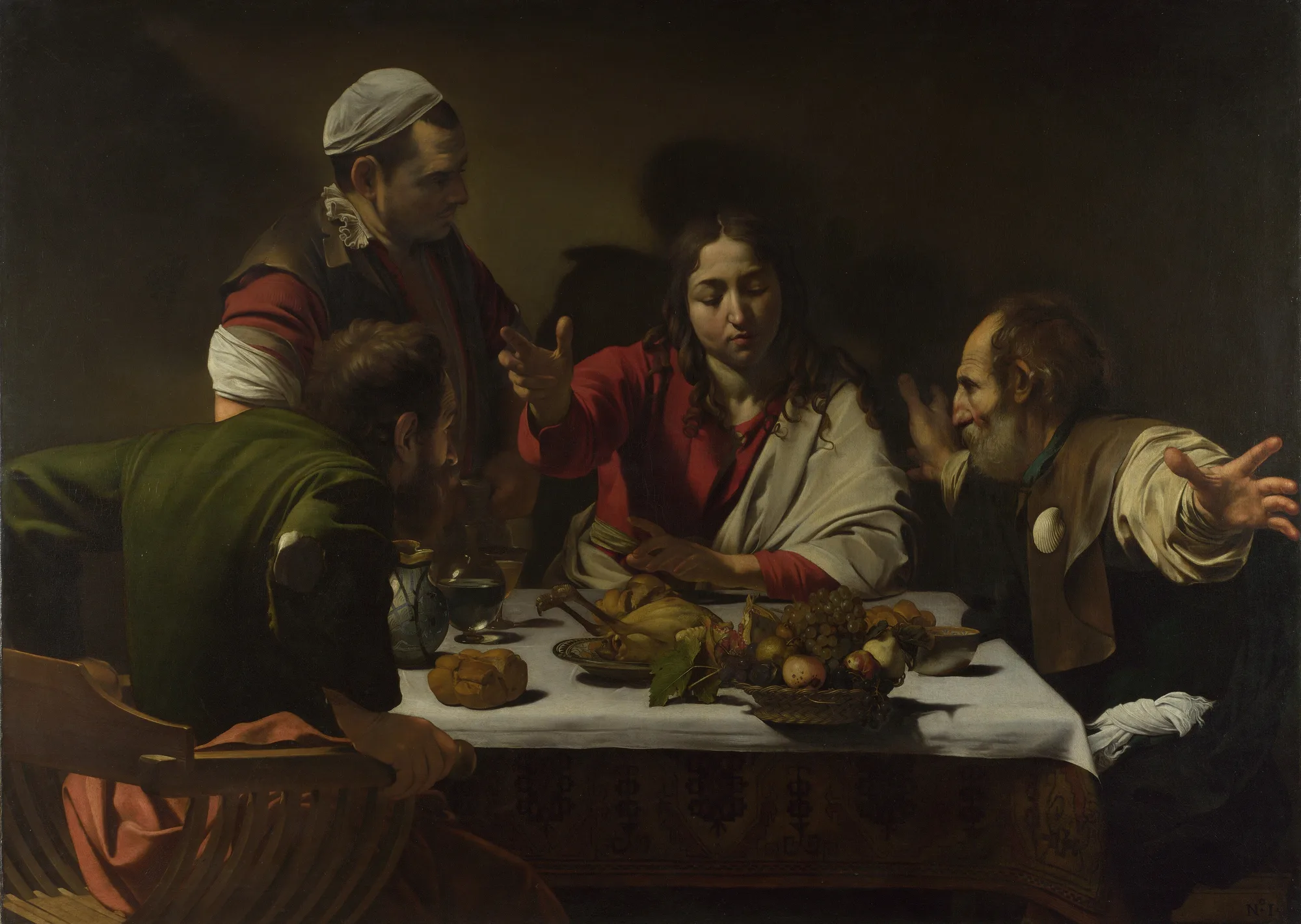
「あっ、この人は!」おどろきの一瞬。落ちそうな果物かごにも注目。'It's him!' A moment of shock, and a fruit basket about to fall.
この作品のお話
Story「エマオの晩餐」は、カラヴァッジョが1601年に描いた、聖書の一場面です。イエスが復活したあと、エマオという村へ向かう2人の弟子が、旅人と出会って夕食にさそいました。旅人がパンを祝福したそのとき、弟子たちは「この人はイエスだ!」と気づきます。その、おどろきの一瞬をとらえた絵です。人物はほぼ実物大で、暗い背景から強い光にうかび上がります。
The Supper at Emmaus, painted by Caravaggio in 1601, shows a scene from the Bible. After Jesus rose from the dead, two of his followers were walking to a village called Emmaus. They met a traveler and invited him to dinner. When he blessed the bread, they suddenly realized: 'It's Jesus!' This painting catches that moment of surprise. The figures are almost life-size and stand out from a dark background in strong light.
注文したのはローマの貴族チリアコ・マッテイです。右の弟子は両腕を大きく広げ、その手はまるで絵から飛び出してくるよう。左の弟子は、今にもいすから立ち上がろうとしています。そのとなりで、宿の主人だけは何も気づかずに立っています。めずらしいのは、イエスにひげがないこと。聖書の「別の姿で現れた」という一文をふまえたとも考えられています。
It was ordered by Ciriaco Mattei, a nobleman in Rome. The follower on the right spreads his arms wide, and his hand seems to reach out of the picture. The one on the left is about to jump up from his chair. Next to them, only the innkeeper stands calmly, without noticing anything. Unusually, Jesus has no beard. This may be because the Bible says he appeared 'in another form'.
この絵は1839年にロンドン・ナショナル・ギャラリーに寄贈され、今もそこにあります。カラヴァッジョは1606年、同じ場面をもう一度描きました(ミラノのブレラ美術館所蔵)。そちらは身ぶりがおさえられた、ずっとしずかな絵です。2枚をくらべると、画家の人生の変化も見えてきます。
The painting was given to the National Gallery in London in 1839, and it is still there. Caravaggio painted the same scene again in 1606 (now in the Brera Gallery in Milan). That version is much quieter, with smaller gestures. Comparing the two shows us how the artist's life had changed.
2人の男が旅人と夕食を食べています。とつぜん、2人は旅人がだれなのかに気づきます。イエスだ!1人は両腕を大きく広げています。果物かごを見てください。テーブルから落ちそうです!
Two men eat dinner with a traveler. Suddenly, they see who he is. It's Jesus! One man opens his arms wide. Look at the fruit basket. It is almost falling off the table!
英語のレベルは上の「やさしい/ふつう」で切りかえられます。
えっ!?な裏ネタ
Secrets絵の中のイエスは、ふつうひげのある大人の姿で描かれます。ところがこの絵のイエスは、ふっくらしたほおの、ひげのない若者。弟子たちがすぐには気づかなかった理由を、見る人にも感じさせるしかけだと考えられています。
Jesus is usually painted with a beard. But here, he is a young man with round cheeks and no beard. This may help us feel why the followers didn't recognize him at first.
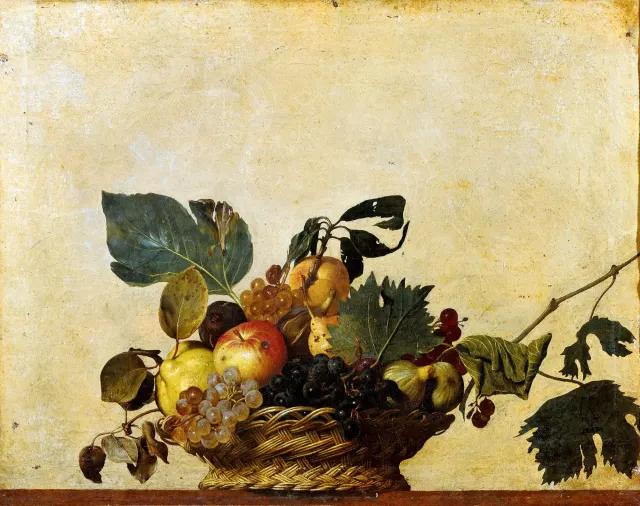
テーブルの端からはみ出して落ちそうな果物かごは、カラヴァッジョの「果物籠」(ミラノ)を思い出させます。かごやマルメロが同じものではないか、と指摘する研究者もいます。このミュージアムで見くらべてみましょう。
The fruit basket hanging over the edge of the table reminds us of Caravaggio's Basket of Fruit in Milan. Some scholars think the basket and even the quince may be the same. Compare them in this museum!
1606年、カラヴァッジョはローマでのけんかで相手を死なせてしまい、町から逃げ出しました。ミラノにある2枚目の「エマオの晩餐」は、その直後に描かれたものです。派手な身ぶりが消えたしずかな画面に、画家の心の変化を見る人もいます。
In 1606, Caravaggio killed a man in a fight in Rome and ran away from the city. The second Supper at Emmaus, now in Milan, was painted soon after. Some people see a change in his feelings in its quiet, simple scene.
右の弟子の胸には、白いホタテ貝がついています。これは聖地をめぐる巡礼者のしるし。スペインのサンティアゴ・デ・コンポステーラへの巡礼者が身につけたことで知られています。
The follower on the right wears a white scallop shell on his chest. It is a badge of pilgrims, people who travel to holy places. It is especially known as a sign of pilgrims to Santiago de Compostela in Spain.
ここを見て!
Look Closer1ひげのないイエスBeardless Jesus
目をふせ、パンを祝福する若いイエス。光が顔と赤い服を照らしています。
The young Jesus looks down and blesses the bread. Light falls on his face and red clothes.
2広げた腕Outstretched arms
おどろいて両腕を広げる弟子。手前の手が、絵から飛び出してきそうです。
A follower throws his arms open in surprise. His near hand seems to come out of the picture.
3落ちそうな果物かごBasket on the edge
テーブルの端からはみ出した果物かご。白いテーブルクロスに影を落としています。
The fruit basket hangs over the edge of the table and casts a shadow on the white cloth.
4ホタテ貝Scallop shell
右の弟子の胸にある白いホタテ貝。巡礼者のしるしです。
A white scallop shell on the chest of the follower on the right. It is a pilgrim's badge.
英語で名画を語ろう
Talk about Art in EnglishAt that moment, the two men realize who the traveler is.
その瞬間、2人は旅人がだれなのかに気づきます。
💡 realize は「頭でわかる・はっと気づく」。notice は「目や耳で気づく」。使い分けに注意。
英語で説明すると… Describe it
暗い部屋で、4人の男がテーブルのまわりにいます。まん中では、赤い服の若者が手を上げています。右では、老人が両腕を大きく広げています。手前には、テーブルの端に果物かごがあります。
Four men are at a table in a dark room. In the center, a young man in red is raising his hand. On the right, an old man is opening his arms wide. In the foreground, there is a basket of fruit on the edge of the table.
考えてみよう Think & Talk
- カラヴァッジョはなぜ、果物かごをテーブルのぎりぎり端に置いたのだと思いますか?Why do you think Caravaggio put the basket right on the edge of the table?
- 宿の主人を見てください。なぜ彼だけ何も気づいていないのだと思いますか?Look at the innkeeper. Why do you think he doesn't notice anything?
この作品の英単語
WordsThey invited the traveler to supper.
彼らは旅人を夕食にさそいました。
Suddenly, they recognize Jesus.
とつぜん、彼らはイエスだと気づきます。
The man on the right is very surprised.
右の男性はとてもおどろいています。
Two followers are sitting at the table.
2人の弟子がテーブルについています。
ミニクイズ
QuizQ. この絵のイエスの姿でめずらしいところは?What is unusual about Jesus in this painting?
ふつうはひげのある姿で描かれるイエスが、ひげのない若者として描かれています。
Jesus is usually painted with a beard, but here he is a young man without one.
ウソ?ホント? カラヴァッジョは、エマオの晩餐の場面を2回描いた。Caravaggio painted the Supper at Emmaus twice.
1601年のロンドンの作品と、1606年のミラノの作品があります。
There is the 1601 version in London and the 1606 version in Milan.
ウソ?ホント? 宿の主人も、旅人がイエスだと気づいてひざまずいている。The innkeeper also recognizes Jesus and kneels down.
宿の主人は立ったままで、何も気づいていない様子です。
The innkeeper is standing and doesn't seem to notice anything.
 画像の出典とライセンス / Image credit
- PD1602-3 Caravaggio,Supper at Emmaus National Gallery, London.jpg(Wikimedia Commons)
ライセンス:Public domain(パブリックドメイン)/作者・撮影者の表記:Caravaggio/提供元:National Gallery, London web site
この作品は、作者の死後長い年月がたち著作権の保護期間が終わった「パブリックドメイン」の作品です。画像は平面の作品を忠実に写したもので、新しい著作権は生じません(Wikimedia Commons の PD-Art の考え方)。 所蔵:ロンドン・ナショナル・ギャラリー(The National Gallery)。画像は表示のために縮小・WebP 形式に変換しています。
カラヴァッジョのほかの作品