 ワークシート
 ぬりえ
 迷路
負けた相手の肩をそっと抱く!戦争画なのにやさしい名場面。A hand on the loser's shoulder! A war painting full of kindness.
この作品のお話
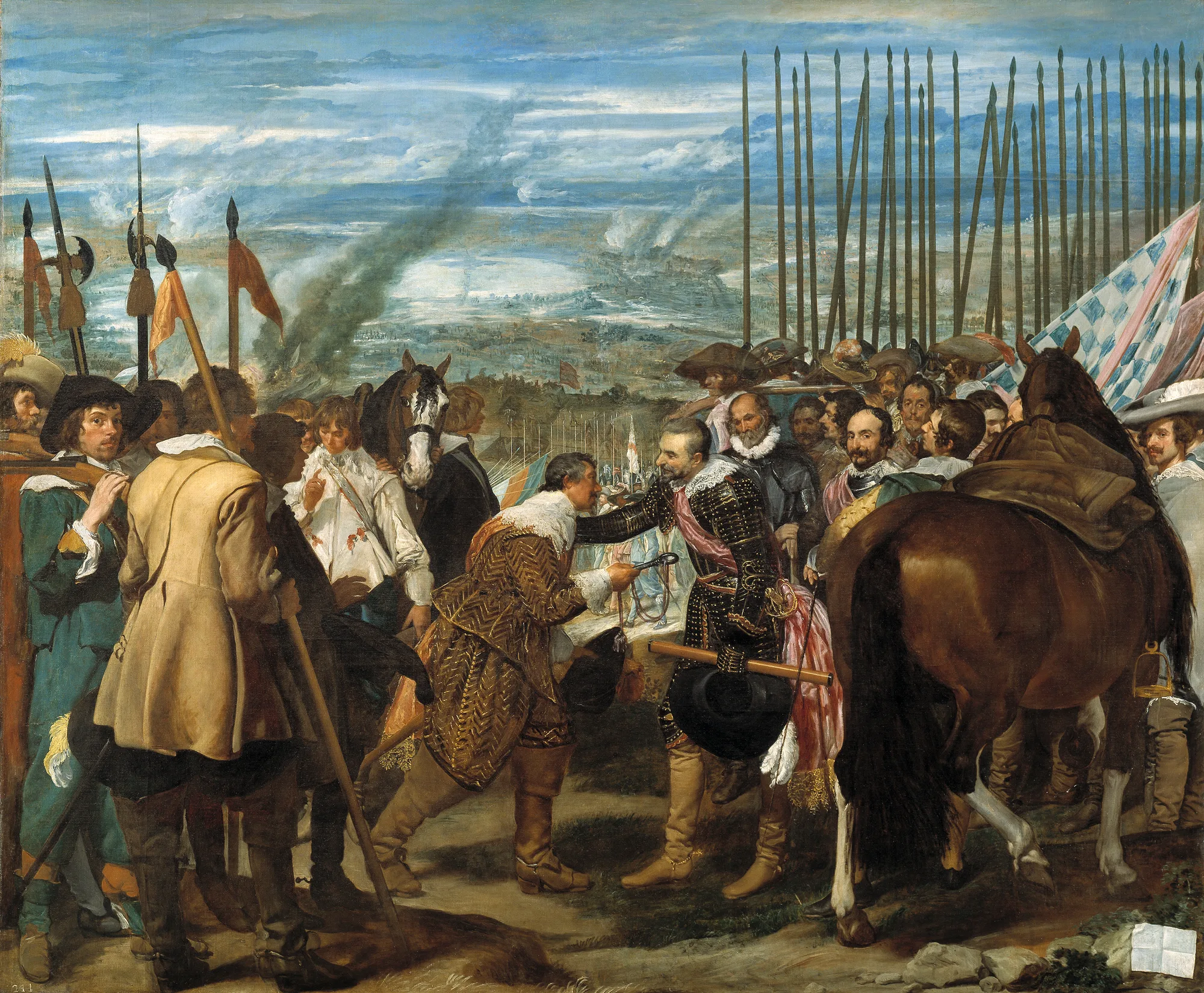
Story1625年、オランダの町ブレダが、長い包囲戦のすえにスペイン軍に降伏した場面です。中央で町の鍵を渡しているのがオランダ側のユスティヌス・ファン・ナッサウ、受け取るのがスペインの将軍アンブロジオ・スピノラ。スピノラは、ひざまずこうとする相手の肩に手をかけて、それを止めています。勝った側が負けた側の誇りを守る、礼儀正しい瞬間です。
This painting shows the Dutch town of Breda surrendering to the Spanish army in 1625 after a long siege. In the center, Justin of Nassau hands over the key of the town. The Spanish general Ambrogio Spinola receives it. Spinola puts his hand on Justin's shoulder to stop him from kneeling. The winner protects the loser's pride. It is a moment of respect.
スペイン国王フェリペ4世は、マドリードのブエン・レティーロ宮殿に「諸王国の間」という大広間を作り、スペインの勝利を描いた絵で飾りました。この絵はその一枚です。宮廷画家ベラスケスは、戦いの激しさではなく、勝者と敗者の心の通いあいを主役にしました。はるか遠くには、煙の上がる戦場が広がっています。
King Philip IV of Spain built a great hall called the Hall of Realms in the Buen Retiro Palace in Madrid. He decorated it with paintings of Spanish victories, and this is one of them. The court painter Velázquez did not focus on the violence of battle. Instead, he showed the human connection between the winner and the loser. Far in the background, smoke rises over the battlefield.
右側に林のように立ちならぶスペイン兵の槍から、この絵は「槍(ラス・ランサス)」とも呼ばれます。左側のオランダ兵の武器はまばらで、勝ち負けの差がひと目でわかります。ところがブレダは、1637年にオランダが取り返してしまいます。絵が完成してから、わずか2年ほど後のことでした。今はマドリードのプラド美術館にあります。
Because of the forest of Spanish lances on the right, the painting is also called "Las Lanzas" (The Lances). On the left, the Dutch soldiers have only a few weapons, so you can see who won at a glance. But the Dutch took Breda back in 1637, only about two years after the painting was finished. Today it is in the Prado Museum in Madrid.
これは長い包囲戦が終わる場面です。オランダの指揮官が、スペインの将軍に町の鍵を渡しています。でも、将軍はやさしい人です。ひざまずこうとする相手を止めています。右側の長い槍をたくさん見てみましょう!
This is the end of a long siege. A Dutch leader gives the key of his town to a Spanish general. But the general is kind. He stops the man from kneeling. Look at all the long lances on the right!
英語のレベルは上の「やさしい/ふつう」で切りかえられます。
えっ!?な裏ネタ
Secretsベラスケスは1629年、初めてのイタリア旅行に出かけるとき、スピノラ将軍と同じ船でバルセロナを出発しました。画家は、実際に会った将軍の顔を思い出しながら描けたのです。スピノラは翌1630年に亡くなっており、この絵には将軍への追悼の気持ちもこめられていると言われます。
In 1629, Velázquez left Barcelona on his first trip to Italy on the same ship as General Spinola. So the painter knew the general's face in person. Spinola died in 1630, and it is said the painting was also a tribute to him.
右下の地面に、白い紙が一枚落ちています。ふつうならサインや説明を書きこむ場所ですが、この紙は白いまま。ベラスケスがなぜ何も書かなかったのかはわかっておらず、今も小さななぞになっています。
At the lower right, a white sheet of paper lies on the ground. Painters often put a signature on a paper like this, but this one is blank. Nobody knows why Velázquez left it empty.
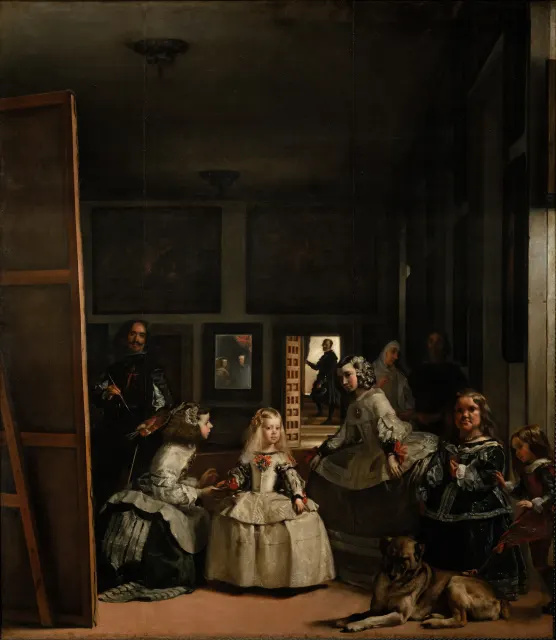
いちばん右はしで、大きな帽子をかぶってこちらを見ている男性は、ベラスケス自身の自画像ではないかと言われています。のちに描いた『ラス・メニーナス』と同じように、さりげなく絵の中に入りこんでいるのかもしれません。
The man at the far right edge, wearing a big hat and looking out at us, may be a self-portrait of Velázquez. As in his later work "Las Meninas," he might have quietly painted himself into the scene.
「諸王国の間」には、スペインの勝利を描いた戦争画がいくつも並び、スルバランら当時の名画家たちがそれぞれ担当しました。ベラスケスはほかに、王家の人々の騎馬肖像も描いています。その中で今いちばん有名なのが、この絵です。
The Hall of Realms showed several battle scenes by different artists, including Zurbarán. Velázquez also painted portraits of the royal family on horseback for the hall. Of all these works, this one is the most famous today.
ここを見て!
Look Closer1町の鍵The key of the town
降伏のしるしに手渡される、ブレダの町の鍵。絵のちょうど中心にあります。
The key of Breda is handed over as a sign of surrender. It is right in the center of the painting.
2槍の林Forest of lances
まっすぐ立ちならぶスペイン兵の槍。別名「ラス・ランサス(槍)」の由来です。
The Spanish soldiers' lances stand straight up. They give the painting its other name, "Las Lanzas."
3白い紙Blank paper
地面に落ちた白い紙。サインを書く場所のようですが、何も書かれていません。
A white paper on the ground. It looks like a place for a signature, but it is blank.
4右はしの男Man at the far right
大きな帽子でこちらを見る男性。ベラスケス本人という説があります。
A man in a big hat looks at us. Some say he is Velázquez himself.
英語で名画を語ろう
Talk about Art in EnglishThe Dutch leader hands over the key of the town.
オランダの指揮官が、町の鍵を引き渡しています。
💡 hand は動詞で「手渡す」。hand over は物や責任を正式に「引き渡す」ときに使います。
英語で説明すると… Describe it
この絵には、二つの兵士のグループがいます。まん中では、茶色の服の男性が、よろいを着た男性に鍵を渡しています。右側には、たくさんの長い槍と大きな馬がいます。奥では、広い戦場から煙が上がっています。
There are two groups of soldiers in this painting. In the middle, a man in brown is giving a key to a man in armor. On the right, there are many tall lances and a big horse. In the background, smoke rises from a wide battlefield.
考えてみよう Think & Talk
- 勝った人が負けた人にやさしくしているのはなぜだと思いますか?Why do you think the winner is being kind to the loser?
- この絵から、勝ち負けについてどんなことが学べるでしょうか?What can we learn from this painting about winning and losing?
この作品の英単語
WordsThe town surrendered after a long siege.
その町は長い包囲戦のあと降伏しました。
Many lances stand on the right.
右側にたくさんの槍が立っています。
The general shows respect to the loser.
将軍は負けた相手に敬意を示しています。
The Dutch leader is sad but proud.
オランダの指揮官は悲しげですが、誇り高く見えます。
ミニクイズ
QuizQ. この絵の別名「ラス・ランサス」の意味は?What does the other name "Las Lanzas" mean?
右側に林のように立ちならぶ、スペイン兵の槍から来た名前です。
The name comes from the forest of Spanish lances on the right.
ウソ?ホント? スピノラ将軍は、ひざまずこうとする相手を止めている。General Spinola stops the other man from kneeling.
肩に手をかけて、負けた相手の誇りを守っています。
He puts a hand on his shoulder and protects the loser's pride.
ウソ?ホント? ブレダは、その後ずっとスペインの町のままだった。Breda stayed a Spanish town forever after this.
1637年にはオランダが取り返しました。
The Dutch took it back in 1637.
 画像の出典とライセンス / Image credit
- PDVelazquez-The Surrender of Breda.jpg(Wikimedia Commons)
ライセンス:Public domain(パブリックドメイン)/作者・撮影者の表記:Diego Velázquez/提供元:Museo del Prado, Madrid
この作品は、作者の死後長い年月がたち著作権の保護期間が終わった「パブリックドメイン」の作品です。画像は平面の作品を忠実に写したもので、新しい著作権は生じません(Wikimedia Commons の PD-Art の考え方)。 所蔵:プラド美術館(Museo del Prado)。画像は表示のために縮小・WebP 形式に変換しています。
ディエゴ・ベラスケスのほかの作品