 ワークシート
 ぬりえ
 迷路
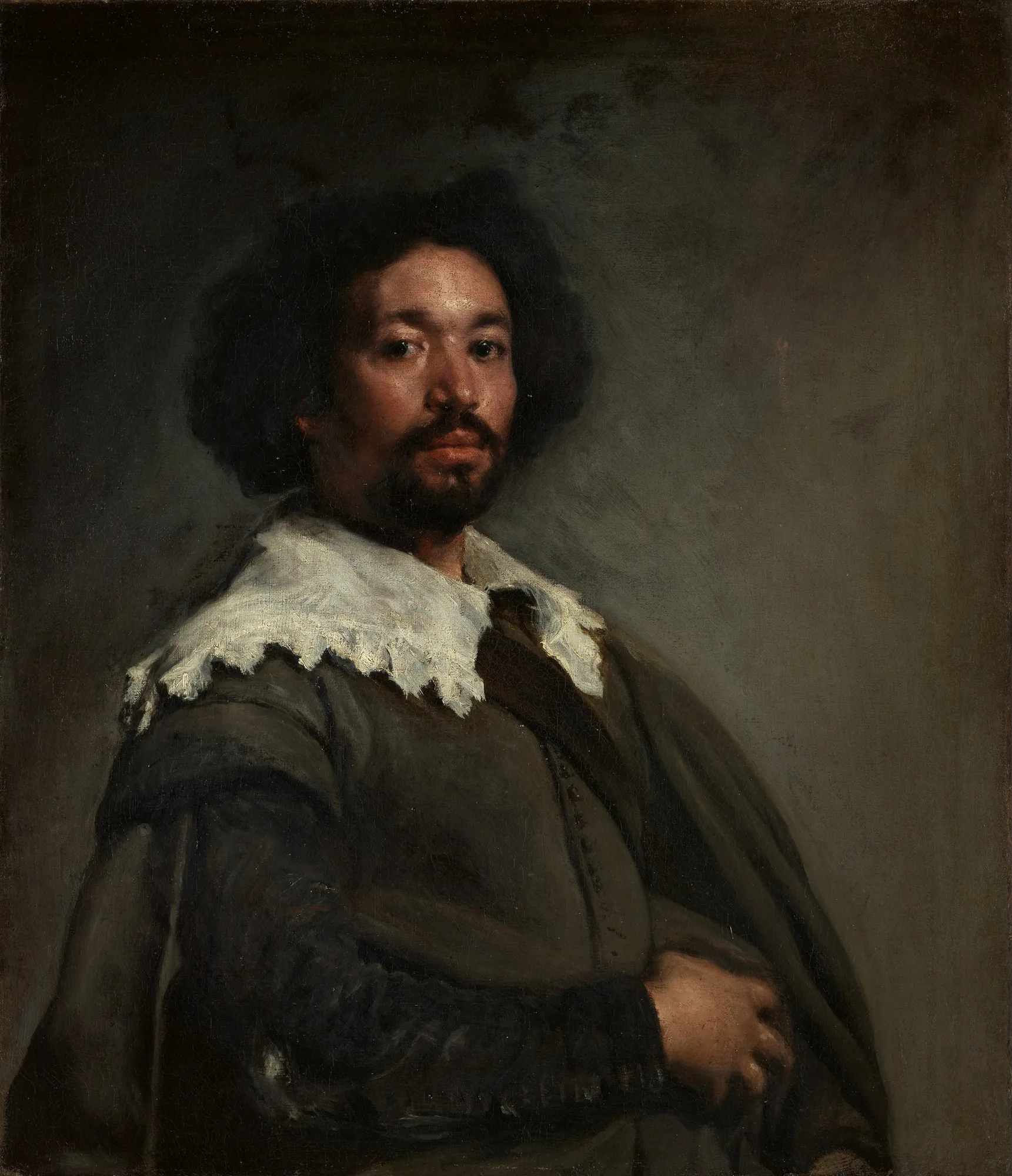
この堂々とした目を見て!奴隷として工房で働き、のちに画家となった人。Look at those proud eyes! An enslaved studio worker who later became a painter.
この作品のお話
Story1650年、ローマ。スペイン王フェリペ4世の宮廷画家ベラスケスが、自分の工房で働いていたフアン・デ・パレーハを描いた肖像です。まっすぐこちらを見る目、ふさふさの黒髪、白いレースのえり。今はニューヨークのメトロポリタン美術館にあり、ベラスケスの肖像画の中でも、特に生き生きとした一枚として知られています。
Rome, 1650. Velázquez, the court painter of King Philip IV of Spain, painted Juan de Pareja, a man who worked in his studio. Look at his direct gaze, his thick black hair and his white lace collar. The portrait is now in the Metropolitan Museum of Art in New York. It is known as one of Velázquez's most lifelike portraits.
パレーハはスペイン南部のアンテケーラ生まれで、アフリカ系の祖先をもつ人でした。当時のスペインには奴隷制があり、パレーハはベラスケスのもとで自由のない身分に置かれていました。18世紀の伝記作者パロミーノは、彼が絵の具を練ったりカンヴァスを準備したりしていたと伝えていますが、くわしい仕事の中身は記録からははっきりしません。1650年11月、ベラスケスはローマで、4年後にパレーハを自由の身にするという証書に署名しています。
Pareja was born in Antequera, in southern Spain, and had African ancestry. Slavery was legal in Spain at that time, and Pareja was enslaved by Velázquez. The 18th-century writer Palomino says he ground pigments and prepared canvases, but surviving records do not tell us exactly what work he did. In November 1650, in Rome, Velázquez signed a document that would free Pareja four years later.
自由になったパレーハは、自分の名前で絵を描く画家になりました。マドリードのプラド美術館にある彼の作品『聖マタイの召命』には、彼自身の姿も描きこまれています。この肖像は長くイギリスの貴族の家にありましたが、1970年にメトロポリタン美術館が競売で落札し、翌1971年に同館の所蔵品となりました。2023年には同館で、パレーハの生涯と作品を紹介する初の大規模な展覧会も開かれました。
After he became free, Pareja worked as a painter under his own name. His painting 'The Calling of Saint Matthew', now in the Prado Museum in Madrid, even includes a picture of himself. This portrait stayed with an English noble family for a long time. The Metropolitan Museum bought it at auction in 1970, and it entered the collection in 1971. In 2023, the museum held the first major exhibition about Pareja's life and art.
この人はフアン・デ・パレーハ。画家ベラスケスのもとで働いていました。そのころ、彼は自由ではありませんでした。のちに自由になり、彼も画家になりました。力強い目を見てください!
This man is Juan de Pareja. He worked for the painter Velázquez. He was not free at that time. Later he became free and became a painter too. Look at his strong eyes!
英語のレベルは上の「やさしい/ふつう」で切りかえられます。
えっ!?な裏ネタ
Secrets18世紀の画家伝を書いたパロミーノによると、ベラスケスはローマ教皇インノケンティウス10世の肖像を描く前に、筆ならしとしてこの絵を描いたそうです。ローマのパンテオンで飾られると、画家たちが「ほかは絵だが、これだけは本物だ」とほめたと伝えられます。
According to Palomino, who wrote about painters' lives in the 18th century, Velázquez painted this as practice before painting Pope Innocent X. When it was shown at the Pantheon in Rome, artists are said to have praised it: everything else was painting, but this alone was truth.
1970年、ロンドンのオークションで、この絵は231万ポンド(当時およそ550万ドル)で落札されました。これは当時、オークションで売られた絵の最高額でした。買ったのはメトロポリタン美術館です。
In 1970, this painting sold at an auction in London for 2.31 million pounds, about 5.5 million dollars at the time. It was then the highest price ever paid for a painting at auction. The buyer was the Metropolitan Museum of Art.
パレーハの人生をもとにした小説『わたしはフアン・デ・パレーハ』(エリザベス・ボートン・デ・トレビーニョ作)は、1966年にアメリカの児童文学賞ニューベリー賞を受けました。小説なので、事実と想像がまじっています。
A novel based on Pareja's life, 'I, Juan de Pareja' by Elizabeth Borton de Treviño, won the Newbery Medal, an American prize for children's books, in 1966. It is a novel, so it mixes facts with imagination.
パレーハの代表作『聖マタイの召命』(1661年)では、画面の左はしに彼自身が立ち、名前の書かれた紙を手にしています。かつてベラスケスに描かれた男が、今度は自分の筆で自分を描いたのです。
In Pareja's best-known work, 'The Calling of Saint Matthew' (1661), he painted himself standing at the left edge. He holds a piece of paper with his name on it. The man once painted by Velázquez now painted himself with his own brush.
ここを見て!
Look Closer1まっすぐな目A direct gaze
少し顔をかたむけ、こちらを見すえる目。光がひたいと鼻すじを照らし、今にも話し出しそうです。
His head is turned a little, and his eyes look right at us. Light falls on his forehead and nose. He seems ready to speak.
2レースのえりLace collar
白いえりは、近くで見るとざっくりした筆あとの集まり。少しはなれると、レースのやわらかさが見えてきます。
Up close, the white collar is just rough brushstrokes. Step back, and it turns into soft lace.
3手His hand
暗いマントの中から、手だけがふっと浮かび上がります。数回の筆で形をとらえています。
His hand appears out of the dark cloak. Velázquez shaped it with just a few strokes.
英語で名画を語ろう
Talk about Art in EnglishJuan de Pareja looks at us with dignity.
フアン・デ・パレーハは堂々とこちらを見ています。
💡 dignity は「尊厳・威厳」。誇り高い人物の様子を言うときの定番表現です。
英語で説明すると… Describe it
これは男の人の肖像画です。ふさふさの黒髪に、口ひげとあごひげがあります。大きな白いレースのえりのついた、暗い色の上着を着ています。まっすぐこちらを見ています。背景は灰色で、何も描かれていません。
This is a portrait of a man. He has thick black hair, a mustache and a beard. He wears a dark coat with a big white lace collar. He is looking straight at us. The background is plain and gray.
考えてみよう Think & Talk
- この肖像のフアン・デ・パレーハは、どんな気持ちだと思いますか?What do you think Juan de Pareja is feeling in this portrait?
- ベラスケスはなぜ、パレーハをこんなにていねいに描いたのだと思いますか?Why do you think Velázquez painted Pareja so carefully?
この作品の英単語
WordsHis face is full of dignity.
彼の顔は威厳にあふれています。
Pareja was enslaved for many years.
パレーハは長いあいだ、自由をうばわれていました。
Pareja got his freedom and became a painter.
パレーハは自由を手にし、画家になりました。
Velázquez portrayed him as a proud man.
ベラスケスは彼を誇り高い人として描きました。
ミニクイズ
QuizQ. ベラスケスがこの絵を描いた町は?In which city did Velázquez paint this?
2度目のイタリア旅行中、1650年にローマで描きました。
He painted it in Rome in 1650, during his second trip to Italy.
ウソ?ホント? パレーハは、のちに自分の名前で絵を描く画家になった。Pareja later became a painter under his own name.
自由になったあと画家として活動し、プラド美術館に作品が残っています。
After he became free, he worked as a painter. His work is in the Prado Museum.
ウソ?ホント? この絵は描かれてからずっとメトロポリタン美術館にある。This painting has been in the Metropolitan Museum since it was painted.
長くイギリスの貴族の家にあり、1970年に美術館が競売で買い取りました。
It was with an English noble family for a long time. The museum bought it at auction in 1970.
 画像の出典とライセンス / Image credit
- PDRetrato de Juan Pareja, by Diego Velázquez.jpg(Wikimedia Commons)
ライセンス:Public domain(パブリックドメイン)/作者・撮影者の表記:Diego Velázquez
この作品は、作者の死後長い年月がたち著作権の保護期間が終わった「パブリックドメイン」の作品です。画像は平面の作品を忠実に写したもので、新しい著作権は生じません(Wikimedia Commons の PD-Art の考え方)。 所蔵:メトロポリタン美術館(The Metropolitan Museum of Art)。画像は表示のために縮小・WebP 形式に変換しています。
ディエゴ・ベラスケスのほかの作品