 ワークシート
 ぬりえ
 迷路
グラスの底はイチジク、それとも気泡!?20歳ごろの天才が描いた水売り。A fig in the glass, or a bubble? A water seller painted by a genius of about 20.
この作品のお話
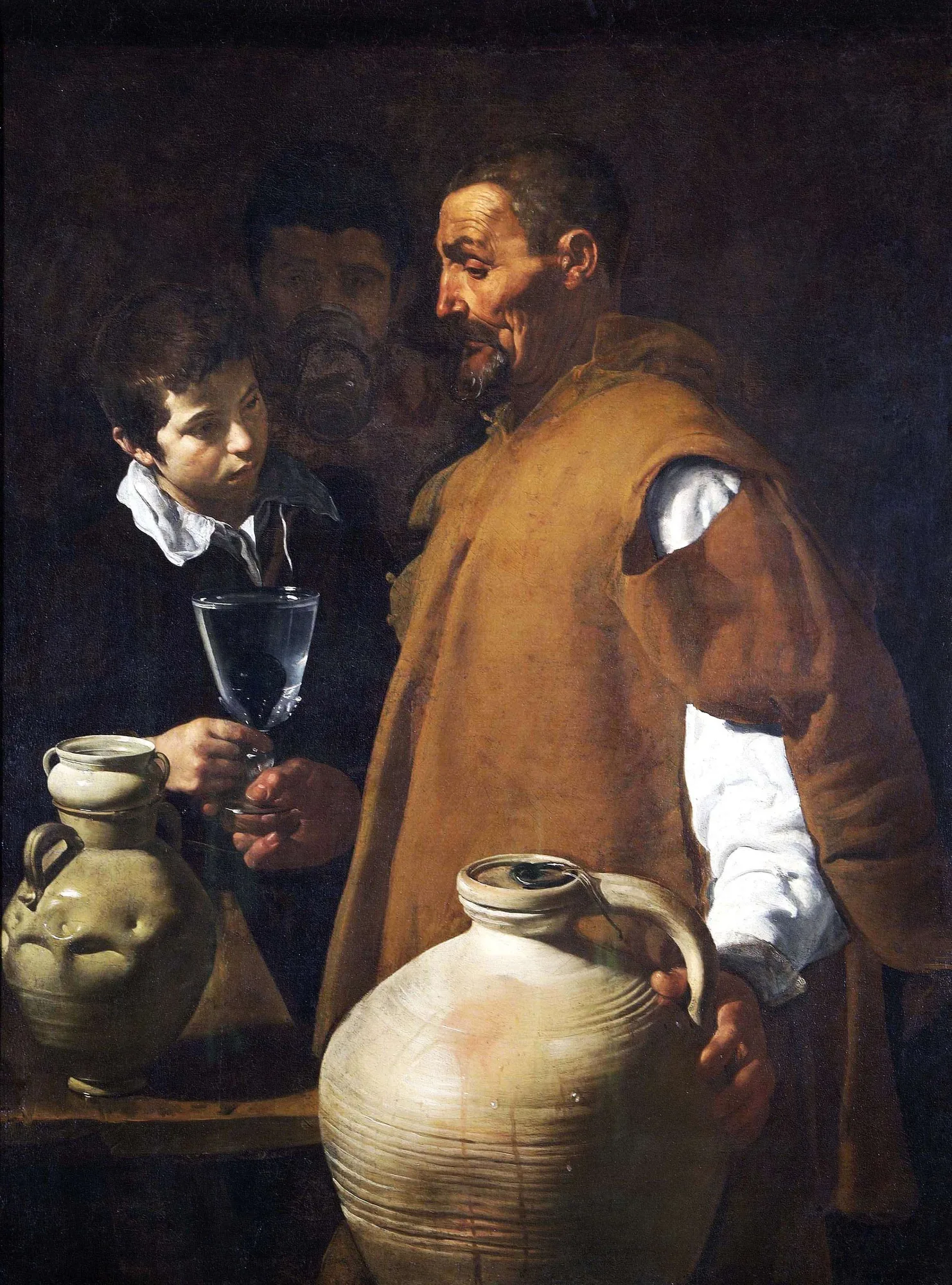
Storyスペイン南部の町セビーリャで、水を売る老人が少年に水のグラスを手わたしています。奥のうす暗がりでは、もう一人の男が水を飲んでいます。ベラスケスが20歳前後で描いた作品で、今はロンドンのアプスリー・ハウス(ウェリントン公爵の旧邸)にあります。暗い背景から人と物が浮かび上がる、静かで重みのある一枚です。
In Seville, a city in southern Spain, an old water seller hands a glass of water to a boy. In the shadows behind them, another man is drinking. Velázquez painted this when he was about 20. It is now in Apsley House in London, the old home of the Duke of Wellington. People and objects glow out of the dark background.
暑いセビーリャでは、水売りは町の暮らしに欠かせない仕事でした。若いベラスケスは、台所や町の人々を描く「ボデゴン」という絵を得意にしていました。強い光と深い影を使い、ざらざらの陶器、すきとおったガラス、しわの深い顔を、さわれそうなほどリアルに描き分けています。1623年、彼はこの絵をマドリードへ持って行きました。
Seville is a hot city, and water sellers were an important part of daily life there. Young Velázquez was good at 'bodegones', pictures of kitchens and ordinary people. Using strong light and deep shadow, he painted rough pottery, clear glass and a deeply lined face so well that you want to touch them. In 1623, he took this painting with him to Madrid.
その後、絵はスペイン王家のコレクションに入りました。1813年、スペインから引き上げるナポレオンの兄ジョゼフ・ボナパルトの荷物の中にこの絵があり、ビトリアの戦いでイギリスのウェリントン公爵の軍がそれを手に入れます。ウェリントンは返そうとしましたが、スペイン王フェルナンド7世はそのまま贈りものにしました。こうして絵はロンドンに残ったのです。
Later, the painting joined the Spanish royal collection. In 1813, it was in the baggage of Joseph Bonaparte, Napoleon's brother, as he left Spain. At the Battle of Vitoria, the Duke of Wellington's army captured it. Wellington offered to send it back, but King Ferdinand VII of Spain let him keep it as a gift. That is why it is in London today.
老人が水を売っています。少年にグラスをわたしています。グラスの中の黒いものはイチジク?それとも気泡?ベラスケスは20歳くらいでした。水やガラスや土のつぼを、とても上手に描きました。
An old man sells water. He gives a glass to a boy. Is that a fig in the glass, or a bubble? Velázquez was about 20 years old. He painted the water, glass and clay very well.
英語のレベルは上の「やさしい/ふつう」で切りかえられます。
えっ!?な裏ネタ
Secrets少年が受けとるグラスの底には、黒っぽい丸い形が見えます。ふつうはイチジクの実と考えられていて、水に香りやさわやかさを加えるために入れたといわれます。一方で、高価なガラスの中にできた気泡だという説もあり、正体はまだ決着していません。
A dark round shape can be seen at the bottom of the boy's glass. It is usually thought to be a fig, which people are said to have put in water to give it a fresh taste. Others think it is a bubble inside the costly glass. No one knows for sure.
1813年のビトリアの戦いで、逃げるジョゼフ王の馬車から、王家の名画がたくさんイギリス軍の手にわたりました。この絵もその一枚。戦争がなければ、今もマドリードにあったかもしれません。
At the Battle of Vitoria in 1813, the British army took many royal paintings from King Joseph's carriages as he fled. This was one of them. Without that war, it might still be in Madrid.
手前の大きな水がめには、水のしずくが流れています。素焼きのかめは水が少しずつしみ出し、表面で蒸発するときに熱をうばうので、中の水が冷たく保たれます。絵からも冷たさが伝わってくるようです。
Drops of water run down the big jar in front. Water slowly seeps through unglazed clay. When it dries on the surface, it takes heat away, so the water inside stays cool. You can almost feel the coolness.
少年、奥で水を飲む若い男、そして老人。この3人で、子ども・大人・老人という人生の段階を表しているという説もあります。水を手わたす場面は、知恵を次の世代へわたすたとえだと読む人もいます。
A boy, a young man drinking in the back and an old man. Some people think the three show the stages of life: youth, adulthood and old age. Others see the passing of the glass as passing wisdom to the next generation.
ここを見て!
Look Closer1水売りの老人The old water seller
しわの深い横顔に、強い光が当たっています。茶色の上着はすり切れていて、働き者の暮らしが伝わります。
Strong light falls on his deeply lined face. His brown coat is worn out. You can sense a life of hard work.
2底に黒い形があるグラスGlass with a dark shape
すきとおったグラスの底に黒い形が見えます。イチジクという説と、ガラスの中の気泡という説があります。ガラスの光り方まで、みごとに描かれています。
A dark shape sits at the bottom of the clear glass. It may be a fig, or it may be a bubble in the glass. Even the shine on the glass is painted perfectly.
3大きな水がめThe big water jar
ろくろの線が残る素焼きのかめ。表面を水のしずくがつたって流れています。
An unglazed clay jar with lines from the potter's wheel. Drops of water run down its side.
4奥で水を飲む男The man drinking in the back
暗がりの中で、水差しから水を飲む男。よく見ないと気づかない「3人目」です。
In the shadows, a man drinks from a jug. He is the 'third person' you might miss.
英語で名画を語ろう
Talk about Art in EnglishThe old man is offering a glass of water to the boy.
老人は少年に水のグラスを差し出しています。
💡 offer は「どうぞと差し出す・勧める」。手わたす場面をていねいに説明できます。
英語で説明すると… Describe it
手前には大きな素焼きのかめがあります。その後ろに茶色の上着の老人が立っています。老人は左の少年に水のグラスをわたしています。奥の暗がりでは、もう一人の男が水を飲んでいます。
In the foreground, there is a big clay jar. An old man in a brown coat is standing behind it. He is giving a glass of water to a boy on the left. In the background, another man is drinking in the shadows.
考えてみよう Think & Talk
- ベラスケスはなぜ、ふつうの水売りをこんなにていねいに描いたのだと思いますか?Why do you think Velázquez painted a simple water seller so carefully?
- 老人の顔から、どんな暮らしをしてきた人だと想像できますか?What does the old man's face tell you about his life?
この作品の英単語
WordsThe big jar keeps the water cool.
大きなかめが水を冷たく保ちます。
Many people think the dark shape in the glass is a fig.
多くの人は、グラスの中の黒い形をイチジクだと考えています。
The clay jar looks rough.
素焼きのかめはざらざらして見えます。
Wellington's army captured the painting in 1813.
1813年、ウェリントンの軍がこの絵を手に入れました。
ミニクイズ
QuizQ. 1813年、この絵はだれの荷物の中から見つかった?In 1813, whose baggage was this painting found in?
スペインから引き上げるジョゼフ・ボナパルトの荷物にあり、ウェリントンの軍が手に入れました。
It was in Joseph Bonaparte's baggage as he left Spain. Wellington's army captured it.
ウソ?ホント? 少年のグラスの底には、黒い形が見える。A dark shape can be seen at the bottom of the boy's glass.
イチジクだといわれますが、ガラスの中の気泡だという説もあります。
It is usually called a fig, but some think it is a bubble in the glass.
ウソ?ホント? ベラスケスはこの絵を60歳のときに描いた。Velázquez painted this when he was 60.
20歳前後、まだセビーリャにいたころの作品です。
He was about 20 and still living in Seville.
 画像の出典とライセンス / Image credit
- PDEl aguador de Sevilla, por Diego Velázquez.jpg(Wikimedia Commons)
ライセンス:Public domain(パブリックドメイン)/作者・撮影者の表記:Diego Velázquez
この作品は、作者の死後長い年月がたち著作権の保護期間が終わった「パブリックドメイン」の作品です。画像は平面の作品を忠実に写したもので、新しい著作権は生じません(Wikimedia Commons の PD-Art の考え方)。 所蔵:ウェリントン・コレクション(アプスリー・ハウス)(Wellington Collection, Apsley House)。画像は表示のために縮小・WebP 形式に変換しています。
ディエゴ・ベラスケスのほかの作品