 ワークシート
 ぬりえ
 迷路
若い女性が木に変わっていく!石でとらえた「変身」の一瞬。A young woman turns into a tree! A moment of change, caught in stone.
この作品のお話
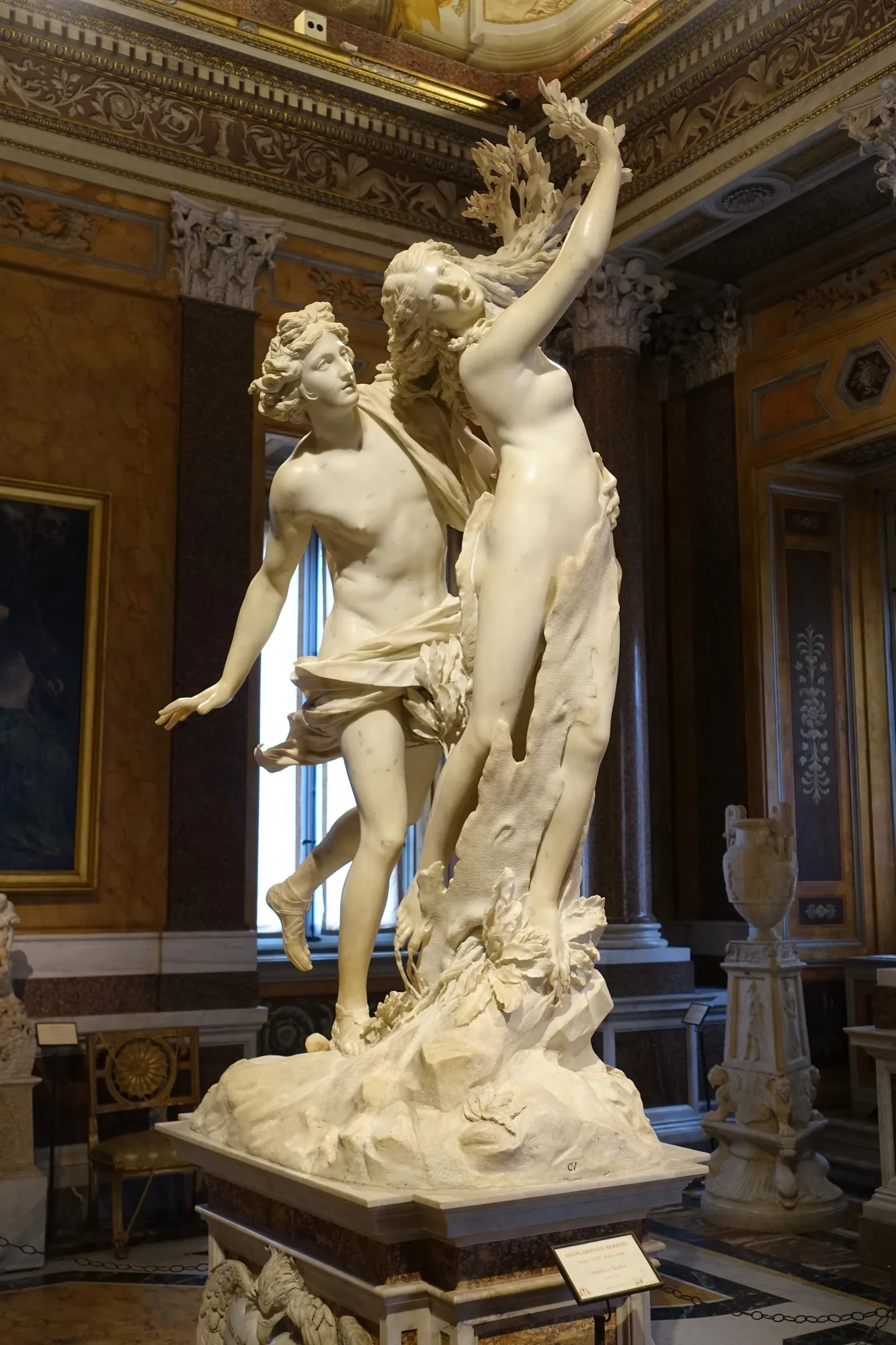
Story「アポロンとダフネ」は、イタリアの彫刻家ベルニーニが1622年から1625年にかけて大理石で彫った像です。高さは2メートル40センチ以上あります。古代ローマの詩人オウィディウスの『変身物語』の一場面で、光と音楽の神アポロンがニンフ(森や川の精)のダフネを追いかけ、ついに追いついた瞬間を表しています。この写真は、ローマのボルゲーゼ美術館に置かれた今の姿です。
Apollo and Daphne is a marble statue carved by the Italian sculptor Bernini between 1622 and 1625. It is more than 2.4 meters tall. It shows a scene from the Metamorphoses, a long poem by the ancient Roman poet Ovid. Apollo, the god of light and music, chases a nymph named Daphne. Here, he has just caught up with her. This photo shows the statue today in the Galleria Borghese in Rome.
物語では、恋の神クピド(キューピッド)が、アポロンには恋をさせる金の矢を、ダフネには恋をきらう鉛の矢を射ます。逃げるダフネは川の神である父に助けを求め、月桂樹(ローリエ)に姿を変えられます。ベルニーニは、指先が葉に、足が根に、体が木の皮に変わっていく途中を、かたい大理石で表しました。注文したのはシピオーネ・ボルゲーゼ枢機卿です。
In the story, Cupid, the god of love, shoots two arrows. A golden arrow makes Apollo fall in love. A lead arrow makes Daphne hate love. As Daphne runs away, she asks her father, a river god, for help. He turns her into a laurel tree. Bernini shows the change in hard marble: her fingers become leaves, her toes become roots, and her body is covered in bark. The statue was ordered by Cardinal Scipione Borghese.
神話では、ダフネを失ったアポロンは月桂樹を自分の聖なる木にし、その葉で冠を作ったといいます。この神話は、月桂樹がアポロンや勝利のしるしになった理由を説明するお話として語られてきました。この像を完成させたとき、ベルニーニはまだ20代。この作品で一気に名をあげ、のちにローマの町を噴水や広場でかざる、バロック時代を代表する芸術家になりました。
In the myth, Apollo lost Daphne, so he made the laurel his sacred tree and wore its leaves as a crown. The story came to be told as the reason why the laurel stands for Apollo and for victory. Bernini was still in his twenties when he finished the statue. It made him famous. He later filled Rome with fountains and squares and became the great artist of the Baroque age.
この像は白い石でできています。アポロンという神さまが、ダフネという若い女性を追いかけています。ダフネは彼が好きではありません。そこで、木に変身してしまいます!指を見てください。葉っぱになりかけています。
This statue is made of white stone. The god Apollo runs after a young woman named Daphne. Daphne does not love him. So she turns into a tree! Look at her fingers. They are becoming leaves.
英語のレベルは上の「やさしい/ふつう」で切りかえられます。
えっ!?な裏ネタ
Secretsダフネの指からのびる細かな小枝や葉を見て、かつては工房の彫刻家ジュリアーノ・フィネッリも制作を手伝ったという説が出されました。でもボルゲーゼ美術館によると、近年の研究者は、ほかの人の手は加わっていないと考える傾向にあります。
The delicate twigs and leaves once led some scholars to suggest that Giuliano Finelli, a sculptor in Bernini's workshop, helped carve the statue. But the Galleria Borghese says that recent scholars tend to rule out any other hands.
台座には、のちの教皇ウルバヌス8世(マッフェオ・バルベリーニ枢機卿)が書いたラテン語の教訓の詩がきざまれています。「はかない美しさを追いかける者は、手に葉をつかむか、にがい実をつむだけ」という意味。枢機卿の館に置く恋の神話に、まじめな教えを足したのです。
On the base is a Latin verse by Cardinal Maffeo Barberini, who later became Pope Urban VIII. It says that anyone who chases fleeting beauty ends up with only leaves or bitter berries in his hands. It added a serious lesson to a love story in a cardinal's house.
この像は、もとは壁の前に置かれ、まずアポロンの右側が見えて、追いかける物語をたどれるように考えられていました。18世紀末の模様がえで部屋の中央へ移され、その後また今の位置へ移されました。今の見え方は、ベルニーニが考えたものとは少しちがうのです。
The statue first stood in front of a wall. Visitors saw Apollo's right side first, as if following the chase. In the late 18th century, it was moved to the middle of the room, and later it was moved again to where it stands today. So we no longer see it exactly as Bernini planned.
ギリシャ語で「ダフネ」は月桂樹のこと。英語で賞の受賞者を laureate(ノーベル賞受賞者は Nobel laureate)と言いますが、これはラテン語の「月桂樹の冠をかぶった」という意味の言葉が語源です。勝者に月桂冠をかぶせた習慣が、今も英語の中に生きています。
In Greek, 'daphne' means laurel. In English, a prizewinner may be called a laureate, as in 'Nobel laureate'. The word comes from a Latin word meaning 'crowned with laurel'. The old custom of crowning winners with laurel still lives on in English.
ここを見て!
Look Closer1葉に変わる指Fingers turning into leaves
高く上げたダフネの指先から、月桂樹の葉と小枝がのびています。石とは思えない薄さです。
Laurel leaves and twigs grow from Daphne's raised fingers. They are so thin that it is hard to believe they are stone.
2アポロンの顔Apollo's face
やっと追いついたアポロン。勝ったと思った表情が、ダフネの変身を見たおどろきへと変わろうとしています。
Apollo has finally caught up. His look of triumph is turning into amazement as he sees Daphne change.
3体をつつむ木の皮Bark wrapping her body
ダフネの足から腰へ、木の皮がはい上がっています。なめらかな肌とごつごつした皮の手ざわりのちがいまで彫り分けています。
Bark climbs up from Daphne's legs to her hips. Bernini carved the difference between smooth skin and rough bark.
英語で名画を語ろう
Talk about Art in EnglishDaphne's fingers are turning into leaves.
ダフネの指は葉に変わりつつあります。
💡 進行形にすると「変わっていく途中」。変身の一瞬をとらえた像の説明にぴったり。
英語で説明すると… Describe it
これは白い大理石の像です。左では、若い男性が走っています。右では、若い女性が逃げようとしています。女性の指は葉に変わりつつあり、足は木の皮におおわれ始めています。
This is a white marble statue. On the left, a young man is running. On the right, a young woman is trying to escape. Her fingers are turning into leaves, and her legs are being covered with tree bark.
考えてみよう Think & Talk
- ベルニーニはなぜ、変身の前や後ではなく「変わっていく途中」を選んだのだと思いますか?Why do you think Bernini chose the moment of change, not before or after it?
- もし植物や動物に変身できるとしたら、何になりたいですか?If you could change into a plant or an animal, what would you be?
この作品の英単語
WordsApollo chases Daphne through the forest.
アポロンは森の中でダフネを追いかけます。
Daphne turns into a laurel tree.
ダフネは月桂樹に変わります。
The statue is carved from white marble.
この像は白い大理石から彫られています。
The leaves look very delicate.
葉はとても繊細に見えます。
ミニクイズ
QuizQ. ダフネは最後に何に変わった?What did Daphne turn into in the end?
父である川の神によって、月桂樹に姿を変えられました。
Her father, a river god, turned her into a laurel tree.
ウソ?ホント? この像を注文したのは、シピオーネ・ボルゲーゼ枢機卿だ。Cardinal Scipione Borghese ordered this statue.
ボルゲーゼ枢機卿はベルニーニに何体もの像を注文しました。今もその館だったボルゲーゼ美術館にあります。
He ordered several statues from Bernini. It is still in the Galleria Borghese, once his villa.
ウソ?ホント? ダフネは最後に、アポロンと結婚して幸せに暮らした。In the end, Daphne married Apollo and lived happily.
ダフネは木になってアポロンから逃れました。アポロンはその葉で冠を作ったといいます。
Daphne escaped Apollo by becoming a tree. Apollo made a crown from its leaves.
 画像の出典とライセンス / Image credit
- PDApollo and Daphne by Bernini - Galleria Borghese - Rome, Italy - DSC04587.jpg(Wikimedia Commons)
ライセンス:Public domain(パブリックドメイン)/作者・撮影者の表記:Daderot/提供元:Own work
この作品は、作者の死後長い年月がたち著作権の保護期間が終わっています。写真は撮影者がパブリックドメインとして公開したもの、または著作権の保護期間が終わった古い写真です。 所蔵:ボルゲーゼ美術館(Galleria Borghese)。画像は表示のために縮小・WebP 形式に変換しています。