

 ワークシート
 ぬりえ
 迷路
王冠もよろいもなし。それでも一目で「王さま」とわかる、ひみつの演出。No crown, no armor. Yet you can tell he is a king at a glance. Here is the secret.
この作品のお話
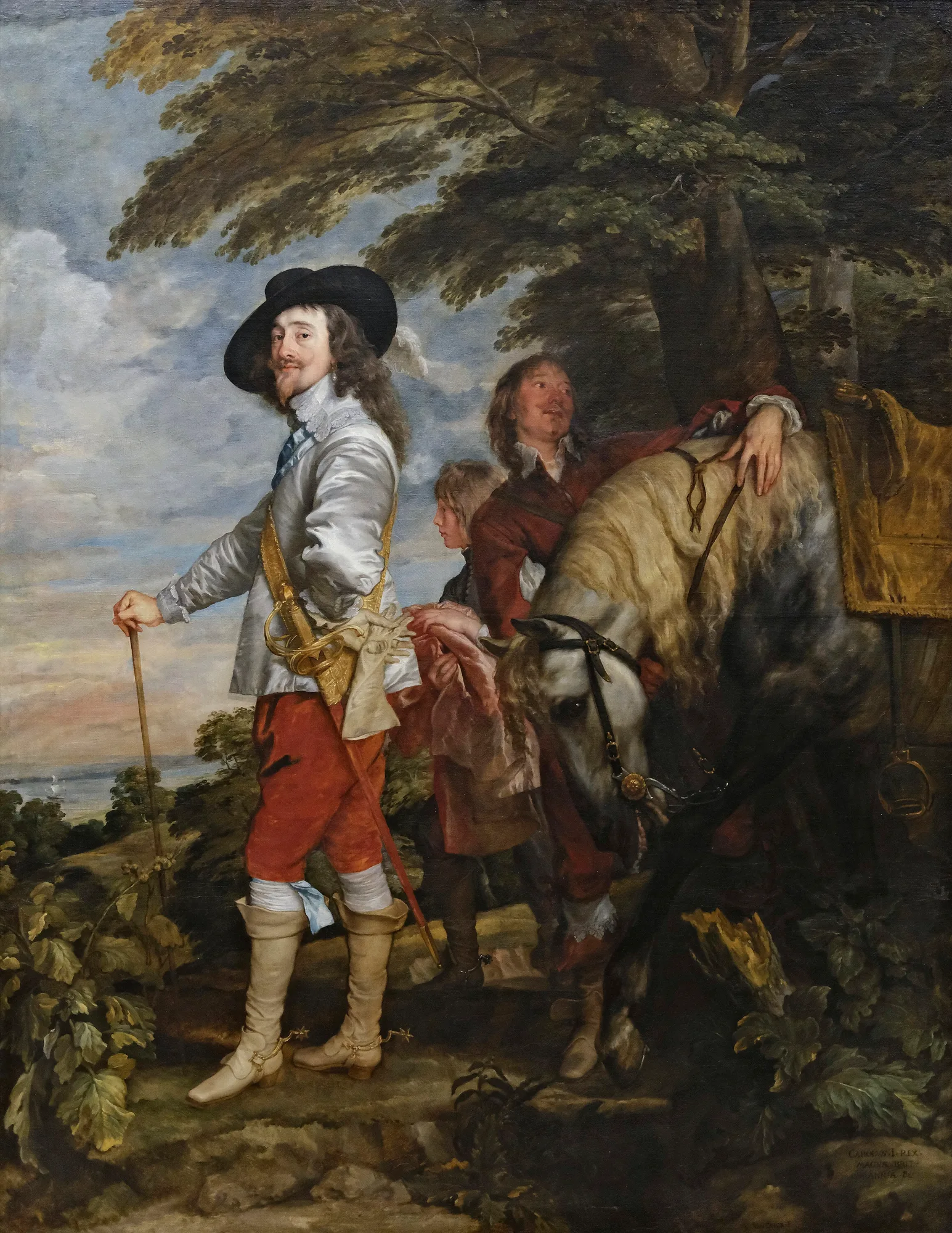
Story狩りの途中、馬からおりたイギリス王チャールズ1世が、腰に手を当て、こちらをちらりと見ています。うしろでは家来が馬をおさえ、少年の小姓がそばにひかえています。遠くには海が見えます。描いたのは、フランドル出身でイギリス王の宮廷画家になったヴァン・ダイク。1635年ごろの作品で、今はパリのルーヴル美術館にあります。
During a hunt, King Charles I of England has stepped down from his horse. He stands with one hand on his hip and glances at us. Behind him, a servant holds the horse and a young page stands beside them. The sea can be seen far away. The painter was Anthony van Dyck, a Flemish artist who became court painter to the English king. He painted it around 1635. It is now in the Louvre in Paris.
王冠も王のマントもなく、服装は狩りに出かける紳士そのものです。それでもすらりと立つ姿、つやのある銀色の上着、自信に満ちた表情で、ひと目で特別な人だとわかります。ヴァン・ダイクは、少し低い位置から見上げるように描くことで、小柄だった王を堂々と見せました。右下の岩には、ラテン語で「チャールズ1世、グレートブリテンの王」と書かれています。
He wears no crown and no royal robe. He is dressed like a gentleman going hunting. Still, his relaxed pose, shiny silver jacket and confident face tell us he is someone special. Van Dyck painted him as if we were looking up from a low point, so the king, who was not tall, looks grand. On the rock at the lower right, Latin words say, 'Charles I, King of Great Britain.'
チャールズ1世はのちに議会との内戦に敗れ、1649年に命を落としました。その後この絵はイギリスをはなれ、18世紀にはフランスにわたっていました。1775年、フランス王ルイ16世がデュ・バリー夫人から買い取り、王家のコレクションをへてルーヴル美術館に入りました。気軽なのに気品のあるこの肖像画は、のちのイギリスの肖像画家たちのお手本になりました。
Charles I later lost a civil war against Parliament and died in 1649. After that, the painting left England, and by the 18th century it was in France. In 1775, King Louis XVI of France bought it from Madame du Barry. It passed through the royal collection into the Louvre. This relaxed but noble portrait became a model for later British portrait painters.
これはイギリス王チャールズ1世です。王冠はかぶっていません。狩りに出かけているところです。家来が白い馬をおさえています。王さまはあまり背が高くなかったのに、この絵では背が高く見えます!
This is King Charles I of England. He is not wearing a crown. He is on a hunting trip. A man holds his white horse. The king was not very tall, but he looks tall in this picture!
英語のレベルは上の「やさしい/ふつう」で切りかえられます。
えっ!?な裏ネタ
Secrets1638年の記録によると、ヴァン・ダイクはこの絵の代金として200ポンドを求めましたが、チャールズ1世はそれを100ポンドに値下げしました(この記録の絵は、一般にこの作品だと考えられています)。宮廷画家にとって、王さまはいちばんの得意客であり、いちばん手ごわい客でもあったのです。
A record from 1638, generally thought to be about this painting, shows that Van Dyck asked for 200 pounds, but Charles I cut the price to 100 pounds. For a court painter, the king was the best customer and also the toughest one.
右の白い馬は、首を深く下げています。まるで王さまに頭を下げているようです。家来も馬も、そして見上げる私たち見物人も、みんな王さまにひれふすように仕組まれた構図だといわれます。
The white horse on the right bends its neck low. It looks as if it is bowing to the king. It is said that the picture is arranged so that the servants, the horse and even we, the viewers, all seem to look up to the king.
右下の岩には「グレートブリテンの王」と書かれています。当時、イングランドとスコットランドは同じ王をいただいていても、まだ別々の国でした。ひとつの「グレートブリテン」になるのは1707年のこと。この呼び名は、チャールズの父ジェームズ1世が使いはじめた王の称号です。
The rock at the lower right says 'King of Great Britain.' At that time, England and Scotland shared one king, but they were still separate countries. They became one 'Great Britain' only in 1707. This royal title was first used by Charles's father, James I.
チャールズ1世が亡くなったあとの王のコレクションの目録には、この絵はのっていません。いつの間にかイギリスを出て、18世紀にはフランスにありました。ルイ15世に愛されたデュ・バリー夫人の手をへて、1775年にルイ16世が手に入れました。
The painting is missing from the lists of Charles's collection made after his death. Somehow it left England, and by the 18th century it was in France. It passed through the hands of Madame du Barry, a favorite of King Louis XV, and in 1775 Louis XVI bought it.
ここを見て!
Look Closer1王の顔The king's face
つば広の黒い帽子の下から、横目でこちらを見る王。黒い帽子のおかげで、明るい空を背に顔がくっきり見えます。
Under his wide black hat, the king glances sideways at us. The dark hat makes his face stand out against the bright sky.
2頭を下げる馬The bowing horse
首を深く曲げた白い馬。王さまにおじぎをしているようにも見えます。
The white horse bends its neck deeply. It almost seems to bow to the king.
3岩の文字Words on the rock
ラテン語で「チャールズ1世、グレートブリテンの王」。絵の題名のような役目もしています。
Latin words: 'Charles I, King of Great Britain.' They work almost like the title of the picture.
4遠くの海と船The distant sea and ship
左はしの遠くに、海と小さな帆船が見えます。海にかこまれた島国の王であることを思わせます。
Far away on the left, you can see the sea and a small sailing ship. It reminds us that he is the king of an island nation.
英語で名画を語ろう
Talk about Art in EnglishThe king seems to look down on us from above.
王は上から私たちを見下ろしているようです。
💡 上から見下ろす意味と、人を「見下す」意味の両方があります。この絵はどちらにも読めますね。
英語で説明すると… Describe it
黒い帽子の男が大きな木の下に立っています。片手を腰に当て、もう片方の手はつえにのせています。右のうしろでは、家来が白い馬をおさえ、そのそばに少年が立っています。左には、遠くに海が見えます。
A man in a black hat stands under a big tree. He has one hand on his hip and the other on a walking stick. Behind him on the right, a servant holds a white horse, and a boy stands next to them. On the left, we can see the sea far away.
考えてみよう Think & Talk
- 王冠がなくても、この人が王さまに見えるのはなぜでしょう?What makes this man look like a king, even without a crown?
- もしあなたの肖像画を描いてもらうなら、どんなポーズを選びますか?それはなぜ?If you had your portrait painted, what pose would you choose? Why?
この作品の英単語
WordsVan Dyck was the king's court painter.
ヴァン・ダイクは王の宮廷画家でした。
The king looks calm and confident.
王は落ち着いて、自信に満ちて見えます。
A servant holds the king's horse.
家来が王の馬をおさえています。
The king glances at the viewer.
王は見る人をちらりと見ています。
ミニクイズ
QuizQ. 画家は、王さまを堂々と見せるためにどんな工夫をした?What did the painter do to make the king look grand?
見上げる視点で描くことで、小柄だった王を背が高く堂々と見せています。
Painting him from a low point of view makes the king, who was not tall, look tall and grand.
ウソ?ホント? この絵の王さまは、王冠をかぶっている。The king in this painting wears a crown.
王冠はなく、つば広の帽子をかぶった狩りの服装です。
He wears no crown, just a wide hat and hunting clothes.
ウソ?ホント? ヴァン・ダイクは、もとの値段の半分しか払ってもらえなかった。Van Dyck was paid only half the price he asked for.
200ポンドを求めましたが、王が支払ったのは100ポンドでした。
He asked for 200 pounds, but the king paid 100.
 画像の出典とライセンス / Image credit
- PDPortrait de Charles 1er, roi d'Angleterre, à la chasse - Antoon van Dyck - Musée du Louvre Peintures INV 1236 ; MR 666.jpg(Wikimedia Commons)
ライセンス:Public domain(パブリックドメイン)/作者・撮影者の表記:Anthony van Dyck
この作品は、作者の死後長い年月がたち著作権の保護期間が終わった「パブリックドメイン」の作品です。画像は平面の作品を忠実に写したもので、新しい著作権は生じません(Wikimedia Commons の PD-Art の考え方)。 所蔵:ルーヴル美術館(Musée du Louvre)。画像は表示のために縮小・WebP 形式に変換しています。
