

 ワークシート
 ぬりえ
 迷路
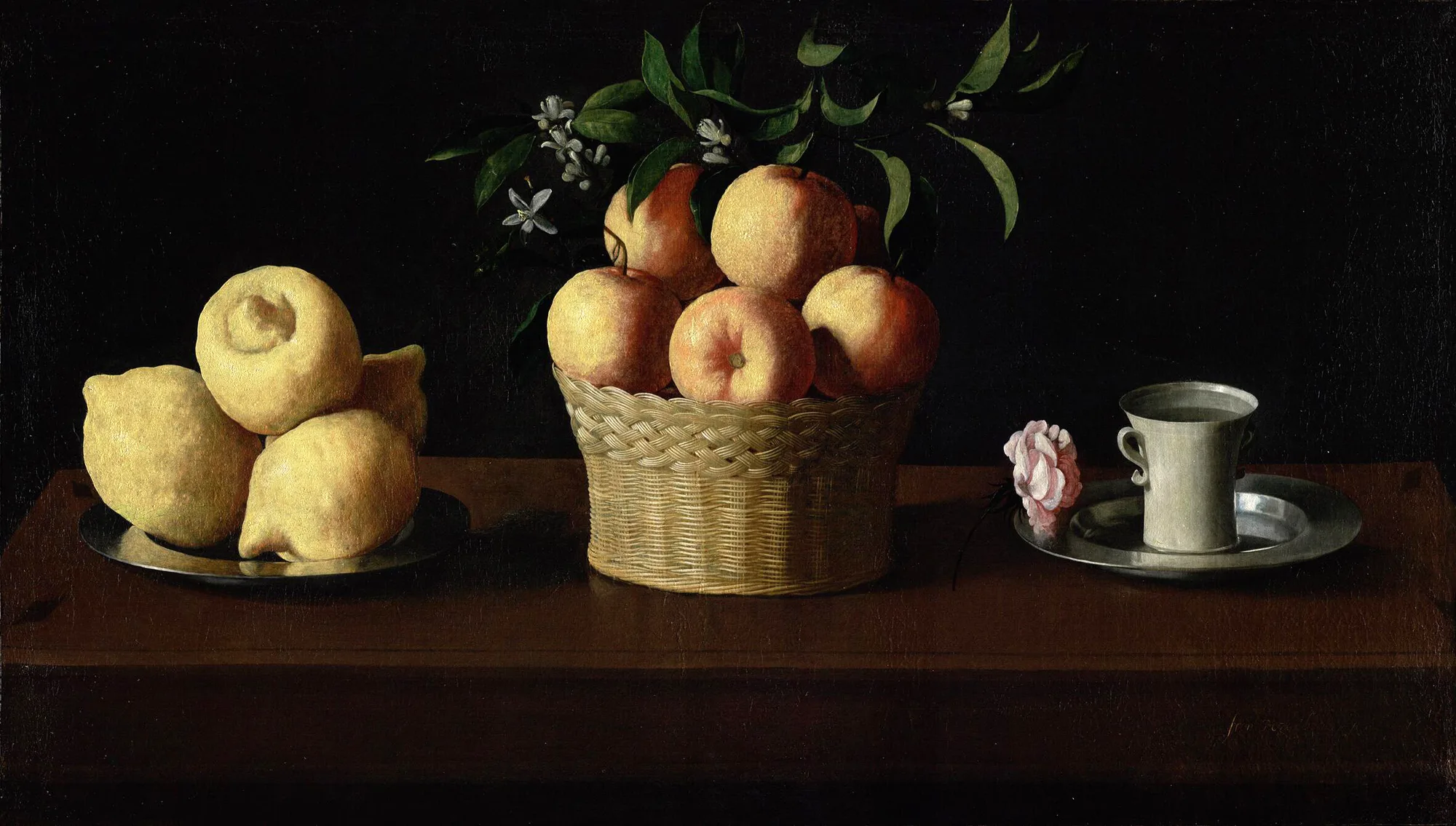
黒の中に並ぶ3つの宝物。署名入りはこれだけの静物画。Three treasures in the dark: his only signed and dated still life.
この作品のお話
Storyまっ黒な背景の前、木のテーブルに3つのものが横一列に並んでいます。左は金属の皿にのった4つのシトロン(レモンに似た大きなかんきつ類)、まん中は花のついた枝をそえたかご入りのオレンジ、右は水の入ったカップと一輪のバラ。スペインの画家スルバランが1633年に描いた静物画の傑作で、アメリカ・パサデナのノートン・サイモン美術館にあります。
In front of a black background, three groups of objects stand in a row on a wooden table. On the left, four citrons, large citrus fruits related to lemons, sit on a pewter plate. In the middle, there is a basket of oranges with a flowering branch. On the right, there is a cup of water and a rose. Zurbarán painted this masterpiece in 1633. It is in the Norton Simon Museum in Pasadena, USA.
スルバランは、スペインの修道院のために聖人や修道士の絵をたくさん描いた画家でした。この絵は、彼の作品の中で署名と年が書かれたただ一つの静物画です。強い光が左から当たり、シトロンのごつごつした皮、かごの編み目、金属の皿の光り方まで、ひとつひとつがくっきり浮かび上がります。
Zurbarán painted many saints and monks for Spanish monasteries. This is the only still life by him that has both his signature and a date. Strong light comes from the left. Every detail stands out clearly: the rough, bumpy skins of the citrons, the woven basket and the shine of the metal plates.
3つのものは、ただの果物と食器ではなく、聖母マリアへのささげものを表しているという説があります。きよらかな水、マリアのしるしとされるバラ、純潔を表すオレンジの花。祭壇のように整った並べ方が、そうした見方を生んでいます。この絵は20世紀に、アメリカの実業家ノートン・サイモンのコレクションに入りました。
Some people think the objects are not just fruit and dishes, but gifts to the Virgin Mary. Clean water, the rose, a symbol of Mary, and orange blossoms, a symbol of purity. The neat, altar-like order of the objects supports this idea. In the 20th century, the painting joined the collection of the American businessman Norton Simon.
この絵には人がいません。シトロン、オレンジ、カップ、バラがあります。シトロンは大きなレモンのような果物です。テーブルの上に一列に並んでいます。背景はまっ黒です。
This picture has no people. There are citrons, oranges, a cup and a rose. Citrons look like big lemons. They are in a line on a table. The background is black.
英語のレベルは上の「やさしい/ふつう」で切りかえられます。
えっ!?な裏ネタ
Secrets署名と年(1633年)が入ったスルバランの静物画は、これ一点だけ。右下のテーブルのふちに、ラテン語で「フランシスコ・デ・スルバランが作る、1633年」という意味の文字がうっすら書かれています。
This is Zurbarán's only still life with both his signature and a date, 1633. On the front edge of the table, at the lower right, Latin words say that Francisco de Zurbarán made it in 1633.
3つの物をきっちり間をあけて並べた構図から、キリスト教の「三位一体」を表すと読む研究者もいます。ただ、スルバランは何も書き残しておらず、はっきりした答えは分かっていません。
The objects are placed in three separate groups. Because of this, some experts think they stand for the Christian Holy Trinity. But Zurbarán left no explanation, so no one knows for sure.
オレンジの枝には、白い花と緑の葉、その下には実った果実。オレンジの木は、実がなっている時期に次の花が咲くこともあるので、花と実を同時に見られることがあります。季節の移り変わりが、一本の枝に重なっているのです。
The orange branch has white flowers and green leaves, and ripe fruit sits below. Orange trees can bloom while the old fruit is still on the branch, so you can sometimes see flowers and fruit together. Two seasons meet on one branch.
スルバランの息子フアン・デ・スルバランも、果物や器を描く静物画の画家になりました。しかし1649年、セビーリャをおそったペストのため、まだ20代の若さで亡くなっています。
Zurbarán's son, Juan de Zurbarán, also became a painter of still lifes with fruit and dishes. Sadly, he died young, still in his twenties, during the plague in Seville in 1649.
ここを見て!
Look Closer1お皿のシトロンCitrons on a plate
金属(ピューター)の皿にのった4つのシトロン。レモンに似た果物で、ごつごつした皮まで、さわれそうなほどリアルです。
Four citrons, fruits related to lemons, sit on a pewter plate. Their rough skins look real enough to touch.
2オレンジのかごBasket of oranges
編みかごに山もりのオレンジ。いちばん高いまん中が、祭壇のような形を作っています。
A woven basket is piled high with oranges. The tall center makes the picture look like an altar.
3オレンジの花Orange blossoms
暗やみに白く光る小さな花。純潔のしるしと解釈されることがあります。
Small white flowers shine in the dark. They are often read as a symbol of purity.
4カップとバラCup and rose
水の入った白いカップと、ピンクのバラ。金属の皿に映りこむ形にも注目。
A white cup of water and a pink rose. Look at their reflections on the metal plate.
英語で名画を語ろう
Talk about Art in EnglishThree groups of objects are arranged on a wooden table.
3つのグループの物が、木のテーブルの上に並べられています。
💡 arrange は「きちんと並べる・配置する」。静物画の説明でよく使う動詞です。
英語で説明すると… Describe it
これは静物画です。木のテーブルの上に、3つのグループの物があります。左には金属の皿にのった4つのシトロン。まん中には白い花をそえたオレンジのかご。右には水の入ったカップとピンクのバラがあります。
This is a still life. Three groups of objects are on a wooden table. On the left, there are four citrons on a metal plate. In the middle, there is a basket of oranges with white flowers. On the right, there is a cup of water and a pink rose.
考えてみよう Think & Talk
- 画家はなぜ、物どうしをこんなに離して並べたのだと思いますか?Why do you think the painter put the objects so far apart?
- あなたが3つの物で静物画を描くなら、何を選びますか?If you painted a still life of three things, what would you choose?
この作品の英単語
WordsWhite orange blossoms shine in the dark.
白いオレンジの花が暗やみで光っています。
The water in the cup looks pure.
カップの水はきよらかに見えます。
The oranges are in a woven basket.
オレンジは編みかごに入っています。
The fruit seems to glow in the dark.
果物が暗やみの中で光っているように見えます。
ミニクイズ
QuizQ. まん中のかごに入っている果物は?What fruit is in the basket in the middle?
かごの中はオレンジ。上には白い花のついた枝がそえられています。
The basket holds oranges, with a branch of white flowers on top.
ウソ?ホント? スルバランの静物画で、署名と年があるのはこの一枚だけだ。This is Zurbarán's only still life with a signature and a date.
1633年の年が書かれた、ただ一つの静物画です。
It is his only still life dated 1633 and signed.
ウソ?ホント? テーブルの横には、果物を売る人が一人立っている。A fruit seller stands next to the table.
人はだれも描かれていません。物だけの静かな絵です。
There are no people at all. It is a quiet picture of objects only.
 画像の出典とライセンス / Image credit
- PDFrancisco de Zurbarán - Still Life with Lemons, Oranges and a Rose.jpg(Wikimedia Commons)
ライセンス:Public domain(パブリックドメイン)/作者・撮影者の表記:Francisco de Zurbarán
この作品は、作者の死後長い年月がたち著作権の保護期間が終わった「パブリックドメイン」の作品です。画像は平面の作品を忠実に写したもので、新しい著作権は生じません(Wikimedia Commons の PD-Art の考え方)。 所蔵:ノートン・サイモン美術館(Norton Simon Museum)。画像は表示のために縮小・WebP 形式に変換しています。
