 ワークシート
 ぬりえ
 迷路
赤い犬が皮肉の的に!?ゴーギャンが自信をもったタヒチの絵。A red dog that people mocked! Gauguin's proud picture of Tahiti.
 美術館アンテナ:この作品に会える展覧会
この作品のお話
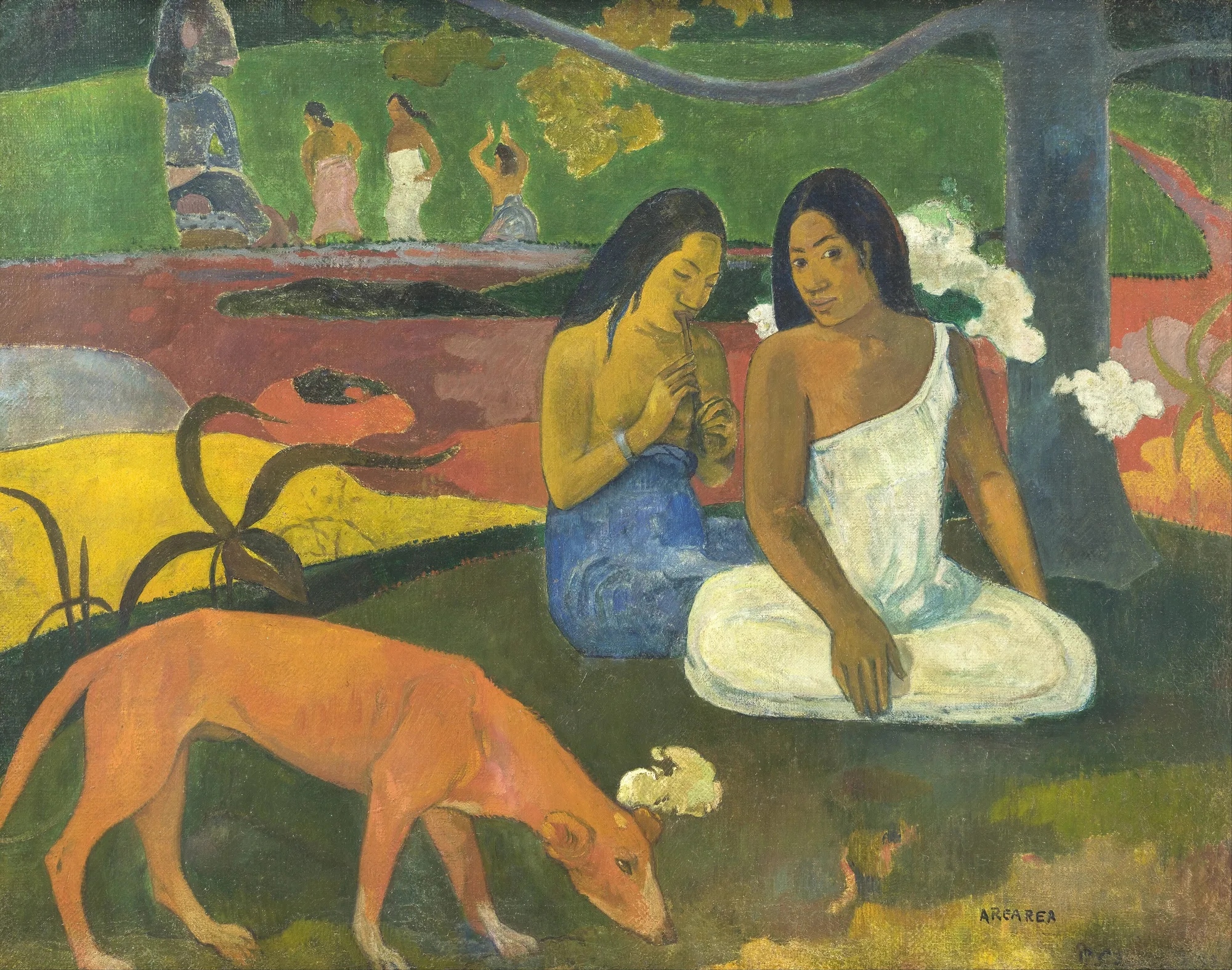
Story大きな木の下に二人の女性が座り、一人は笛を吹いています。手前では赤い犬が地面のにおいをかぎ、奥では女性たちが大きな像の前で祈りをささげています。描いたのは、パリからタヒチへわたったフランスの画家ポール・ゴーギャン。1892年、南太平洋のタヒチで描いた作品で、今はパリのオルセー美術館にあります。
Two women sit under a big tree, and one plays a flute. In front, a red dog sniffs the ground. In the background, women pray in front of a large statue. The French painter Paul Gauguin painted this in 1892 in Tahiti, in the South Pacific. It is now in the Musée d'Orsay in Paris.
ゴーギャンは「近代文明にそまっていない楽園」を求めて、1891年にタヒチへわたりました。しかし当時のタヒチはフランスの植民地で、キリスト教の布教も進み、昔ながらの信仰や暮らしは大きく変わっていました。奥の神像も、ゴーギャンが本で読んだ知識と想像をもとに作り上げたものと考えられています。
In 1891, Gauguin went to Tahiti looking for a 'paradise' untouched by modern life. But Tahiti was a French colony, and Christian missionaries had already changed many old beliefs and ways of life. The statue in the background was probably created from books he read and from his own imagination.
1893年、パリに戻ったゴーギャンはタヒチの絵の展覧会を開きました。しかしタヒチ語の題名や、手前の赤い犬は、皮肉やからかいの的になりました。それでもゴーギャンはこの絵を自信作と考えていたようです。今では、ヨーロッパの画家が夢見た「楽園」と本当のタヒチとのちがいも含めて、考えながら見られる作品です。
In 1893, back in Paris, Gauguin held an exhibition of his Tahiti paintings. But the Tahitian titles and the red dog were made fun of. Still, Gauguin seems to have thought of this as one of his best works. Today, we can look at it while thinking about the gap between a European painter's dream of 'paradise' and the real Tahiti.
タヒチで、二人の女性が木の下に座っています。一人は笛を吹いています。手前を赤い犬が歩いています。パリでは、赤い犬を笑う人もいました。でもゴーギャンはこの絵が大好きでした。
Two women sit under a tree in Tahiti. One plays a flute. A red dog walks in front. Some people in Paris laughed at the red dog. But Gauguin liked this painting very much.
英語のレベルは上の「やさしい/ふつう」で切りかえられます。
えっ!?な裏ネタ
Secrets2度目のタヒチ行きを前にした1895年、ゴーギャンはパリで作品の売り立てを開きました。この絵は、ゴーギャンが自分で買いもどしたと伝えられています。それだけ手放したくない1枚だったのでしょう。
In 1895, before leaving for Tahiti again, Gauguin held a sale of his works in Paris. It is said that he bought this painting back himself. He probably did not want to let it go.
ゴーギャンは若い画家セリュジエに、「木が緑に見えるなら、パレットでいちばん美しい緑をぬれ」と教えたと伝えられます。見たままより強い色で描くという考え方が、赤い犬や黄色い地面にもあらわれています。
Gauguin is said to have told the young painter Paul Sérusier, 'If a tree looks green, use the most beautiful green on your palette.' This idea of using stronger colors than reality can be seen in the red dog and the yellow ground.
ゴーギャンがタヒチに着いたころ、昔の信仰の名残はほとんど失われていました。彼は、ベルギー生まれの旅行家モーレンハウトが1837年にフランス語で出した旅行記を読み、そこに書かれたタヒチの神話をノートに書き写して、絵の参考にしました。
When Gauguin arrived, traces of the old Tahitian religion had largely disappeared. He read an 1837 French-language travel book by the Belgian-born traveler Jacques-Antoine Moerenhout and copied its Tahitian myths into his notebook to use in his art.
ゴーギャンのタヒチの絵には、首輪のない自由な犬がたびたび登場します。犬が何を表しているのか、画家自身の姿を重ねたものなのか、などについては、今も研究者のあいだでいろいろな説があります。
Free dogs without collars often appear in Gauguin's Tahiti paintings. What do they mean? Are they the painter himself? There are still many different ideas.
ここを見て!
Look Closer1笛を吹く女性The flute player
青い布の女性が、うつむいて笛を吹いています。のんびりした音が聞こえてきそうです。
A woman in a blue cloth looks down and plays a flute. You can almost hear a gentle tune.
2白い服の女性The woman in white
白い服の女性は、まっすぐこちらを見ています。見る人に話しかけてくるようです。
The woman in white looks straight at us, as if she wants to talk to the viewer.
3赤い犬The red dog
展覧会で皮肉を言われた赤い犬。本当の毛の色より、画面の色合わせを優先しています。
This red dog was mocked at the exhibition. Gauguin chose the color for the picture, not for realism.
4像の前の人々People at the statue
奥では、大きな神像の前で女性たちが祈っています。ゴーギャンが想像で作った場面です。
In the back, women pray before a large statue. Gauguin created this scene from his imagination.
英語で名画を語ろう
Talk about Art in EnglishThe red dog sniffs at the ground.
赤い犬が地面をくんくんかいでいます。
💡 sniff at は「くんくんかぐ」。「鼻であしらう」の意味もあります。
英語で説明すると… Describe it
これはタヒチの場面です。二人の女性が大きな木の下に座っています。一人は笛を吹いています。手前には赤い犬がいます。奥では、女性たちが像の前で祈っています。
This is a scene in Tahiti. Two women are sitting under a big tree. One woman is playing a flute. In the foreground, there is a red dog. In the background, some women are praying in front of a statue.
考えてみよう Think & Talk
- ゴーギャンはなぜ犬を赤くぬったのだと思いますか?Why do you think Gauguin painted the dog red?
- 旅人がある場所を「楽園」とよぶのは、正しいことでしょうか?それはなぜ?Is it fair for a visitor to call a place 'paradise'? Why or why not?
この作品の英単語
WordsOne woman is playing a flute.
一人の女性が笛を吹いています。
Gauguin hoped to find a paradise.
ゴーギャンは楽園を見つけたいと思っていました。
Tahiti was a French colony.
タヒチはフランスの植民地でした。
The title means a joyful feeling.
題名は喜びにあふれた気持ちを表しています。
ミニクイズ
QuizQ. 題名「アレアレア」の意味は?What does the title 'Arearea' mean?
タヒチの言葉で「楽しみ・喜び」。日本では「赤い犬」という別名もあります。
It means joy or fun in Tahitian. It is also called 'The Red Dog.'
ウソ?ホント? 当時のタヒチは、フランスの植民地だった。Tahiti was a French colony at that time.
1880年にフランスに併合され、暮らしや信仰が大きく変わっていました。
France took control of Tahiti in 1880, and life and beliefs there had changed a lot.
ウソ?ホント? 1893年の展覧会で、赤い犬は大絶賛された。The red dog was highly praised at the 1893 exhibition.
赤い犬は、むしろ皮肉の的になりました。
In fact, people made fun of the red dog.
 画像の出典とライセンス / Image credit
- PDPaul Gauguin - Arearea - Google Art Project.jpg(Wikimedia Commons)
ライセンス:Public domain(パブリックドメイン)/作者・撮影者の表記:Paul Gauguin
この作品は、作者の死後長い年月がたち著作権の保護期間が終わった「パブリックドメイン」の作品です。画像は平面の作品を忠実に写したもので、新しい著作権は生じません(Wikimedia Commons の PD-Art の考え方)。 所蔵:オルセー美術館(Musée d'Orsay)。画像は表示のために縮小・WebP 形式に変換しています。
ポール・ゴーギャンのほかの作品