

 PDF をダウンロード
Let's Look at Art!
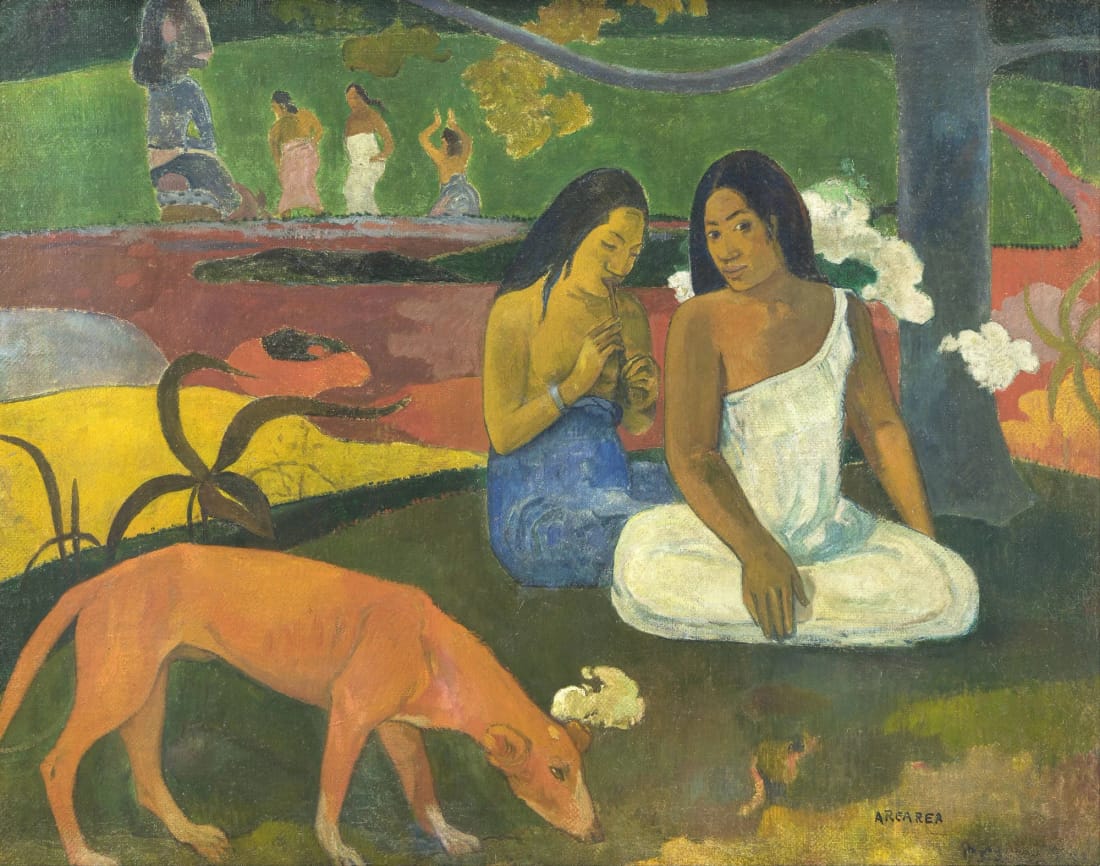
Title: Arearea (Joyfulness)
Artist: Paul Gauguin (1848–1903)
Year: 1892
Medium: Oil on canvas
Museum: Musée d'Orsay, Paris
1 Find it! 絵の中から見つけて、○でかこもう。
- ☐ The flute player
- ☐ The woman in white
- ☐ The red dog
- ☐ People at the statue
2 First look 最初に見たときの感想を書こう。
When I first saw this painting, I felt ______________ because ______________________.
Three colors I can see: ①__________ ②__________ ③__________
3 Words — Match them. 英語と日本語を線で結ぼう。
- flute ●
- paradise ●
- colony ●
- joyful ●
- ● 楽園
- ● 喜びにあふれた
- ● 笛・フルート
- ● 植民地
Arearea (Joyfulness)
4 Fill in the blanks. 下の箱から選んで、( )に入れよう。形を変えるものもあります。
- One woman is playing a .
- Gauguin hoped to find a .
- Tahiti was a French .
- The title means a feeling.
5 Read and answer — True or False? 英文を読んで、正しければ T、ちがえば F。
Two women sit under a tree in Tahiti. One plays a flute. A red dog walks in front. Some people in Paris laughed at the red dog. But Gauguin liked this painting very much.
Two women sit under a big tree, and one plays a flute. In front, a red dog sniffs the ground. In the background, women pray in front of a large statue. The French painter Paul Gauguin painted this in 1892 in Tahiti, in the South Pacific. It is now in the Musée d'Orsay in Paris.
- Tahiti was a French colony at that time. T / F
- The red dog was highly praised at the 1893 exhibition. T / F
6 Quiz — Choose the best answer. 正しいものを選ぼう。
What does the title 'Arearea' mean?
- Red dog
- Rainy day
- Joy, fun
- Goodbye
Arearea (Joyfulness)
7 Put the words in order. 語を正しく並べかえて、文を書こう。
- sniffs / dog / ground / the / red / at / The .
- Tahiti / a / is / This / scene / in .
8 Complete the description. 箱の語を(1)〜(4)に入れて、絵の説明を完成させよう。
This is a (1) in Tahiti. Two women are sitting under a big tree. One (2) is playing a flute. In the foreground, there is a red dog. In the background, some women are praying in (3) of a (4).
9 Describe the painting in English. この絵を英語で説明しよう(3文以上)。
10 Think & Talk 考えて、ペアやグループで話し合おう。
Why do you think Gauguin painted the dog red?
Is it fair for a visitor to call a place 'paradise'? Why or why not?
11 My favorite part いちばん好きなところを英語で。
I like the ____________ because ____________________________.
Answers & Notes
1 Find it!
The flute player=笛を吹く女性/The woman in white=白い服の女性/The red dog=赤い犬/People at the statue=像の前の人々
2 First look
自由に書けたら正解。I felt calm / surprised / happy … などの形容詞を使おう。
3 Words
1–c(flute=笛・フルート) 2–a(paradise=楽園) 3–d(colony=植民地) 4–b(joyful=喜びにあふれた)
4 Fill in the blanks
- flute One woman is playing a flute.
一人の女性が笛を吹いています。 - paradise Gauguin hoped to find a paradise.
ゴーギャンは楽園を見つけたいと思っていました。 - colony Tahiti was a French colony.
タヒチはフランスの植民地でした。 - joyful The title means a joyful feeling.
題名は喜びにあふれた気持ちを表しています。
5 Read — T / F
【本文の訳】タヒチで、二人の女性が木の下に座っています。一人は笛を吹いています。手前を赤い犬が歩いています。パリでは、赤い犬を笑う人もいました。でもゴーギャンはこの絵が大好きでした。
【本文の訳】大きな木の下に二人の女性が座り、一人は笛を吹いています。手前では赤い犬が地面のにおいをかぎ、奥では女性たちが大きな像の前で祈りをささげています。描いたのは、パリからタヒチへわたったフランスの画家ポール・ゴーギャン。1892年、南太平洋のタヒチで描いた作品で、今はパリのオルセー美術館にあります。
- T 当時のタヒチは、フランスの植民地だった。
解説:1880年にフランスに併合され、暮らしや信仰が大きく変わっていました。 - F 1893年の展覧会で、赤い犬は大絶賛された。
解説:赤い犬は、むしろ皮肉の的になりました。
6 Quiz
C 問:題名「アレアレア」の意味は?
選択肢:A 赤い犬/B 雨の日/C 楽しみ・喜び/D さようなら
解説:タヒチの言葉で「楽しみ・喜び」。日本では「赤い犬」という別名もあります。
7 Put the words in order
- The red dog sniffs at the ground.
赤い犬が地面をくんくんかいでいます。 - This is a scene in Tahiti.
これはタヒチの場面です。
💡 sniff at(くんくんかぐ):sniff at は「くんくんかぐ」。「鼻であしらう」の意味もあります。
8 Complete the description
(1) scene (2) woman (3) front (4) statue
9 Describe(模範解答)
This is a scene in Tahiti. Two women are sitting under a big tree. One woman is playing a flute. In the foreground, there is a red dog. In the background, some women are praying in front of a statue.
これはタヒチの場面です。二人の女性が大きな木の下に座っています。一人は笛を吹いています。手前には赤い犬がいます。奥では、女性たちが像の前で祈っています。
10 Think & Talk(問いの訳)
- Why do you think Gauguin painted the dog red?
ゴーギャンはなぜ犬を赤くぬったのだと思いますか? - Is it fair for a visitor to call a place 'paradise'? Why or why not?
旅人がある場所を「楽園」とよぶのは、正しいことでしょうか?それはなぜ?
正解のない問いです。理由をつけて話せたら◎。
Fun Fact(訳)
売れなかった絵を自分で買いもどした? 2度目のタヒチ行きを前にした1895年、ゴーギャンはパリで作品の売り立てを開きました。この絵は、ゴーギャンが自分で買いもどしたと伝えられています。それだけ手放したくない1枚だったのでしょう。
