 ワークシート
 ぬりえ
 迷路
タヒチの姿をしたマリアとイエス。題名はあいさつの言葉!Mary and Jesus as Tahitians. The title is a greeting!
 美術館アンテナ:ポール・ゴーギャンの作品に会える展覧会
この作品のお話
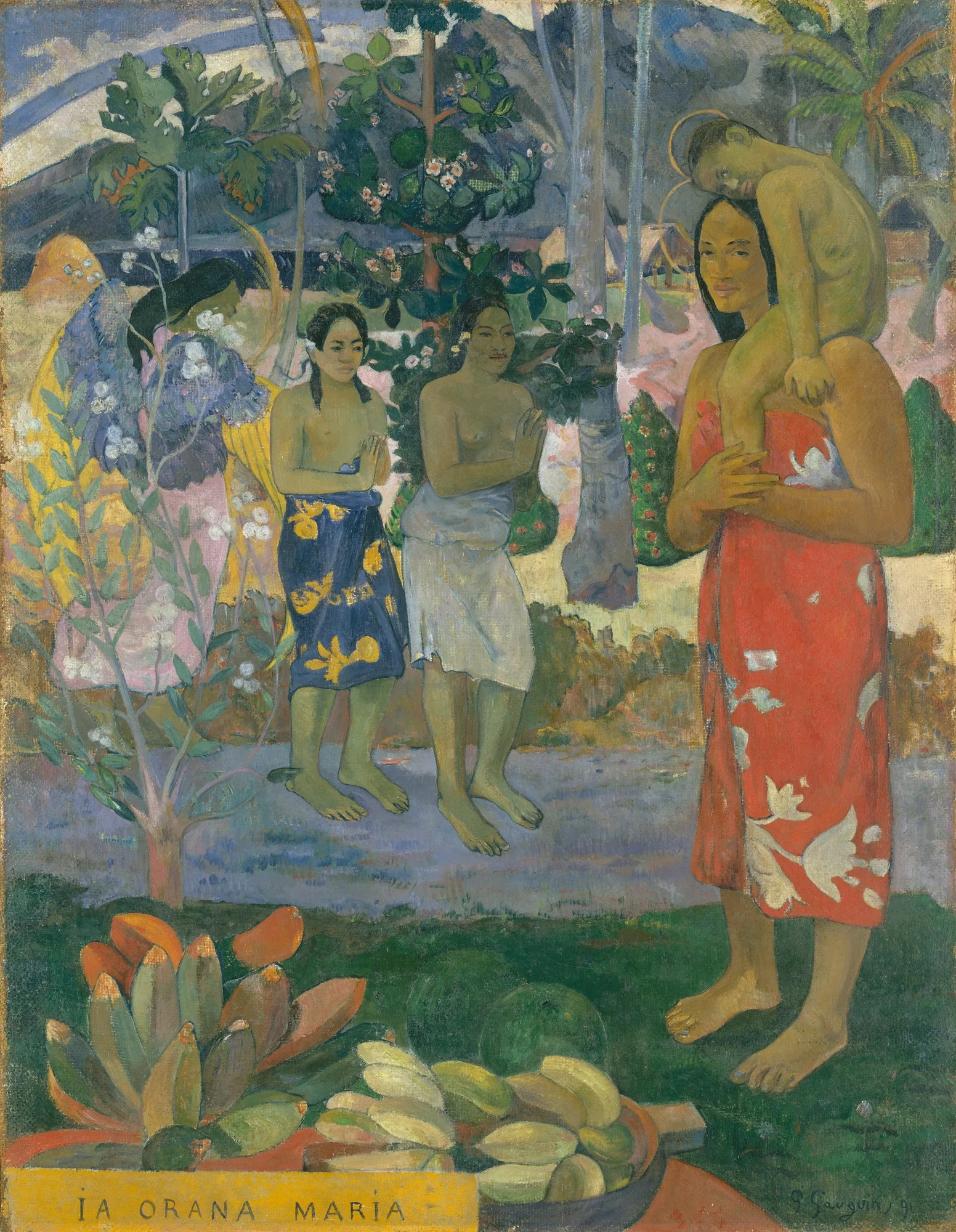
Story赤い布を巻いた女性が、子どもを肩にのせて立っています。二人の頭のうしろには光の輪。キリスト教の聖母マリアと幼いイエスを、タヒチの母と子の姿で描いているのです。左には黄色い羽の天使、中央には手を合わせる二人の女性。ゴーギャンが1891年に描き、今はニューヨークのメトロポリタン美術館にあります。
A woman wrapped in red cloth stands with a child on her shoulder. Behind their heads are halos. Gauguin painted the Virgin Mary and the child Jesus as a Tahitian mother and child. On the left is an angel with yellow wings, and in the center, two women put their hands together. Gauguin painted it in 1891, and it is now in the Metropolitan Museum of Art in New York.
題名は、天使がマリアにかける「アヴェ・マリア(めでたし、マリア)」をタヒチの言葉にしたものです。当時のタヒチではキリスト教の布教が進み、多くの人が信者になっていました。ゴーギャンはヨーロッパの宗教画をタヒチの風景と人々に置きかえ、手前には祭壇のように、バナナやパンの実を供えています。
The title is the angel's greeting to Mary, 'Hail Mary,' in the Tahitian language. In Tahiti at that time, missionaries had spread Christianity, and many people had become Christians. Gauguin set a European religious picture in the Tahitian landscape with Tahitian people. In front, bananas and breadfruit are offered as if on an altar.
1893年にパリで展示されたあと、この絵は2000フランで売れました。それまでのゴーギャンの作品で最も高い値段でした。ただ、ここに描かれたタヒチは、ゴーギャンが思いえがいた「楽園」の姿でもあります。実際のタヒチはフランスの植民地となり、人々の暮らしは大きく変わりつつありました。
After it was shown in Paris in 1893, the painting sold for 2,000 francs. It was the highest price Gauguin had received for a work up to then. But the Tahiti in this picture is also Gauguin's dream of 'paradise.' In reality, Tahiti had become a French colony, and people's lives were changing a lot.
お母さんが子どもを肩にのせています。二人の頭のうしろには金色の輪があります。マリアとイエスですが、タヒチの人の姿をしています。「イア・オラナ」はタヒチの言葉で「こんにちは」という意味です。
A mother carries her child on her shoulder. They have golden halos behind their heads. They are Mary and Jesus, but they look like people from Tahiti. 'Ia orana' means 'hello' in Tahiti.
英語のレベルは上の「やさしい/ふつう」で切りかえられます。
えっ!?な裏ネタ
Secrets中央の二人の女性のポーズは、インドネシア・ジャワ島の仏教寺院ボロブドゥールの浮き彫りから借りたものです。ゴーギャンはその写真を持っていて、仏陀にあいさつする僧の姿をまねました。キリスト教の絵に仏教のポーズなのです。
The pose of the two women in the center comes from relief carvings at Borobudur, a Buddhist temple on the island of Java in Indonesia. Gauguin owned photographs of it and copied monks greeting the Buddha. A Buddhist pose in a Christian picture!
左の花の木のうしろに、黄色や青、紫の羽をもつ天使がいます。ゴーギャンは手紙で、黄色い羽の天使が、二人ともタヒチ人であるマリアとイエスを指し示している、と説明しています。
Behind the flowering tree on the left is an angel with yellow, blue and purple wings. In a letter, Gauguin explained that the angel with yellow wings points out Mary and Jesus, who are both Tahitians.
この絵を2000フランで買ったのは、美術品の印刷・複製の技術で知られたミシェル・マンジという人物です。彼は画家ドガの親しい友人で、熱心な美術収集家でもありました。
The buyer who paid 2,000 francs was Michel Manzi, known for his skill in printing copies of artworks. He was a close friend of the painter Degas and a keen art collector.
ゴーギャンの最初のタヒチ滞在で、はっきりキリスト教をテーマにした絵はこの作品だけです。タヒチに着いて間もなく描かれた、タヒチ時代の始まりを告げる代表作のひとつです。
This is the only clearly Christian painting from Gauguin's first stay in Tahiti. Painted soon after he arrived, it is one of the key works that opened his Tahitian period.
ここを見て!
Look Closer1光の輪の母子Mother and child with halos
肩車された子どもと母の頭に、うすい金色の光の輪。マリアとイエスのしるしです。
Thin golden halos shine behind the mother and the child on her shoulder. They are signs of Mary and Jesus.
2黄色い羽の天使The angel with yellow wings
花の木のうしろに、天使がひっそりと立っています。羽は黄色や青、紫です。
An angel stands quietly behind the flowering tree. Its wings are yellow, blue and purple.
3手を合わせる二人Two women praying
胸の前で手を合わせる二人。ジャワの仏教寺院の浮き彫りがもとになったポーズです。
Two women put their hands together. Their pose comes from carvings at a Buddhist temple in Java.
4供えられた果物Offered fruit
手前には、赤いバナナや黄色いバナナ、パンの実が、祭壇のように並べられています。
In front, red and yellow bananas and breadfruit are set out like an offering on an altar.
英語で名画を語ろう
Talk about Art in EnglishThe mother carries her child on her shoulder.
母親は子どもを肩にのせています。
💡 carry A on one's shoulder は「Aを肩にのせる」。荷物にも人にも使えます。
英語で説明すると… Describe it
これはタヒチの場面です。右では、赤い布を巻いた女性が子どもを肩にのせています。真ん中では、二人の女性が手を合わせています。手前には、バナナなどの果物があります。
This is a scene in Tahiti. On the right, a woman in a red cloth is carrying a child on her shoulder. In the middle, two women are holding their hands together. In the foreground, there are bananas and other fruit.
考えてみよう Think & Talk
- ゴーギャンはなぜマリアとイエスをタヒチの人の姿で描いたのだと思いますか?Why do you think Gauguin painted Mary and Jesus as Tahitian people?
- 当時のタヒチの人たちは、この絵を見てどう感じたと思いますか?How might Tahitian people of that time have felt about this picture?
この作品の英単語
WordsThere is a halo around the child's head.
子どもの頭のまわりに光の輪があります。
An angel with yellow wings stands on the left.
左に黄色い羽の天使が立っています。
In Tahiti, people greet each other with 'Ia orana.'
タヒチでは「イア・オラナ」とあいさつします。
Fruit is offered in front of them.
彼らの前に果物が供えられています。
ミニクイズ
QuizQ. 中央の二人の、手を合わせるポーズの元になったのは?Where did the praying pose of the two women come from?
ボロブドゥール寺院の浮き彫りの写真をもとにしています。
It is based on photographs of carvings at Borobudur temple.
ウソ?ホント? 題名は「アヴェ・マリア」をタヒチの言葉にしたものだ。The title is 'Hail Mary' in the Tahitian language.
「イア・オラナ」は今もタヒチで使われるあいさつの言葉です。
'Ia orana' is still used as a greeting in Tahiti today.
ウソ?ホント? この絵はまったく売れず、ゴーギャンが一生手もとに置いた。This painting never sold, and Gauguin kept it all his life.
2000フランで売れ、それまでで最も高い値段になりました。
It sold for 2,000 francs, his highest price up to then.
 画像の出典とライセンス / Image credit
- PDPaul Gauguin Ia Orana Maria (Hail Mary) The Metropolitan Museum of Art1.jpg(Wikimedia Commons)
ライセンス:Public domain(パブリックドメイン)/作者・撮影者の表記:Paul Gauguin
この作品は、作者の死後長い年月がたち著作権の保護期間が終わった「パブリックドメイン」の作品です。画像は平面の作品を忠実に写したもので、新しい著作権は生じません(Wikimedia Commons の PD-Art の考え方)。 所蔵:メトロポリタン美術館(The Metropolitan Museum of Art)。画像は表示のために縮小・WebP 形式に変換しています。
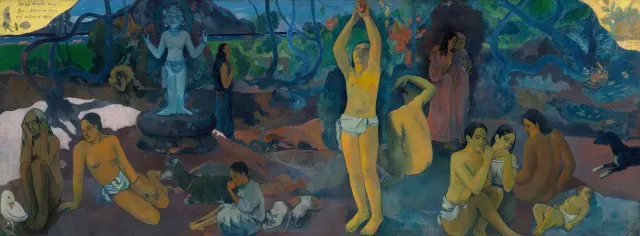
ポール・ゴーギャンのほかの作品