


 この展示室のワークシート
18世紀の京都は、個性あふれる画家たちが次々に現れた、日本美術の黄金期でした。1970年、美術史家の辻惟雄は『奇想の系譜』という本で、伊藤若冲、曾我蕭白、長沢芦雪らを紹介し、それまで「変わり者」として忘れられがちだった彼らに光を当てました。今では展覧会に長い行列ができるほどの人気です。
18th-century Kyoto was a golden age, when one original painter after another appeared. In 1970, the art historian Tsuji Nobuo introduced Itō Jakuchū, Soga Shōhaku, Nagasawa Rosetsu and others in his book Lineage of Eccentrics. These artists had often been forgotten as oddballs, but today their exhibitions draw long lines.
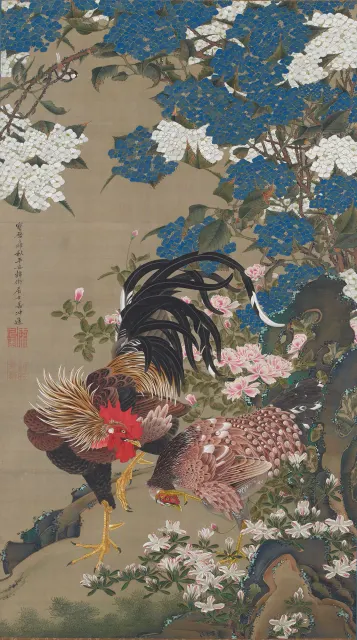
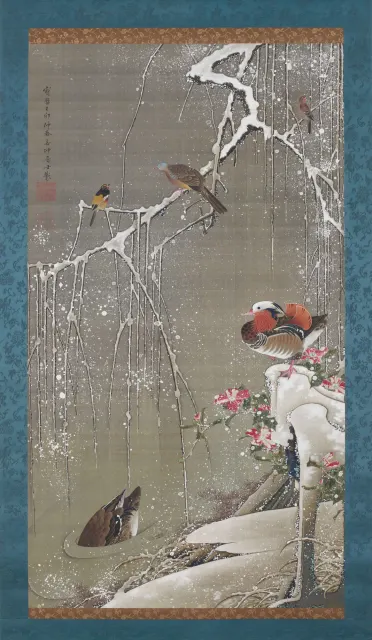
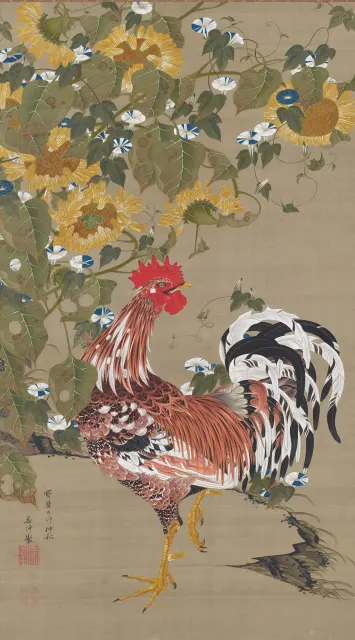
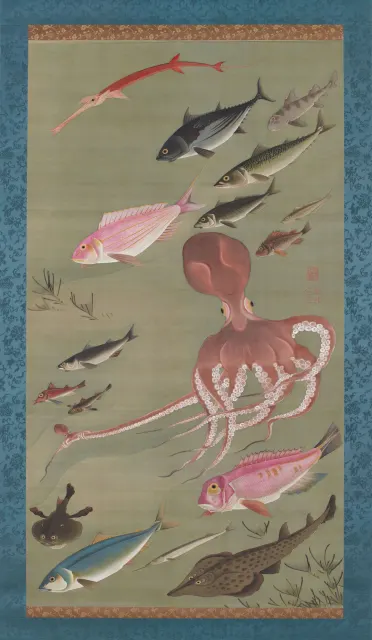
京都の青物問屋の主人だった伊藤若冲は、庭にニワトリを飼って観察し、羽の一枚一枚まで細かく描きました。30幅の大作『動植綵絵』は、最高級の絵の具で描かれ、京都の相国寺に寄進されました。また、若冲の作とされる作品には、画面を細かいマス目に区切って色を置く「升目描き」という、まるでデジタル画像のような技法のものもあります。
Itō Jakuchū ran a vegetable wholesale business in Kyoto. He kept roosters in his garden to study them and painted every feather in detail. His great set of 30 scrolls, Colorful Realm of Living Beings, was painted with the finest pigments and given to Shōkoku-ji temple. Some works attributed to him use a grid technique, filling tiny squares with color, almost like a digital image.
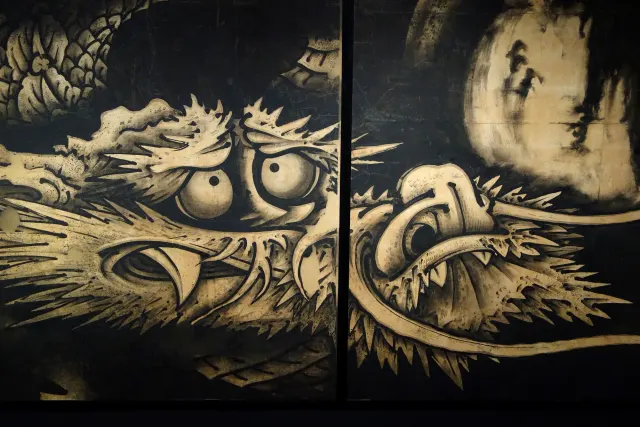
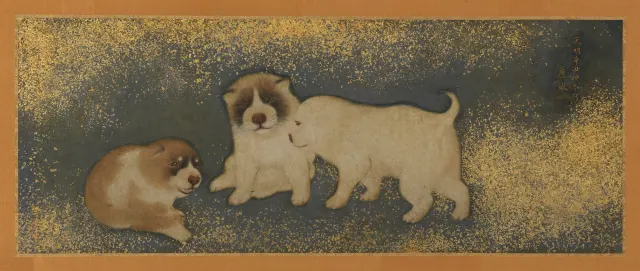
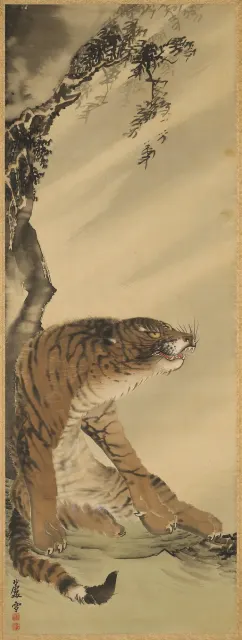
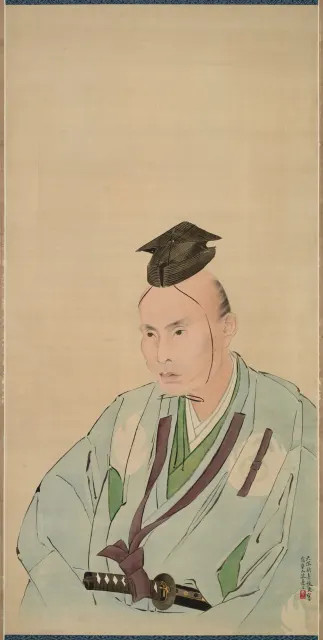
円山応挙は、目の前のものを写生する新しい描き方で大人気となり、ころころした子犬や幽霊の絵でも知られます。弟子の長沢芦雪は、ふすまいっぱいに迫力ある虎を描き、曾我蕭白は、あやしく荒々しい龍や人物で人々をおどろかせました。俳人としても名高い与謝蕪村は俳句の心を絵にし、渡辺崋山は西洋の陰影を取り入れた肖像画を残しました。
Maruyama Ōkyo became hugely popular for his new style based on sketching from life, and he is known for fluffy puppies and ghost paintings. His student Rosetsu painted a powerful tiger across a whole set of sliding doors, and Shōhaku shocked people with wild, eerie dragons and figures. Yosa Buson, also a famous haiku poet, put the spirit of haiku into painting, and Watanabe Kazan made portraits using Western-style shading.
