

 ワークシート
 ぬりえ
 迷路
全長10メートル超!目玉ギョロリの墨の竜が、ボストンで眠っていた。Over ten meters long! A googly-eyed ink dragon that slept in Boston.
この作品のお話
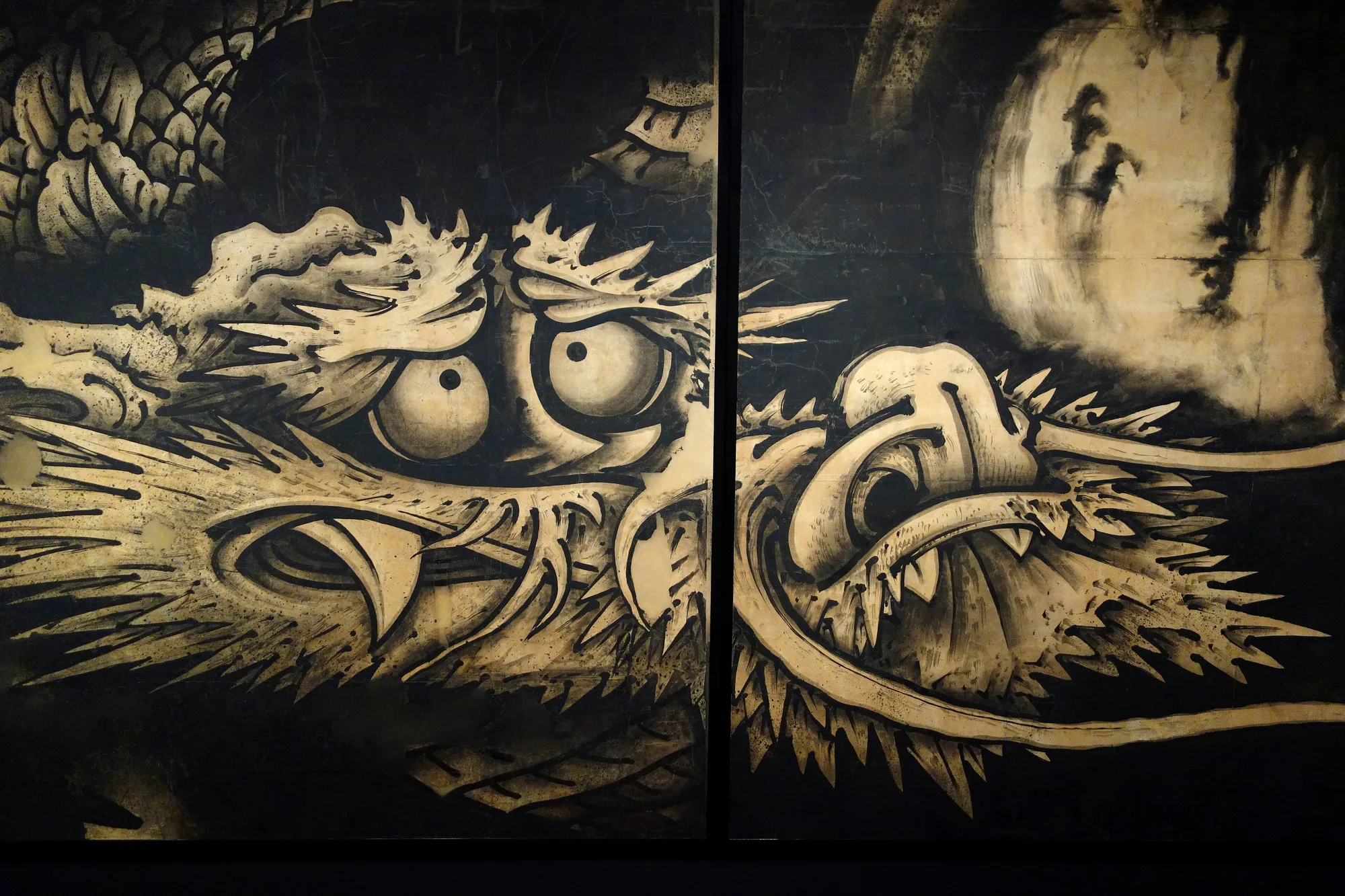
Story1763年、京都の絵師・曾我蕭白が墨だけで描いた巨大な竜です。もとは8枚の襖(ふすま)に描かれ、つなげると長さは約10.8メートル。雲の中から竜がぬっと顔を出し、片側には長いしっぽが続きます。この画像は、そのうち竜の顔の部分を、展示室で写した写真です。
In 1763, the Kyoto painter Soga Shōhaku painted this huge dragon using only black ink. It was first painted on eight sliding doors called fusuma. Side by side, they are about 10.8 meters long. The dragon pushes its face out of the clouds, and its long tail runs along the other side. This photo shows the dragon's face, taken in the gallery.
蕭白は江戸時代の「変わり者」の絵師として知られます。色をほとんど使わず、墨の濃さとかすれだけで、ごつごつしたうろこや、とげのようなひげを描きました。お寺のお堂の向かい合う壁に、頭としっぽが分かれて並んでいたと考えられています。見る人をぐるりと竜が取り囲む、迫力の仕掛けでした。
Shōhaku was known as an eccentric painter of the Edo period. He used almost no color. With only dark and dry ink, he painted rough scales and spiky whiskers. Experts think the head and the tail once faced each other on opposite walls of a temple hall. Visitors would have felt surrounded by the dragon.
明治時代、アメリカ人収集家ウィリアム・スタージス・ビゲローが日本で手に入れ、1911年にボストン美術館へ寄贈しました。長いあいだ傷んだまま倉庫で眠っていましたが、5年がかりの修復でよみがえり、2012〜13年に「里帰り」して日本各地で展示されました。今では蕭白の代表作の一つです。
In the Meiji period, the American collector William Sturgis Bigelow got it in Japan. He gave it to the Museum of Fine Arts, Boston, in 1911. For a long time it stayed in storage, badly damaged. A five-year conservation project brought it back to life. In 2012 and 2013 it traveled home to Japan for an exhibition. Today it is one of Shōhaku's most famous works.
これは大きな竜です。黒い墨だけで描かれています。目を見てください。おもちゃのように大きくてまんまるで、ちょっとおかしいですね!この絵は長さが10メートル以上あります。今はアメリカのボストンの美術館にあります。
This is a big dragon. It is painted with only black ink. Look at its eyes. They are big and round, like funny toy eyes! The painting is over ten meters long. Now it lives in a museum in Boston, America.
英語のレベルは上の「やさしい/ふつう」で切りかえられます。
えっ!?な裏ネタ
Secrets美術館に入ったとき、この竜は厚い紙に4つに分けて貼られていました。のちの調査で、もとは8枚の襖絵だったことがわかりました。お堂の中央には、今は失われた小さな襖が4枚あったと考えられています。
When it came to the museum, the dragon was mounted in four sections on thick paper. Later research showed it was first eight sliding doors. Four smaller doors, now lost, may have stood near the center of the hall.
ボストン美術館では5人の修復家が5年をかけて、汚れや古い修理のあとを取りのぞきました。木の格子に和紙を何枚も重ねた新しい芯を作り、そこに絵を貼りなおしたのです。
At the museum, five conservators spent five years on it. They removed dirt and traces of old repairs. Then they built new wooden lattice cores covered with layers of Japanese paper and mounted the paintings on them.
蕭白は、写生で大人気だった円山応挙をライバル視し、「絵がほしければ自分に頼め、図面がほしければ応挙でよい」と言ったと伝えられます。自信満々の変わり者ぶりがうかがえる逸話です。
Shōhaku is said to have joked about the popular painter Maruyama Ōkyo: 'If you want a real painting, ask me. If you just want a diagram, Ōkyo will do.' The story shows his proud, eccentric character.
蕭白は長く「異端」として忘れられていました。1970年、美術史家・辻惟雄の本『奇想の系譜』が、伊藤若冲や長沢芦雪とともに紹介し、一気に人気者になりました。この本で紹介された絵師たちの展覧会には、今では長い行列ができるほどです。
For a long time, Shōhaku was ignored as too strange. In 1970, the art historian Tsuji Nobuo wrote a book called 'Lineage of Eccentrics'. It introduced him with Itō Jakuchū and Nagasawa Rosetsu, and his fame grew fast. Today, exhibitions of these painters draw long lines.
ここを見て!
Look Closer1ギョロリとした目Googly eyes
まんまるの大きな目。こわいはずなのに、どこかとぼけた表情です。蕭白らしいユーモアが出ています。
Big, round eyes. The dragon should be scary, but it looks a little silly. This is Shōhaku's humor.
2鼻と牙Nose and fangs
ぐるりと巻いた鼻先と、ぎざぎざの牙。墨の濃いところと薄いところで、立体感を出しています。
A curling nose and jagged fangs. Dark and light ink make them look solid and round.
3襖のつなぎ目Where the doors meet
縦の黒い線は、襖と襖のさかい目です。もとは開け閉めする戸だったことがわかります。
The black vertical line is the edge between two doors. It reminds us that these were once sliding doors.
英語で名画を語ろう
Talk about Art in EnglishThis huge dragon is painted in ink on paper.
この巨大な竜は、紙に墨で描かれています。
💡 水墨画は ink painting。「〜で描かれた」は painted in + 材料 で言えます。
英語で説明すると… Describe it
これは雲の中の竜の絵です。真ん中には、大きなまんまるの目が2つあります。右側には、くるりと巻いた鼻とするどい牙があります。真ん中に黒い線があるのは、戸に描かれていたからです。
This is a picture of a dragon in the clouds. In the center, there are two big round eyes. On the right, there is a curling nose and sharp fangs. There is a dark line in the middle because it was painted on doors.
考えてみよう Think & Talk
- 蕭白はなぜ竜にこんなおかしな目を描いたと思いますか?Why do you think Shōhaku gave the dragon such funny eyes?
- 暗いお堂でこの竜にぐるりと囲まれたら、どんな気持ちになると思いますか?How would you feel if this dragon surrounded you in a dark temple hall?
この作品の英単語
WordsThe dragon is coming out of the clouds.
竜が雲の中から出てきている。
Shōhaku was an eccentric painter.
蕭白は風変わりな絵師だった。
It took five years to restore the dragon.
竜を修復するのに5年かかった。
The painting was first made on sliding doors.
この絵はもともと襖に描かれた。
ミニクイズ
QuizQ. この竜の絵は、もともと何に描かれていた?What was this dragon first painted on?
もとは8枚の襖絵で、つなげると約10.8メートルになります。
It was painted on eight sliding doors. Together they are about 10.8 meters long.
ウソ?ホント? この絵は今、アメリカのボストン美術館にある。This painting is now in the Museum of Fine Arts, Boston, in the U.S.
1911年に寄贈され、今もボストン美術館の所蔵です。
It was given to the museum in 1911 and is still there.
ウソ?ホント? 蕭白はこの竜を、赤や金など色とりどりの絵の具で描いた。Shōhaku painted this dragon in many colors, like red and gold.
墨だけで描かれています。濃い墨とかすれで迫力を出しました。
He used only black ink. Dark and dry ink strokes make it powerful.
 画像の出典とライセンス / Image credit
- PDDragon and Clouds by Soga Shohaku, 1763, set of eight panels, ink on paper DSC02757.JPG(Wikimedia Commons)
ライセンス:Public domain(パブリックドメイン)/作者・撮影者の表記:Soga Shōhaku/提供元:Own work
この作品は、作者の死後長い年月がたち著作権の保護期間が終わった「パブリックドメイン」の作品です。画像は平面の作品を忠実に写したもので、新しい著作権は生じません(Wikimedia Commons の PD-Art の考え方)。 所蔵:ボストン美術館(Museum of Fine Arts, Boston)。画像は表示のために縮小・WebP 形式に変換しています。
