 ワークシート
 ぬりえ
 迷路
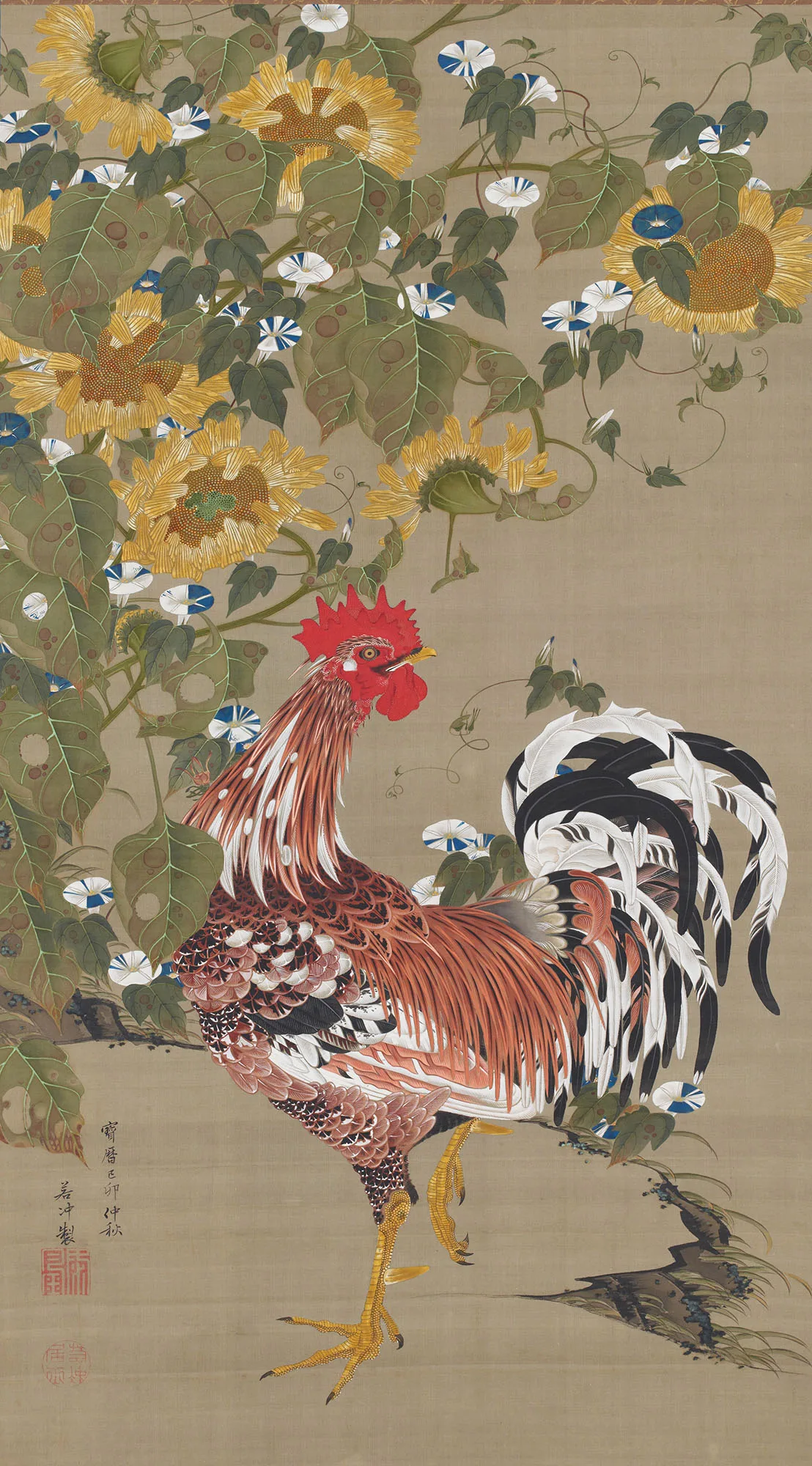
ヒマワリの下で胸をはるオンドリ。若冲のころはまだめずらしい花!A rooster stands proudly under sunflowers—a flower that was probably still rare in Jakuchū's day!
 美術館アンテナ:伊藤若冲の作品に会える展覧会
全国の展覧会をさがす →この作品のお話
Story夏の庭で、ヒマワリとアサガオの下に立つオンドリを描いた絵です。伊藤若冲の『動植綵絵』30幅のうちの1幅で、絵の中に1759年(宝暦9年)秋の年記があります。赤いトサカ、白と黒の長い尾羽、片足を上げたポーズまで、細かく描きこまれています。今は皇居三の丸尚蔵館にあります。
This painting shows a rooster standing under sunflowers and morning glories in a summer garden. It is one of the thirty scrolls of Itō Jakuchū's 'Colorful Realm of Living Beings,' dated autumn 1759. The red comb, the long black-and-white tail and the raised foot are all painted in fine detail. It is now in the Museum of the Imperial Collections, Sannomaru Shōzōkan.
ヒマワリは北アメリカ生まれの花で、日本には江戸時代の前半に伝わりました。若冲のころは、まだめずらしい花だったと考えられます。若冲は、小さな花がびっしり集まるヒマワリの中心を細かく描いています。きれいな花だけでなく、虫に食われたような葉の穴やしみまで、ていねいに描きこんでいます。
Sunflowers come from North America and reached Japan in the early Edo period. In Jakuchū's time, they were probably still rare. Jakuchū carefully painted the sunflower centers, which are packed with tiny florets. He also included the holes and spots on the leaves, as if insects had eaten them, not only the beautiful flowers.
動植綵絵の30幅のうち、ニワトリが主役の絵は8幅もあります。若冲がどれほどニワトリを好んだかがわかります。動植綵絵は2021年に国宝に指定されました。中でもこの堂々としたオンドリは、「若冲といえばニワトリ」というイメージを代表する1羽です。
Of the thirty scrolls, eight star chickens. This shows how much Jakuchū loved them. The series was named a National Treasure in 2021. This proud rooster is one of the birds that made people think of chickens whenever they hear Jakuchū's name.
これは夏の庭です。大きなオンドリがヒマワリの下に立っています。赤いトサカと長い尾羽があります。葉っぱを見てください。虫が食べたような穴があります!
This is a summer garden. A big rooster stands under sunflowers. It has a red comb and a long tail. Look at the leaves. They have holes, like bugs ate them!
英語のレベルは上の「やさしい/ふつう」で切りかえられます。
えっ!?な裏ネタ
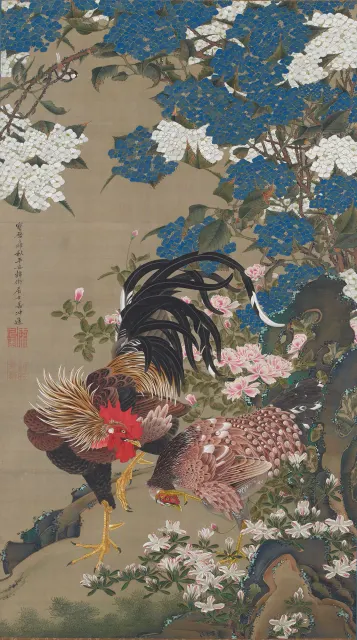
Secrets動植綵絵の題名を見ると、「群鶏図」「南天雄鶏図」「紫陽花双鶏図」など、ニワトリが主役の絵が8幅あります。30幅の4分の1以上です。ニワトリは、若冲がとくに好んでくり返し描いた生きものでした。
Look at the titles in the series: 'Group of Chickens,' 'Nandina and Rooster,' 'Hydrangeas and Two Chickens' and more. Eight of the thirty scrolls star chickens, more than a quarter. Chickens were one of Jakuchū's favorite subjects.
ヒマワリの大きな葉には、虫に食われたような丸い穴やしみがたくさんあります。見落としそうな細部ですが、若冲はていねいに描きこみました。若冲の版画作品にも、虫食いの葉がよく登場します。
The big sunflower leaves have many round holes and spots, as if eaten by insects. These details are easy to overlook, but Jakuchū painted them carefully. Leaves with insect holes also appear often in his prints.
ヒマワリは北アメリカが原産で、ヨーロッパや中国をへて、17世紀に日本へ伝わったとされます。江戸時代には「丈菊(じょうぎく)」などとよばれました。この絵は、日本の絵の中にヒマワリが描かれた早いころの例のひとつといわれます。
Sunflowers are native to North America and are said to have reached Japan in the 17th century by way of Europe and China. In the Edo period, they had names such as 'jōgiku,' or 'tall chrysanthemum.' This is said to be one of the early Japanese paintings of sunflowers.
ヒマワリにからみつくように、青と白のアサガオが咲いています。アサガオは朝、ヒマワリは日中に元気な夏の花。若冲は、夏の朝と昼をひとつの画面に合わせたのかもしれません。江戸時代の後半には、アサガオの大ブームも起こりました。
Blue-and-white morning glories bloom, winding around the sunflowers. Morning glories open in the morning, and sunflowers shine in the daytime. Perhaps Jakuchū put a summer morning and noon into one picture. Later in the Edo period, morning glories became a huge craze.
ここを見て!
Look Closer1真っ赤なトサカThe bright red comb
あざやかな赤いトサカ。くちばしを少し開け、何か鳴いているようです。
A bright red comb. The beak is a little open, as if the rooster is calling.
2白と黒の尾羽Black-and-white tail
大きく弧をえがく尾羽。白と黒の羽が重なり合い、リズムを生んでいます。
The tail feathers curve in a big arc. The overlapping white and black feathers create a rhythmic pattern.
3ヒマワリA sunflower
花の中心には、小さな花が細かい点のようにびっしり描かれています。
The center is packed with tiny florets painted like small dots.
4アサガオA morning glory
青と白のアサガオが、ヒマワリにからみついて咲いています。
A blue-and-white morning glory blooms, winding around the sunflowers.
英語で名画を語ろう
Talk about Art in EnglishThe sunflowers are in full bloom above the rooster.
オンドリの上で、ヒマワリが満開です。
💡 in full bloom で「満開」。花の絵を説明するときの定番表現です。
英語で説明すると… Describe it
これは夏の庭です。上のほうには、大きな黄色いヒマワリと青いアサガオがあります。下のほうでは、オンドリが堂々と立っています。赤いトサカと、白と黒の長い尾羽があります。
This is a summer garden. At the top, there are big yellow sunflowers and blue morning glories. In the lower part, a rooster is standing proudly. It has a red comb and a long black-and-white tail.
考えてみよう Think & Talk
- 若冲はなぜ、穴のあいた葉を描いたのだと思いますか?Why do you think Jakuchū painted leaves with holes?
- このオンドリは、どんな声で鳴いていると思いますか?What sound do you think this rooster is making?
この作品の英単語
WordsA proud rooster stands under the flowers.
堂々としたオンドリが花の下に立っています。
Sunflowers were still rare in Jakuchū's time.
若冲のころ、ヒマワリはまだめずらしい花でした。
The rooster looks proud of its long tail.
オンドリは長い尾羽が自慢そうです。
Morning glories bloom early in the day.
アサガオは朝早くに咲きます。
ミニクイズ
QuizQ. 動植綵絵30幅のうち、ニワトリが主役の絵はいくつ?How many of the thirty scrolls star chickens?
8幅あります。若冲はニワトリをとくに好んで描きました。
There are eight. Jakuchū especially loved painting chickens.
ウソ?ホント? ヒマワリは日本生まれの花だ。Sunflowers are native to Japan.
北アメリカ生まれで、日本には江戸時代の前半に伝わりました。
They come from North America and reached Japan in the early Edo period.
ウソ?ホント? この絵には、虫に食われたような穴のある葉も描かれている。This painting shows leaves with holes, as if eaten by insects.
葉の穴やしみまで、若冲は細かく描いています。
Jakuchū carefully painted even the holes and spots on the leaves.
 画像の出典とライセンス / Image credit
- PDItō Jakuchū - Rooster and Sunflowers (Colorful Realm of Living Beings).jpg(Wikimedia Commons)
ライセンス:Public domain(パブリックドメイン)/作者・撮影者の表記:Itō Jakuchū
この作品は、作者の死後長い年月がたち著作権の保護期間が終わった「パブリックドメイン」の作品です。画像は平面の作品を忠実に写したもので、新しい著作権は生じません(Wikimedia Commons の PD-Art の考え方)。 所蔵:皇居三の丸尚蔵館(The Museum of the Imperial Collections, Sannomaru Shōzōkan)。画像は表示のために縮小・WebP 形式に変換しています。