 ワークシート
 ぬりえ
 迷路
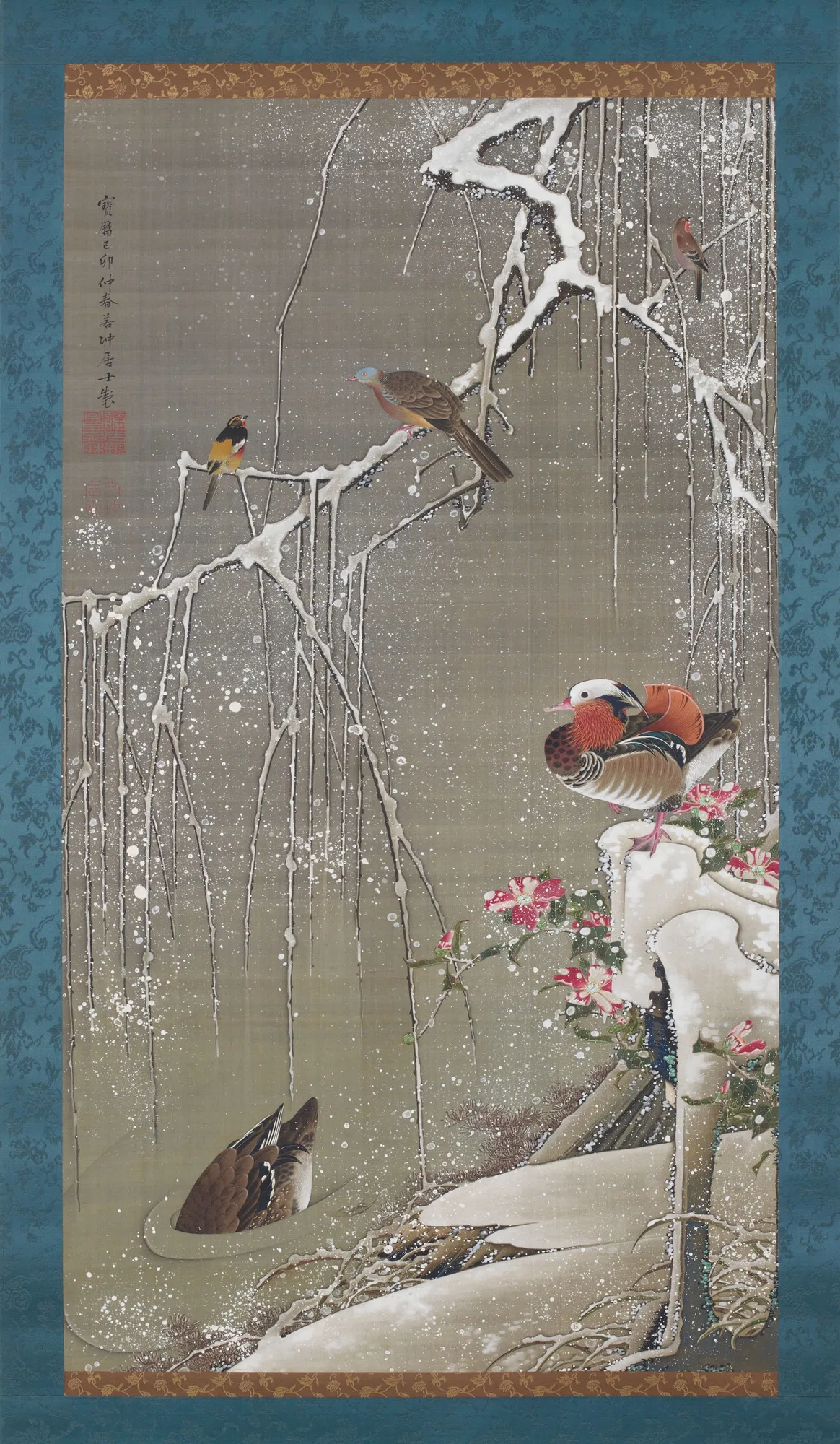
雪の水辺にオシドリの夫婦。ねっとりした不思議な雪に注目!A pair of mandarin ducks by a snowy pond. Look at the strange, thick snow that seems to be melting!
 美術館アンテナ:伊藤若冲の作品に会える展覧会
全国の展覧会をさがす →この作品のお話
Story雪の積もった柳の枝と岩、冷たい水辺にいるオシドリの夫婦を描いた絵です。伊藤若冲の『動植綵絵』30幅のうちの1幅で、絵の中に1759年(宝暦9年)の年記があります。岩の上にあざやかな色のオスが立ち、左下ではメスが頭を水の中に入れています。今は皇居三の丸尚蔵館にあります。
This painting shows a pair of mandarin ducks by cold water, with snowy willow branches and rocks. It is one of the thirty scrolls of Itō Jakuchū's 'Colorful Realm of Living Beings,' and it is dated 1759. The colorful male stands on a rock, and at the lower left the female has her head under the water. It is now in the Museum of the Imperial Collections, Sannomaru Shōzōkan.
この絵は、動植綵絵の中でも早いころの作品です。雪は白い絵の具で描かれ、枝からたれさがる雪や、空中に散る雪のつぶが、画面全体をおおっています。オスの羽のオレンジや、岩のわきに咲く赤い花が、白と灰色の世界の中で、ひときわあざやかに見えます。色をおさえた画面だからこそ、生きものの色が引き立つのです。
This is one of the earlier works in the series. The snow is painted in white pigment. Snow hangs from the branches, and flakes are scattered all over the picture. The orange feathers of the male and the red flowers by the rock stand out brightly in a world of white and gray. Because the rest of the picture is so quiet, the colors of the living things shine.
オシドリは、オスとメスがいつも一緒にいると考えられ、昔から仲のよい夫婦のたとえにされてきました。若冲は、その夫婦を、片方は岩の上、片方は水の中という思いきった配置で描いています。寒さの中で生きる鳥たちの姿を、静かで、どこか不思議な雰囲気で表した一枚です。
Mandarin ducks were believed to stay together always, so they have long been a symbol of a happy couple. Jakuchū boldly placed one bird on a rock and the other in the water. The painting shows birds living in the cold, with a quiet and slightly mysterious feeling.
水辺の雪の日です。色あざやかなカモが岩の上に立っています。もう1羽は頭を水に入れています。厚い雪が、とけかけているように枝からたれさがっています。あと3羽の鳥を見つけられるかな?
It is a snowy day by the water. A colorful duck stands on a rock. Another duck puts its head in the water. The thick snow hangs from the branches as if it is melting. Can you find three more birds?
英語のレベルは上の「やさしい/ふつう」で切りかえられます。
えっ!?な裏ネタ
Secrets若冲の雪は、ふわふわというより、ねっとりとたれさがり、今にもとけ落ちそうな形をしています。枝からつららのようにのびる雪もあります。この独特の雪の表現は、若冲ならではのものとして、よく話題になります。
Jakuchū's snow is not fluffy. It hangs down thickly, as if it is about to melt and drop. Some of it stretches from the branches like icicles. This unusual way of painting snow is often discussed as a distinctive feature of Jakuchū's work.
仲のよい夫婦を「おしどり夫婦」といいますが、野生のオシドリは、毎年のように相手を変えるといわれます。また、子育てはメスだけで行います。絵の中の夫婦も、オスは岩の上、メスは水の中と、別々のことをしているのが面白いところです。
In Japanese, a happy couple is called a 'mandarin duck couple.' But wild mandarin ducks are said to change partners almost every year, and only the female raises the chicks. In this painting, too, the male and female are busy with different things.
左下のメスは、体と尾だけが水面から出ています。頭を水の中に入れて、エサをさがしているところでしょうか。オシドリの夫婦は2羽をならべて描かれることが多いのですが、若冲はあえてメスの顔をかくしました。
Only the body and tail of the female at the lower left are above the water. She may be looking for food with her head under the surface. Mandarin duck couples are often painted side by side, but Jakuchū chose to hide the female's face.
雪の枝をよく見ると、オシドリのほかにも鳥がいます。まん中の枝にはハトのような鳥、その左には黒い頭の小鳥、右上の枝にももう1羽。全部で5羽の鳥が、雪の中で息をひそめているのです。
Look closely at the snowy branches. There are other birds besides the ducks: a dove-like bird on the middle branch, a small black-headed bird to its left and one more on the upper right. Five birds are quietly waiting in the snow.
ここを見て!
Look Closer1オスのオシドリThe male duck
岩の上に立つオス。オレンジの羽が、雪の中で目立っています。
The male stands on a rock. His orange feathers stand out in the snow.
2水に頭を入れるメスThe female with her head underwater
頭を水に入れたメス。水面には体と尾だけが見えています。
The female has her head in the water. Only her body and tail show above the surface.
3たれさがる雪Drooping snow
柳の細い枝から、雪がつららのようにたれさがっています。
Snow hangs from the thin willow branches like icicles.
4枝の上の鳥A bird on the branch
雪の枝にとまるハトのような鳥。左にも小鳥がいます。
A dove-like bird sits on a snowy branch. Another small bird is to its left.
英語で名画を語ろう
Talk about Art in EnglishThe female duck is floating with her head under the water.
メスのカモは、頭を水の中に入れてうかんでいます。
💡 with+もの+状態で「〜を…にして」。姿勢を説明するのに便利です。
英語で説明すると… Describe it
これは雪の冬の場面です。右では、色あざやかなオスのカモが岩の上に立っています。左下では、茶色のカモが水の中にいます。絵の上のほうから、雪の積もった枝がたれさがっています。
This is a snowy winter scene. On the right, a colorful male duck is standing on a rock. In the lower left, a brown duck is in the water. Snowy branches hang down from the top of the picture.
考えてみよう Think & Talk
- 若冲はなぜ、メスの顔をかくしたのだと思いますか?Why do you think Jakuchū hid the female duck's face?
- この雪は冷たそうに見えますか?それはなぜ?Does this snow look cold to you? Why or why not?
この作品の英単語
WordsThe female duck dips her head underwater to look for food.
メスのカモは、エサをさがして頭を水につけています。
The snow seems to drip from the branches.
雪が枝からしたたり落ちそうに見えます。
A pair of ducks lives by the pond.
一組のカモが池のそばにいます。
The male duck has vivid orange feathers.
オスのカモはあざやかなオレンジの羽をしています。
ミニクイズ
QuizQ. 左下のメスのオシドリは何をしている?What is the female duck at the lower left doing?
体と尾だけが水面に出ています。エサをさがしているのかもしれません。
Only her body and tail are above the water. She may be looking for food.
ウソ?ホント? この絵の中には、1759年の年記がある。This painting is dated 1759.
動植綵絵の中でも早いころの作品です。
It is one of the earlier works in the series.
ウソ?ホント? この絵に描かれている鳥は、オシドリ2羽だけだ。The only birds in this painting are the two mandarin ducks.
枝の上にも3羽の鳥がいて、全部で5羽です。
Three more birds sit on the branches, so there are five in all.
 画像の出典とライセンス / Image credit
- PDItō Jakuchū - Mandarin ducks in the snow (Colorful Realm of Living Beings).jpg(Wikimedia Commons)
ライセンス:Public domain(パブリックドメイン)/作者・撮影者の表記:Itō Jakuchū
この作品は、作者の死後長い年月がたち著作権の保護期間が終わった「パブリックドメイン」の作品です。画像は平面の作品を忠実に写したもので、新しい著作権は生じません(Wikimedia Commons の PD-Art の考え方)。 所蔵:皇居三の丸尚蔵館(The Museum of the Imperial Collections, Sannomaru Shōzōkan)。画像は表示のために縮小・WebP 形式に変換しています。