 ワークシート
 ぬりえ
 迷路
タコの足に子ダコがしがみつく!?若冲の海の図鑑。A baby octopus clings to its parent's leg!? Jakuchū's guide to the sea.
 美術館アンテナ:伊藤若冲の作品に会える展覧会
全国の展覧会をさがす →この作品のお話
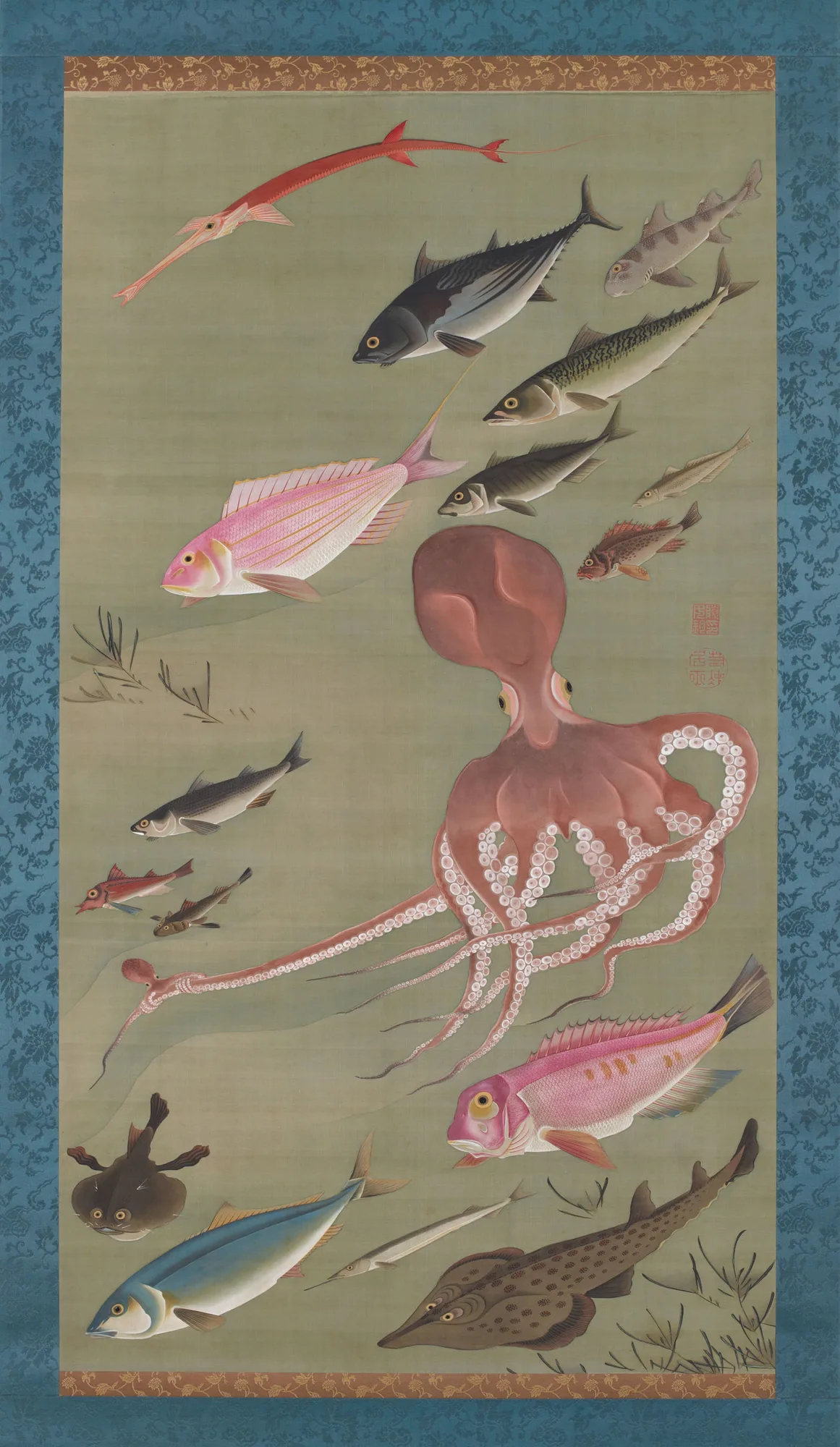
Story大きなタコを中心に、たくさんの魚が泳ぐ姿を描いた絵です。江戸時代の京都の絵師・伊藤若冲(いとうじゃくちゅう)の代表作『動植綵絵(どうしょくさいえ)』30幅のうちの1幅。1766年ごろの作とされ、今は皇居三の丸尚蔵館にあります。2021年には、30幅まとめて国宝に指定されました。
This painting shows many fish swimming around a big octopus. It is one of the thirty scrolls of 'Colorful Realm of Living Beings,' the masterpiece of Itō Jakuchū, a Kyoto painter of the Edo period. It is thought to date from around 1766 and is now in the Museum of the Imperial Collections, Sannomaru Shōzōkan. In 2021, all thirty scrolls were named a National Treasure together.
若冲は京都・錦市場の青物問屋の長男に生まれ、店先にならぶ魚や野菜を見て育ちました。40歳ごろに家業を弟にゆずり、絵に打ちこみます。この絵では、多くの魚が同じ向きにならび、うろこやひれ、タコの吸盤まで細かく描かれています。海の中の景色というより、まるで魚の図鑑のようです。
Jakuchū was born the eldest son of a vegetable wholesaler at Nishiki Market in Kyoto, and he grew up looking at the fish and vegetables in the shops. Around the age of 40, he handed the business to his brother and devoted himself to painting. Here, many fish face the same way, and every scale, fin and sucker is drawn in detail. It looks less like the sea and more like a fish guidebook.
動植綵絵は、若冲が京都の相国寺に寄進したもので、お寺の大切な儀式のときには、仏の絵のまわりに30幅がずらりと掛けられました。明治時代に皇室に納められ、今は皇居三の丸尚蔵館で守られています。こわそうな大ダコと、かわいい子ダコ。見るたびに新しい発見がある1幅です。
Jakuchū donated these scrolls to Shōkoku-ji temple in Kyoto. For important ceremonies, all thirty were hung around paintings of the Buddha. In the Meiji period, they were given to the Imperial Household, and they are now kept at the Sannomaru Shōzōkan. A scary big octopus and a cute little one—you find something new each time you look.
この絵には、たくさんの魚と大きなタコがいます。タコの長い足を見てください。子ダコがつかまっています!若冲は京都の錦市場の近くで育ちました。そこでは魚や野菜が売られていました。
This picture shows many fish and a big octopus. Look at the octopus's long leg. A baby octopus is holding it! Jakuchū grew up near Nishiki Market in Kyoto. Fish and vegetables were sold there.
英語のレベルは上の「やさしい/ふつう」で切りかえられます。
えっ!?な裏ネタ
Secrets左のほうへ長くのびる大ダコの足の先をよく見ると、小さなタコがしがみついています。親子のタコとして紹介されることが多く、迫力ある大ダコの絵に、くすっと笑えるかわいさを加えています。若冲のちゃめっけが見える場所です。
Look closely at the tip of the big octopus's long leg on the left. A tiny octopus is holding on to it. It is often described as a parent and child. This little detail adds a funny, cute touch to a powerful picture and shows Jakuchū's playful side.
よく見ると、魚たちの多くが左を向いて泳いでいます。本物の海では、魚はばらばらの向きに泳ぐものです。若冲は、店先にならべるように、また標本のように見せることで、一匹ずつの形をくらべやすくしたのかもしれません。
Look closely and you will see that most of the fish swim to the left. In the real sea, fish swim every which way. Perhaps Jakuchū lined them up like fish in a shop or like specimens, so we can compare each shape easily.
動植綵絵には、この絵と対になるもう1幅の魚の絵「群魚図」があります。その左下のルリハタという魚には、18世紀にドイツで生まれた青い絵の具プルシアンブルーが使われている可能性が非常に高いと、のちの調査で判断されました。日本ではとても早い時期の使用例とされます。
The series has another fish scroll, 'Group of Fish,' which pairs with this one. Later research concluded that a blue fish at its lower left was very likely painted with Prussian blue, a pigment invented in Germany in the 18th century. It is said to be a very early use of this blue in Japan.
「若冲」という名前は、中国の思想書『老子』の「大盈若冲」ということばから取られたとされます。本当に満ちているものは、かえってからっぽのように見える、という意味。相国寺の僧・大典がつけたと伝えられています。
The name 'Jakuchū' is said to come from a phrase in the Chinese classic Laozi. It means that something truly full looks empty. It is said that Daiten, a monk of Shōkoku-ji, gave him this name.
ここを見て!
Look Closer1大ダコThe big octopus
画面のまん中で、赤い大ダコが足を大きく広げています。白い吸盤が一つずつ描かれています。
In the center, a big red octopus spreads its legs. Each white sucker is drawn one by one.
2子ダコThe baby octopus
大ダコの長い足の先に、小さなタコがしがみついています。
A tiny octopus clings to the tip of the big octopus's long leg.
3赤くて細長い魚A long red fish
口が細長くのびた赤い魚。ヤガラのなかまのようです。
A red fish with a long, thin snout. It looks like a kind of cornetfish.
英語で名画を語ろう
Talk about Art in EnglishMost of the fish face the same direction.
ほとんどの魚が同じ方向を向いています。
💡 face は動詞で「〜の方を向く」。向きをそろえた描き方を説明できます。
英語で説明すると… Describe it
これは海の生きものの絵です。まん中には、大きな赤いタコがいます。そのまわりでは、たくさんの魚が左に向かって泳いでいます。左のほうでは、小さなタコが長い足にしがみついています。
This is a picture of sea animals. In the middle, there is a big red octopus. Around it, many fish are swimming to the left. On the left, a tiny octopus is holding on to a long leg.
考えてみよう Think & Talk
- 若冲はなぜ、子ダコを描きこんだのだと思いますか?Why do you think Jakuchū put a baby octopus in the picture?
- この絵は、海の中と魚屋さんのどちらに近く見えますか?それはなぜ?Does this picture look more like the sea or like a fish shop? Why?
この作品の英単語
WordsA big octopus is in the middle of the picture.
絵のまん中に大きなタコがいます。
A baby octopus holds on to one of the larger octopus's arms.
子ダコが大きなタコの足にしがみついています。
Jakuchū painted every scale of the fish.
若冲は魚のうろこを一枚一枚描きました。
His drawings of fish are very precise.
彼の魚の絵はとても精密です。
ミニクイズ
QuizQ. 大ダコの足の先にいるのは?What is at the tip of the big octopus's leg?
小さなタコがしがみついています。親子のタコとしてよく紹介されます。
A tiny octopus is holding on. It is often described as a parent and child.
ウソ?ホント? この絵は『動植綵絵』30幅のうちの1幅である。This is one of the thirty scrolls of 'Colorful Realm of Living Beings.'
30幅は2021年にまとめて国宝に指定されました。
All thirty were named a National Treasure in 2021.
ウソ?ホント? 若冲は漁師の家に生まれた。Jakuchū was born into a fisherman's family.
京都・錦市場の青物問屋の長男でした。
He was the eldest son of a vegetable wholesaler at Nishiki Market in Kyoto.
 画像の出典とライセンス / Image credit
- PDItō Jakuchū - Fish and octopus (Colorful Realm of Living Beings).jpg(Wikimedia Commons)
ライセンス:Public domain(パブリックドメイン)/作者・撮影者の表記:Itō Jakuchū
この作品は、作者の死後長い年月がたち著作権の保護期間が終わった「パブリックドメイン」の作品です。画像は平面の作品を忠実に写したもので、新しい著作権は生じません(Wikimedia Commons の PD-Art の考え方)。 所蔵:皇居三の丸尚蔵館(The Museum of the Imperial Collections, Sannomaru Shōzōkan)。画像は表示のために縮小・WebP 形式に変換しています。