 ワークシート
 ぬりえ
 迷路
羽の1枚1枚まで本物以上!八百屋の主人が描いた、超細密ニワトリ。Every feather looks realer than real! Amazing chickens by a former greengrocer.
 美術館アンテナ:伊藤若冲の作品に会える展覧会
全国の展覧会をさがす →この作品のお話
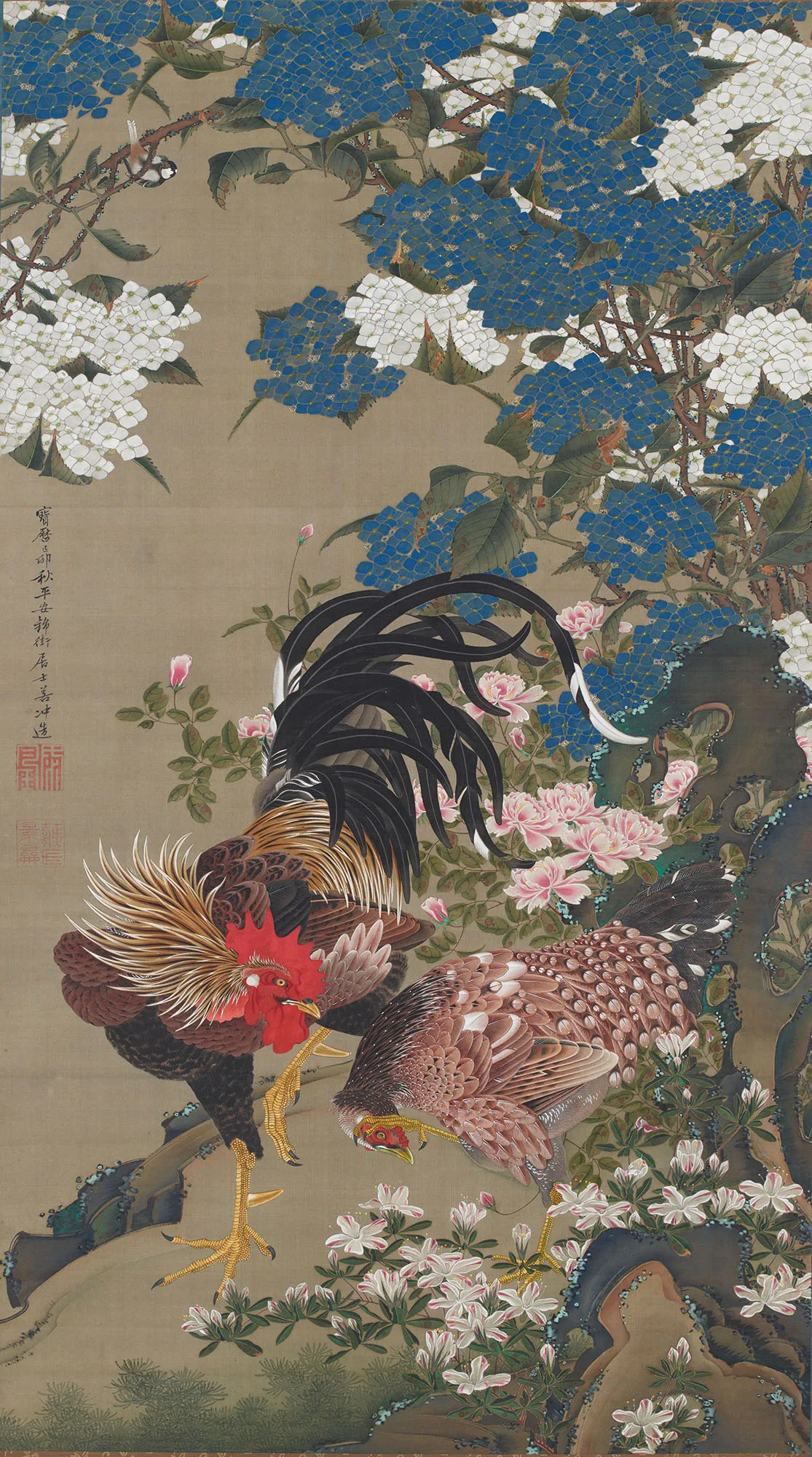
Story伊藤若冲の「紫陽花双鶏図」は、30幅からなる国宝「動植綵絵(どうしょくさいえ)」のひとつです。真っ赤なとさかの雄鶏が胸をはり、そのとなりで、点々もようの羽をもつ雌鶏が身をかがめています。頭の上には青と白のアジサイが咲きみだれ、枝には小さな鳥が1羽。左の書きこみから、1759年の秋に描かれたことがわかります。
Rooster and Hen with Hydrangeas by Itō Jakuchū is one of the 30 scrolls of Colorful Realm of Living Beings, a National Treasure. A rooster with a bright red comb puffs out his chest. Beside him, a hen with spotted feathers bends down. Blue and white hydrangeas bloom above them, and a small bird sits on a branch. The writing on the left tells us it was painted in autumn 1759.
若冲は京都・錦市場の青物問屋(八百屋)の長男に生まれ、23歳で家業をつぎましたが、40歳ごろに弟に店をゆずって絵に打ちこみました。署名の「錦街居士」は「錦通りに住む人」という意味です。絹のうら側からも色をぬる「裏彩色」を使い、色に深みを出しています。庭でたくさんのニワトリを飼って観察した、とも伝えられます。
Jakuchū was the eldest son of a greengrocer in Kyoto's Nishiki Market. He took over the family business at 23, but around 40 he gave it to his brother and devoted himself to painting. His signature 'Kingai Koji' means 'a man living on Nishiki Street.' He also painted on the back of the silk, a technique called urazaishiki, to give the colors depth. It is said he kept many chickens in his garden to study them.
動植綵絵は、若冲が釈迦三尊像とともに京都の相国寺に寄進したものです。明治時代の1889年、相国寺はこの30幅を皇室に献上し、そのお礼の1万円で寺の土地を守ったと言われます。2016年の若冲展では、見るのに何時間も待つ大行列ができ、2021年には国宝に指定されました。
Jakuchū gave the Colorful Realm scrolls to Shōkokuji Temple in Kyoto, along with paintings of the Buddha and two attendants. In 1889, the temple presented the 30 scrolls to the Imperial Family. It is said the 10,000 yen it received in return helped the temple keep its land. At a 2016 Jakuchū exhibition, people waited for hours in line. In 2021, the scrolls were named a National Treasure.
これは雄鶏と雌鶏の絵です。雄鶏には赤いとさかがあります。羽を見てください!画家は1枚1枚描きました。彼はたくさんのニワトリを飼って、毎日観察しました。
This is a painting of a rooster and a hen. The rooster has a red comb. Look at the feathers! The artist painted every one. He kept many chickens and watched them every day.
英語のレベルは上の「やさしい/ふつう」で切りかえられます。
えっ!?な裏ネタ
Secrets若冲は、絹の表だけでなくうら側からも色をぬる「裏彩色」を使いました。うらからぬった色が表にうっすらすけて、やわらかく深い色合いが生まれます。修理のときの調査でくわしくわかりました。
Jakuchū painted on both the front and the back of the silk. Colors from the back show softly through, giving a deep, gentle tone. Studies during restoration revealed this in detail.
1889年、相国寺は動植綵絵を皇室に献上し、1万円を受けとりました。当時のお寺は明治の改革で苦しく、このお金で土地を守れたと言われます。名画がお寺を救ったのです。
In 1889, Shōkokuji gave the scrolls to the Imperial Family and received 10,000 yen. Temples were struggling after the Meiji reforms, and this money is said to have saved the temple's land. A masterpiece saved a temple!
若冲は庭にニワトリを何十羽も飼い、毎日見つめて描いた、と伝えられています。相国寺の僧・大典が若冲について書き残した文章などがもとになった話です。観察の積み重ねが、この細かさを生んだのでしょう。
It is said Jakuchū kept dozens of chickens in his garden and watched them every day. The story comes from writings by Daiten, a Shōkokuji monk who knew him. Careful watching must have led to this amazing detail.
2016年、東京都美術館の「若冲展」では、動植綵絵が一挙に公開され、5時間をこえる行列ができた日もありました。江戸時代の八百屋の絵が、令和のスーパースターになったのです。
At a 2016 Jakuchū exhibition at the Tokyo Metropolitan Art Museum, all the Colorful Realm scrolls were shown. On some days, people waited more than five hours. An Edo greengrocer had become a modern superstar.
ここを見て!
Look Closer1雄鶏のとさかRooster's comb
真っ赤なとさかと、金色の首の羽。するどい目つきで胸をはっています。
A bright red comb and golden neck feathers. He puffs out his chest with sharp eyes.
2黒い尾羽Black tail feathers
弓のように反りかえる黒い尾羽。1本1本がつややかです。
Black tail feathers curve like bows. Each one shines.
3点もようの雌鶏Spotted hen
雌鶏の羽には、白い点がびっしり。身をかがめて足もとを見ています。
The hen's feathers are covered with white dots. She bends down to look at the ground.
4小さな鳥Little bird
アジサイの枝に、シジュウカラのような小鳥がちょこん。見つけられましたか?
A small bird, like a Japanese tit, sits on a branch. Can you find it?
英語で名画を語ろう
Talk about Art in EnglishJakuchū painted the rooster's feathers in great detail.
若冲は雄鶏の羽をとても細かく描きました。
💡 detail は「細部」。in detail で「くわしく」。great をつけると「すみずみまで」の感じに。
英語で説明すると… Describe it
これは2羽のニワトリをえがいた色あざやかな絵です。左では、赤いとさかの雄鶏が堂々と立っています。そのとなりでは、白い点もようの雌鶏が身をかがめています。上には、青と白のアジサイがたくさん咲いています。
This is a colorful painting of two chickens. On the left, a rooster with a red comb is standing proudly. Next to him, a hen with white dots is bending down. Above them, there are many blue and white hydrangeas.
考えてみよう Think & Talk
- 若冲はなぜ、店をゆずってまで絵を描いたのだと思いますか?Why do you think Jakuchū gave up his shop to paint?
- 絵は写真よりも本物らしくなれると思いますか?それはなぜ?Is a painting more real than a photo? Why or why not?
この作品の英単語
WordsThe rooster has a bright red comb.
雄鶏は真っ赤なとさかをしている。
Jakuchū painted every feather.
若冲は羽を1枚1枚描いた。
The painting is very detailed.
その絵はとても細かい。
He observed chickens every day.
彼は毎日ニワトリを観察した。
ミニクイズ
QuizQ. 若冲の家の仕事は何だった?What was Jakuchū's family business?
京都・錦市場の青物問屋の長男でした。
He was the eldest son of a greengrocer in Nishiki Market, Kyoto.
ウソ?ホント? 動植綵絵は全部で30幅ある。Colorful Realm of Living Beings has 30 scrolls in all.
鳥・魚・虫・花など、さまざまな生き物を描いた30幅です。
The 30 scrolls show birds, fish, insects, flowers and more.
ウソ?ホント? 若冲は、子どものころから絵だけを仕事にしていた。Jakuchū worked only as a painter from childhood.
家業の八百屋をつぎ、40歳ごろに弟にゆずってから絵に打ちこみました。
He ran the family shop first and devoted himself to painting around age 40.
 画像の出典とライセンス / Image credit
- PDItō Jakuchū - Rooster and Hen with Hydrangeas (Colorful Realm of Living Beings).jpg(Wikimedia Commons)
ライセンス:Public domain(パブリックドメイン)/作者・撮影者の表記:Itō Jakuchū
この作品は、作者の死後長い年月がたち著作権の保護期間が終わった「パブリックドメイン」の作品です。画像は平面の作品を忠実に写したもので、新しい著作権は生じません(Wikimedia Commons の PD-Art の考え方)。 所蔵:皇居三の丸尚蔵館(The Museum of the Imperial Collections, Sannomaru Shōzōkan)。画像は表示のために縮小・WebP 形式に変換しています。