

 ワークシート
 ぬりえ
 迷路
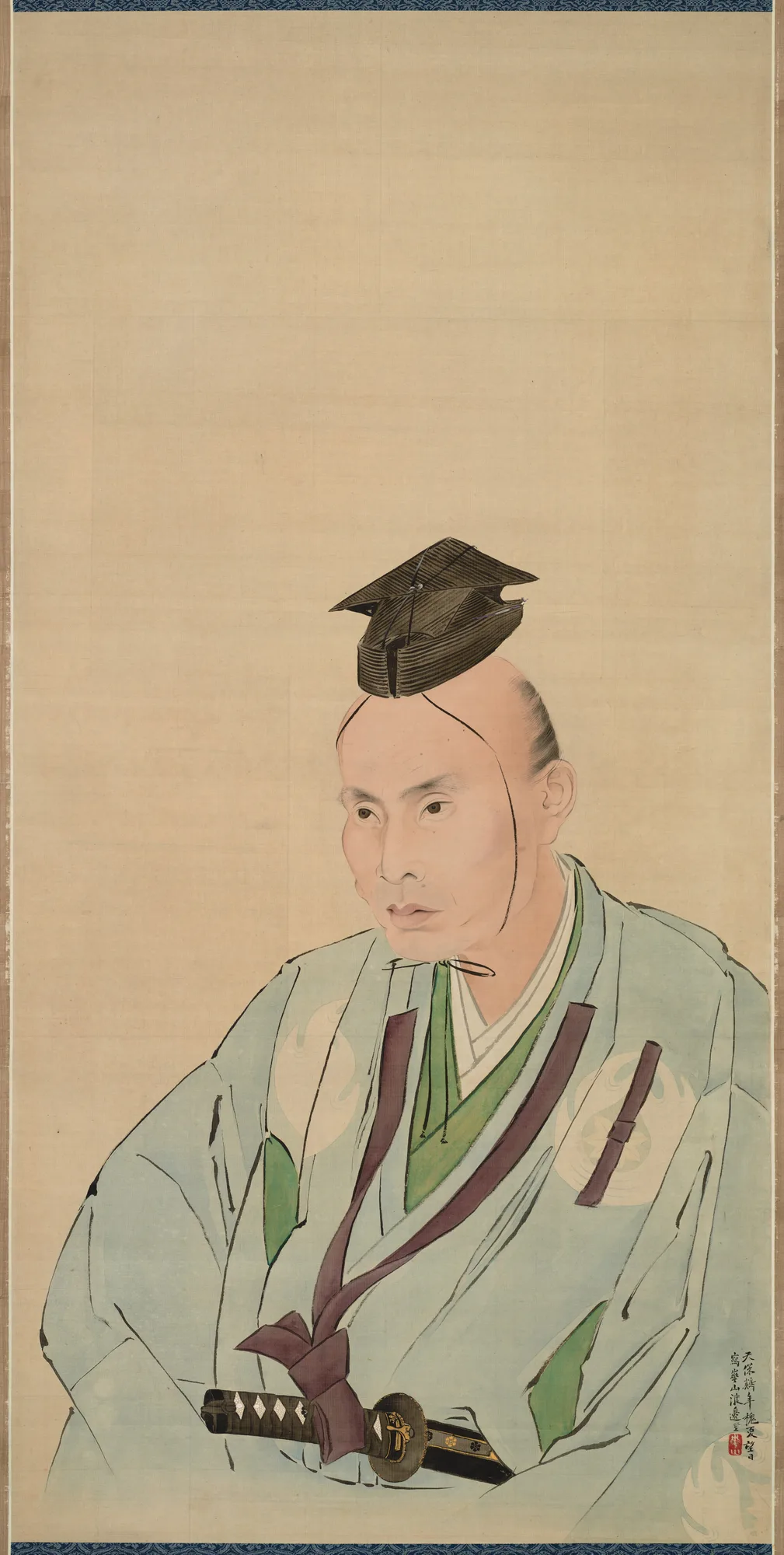
顔には西洋風の陰影、着物には日本の線。蘭学者が蘭学者を描いた国宝の肖像画。Western-style shading on the face, Japanese lines on the robe: one scholar of Dutch learning painted by another.
この作品のお話
Story1837年、渡辺崋山が描いた鷹見泉石(たかみ・せんせき)の肖像画です。泉石は古河藩(今の茨城県古河市)の家老で、53歳のときの姿です。烏帽子(えぼし)をかぶり、紋のついた正装で、少し横を向いています。国宝に指定され、東京国立博物館が所蔵しています。
Watanabe Kazan painted this portrait of Takami Senseki in 1837. Senseki was a senior officer of the Koga domain, in today's Ibaraki. Here he is 53 years old. He wears a formal hat and a robe with family crests, and he turns a little to the side. It is a National Treasure at the Tokyo National Museum.
崋山も泉石も、オランダ語の本で西洋の学問を学ぶ「蘭学」の仲間でした。崋山は西洋の絵の陰影のつけ方を研究し、顔には薄い赤と墨で細かなかげをつけて立体的に描きました。いっぽう着物は、日本の伝統的な線でさらりと描いています。東と西の描き方が一枚の中で出会っているのです。
Both Kazan and Senseki studied Western knowledge through Dutch books. This was called Rangaku, or Dutch learning. Kazan studied the shading of Western pictures. He shaded the face with light red and ink, so it looks solid. But he painted the robe with simple, traditional Japanese lines. East and West meet in one picture.
この2年後の1839年、崋山は幕府の外国政策を批判したとして罰せられ(蛮社の獄)、1841年に亡くなりました。肖像は鷹見家に大切に伝えられ、1951年、新しい法律のもとで最初に国宝に指定された作品の一つになりました。日本の写実的な肖像画の先がけとされます。
Two years later, in 1839, Kazan was punished for criticizing the shogunate's foreign policy. He died in 1841. The Takami family kept the portrait with great care. In 1951, it was among the first works named National Treasures under a new law. It is seen as a pioneer of realistic portraits in Japan.
これは男の人の絵です。名前は鷹見泉石です。彼はオランダ語の本でヨーロッパのことを学びました。顔を見てください。西洋の絵のように、やわらかいかげがあります。絵師は、この描き方を西洋の絵から学びました。
This is a picture of a man. His name is Takami Senseki. He studied things from Europe in Dutch books. Look at his face. It has soft shadows, like a Western picture. The painter learned this from Western art.
英語のレベルは上の「やさしい/ふつう」で切りかえられます。
えっ!?な裏ネタ
Secrets泉石は西洋の地理や歴史の資料を熱心に集め、「ヤン・ヘンドリック・ダップル」というオランダ風の名前でサインすることもありました。江戸時代の「海外通」だったのです。
Senseki eagerly collected Western maps and books on history. He sometimes signed his name as Jan Hendrik Dapper, a Dutch-style name. He was an Edo-period expert on the outside world.
泉石の主君・土井利位(としつら)は、顕微鏡で雪の結晶を観察した『雪華図説』を出しました。泉石はその仕事を支えました。雪の結晶の模様は、のちに着物の柄としても流行しました。
Senseki's lord, Doi Toshitsura, studied snowflakes with a microscope and published a book of them. Senseki helped with the work. Snowflake patterns later became popular on kimono.
崋山の家は武士でしたがとても貧しく、崋山は少年のころから、祭りの灯籠の絵などを描いて家計を助けたと伝えられます。絵の腕はその苦労の中でみがかれました。崋山はのちに、絵だけでなく学者としても名を残しました。
Kazan's samurai family was very poor. It is said that as a boy he painted pictures for festival lanterns to help his family. His skill grew through those hard times. Later, Kazan became known not only as a painter but also as a scholar.
泉石はとても有能で、「土井家の鷹見なのか、鷹見の土井家なのか」と言われるほどでした。家臣なのに主君と同じくらい有名だった、というほめ言葉です。泉石は、江戸や大坂での主君の大事な仕事もしっかり支えました。
Senseki was so capable that people said, 'Is he Doi's Takami, or is it Takami's Doi family?' It meant the servant was as famous as his lord. Senseki also supported his lord in important work in Edo and Osaka.
ここを見て!
Look Closer1かげのある顔Shaded face
目の下やほおに薄いかげがあり、骨の形まで感じられます。西洋の絵から学んだ描き方です。
Soft shadows under the eyes and on the cheeks show the shape of the bones. Kazan learned this from Western pictures.
2烏帽子Formal hat (eboshi)
頭にのせた黒い烏帽子。正式な場で武士がかぶるものです。
A black hat called an eboshi. Samurai wore it on formal occasions.
3線で描いた着物Robe in simple lines
顔とちがって、着物はかげをつけず、すっきりした線と淡い色で描かれています。
Unlike the face, the robe has no shading. It is made of clean lines and soft colors.
4崋山の書きこみKazan's inscription
右下に、描いた年と崋山の名前、印があります。
In the lower right are the year, Kazan's name and his seal.
英語で名画を語ろう
Talk about Art in EnglishSenseki is turning slightly to the side.
泉石は少し横を向いています。
💡 肖像画の顔の向きは turn to the left / right / side で言えます。
英語で説明すると… Describe it
これは男の人の肖像画です。黒い帽子をかぶり、水色の着物を着ています。顔にはやわらかいかげがあります。画面の下のほうでは、腰に刀を差しています。彼は少し横を向いています。
This is a portrait of a man. He is wearing a black hat and a light blue robe. His face has soft shadows. Near the bottom, a sword is tucked into his belt. He is turning slightly to the side.
考えてみよう Think & Talk
- 崋山はなぜ顔にだけかげをつけたと思いますか?Why do you think Kazan shaded only the face?
- 顔を見て、泉石はどんな人だったと思いますか?What kind of person do you think Senseki was, from his face?
この作品の英単語
WordsThis portrait shows Senseki at the age of 53.
この肖像画は53歳の泉石を描いている。
Kazan used Western shading on the face.
崋山は顔に西洋の陰影法を使った。
Senseki was a scholar of Dutch learning.
泉石は蘭学の学者だった。
His face looks very realistic.
彼の顔はとても写実的に見える。
ミニクイズ
QuizQ. 崋山と泉石が共通して学んでいたのは?What did Kazan and Senseki both study?
二人とも蘭学の仲間でした。崋山は西洋画の陰影も研究しました。
Both studied Dutch learning. Kazan also studied Western shading.
ウソ?ホント? この肖像画は国宝に指定されている。This portrait is a National Treasure.
1951年に国宝に指定され、東京国立博物館が所蔵しています。
It was named a National Treasure in 1951. It is in the Tokyo National Museum.
ウソ?ホント? 崋山は、着物にも顔と同じように強いかげをつけた。Kazan shaded the robe as strongly as the face.
かげをつけたのは主に顔だけ。着物は伝統的な線で描いています。
He mainly shaded the face. The robe is drawn with traditional lines.
 画像の出典とライセンス / Image credit
- PDA portrait of Takami Senseki by Watanabe Kazan.jpg(Wikimedia Commons)
ライセンス:Public domain(パブリックドメイン)/作者・撮影者の表記:Watanabe Kazan/提供元:Emuseum
この作品は、作者の死後長い年月がたち著作権の保護期間が終わった「パブリックドメイン」の作品です。画像は平面の作品を忠実に写したもので、新しい著作権は生じません(Wikimedia Commons の PD-Art の考え方)。 所蔵:東京国立博物館(国宝)(Tokyo National Museum (National Treasure))。画像は表示のために縮小・WebP 形式に変換しています。
