

 ワークシート
 ぬりえ
 迷路
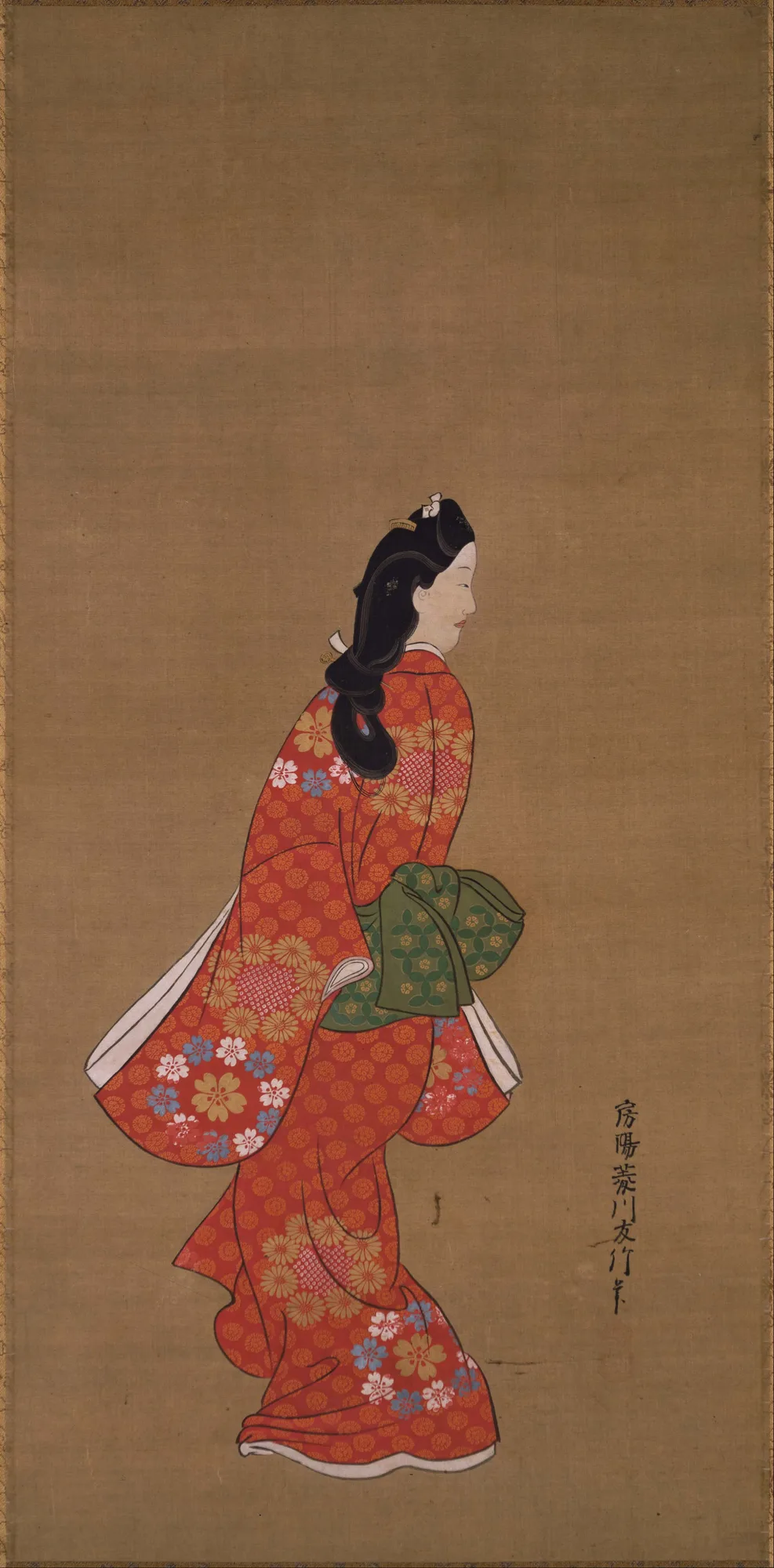
ふり返ったその一瞬がおしゃれ!切手でもおなじみの「浮世絵の元祖」の名品。Looking back in style! A famous work by the 'father of ukiyo-e', also seen on a stamp.
この作品のお話
Story江戸時代の前半、17世紀の終わりごろに菱川師宣が描いた肉筆画(筆で直接描いた絵)です。赤い着物の若い女性が、歩きながらふと後ろをふり返っています。何もない背景に人物だけを置き、着物の柄と体のひねりで見る人の目をひきつけます。東京国立博物館の所蔵です。
Hishikawa Moronobu painted this by hand in the late 17th century, early in the Edo period. A young woman in a red kimono looks back over her shoulder as she walks. There is no background, only the figure. The kimono pattern and her twisting body catch our eye. It is in the Tokyo National Museum.
師宣は「浮世絵の祖」と呼ばれます。浮世絵の「浮世」は、今を楽しむ世の中という意味。師宣は本のさし絵から始め、1枚刷りの版画を広めました。この女性の着物は、桜や菊を丸く図案化した当時流行の柄で、帯は役者の名前にちなむ「吉弥結び」、髪は「玉結び」という最新のおしゃれです。
Moronobu is called the father of ukiyo-e. 'Ukiyo' means the 'floating world', a world of fun and fashion. He began with book pictures and helped make single-sheet prints popular. Her kimono has round designs of cherry blossoms and chrysanthemums, very fashionable then. Her sash is tied in a style named after a kabuki actor, and her hair is in the stylish tama-musubi style.
1948年、この絵は記念切手「切手趣味週間」の図柄に選ばれました。この切手は人気が高く、今も収集家にあこがれの一枚です。ふり返る美人のポーズは、その後の美人画にもくり返し使われ、日本美術を代表するイメージの一つになりました。今も東京国立博物館で、ときどき公開されています。
In 1948, this painting was used on a special stamp for Philatelic Week. The stamp is still very popular with collectors. The pose of a beauty looking back was used again and again in later pictures of women. It became one of the best-known images of Japanese art. It is still shown from time to time at the Tokyo National Museum.
若い女性が歩いています。ふと、うしろをふり返りました。赤い着物にはたくさんの花の柄があります。この絵は300年以上前のものです。1948年には、有名な日本の切手になりました!
A young woman is walking. Suddenly, she looks back. Her red kimono has many flowers on it. This picture is more than 300 years old. In 1948, it became a famous Japanese stamp!
英語のレベルは上の「やさしい/ふつう」で切りかえられます。
えっ!?な裏ネタ
Secrets右下の署名は「房陽 菱川友竹筆」。「房陽」は安房の国(今の千葉県南部)のこと。師宣は自分のふるさとを名前に入れて、ほこらしく署名したのです。「友竹」は師宣の号(絵師としての名前)の一つです。
The signature reads 'Bōyō Hishikawa Yūchiku hitsu,' meaning 'painted by Bōyō Hishikawa Yūchiku.' Bōyō means Awa Province, now southern Chiba. Moronobu proudly put his hometown in his signature. Yūchiku was one of Moronobu's art names.
師宣の父は、着物に刺繍や金箔をほどこす職人だったと伝えられます。この絵の、すみずみまで美しい着物の柄にも、その目がいきているのかもしれません。師宣はのちに江戸へ出て、絵師として名を上げました。
Moronobu's father is said to have been a craftsman who decorated kimono with embroidery and gold leaf. That may be why the kimono pattern here is so beautiful. Moronobu later moved to Edo and made his name as a painter.
1948年の「見返り美人」の切手は、横長でなく縦に細長い大きめの形。発行当時から人気で、今でも日本の記念切手の代表として知られています。額面は5円でした。
The 1948 'Beauty Looking Back' stamp is tall and narrow. It was popular from the start, and it is still one of Japan's best-known special stamps. Its face value was 5 yen.
後ろをふり返るポーズだと、帯の結び方や背中の柄、髪型が一度に見えます。流行の最先端を見せる、いわば江戸のファッション写真だった、という見方もあります。ただし、これは一つの見方で、師宣の本当のねらいはわかっていません。
When she looks back, we can see her sash knot, the pattern on her back and her hairstyle all at once. Some say it was like an Edo fashion photo. But this is just one view. We do not know what Moronobu really intended.
ここを見て!
Look Closer1ふり返る顔Face looking back
白い顔が、肩ごしにうしろを見ています。何を見ているのか、想像がふくらみます。
Her pale face looks back over her shoulder. What is she looking at?
2吉弥結びの帯Kichiya-style sash
緑の帯を、たれを長く下げて結んでいます。当時の人気役者・上村吉弥にちなむ結び方です。
The green sash hangs down at the back. This knot was named after Uemura Kichiya, a popular actor of the time.
3花の丸の着物Kimono with flower circles
赤い地に、桜や菊を丸い形にした模様がちりばめられています。
On the red kimono are round designs of cherry blossoms and chrysanthemums.
4署名Signature
「房陽 菱川友竹筆」。ふるさと安房の国の名が入っています。
It says 'Bōyō Hishikawa Yūchiku', including the name of his home province.
英語で名画を語ろう
Talk about Art in EnglishShe is looking back over her shoulder.
彼女は肩ごしにふり返っています。
💡 look back over one's shoulder で「肩ごしにふり返る」。ポーズの説明に便利です。
英語で説明すると… Describe it
これは若い女性の絵です。丸い花の模様がついた赤い着物を着ています。緑の帯をしめ、長い黒髪です。歩きながら、肩ごしにふり返っています。背景には何も描かれていません。
This is a picture of a young woman. She is wearing a red kimono with round flower designs. She has a green sash and long black hair. She is walking and looking back over her shoulder. The background is plain.
考えてみよう Think & Talk
- 彼女は何をふり返って見ていると思いますか?What do you think she is looking back at?
- 絵師はなぜ背景を何も描かなかったと思いますか?Why do you think the artist painted no background?
この作品の英単語
WordsThe woman looks back over her shoulder.
女性は肩ごしにふり返っている。
Her kimono has a flower pattern.
彼女の着物には花の柄がある。
Her hairstyle was very fashionable at the time.
彼女の髪型は当時とても流行していた。
This painting appeared on a stamp in 1948.
この絵は1948年に切手になった。
ミニクイズ
QuizQ. 菱川師宣は何と呼ばれている?What is Moronobu called?
1枚刷りの版画を広めるなど、浮世絵の始まりを作った人とされます。
He helped start ukiyo-e, for example by making single-sheet prints popular.
ウソ?ホント? この絵は1948年に切手の図柄になった。This painting was used on a stamp in 1948.
「切手趣味週間」の記念切手になり、今も人気です。
It was used for Philatelic Week, and the stamp is still popular.
ウソ?ホント? この絵は木版画で、たくさん刷られた。This picture is a woodblock print, and many copies were made.
師宣が筆で直接描いた一点ものの肉筆画です。
It is a one-of-a-kind painting made by hand with a brush.
 画像の出典とライセンス / Image credit
- PDHishikawa Moronobu - Beauty Looking Back - Google Art Project.jpg(Wikimedia Commons)
ライセンス:Public domain(パブリックドメイン)/作者・撮影者の表記:Hishikawa Moronobu/提供元:gQFgWTeF6qSwkg at Google Cultural Institute maximum zoom level
この作品は、作者の死後長い年月がたち著作権の保護期間が終わった「パブリックドメイン」の作品です。画像は平面の作品を忠実に写したもので、新しい著作権は生じません(Wikimedia Commons の PD-Art の考え方)。 所蔵:東京国立博物館(Tokyo National Museum)。画像は表示のために縮小・WebP 形式に変換しています。
