

 ワークシート
 ぬりえ
 迷路
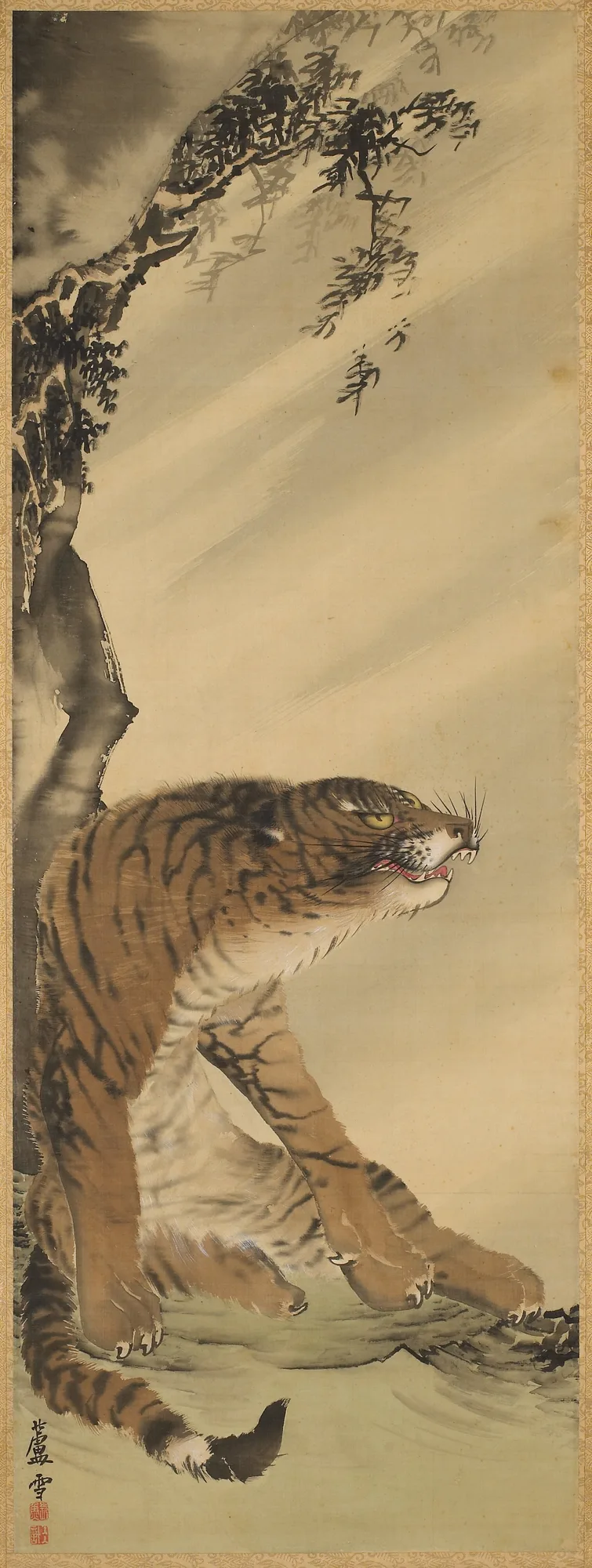
本物の虎を見たことがない絵師が描いた、風の中で吼える虎!A tiger roaring in the wind, by a painter who never saw a real tiger!
この作品のお話
Story江戸時代の京都の絵師・長沢芦雪が描いた掛軸です。大きな木の下で、虎が腰をおろし、強い風の吹く空を見上げて吼えています。左下には「蘆雪」の署名と印があります。アメリカのミネアポリス美術館が所蔵する一幅で、有名な和歌山・無量寺の襖絵の虎とは別の作品です。
This is a hanging scroll by Nagasawa Rosetsu, a Kyoto painter of the Edo period. Under a big tree, a tiger sits and roars up at the windy sky. His signature and seals are in the lower left corner. It belongs to the Minneapolis Institute of Art. It is a different work from his famous tiger on sliding doors at Muryōji Temple in Wakayama.
芦雪の時代、日本の絵師が生きた虎を見る機会はほとんどありませんでした。絵師たちは中国の絵や毛皮、そして身近な猫を手がかりに虎を描きました。芦雪は写生で有名な円山応挙の弟子で、師ゆずりの細やかな毛の描き方に、自分らしい大胆さを加えています。ななめに走る薄墨の線が、吹きつける風をあらわしています。
In Rosetsu's time, painters in Japan had almost no chance to see a living tiger. Painters used Chinese paintings, tiger skins and house cats as models. Rosetsu was a student of Maruyama Ōkyo, who was famous for drawing from life. He painted fine fur like his teacher, but added his own bold style. Light, slanting ink lines show the strong wind.
芦雪は46歳の若さで大坂で亡くなり、その後長く忘れられていました。1970年代から、思いきった構図とユーモアが「奇想の絵師」として注目されるようになりました。この作品は2012年にミネアポリス美術館に寄贈され、海外でも芦雪の虎を楽しめるようになっています。
Rosetsu died in Osaka at only 46, and people forgot him for a long time. From the 1970s, his bold designs and humor drew new attention. He was called one of the 'eccentric' painters. This scroll was given to the museum in 2012, so people outside Japan can enjoy his tiger too.
これは大きな木の下の虎です。風が強く吹いています。虎は上を見て吼えています。そのころ、日本の絵師は本物の虎を見られませんでした。だから絵師は猫を見て描いたのです!顔が猫に見えませんか?
This is a tiger under a big tree. The wind is strong. The tiger looks up and roars. In those days, painters in Japan could not see real tigers. So the painter looked at cats! Does the face look like a cat to you?
英語のレベルは上の「やさしい/ふつう」で切りかえられます。
えっ!?な裏ネタ
Secrets芦雪の時代の絵師は、生きた虎を見る機会がほとんどありませんでした。毛皮や中国の絵、そして猫を観察して描きました。だから日本の古い虎の絵は、どこか猫のような顔をしていることが多いのです。
Painters in Rosetsu's time had almost no chance to see a living tiger. They studied skins, Chinese paintings and cats. That is why many old Japanese tigers have faces a bit like cats.
芦雪の代表作、無量寺の虎の襖の裏側には、水の中の魚をねらう猫が描かれています。「表の虎は、魚から見た猫の姿」という楽しい読み解きもあります。表と裏で一つのお話になっているのかもしれない、遊び心たっぷりの仕掛けです。
His most famous tiger is on sliding doors at Muryōji Temple. On the back, a cat is trying to catch fish in water. One fun idea says the tiger is the cat as the fish sees it. The two sides may tell one playful story.
1786年ごろ、芦雪は師の応挙の代わりに紀伊半島(今の和歌山県)のお寺をめぐり、たくさんの襖絵を描きました。無量寺の虎もそのとき生まれた作品です。無量寺には今も芦雪と応挙の作品が伝わり、境内の美術館で見ることができます。
Around 1786, Rosetsu traveled to temples on the Kii Peninsula, now Wakayama, in place of his teacher Ōkyo. He painted many sliding doors there. The Muryōji tiger was made on that trip. Works by Rosetsu and Ōkyo are still kept at Muryōji, and you can see them in the temple museum.
芦雪は「魚」の字を、欠けた枠で囲んだ印を使いました。氷に閉じこめられた魚が、氷がとけて自由に泳ぎだしたのを見て、修行が実ったことになぞらえた、という言い伝えがあります。
Rosetsu used a seal with the character for 'fish' in a broken frame. A legend says he once saw a fish trapped in ice swim free when the ice melted. He felt it was like his own long training finally paying off.
ここを見て!
Look Closer1吼える顔Roaring face
口を開け、空を見上げて吼える顔。ひげは細い線で一本ずつ描かれています。目は猫にも似ています。
The tiger opens its mouth and roars at the sky. Each whisker is a thin line. The eyes look a little like a cat's.
2風にあおられる木Tree in the wind
上の木の葉は、薄墨でささっと描かれ、風にゆれているようです。
The leaves at the top are quick strokes of light ink. They seem to shake in the wind.
3太い前足Big front paws
地面をつかむ太い前足とつめ。顔よりも大きく見えるほどで、力強さを出しています。
Thick front paws with claws grip the ground. They look almost bigger than the face, and show the tiger's power.
4署名と印Signature and seals
左下に「蘆雪」の署名と、赤い印が2つあります。
In the lower left are the name 'Rosetsu' and two red seals.
英語で名画を語ろう
Talk about Art in EnglishThe tiger is looking up at the windy sky.
虎は風の吹く空を見上げています。
💡 look up at は「下から上を見る」。人物や動物の視線を説明するのに便利です。
英語で説明すると… Describe it
これは虎を描いた縦長の絵です。虎は大きな木の下に座っています。上を見上げて吼えています。左側には黒っぽい木の幹があります。空には、風をあらわす薄い線があります。
This is a tall painting of a tiger. The tiger is sitting under a big tree. It is looking up and roaring. On the left, there is a dark tree trunk. In the sky, there are light lines that show the wind.
考えてみよう Think & Talk
- 虎を一度も見たことがなかったら、あなたはどうやって描きますか?If you had never seen a tiger, how would you draw one?
- 虎は何に向かって吼えていると思いますか?What do you think the tiger is roaring at?
この作品の英単語
WordsThe tiger roars at the windy sky.
虎が風の吹く空に向かって吼えている。
This tiger is painted on a hanging scroll.
この虎は掛軸に描かれている。
Each whisker is drawn with a thin line.
ひげは一本ずつ細い線で描かれている。
The tiger looks fierce, but also a little cute.
虎はどうもうに見えるけれど、少しかわいくもある。
ミニクイズ
QuizQ. 芦雪の時代の絵師は、虎を何を手がかりに描いた?What did painters in Rosetsu's time use as models for tigers?
生きた虎を見る機会がほとんどなかったので、毛皮や中国の絵、猫を参考にしました。
They had almost no chance to see a living tiger, so they used skins, Chinese paintings and cats.
ウソ?ホント? 芦雪は円山応挙の弟子だった。Rosetsu was a student of Maruyama Ōkyo.
応挙のもとで学び、のちに自由で大胆な絵で知られるようになりました。
He studied with Ōkyo and later became known for his free, bold style.
ウソ?ホント? この掛軸は、無量寺の有名な虎の襖と同じ作品だ。This scroll is the same work as the famous tiger doors at Muryōji Temple.
別の作品です。無量寺の虎は襖絵で、今も和歌山県にあります。
They are different works. The Muryōji tiger is on sliding doors and is still in Wakayama.
 画像の出典とライセンス / Image credit
- PDNagasawa Rosetsu - Sitting Tiger Roaring with the Wind - 2012.1.14 - Minneapolis Institute of Art.jpg(Wikimedia Commons)
ライセンス:Public domain(パブリックドメイン)/作者・撮影者の表記:Nagasawa Rosetsu/提供元:Minneapolis Institute of Art
この作品は、作者の死後長い年月がたち著作権の保護期間が終わった「パブリックドメイン」の作品です。画像は平面の作品を忠実に写したもので、新しい著作権は生じません(Wikimedia Commons の PD-Art の考え方)。 所蔵:ミネアポリス美術館(Minneapolis Institute of Art)。画像は表示のために縮小・WebP 形式に変換しています。
