 ワークシート
 ぬりえ
 迷路
白い雪は「描いていない」!紙の白さで雪を見せた応挙のマジック。The white snow isn't painted at all! Ōkyo's magic with blank paper.
 美術館アンテナ:この作品に会える展覧会
この作品のお話
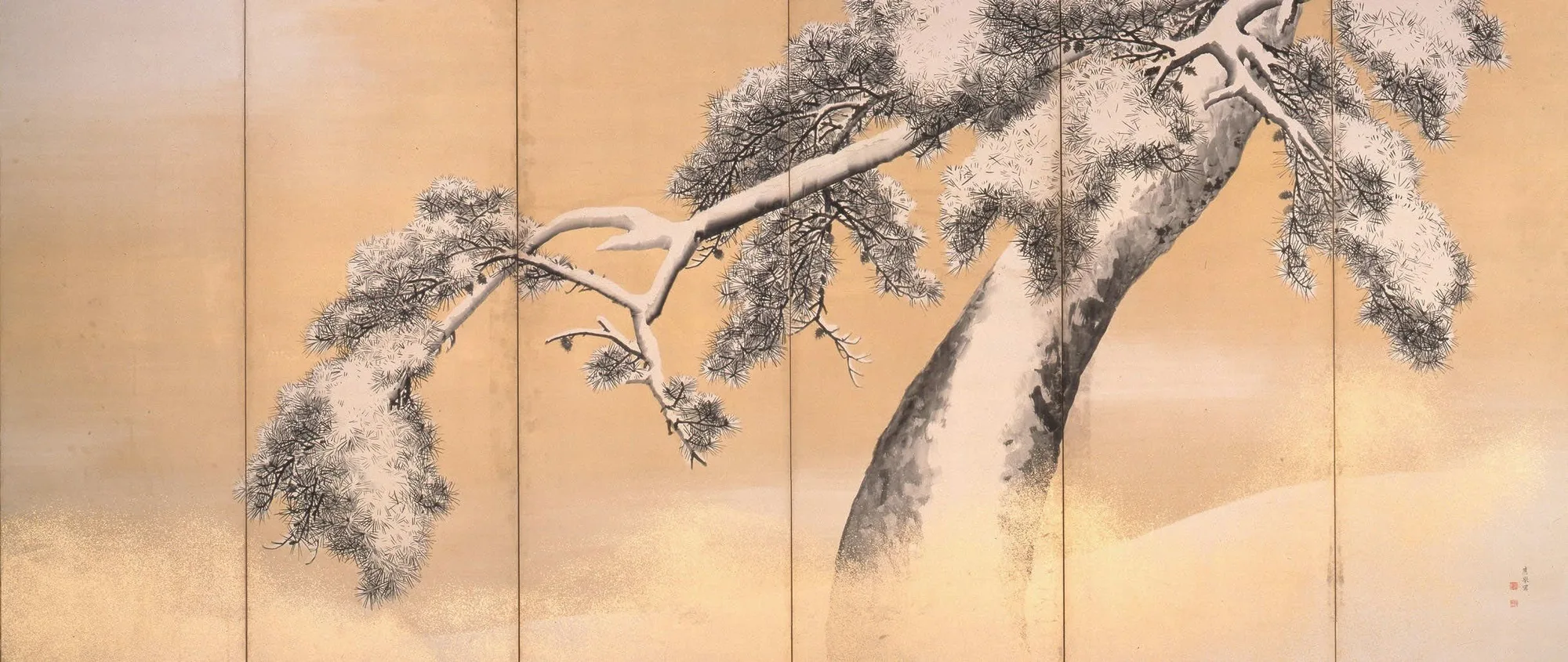
Story円山応挙の「雪松図屏風」は、雪をかぶった松の大木を描いた国宝の屏風です。これは右隻で、太い幹が右から大きくかたむき、枝が左へ長くのびています。松の枝につもった白い雪は、じつは絵の具ではなく、何も描いていない紙の白さそのもの。まわりに散らした金が、雪の朝の光のように輝きます。
Pine Trees in Snow by Maruyama Ōkyo is a National Treasure. This is the right screen. A thick trunk leans from the right, and long branches stretch to the left. The white snow on the branches is not painted. It is the white of the bare paper. Gold scattered around shines like morning light on fresh snow.
応挙は丹波(いまの京都府亀岡市)の農家に生まれ、若いころ京都のおもちゃ屋で「眼鏡絵」を描きました。のぞき箱のレンズで見ると立体的に見える絵で、ここで西洋の遠近法を身につけたと考えられています。応挙は実物をよく見て描く「写生」を大切にし、「円山派」を開きました。
Ōkyo was born into a farming family in Tanba, now Kameoka in Kyoto Prefecture. As a young man, he worked at a toy shop in Kyoto, painting megane-e. These pictures looked 3D through the lens of a viewing box. There he probably learned Western perspective. Ōkyo believed in drawing from real life, and he founded the Maruyama school.
この屏風は、京都の大商人・三井家のために描かれたと考えられ、三井家に大切に伝えられてきました。いまは東京・日本橋の三井記念美術館にあり、冬から新年のころに公開されることが多い名品です。応挙の作品で国宝になっているのは、この雪松図屏風だけです。
These screens were probably painted for the Mitsui family, wealthy merchants of Kyoto, and the family kept them carefully. Today they are at the Mitsui Memorial Museum in Nihonbashi, Tokyo. They are often shown in winter and around New Year. This is Ōkyo's only work named a National Treasure.
これは雪の中の大きな松の木です。白い雪を見てください。画家はそれを描いていません!それは紙の白さなのです。金が朝日のように輝いています。これは国宝です。
This is a big pine tree in the snow. Look at the white snow. The artist did not paint it! It is the white paper. Gold shines like the morning sun. It is a National Treasure.
英語のレベルは上の「やさしい/ふつう」で切りかえられます。
えっ!?な裏ネタ
Secrets雪の部分には白い絵の具をぬらず、まわりの松の葉や枝だけを墨で描いて、紙の白を雪に見せています。描かないことで描く、応挙の高度なワザです。白い絵の具よりも自然で、やわらかい雪に見えます。
Ōkyo did not paint the snow white. He painted only the needles and branches around it in ink, so the bare paper looks like snow. He painted by not painting. It looks softer and more natural than white paint.
若いころの応挙は、おもちゃ屋で、レンズのついた箱からのぞく「眼鏡絵」を描いていました。西洋の遠近法を使った絵で、この経験が立体感のある画風につながったと考えられています。
As a young man, Ōkyo painted megane-e for a toy shop. People looked at them through a lens in a box. These used Western perspective, and this work likely helped him create his realistic, 3D style.
日本の幽霊に足がない姿は、応挙の幽霊画から広まった、という言い伝えがあります。ただし、応挙より前にも足のない幽霊の絵はあり、はっきりしたことはわかっていません。
A popular story says Japan's legless ghosts began with Ōkyo's ghost paintings. But some legless ghosts were drawn before him, so no one knows for sure.
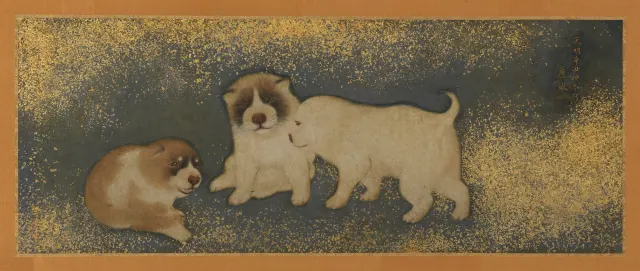
応挙は、ころころした子犬の絵でもよく知られています。ふわふわの毛やあどけない表情は、写生を大切にした応挙ならでは。雪松図とはまたちがう、かわいい一面です。子どもたちにも大人気です。
Ōkyo is also famous for paintings of round, fluffy puppies. Their soft fur and sweet faces come from his careful study of real life. It is a cute side of the artist, very different from this pine. They are popular with children too.
ここを見て!
Look Closer1太い幹Thick trunk
大きくかたむく松の幹。墨のこさを変えて、ごつごつした樹皮を表しています。
The leaning pine trunk. Ōkyo changed the ink tones to show rough bark.
2雪のつもった枝Snow on the branch
枝の上の白い雪は、紙をぬり残したもの。ふんわりと重みがあるように見えます。
The white snow on the branch is unpainted paper. It looks soft and heavy.
3たれ下がる枝先Drooping branch tip
雪の重みで、枝先が下へたれています。
The weight of the snow makes the branch tip bend down.
4金の輝きGold sparkle
下のほうに散らした金。雪に朝日が当たったような明るさです。
Gold is scattered near the bottom, like morning sun on snow.
英語で名画を語ろう
Talk about Art in EnglishThe old pine tree is covered with fresh snow.
古い松の木は、降ったばかりの雪でおおわれています。
💡 be covered with ~で「~でおおわれている」。雪・花・こけなど、表面をおおうものに。
英語で説明すると… Describe it
これは大きな松の木がえがかれた屏風です。太い幹は右にあります。長い枝は左へのびています。枝は白い雪でおおわれていて、下のほうには金があります。
This is a folding screen with a big pine tree. The thick trunk is on the right. The long branches reach to the left. The branches are covered with white snow, and there is gold near the bottom.
考えてみよう Think & Talk
- 何も描いていない紙が、どうして雪に見えるのでしょう?How can blank paper look like snow?
- この絵は、一日のうちのいつごろだと思いますか?What time of day do you think it is in this painting?
この作品の英単語
WordsSnow covers the pine branches.
雪が松の枝をおおっている。
The thick pine trunk leans to the right.
太い松の幹は右へかたむいている。
Ōkyo learned Western perspective.
応挙は西洋の遠近法を学んだ。
His paintings are very realistic.
彼の絵はとても写実的だ。
ミニクイズ
QuizQ. 雪松図屏風の白い雪は、どうやって表されている?How is the white snow made in this painting?
雪の部分は何もぬらず、紙の白さを雪に見せています。
The snow is unpainted paper. Its whiteness becomes the snow.
ウソ?ホント? 応挙は若いころ、おもちゃ屋で眼鏡絵を描いていた。As a young man, Ōkyo painted megane-e for a toy shop.
レンズでのぞく立体的な絵で、遠近法を学ぶきっかけになりました。
These 3D-looking pictures helped him learn perspective.
ウソ?ホント? 応挙の国宝の作品は10件以上ある。More than ten of Ōkyo's works are National Treasures.
応挙の作品で国宝になっているのは、この雪松図屏風だけです。
This is his only National Treasure.
 画像の出典とライセンス / Image credit
- PDOkyo Pines right.jpg(Wikimedia Commons)
ライセンス:Public domain(パブリックドメイン)/作者・撮影者の表記:Maruyama Ōkyo/提供元:scan by User:Fraxinus2
この作品は、作者の死後長い年月がたち著作権の保護期間が終わった「パブリックドメイン」の作品です。画像は平面の作品を忠実に写したもので、新しい著作権は生じません(Wikimedia Commons の PD-Art の考え方)。 所蔵:三井記念美術館(Mitsui Memorial Museum)。画像は表示のために縮小・WebP 形式に変換しています。