

 PDF をダウンロード
Eccentric Visionaries and Edo Painting
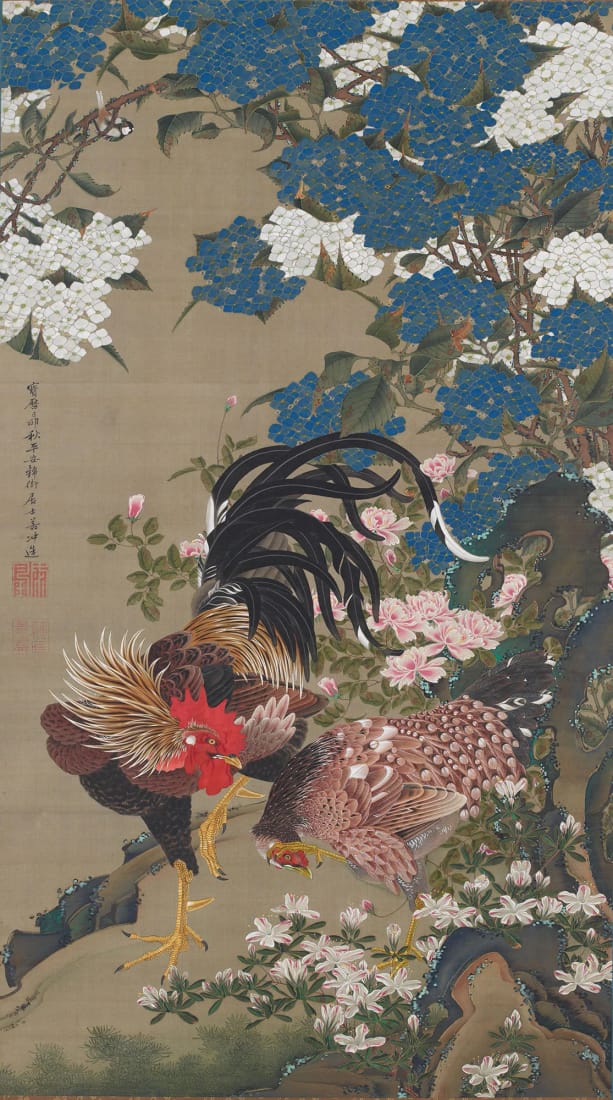
Itō Jakuchū, 1759
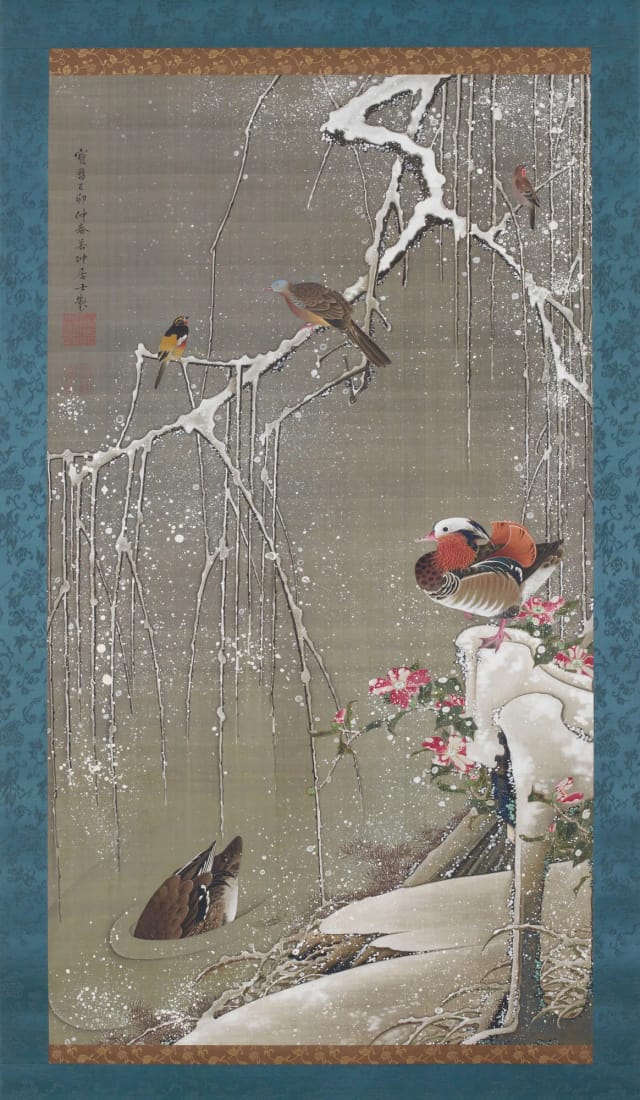
Itō Jakuchū, 1759
1 How to spot it 2つの絵で見つけたら ✓ をつけよう。
| A | B | |
|---|---|---|
| Every feather, leaf and scale is painted in amazing detail. | ☐ | ☐ |
| The picture is made of tiny squares. | ☐ | ☐ |
| The animals are cute, round and fluffy. | ☐ | ☐ |
| Bold designs where creatures seem to leap out of the sliding doors. | ☐ | ☐ |
| Careful sketches from life are mixed with wild imagination. | ☐ | ☐ |
2 Read 英文を読もう。
18th-century Kyoto was a golden age, when one original painter after another appeared. In 1970, the art historian Tsuji Nobuo introduced Itō Jakuchū, Soga Shōhaku, Nagasawa Rosetsu and others in his book Lineage of Eccentrics. These artists had often been forgotten as oddballs, but today their exhibitions draw long lines.
Write one thing you learned:
Eccentric Visionaries and Edo Painting
3 Art words — Match them. 英語と日本語を線で結ぼう。
- sketching from life ●
- eccentric ●
- grid technique ●
- ghost painting ●
- ● 升目描き
- ● 写生
- ● 幽霊画
- ● 奇想
4 Quiz
Which bird did Jakuchū keep in his garden to study?
- Roosters
- Cranes
- Peacocks
- Crows
5 Quiz
Which Edo painter was also a famous haiku poet?
- Maruyama Ōkyo
- Yosa Buson
- Soga Shōhaku
- Nagasawa Rosetsu
6 Which do you like better, A or B? Why? AとB、どちらが好き?理由も英語で。
I like ____ better because ________________________________.
Answers & Notes
1 How to spot it(訳)
- Every feather, leaf and scale is painted in amazing detail.
羽や葉っぱ、うろこの一枚一枚まで、びっしりと描きこまれている。 - The picture is made of tiny squares.
画面が小さな四角いマス目でできている。 - The animals are cute, round and fluffy.
動物がかわいくて、ころころ・もふもふしている。 - Bold designs where creatures seem to leap out of the sliding doors.
生き物がふすまから飛び出してきそうな、大胆な構図。 - Careful sketches from life are mixed with wild imagination.
本物を見て描いた写生と、ありえない空想が一つの画面にまざっている。
A:動植綵絵「紫陽花双鶏図」 B:動植綵絵「雪中鴛鴦図」
2 Read(訳)
18世紀の京都は、個性あふれる画家たちが次々に現れた、日本美術の黄金期でした。1970年、美術史家の辻惟雄は『奇想の系譜』という本で、伊藤若冲、曾我蕭白、長沢芦雪らを紹介し、それまで「変わり者」として忘れられがちだった彼らに光を当てました。今では展覧会に長い行列ができるほどの人気です。
3 Art words
1–b(sketching from life=写生:実物をよく見て描くこと。応挙が広め、江戸の絵画を大きく変えた。)
2–d(eccentric=奇想:ふつうとはちがう、思いもよらない発想。辻惟雄が若冲たちをこうよんだ。)
3–a(grid technique=升目描き:画面を細かいマス目に分けて色をぬる技法。西陣織の下絵との関係も言われる。)
4–c(ghost painting=幽霊画:幽霊を描いた絵。江戸時代に人気があり、夏の夜に飾る習わしもあった。)
4 Quiz
A 問:若冲が庭で飼って観察したといわれる鳥は?
選択肢:A ニワトリ/B ツル/C クジャク/D カラス
解説:毎日ニワトリを観察して、羽や動きを細かく描いたといわれます。
5 Quiz
B 問:俳人としても有名な江戸の画家は?
選択肢:A 円山応挙/B 与謝蕪村/C 曾我蕭白/D 長沢芦雪
解説:与謝蕪村は、松尾芭蕉・小林一茶と並ぶ俳句の名人でもあります。
Fun Fact(訳)
若冲は40歳で、家業を弟にゆずった 若冲は23歳で家業の青物問屋をつぎましたが、40歳で弟に家をゆずり、絵に打ちこみました。お酒もぜいたくも好まず、生涯結婚もせず、一生を絵にささげたと伝えられています。
