

 テクノロジー・未来
自動運転には「レベル0〜5」がある。レベル3からは条件つきでクルマが運転の主役に
 2026.10.02
 English Corner(A2〜B2・4択クイズ)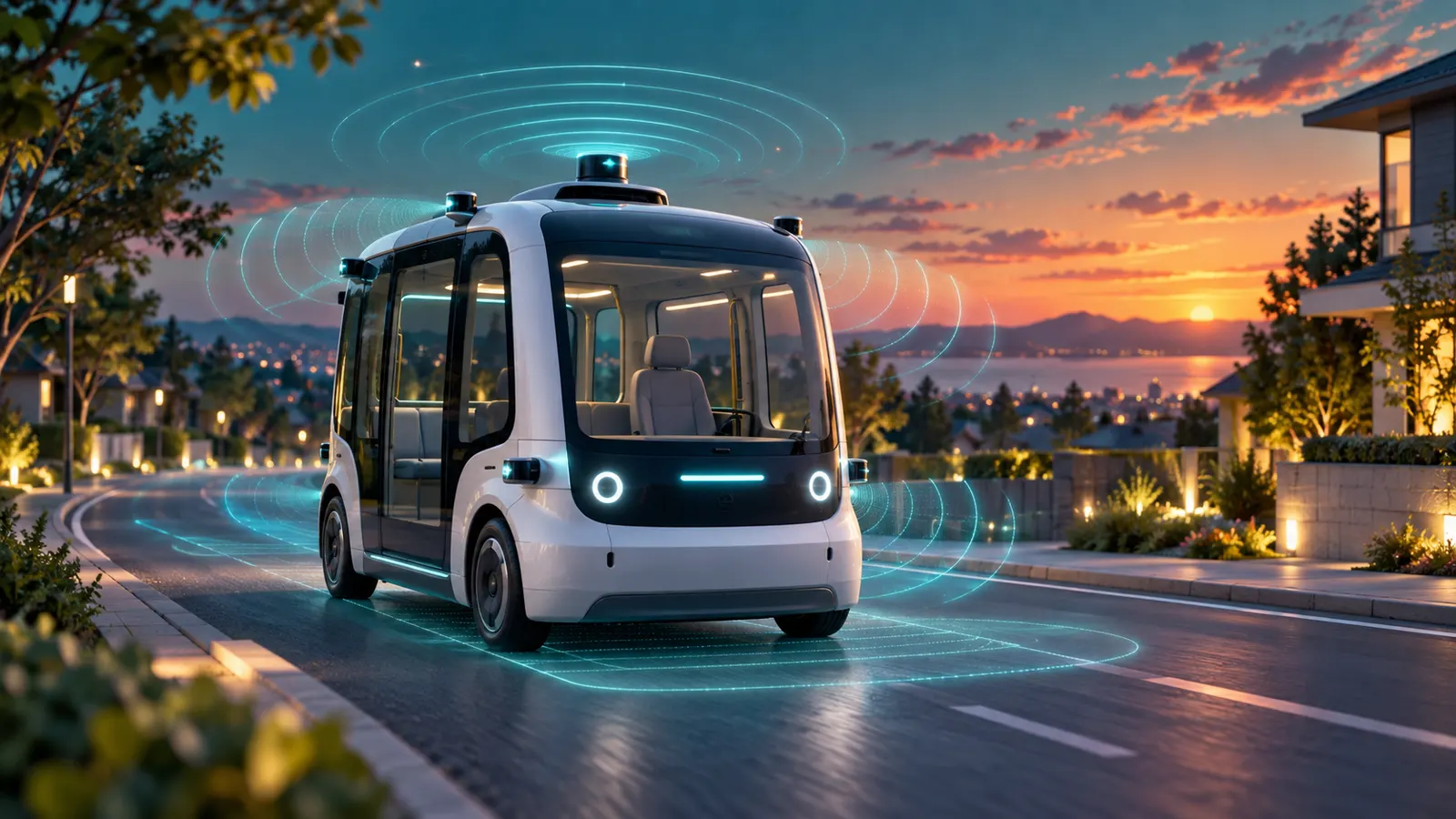
 読む前に予想してみよう!
日本では、条件付きでレベル4(特定条件下の完全自動運転)が法律上認められている
2023年施行の改正道路交通法で、決められた地域・ルートなどでの運行が許可制で可能になった。
 研究カード(どんな研究?)
- 対象
- 自動運転技術と制度
- 規模
- 国際基準・各国の制度と統計的試算
- 研究の種類
- 技術基準・政策文書・統計モデル研究
- 確かさ
- ★★★☆☆
自動運転は0〜5の6段階。レベル2までは人間が主役、レベル3以上は決められた条件の中でシステムが運転の主役に。どこでも走れる完全自動運転(レベル5)はまだ先。
ひとことで言うと「自動運転」にも段階がある。今のクルマの多くは“お手伝い”レベル!
「自動運転の車がもう走っているらしい」「でもまだ実現していないとも聞く」――どっちが本当なの?と混乱したこと、ありませんか?
答えは「どっちも本当」。なぜなら自動運転には、レベル0からレベル5までの6段階があるからです。
そしてこのレベル分けには、実はとても重要な“境目”があります。それがレベル2と3の間です。
01自動運転の6段階をざっくり解説
自動運転のレベルは、米国の技術者団体 SAE(米国自動車技術会) が定めた基準 J3016 がもとになっていて、日本でも使われています。
いま一般に売られている車の「自動運転っぽい機能」の多くは、レベル2までです。手を離せる機能があっても、責任はあくまでドライバーにあります。
02レベル3で「運転の主役」が交代する
レベル2までは、人間が運転の主役で、機械はお手伝い。レベル3からは、決められた条件の中でシステムが運転の主役になります。
つまり事故が起きたとき「誰の責任?」という問題が、ここから難しくなるのです。だからこそ、レベル3以上は国の法律やルールづくりとセットで進められています。
日本では2021年に、高速道路の渋滞時などに限ってシステムが運転するレベル3の乗用車が世界に先がけて発売されました。さらに2023年4月に施行された改正道路交通法で、レベル4の運行が許可制で可能になりました。同じ年には福井県永平寺町で、限られたルートを走るレベル4の移動サービスが始まりました。海外でも、米国や中国の一部の都市では、運転席に誰もいないレベル4のロボタクシーが決められたエリアで営業しています(2026年10月時点)。

03それでもレベル5が難しい理由
「じゃあ、どこでも走れる完全自動運転はいつ?」というと、まだ見通しは立っていません。最大の壁は、道路に無数にある「めったに起きないこと」です。
- 工事現場で警備員が手で合図している
- 雪で車線が見えない、逆光でカメラが見えにくい
- ボールを追いかけて子どもが飛び出してくる
- 信号が故障していて、人間同士が目配せで譲り合っている
人間なら「なんとなく」対応できる場面でも、AIにとってはとても難しい。こうした想定外のケースは、専門家の間で「エッジケース」と呼ばれています。
04まとめ
自動運転は「ある・ない」の二択ではなく、レベル0〜5の階段。いまは、限られた場所・条件でレベル4が動き始めた段階です。
ニュースで「自動運転」と聞いたら、「それってレベルいくつ?」「どんな条件で?」と聞き返してみてください。それだけで、話の見え方がぐっと変わります。
この研究を英語で読もう原田英語の English CornerPeople often talk about "self-driving cars" as if they either exist or do not, but driving automation… 音声
音声 4択クイズ9問A2・B1・B2タップして開く
原田英語の English Corner
この研究を英語で読もう
Self-driving cars have six levels, from Level 0 to Level 5. At Level 0, a person does everything. At Levels 1 and 2, the car only helps the driver.
From Level 3, the car drives by itself in some situations. At Level 5, the car can drive anywhere. Most cars sold today are Level 2 or lower. Level 5 cars are still far away.
64 words ・ CEFR A2
和訳を見る
自動運転車には、レベル0からレベル5までの6つのレベルがあります。レベル0では、人がすべてを行います。レベル1と2では、車はドライバーを手伝うだけです。
レベル3からは、ある状況では車が自分で運転します。レベル5では、車はどこでも走ることができます。今日売られているほとんどの車は、レベル2以下です。レベル5の車はまだずっと先です。
4択リーディングクイズ
Q1. What is the passage mainly about?
自動運転の6つのレベルが主題なので C。
Q2. At which levels does the car only help the driver?
At Levels 1 and 2, the car only helps the driver. とあるので D。
Q3. In this passage, "by itself" means ...
by itself は「ひとりで・自力で」。人の助けなしに車が運転する、なので A。
People often talk about "self-driving cars" as if they either exist or do not, but driving automation actually has six levels, from 0 to 5, based on a standard created by SAE International. At Levels 1 and 2, the car helps with steering or speed, but the human must always watch the road and is responsible for driving.
The big change comes at Level 3, when the system drives under certain conditions and the human only needs to take over when asked. At Level 4, the system drives fully within set conditions. In Japan, Level 4 operation became legal with a permit in 2023, and a service began on a limited route. However, Level 5, which works anywhere, is still not in sight.
123 words ・ CEFR B1
和訳を見る
人々はよく「自動運転車」を、あるかないかのどちらかであるかのように話しますが、運転の自動化には実は、SAEインターナショナルが作った基準に基づく0から5までの6つのレベルがあります。レベル1と2では、車はハンドル操作や速度を手伝いますが、人間は常に道路を見ていなければならず、運転の責任を負います。
大きな変化はレベル3で起こります。システムが一定の条件で運転し、人間は求められたときだけ交代すればよいのです。レベル4では、決められた条件の中でシステムが完全に運転します。日本では2023年にレベル4の運行が許可制で合法になり、限られたルートでサービスが始まりました。しかし、どこでも動くレベル5は、まだ見通しが立っていません。
4択リーディングクイズ
Q1. Who is responsible for driving at Levels 1 and 2?
the human must always watch the road and is responsible for driving とあるので C。
Q2. What happens at Level 3?
the system drives under certain conditions and the human only needs to take over when asked とあるので A。
Q3. Why does the writer say "the big change comes at Level 3"?
レベル2までは人間が責任者、レベル3からはシステムが条件付きで運転する。運転の主役が入れ替わるので B。
Debates about self-driving cars are often confused because "self-driving" covers a wide range of technologies. The SAE J3016 standard, also used in Japan, divides driving automation into six levels according to who performs the driving task and who must monitor and respond. Up to Level 2, systems merely assist with steering and speed; the human driver must supervise constantly and bears responsibility, even if the car allows hands-free driving. At Level 3, the system takes over the driving task within defined conditions, while the human must be ready to intervene on request, which shifts the question of liability in an accident.
Level 4 vehicles need no human fallback within their operating conditions, and Japan legalized such operations with a permit in 2023; robotaxis also operate in parts of the US and China. Level 5, however, remains distant, largely because of rare edge cases such as hand signals at construction sites or lanes hidden by snow. A 2016 RAND report estimated that proving autonomous vehicles safer than humans through driving data alone could require hundreds of millions to hundreds of billions of miles, which is why simulation-based evaluation has become central.
190 words ・ CEFR B2
和訳を見る
「自動運転」は幅広い技術を含むため、自動運転車についての議論はしばしば混乱します。日本でも使われているSAE J3016の基準は、誰が運転の作業を行い、誰が監視して対応しなければならないかによって、運転の自動化を6つのレベルに分けています。レベル2までは、システムはハンドル操作と速度を補助するだけで、たとえ車が手放し運転を許していても、人間のドライバーが常に監督し、責任を負います。レベル3では、システムが決められた条件の中で運転の作業を引き継ぎ、人間は要求があればすぐに介入できるよう準備していなければなりません。これにより、事故の際の責任の問題が変わります。レベル4の車は運行条件の中では人間の予備を必要とせず、日本は2023年にそのような運行を許可制で合法化しました。
米国や中国の一部でもロボタクシーが運行しています。しかしレベル5はまだ遠く、その大きな理由は、工事現場での手信号や雪で隠れた車線といった、めったに起きないエッジケースです。2016年のRANDの報告書は、走行データだけで自動運転車が人間より安全だと証明するには、数億から数千億マイルが必要になりうると試算しました。そのため、シミュレーションに基づく評価が中心になっているのです。
4択リーディングクイズ
Q1. On what basis does SAE J3016 divide driving automation into levels?
according to who performs the driving task and who must monitor and respond とあるので B。
Q2. According to the passage, why is Level 5 still distant?
largely because of rare edge cases とあるので C。
Q3. Why has simulation-based evaluation become central?
走行データだけで証明するには数億〜数千億マイル必要という試算を受けて which is why ... とあるので A。
重要単語
- autonomous vehicleC1名詞(句)自動運転車An autonomous vehicle drives without a human driver.
 auto-(自ら)+nomos(法)=「自分で決める」。autonomy(自律)も入試頻出。
 - liabilityC1名詞(法的な)責任Liability becomes a harder question at Level 3. 形容詞 liable(責任がある/~しがちな)。be liable to do「~しがちだ」も要注意。
- edge caseC1名詞(句)めったに起きない想定外の状況Rare edge cases are the hardest part of self-driving. edge(端)=「想定の端っこにある事例」。IT・AIの文脈で頻出。
- sensorB1名詞センサーCameras and radar are important sensors. sense(感じる)+-or。sensitive(敏感な)とも同語源。
- take overB1動詞(句)引き継ぐ、交代するThe driver must take over when the system asks. 名詞形は takeover(買収・乗っ取り)。take over A「Aを引き継ぐ」。
- interveneC1動詞介入するThe driver must be ready to intervene at any time. inter-(間に)+vene(来る)。名詞 intervention。
- superviseB2動詞監督する、見守るAt Level 2, the driver must supervise the system. super-(上から)+vise(見る)。名詞 supervision、supervisor(上司・指導教員)。
 入試に出る順の単語帳を印刷する →
 全5903語の「科学英単語カード」で復習する →
 動画でもっと知る
動画は各チャンネルの公式埋め込みで表示しています(YouTube)。
この話題を TED で聞く
同じテーマの TED・TED-Ed を、 TED HACK で。英語の見どころ・使える表現・学習ミッションつきの日本語ガイドです。(運営:原田英語)

 公式・一次情報をチェック
- 自動運転(警察庁)npa.go.jp
このネタ、誰かに教えたくなった?
「自動運転」って一言でいうけど、実はレベル0〜5の6段階。しかもレベル2と3の間で、運転の主役が人間からクルマに入れ替わるらしい。今の多くの車はまだ「お手伝い」段階。
押すと「マジかリスト」に保存されます
 出典・参考文献(4件)タップで表示
- SAE International (2021) J3016: Taxonomy and Definitions for Terms Related to Driving Automation Systems for On-Road Motor Vehiclessae.org
- Kalra & Paddock (2016) Driving to safety: How many miles of driving would it take to demonstrate autonomous vehicle reliability?, Transportation Research Part Adoi.org
- Kalra & Paddock (2016) Driving to Safety, RAND Corporationdoi.org
- 警察庁: 自動運転npa.go.jp

※本記事は上記の研究・公開資料をもとに、原田英語が独自の言葉で解説したものです。引用は著作権法第32条の範囲で行い、出典を明記しています。画像はすべてオリジナルのイメージです。研究結果には限界や個人差があります。誤りのご指摘は原田英語のお問い合わせフォームから。