
 心理学ホント
AIを使うと、みんな「自分はできる」と勘違いする。「できない人ほど自信過剰」の法則も消えた
 2026.10.02
 English Corner(A2〜B2・4択クイズ)

 読む前に予想してみよう!
AIに詳しい人ほど、AIを使ったときの自分の成績を正確に見積もれた
逆に、「AIに詳しい」と答えた人ほど自信が高く、見積もりが不正確な傾向があった(関係の強さは小さい)。
 研究カード(どんな研究?)
- 対象
- オンライン実験の成人参加者
- 規模
- 246人+452人(2実験)
- 研究の種類
- 実験研究(AI使用下の論理課題と自己評価)
- 確かさ
- ★★★☆☆
AIを使って論理問題を解くと成績は上がるが、できる人もできない人も自分の点数を過大評価。AIに詳しい人ほど自己評価がズレていた。
ひとことで言うとAIを使うと点は上がるけど、「どれだけできたか」は分からないまま!
「できない人ほど、自分はできると思い込む」。心理学で有名なダニング=クルーガー効果です。テストの点が低い人ほど、自分の点数を高く見積もってしまう、というあれですね。
ところが、AIを使うと、この効果が消えてしまうという研究が出ました。
「じゃあみんな正確に自己評価できるようになったの?」――いいえ。できる人もできない人も、そろって自分の点数を高く見積もっていたのです。
01AIと一緒にロースクール入試の問題を解く
解き終わったあと、参加者には「自分は何問正解したと思うか」を答えてもらいました。
02点数は上がった。でも自己評価はもっと高かった
1つ目の実験で、AIを使った参加者の平均点は20点満点の約13点でした。同じ問題をAIなしで解いた別の調査の参加者(3543人)の平均は約9.5点なので、約3点アップです。ここまではAIの力ですね。
ところが参加者は、自分の点数を平均で約16.5点と答えました。実際より約4点も高く見積もっていたのです。AIで上がった実際の点数よりも、さらに上を思い描いていたことになります。
ただし、高く見積もるクセはAIなしでも見られます。くじ引きで分けた2つ目の実験では、AIなしで解いた人も、実際より約4点高く見積もっていました。数字の上ではAIありとほとんど同じです。ところが、AIを使った人の見積もりは平均で約17問と上限の20問に近く、それより高くは答えられないぶん、ズレが小さめに出やすくなります。研究チームは、この分を計算で補うと、AIを使った人のほうがズレが大きいと分析しています。
参加者一人ひとりの見積もりのズレを計算モデルで分析すると、ふだんこの課題で見られるダニング=クルーガー効果が、AIを使うと見られなくなっていたことも分かりました。できる人もできない人も、そろって過大評価していたわけです。
ただし研究チームは、これは「効果がなくなった」というより、「AIのおかげでみんな同じくらいできるようになったのに、自分の出来はやはり分かっていない」状態かもしれない、と注意しています。

03「AIに詳しい」人ほど、見積もりがズレやすい
いちばんの「マジか」ポイントはここ。「AIに詳しい」と自己評価した人ほど、自信は高いのに見積もりは不正確だったのです。ただし、この関係(相関)は小さく、研究チームも慎重に見るべきだとしています。
大学の発表では、これを「ダニング=クルーガー効果の逆転」とも表現しています。AIに慣れている人ほど「自分はAIをうまく使いこなせている」と感じ、答えの中身を疑わなくなるのかもしれません。
実際、参加者のほぼ半数(46%)は、どの問題でもChatGPTに1回質問しただけで答えを決めていました。1問あたりの質問回数は、平均でも1.15回でした。AIの答えをそのまま信じて、自分で考え直す「振り返り」をしなかった人が多かったのかもしれません。
04そもそもダニング=クルーガー効果とは
1999年、アメリカ・コーネル大学のクルーガーさんとダニングさんは、論理やユーモア、文法のテストで、成績が下位の人ほど自分の順位を実際よりかなり高く見積もることを報告しました。できない人は、自分の「できなさ」に気づくための力も足りない、と2人は説明しています。ただし、この効果の一部は統計上の見かけ(平均への回帰など)ではないか、という指摘もあり、大きさについては今も議論があります。今回の研究では、AIを使うと、この関係そのものが見られなくなっていました。
05まとめ
AIは私たちを「賢く」はしてくれる。でも、「自分の賢さを正しく測る力」までは貸してくれないようです。
AIと一緒に勉強や仕事をするなら、最後の「これで本当に合ってる?」だけは、自分の頭でやりましょう。
この研究を英語で読もう原田英語の English CornerThe Dunning-Kruger effect describes how people with low skills tend to overestimate their abilities. 音声
音声 4択クイズ9問A2・B1・B2タップして開く
原田英語の English Corner
この研究を英語で読もう
Some people who do badly on a test think they did well. This is called the Dunning-Kruger effect. Researchers in Finland asked 246 people to solve 20 hard logic questions with ChatGPT. Their scores were about 3 points higher than usual.
But they thought their scores were about 4 points higher than they really were. With AI, most people were too confident. People who said they knew a lot about AI were often even more wrong about their own scores.
80 words ・ CEFR A2
和訳を見る
テストの成績が悪い人の中には、自分はよくできたと思う人がいます。これはダニング=クルーガー効果と呼ばれています。フィンランドの研究者たちは、246人にChatGPTを使って難しい論理問題を20問解いてもらいました。彼らの点数はふだんより約3点高くなりました。
しかし彼らは、自分の点数を実際より約4点高いと思っていました。AIを使うと、大半の人が自信過剰になったのです。AIについてよく知っていると答えた人ほど、自分の点数をさらに大きく見誤りがちでした。
4択リーディングクイズ
Q1. What is the passage mainly about?
AIを使うと点数以上に自分を高く見積もってしまう=自信過剰になる、という内容なので A。
Q2. How many logic questions did the people solve?
solve 20 hard logic questions とあるので C。246は参加者の数。
Q3. In this passage, "too confident" means ...
confident は「自信がある」、too が付くと「自信がありすぎる」。実際より自分をできると思っている状態なので B。
The Dunning-Kruger effect describes how people with low skills tend to overestimate their abilities. A team at Aalto University in Finland tested whether this changes when people use AI.
In the first experiment, 246 participants solved 20 logic problems from an American law school entrance exam with help from ChatGPT. They scored about 3 points higher than people in an earlier study who worked without AI.
However, they believed they had scored about 4 points more than they actually did. The Dunning-Kruger effect disappeared, because almost everyone overestimated their performance. People who rated their AI knowledge higher tended to be more overconfident. Many participants asked ChatGPT only once per question and accepted its answer. A second experiment with 452 people, randomly split into AI and no-AI groups, showed similar results.
130 words ・ CEFR B1
和訳を見る
ダニング=クルーガー効果とは、能力の低い人ほど自分の能力を過大評価しがちだという現象です。フィンランドのアールト大学を中心とする研究チームは、人がAIを使うとこれが変わるかどうかを確かめました。
最初の実験では、246人の参加者がChatGPTの助けを借りて、アメリカのロースクール入試の論理問題を20問解きました。彼らの点数は、以前の別の研究でAIなしで解いた人たちより約3点高くなりました。
しかし彼らは、自分が実際より約4点多く取れたと思いこんでいました。ほぼ全員が自分の成績を過大評価したため、ダニング=クルーガー効果は消えてしまいました。AIについての知識が多いと自己評価した人ほど、自信過剰になる傾向がありました。多くの参加者は1問につき1回しかChatGPTに質問せず、その答えをそのまま受け入れていました。452人をくじ引きでAIありとAIなしに分けた2つ目の実験でも、似た結果が出ました。
4択リーディングクイズ
Q1. What did the research team want to test?
tested whether this changes when people use AI とあり、this はダニング=クルーガー効果を指すので D。
Q2. Why did the Dunning-Kruger effect disappear?
the Dunning-Kruger effect disappeared, because almost everyone overestimated their performance とあるので B。正確になったわけではない点に注意。
Q3. What can we infer about participants who asked ChatGPT only once per question?
only once per question and accepted its answer から、AIの答えを見直さなかったと推測できるので A。
People who do badly on a test often think they did well. This is the Dunning-Kruger effect, first reported in 1999, and one explanation is that poor performers lack the skills to spot their own mistakes. In a study published in Computers in Human Behavior in 2026, a team centered at Aalto University in Finland asked what happens to this pattern when people work with AI.
In two experiments, with 246 and 452 participants, most people used ChatGPT to solve logic problems from the LSAT, an American law school admission test, and then estimated how many they had answered correctly. Their scores were about 3 points higher than a comparison group without AI, but they overestimated their scores by about 4 points. Computational modeling showed that the usual Dunning-Kruger pattern had vanished.
Strong and weak performers alike rated themselves too highly. The first study compared scores with a norm group rather than a no-AI group of its own, and only one type of task was tested. People with greater AI literacy tended to be more confident but less accurate. Many sent only one prompt per question and seemed to hand their thinking over to the AI without checking it.
199 words ・ CEFR B2
和訳を見る
テストで成績の悪かった人ほど、よくできたと思いこみがちです。これが1999年に初めて報告されたダニング=クルーガー効果で、理由の一つは、成績の悪い人には自分の間違いに気づくのに必要な力が欠けていることだとされます。2026年に『Computers in Human Behavior』で発表された研究で、フィンランドのアールト大学を中心とするチームは、人がAIと一緒に取り組むとこのパターンがどうなるかを調べました。
246人と452人による2つの実験で、参加者の多くはChatGPTを使って、アメリカのロースクール入試であるLSATの論理問題を解き、その後、何問正解したと思うかを見積もりました。彼らの点数はAIなしの比較グループより約3点高かったものの、自分の点数を約4点過大に見積もっていました。計算モデルによる分析では、いつものダニング=クルーガー型のパターンが消えていました。
成績の高い人も低い人も、同じように自分を高く評価しすぎていたのです。1つ目の実験では、点数は実験内のAIなしグループではなく基準集団と比べられたもので、調べた課題も1種類だけでした。AIリテラシーの高い人ほど、自信は高いのに見積もりは不正確になる傾向がありました。多くの人は1問につき1回しかプロンプトを送らず、考えることをAIに任せきりにして、それを確かめていなかったようです。
4択リーディングクイズ
Q1. According to the original Dunning-Kruger effect, why do poor performers overestimate themselves?
poor performers lack the skills to spot their own mistakes とあるので C。
Q2. What was found about participants with greater AI literacy?
People with greater AI literacy tended to be more confident but less accurate とあるので D。
Q3. Why does the author mention that the comparison was made against a "norm group"?
The first study compared scores with a norm group rather than a no-AI group of its own とあり、1つ目の実験は実験内のAIなし対照群との比較ではないので、点数の上昇をAIの効果と断定できない、という限界の指摘。正解は B。
重要単語
- overestimateB2動詞過大評価するPeople often overestimate their driving skills.
 over-(過度に)+estimate(見積もる)。反対は underestimate(過小評価する)。
 - metacognitionC1名詞メタ認知(自分の考えを客観的に見る力)Good learners use metacognition to check their understanding. meta-(一段上の)+cognition(認知)。「自分が分かっているかを分かる力」。学習法の長文で頻出。
- literacyB2名詞読み書き能力、(ある分野の)知識・活用能力Media literacy helps us judge online news. もとは「読み書き能力」。反対は illiteracy(非識字)。AI literacy, financial literacy のように広がって使われる。
- overconfidentB2形容詞自信過剰なHe was overconfident and didn't study enough. 名詞は overconfidence。overconfidence bias(自信過剰バイアス)は行動経済学の定番テーマ。
- rely onB1動詞句~に頼るMany students rely on AI for homework. depend on / count on と同義。形容詞 reliable(信頼できる)、名詞 reliance(依存)。
- offloadC1動詞(負担を)ほかに移す、肩代わりさせるWe offload memory to our smartphones. off(離して)+load(荷)。cognitive offloading「認知的オフローディング」は、メモやAIに考えを預けること。
 入試に出る順の単語帳を印刷する →
 全5903語の「科学英単語カード」で復習する →
 動画でもっと知る
動画は各チャンネルの公式埋め込みで表示しています(YouTube)。
この話題を TED で聞く
同じテーマの TED・TED-Ed を、 TED HACK で。英語の見どころ・使える表現・学習ミッションつきの日本語ガイドです。(運営:原田英語)
 公式・一次情報をチェック
 4コマでわかる
このネタ、誰かに教えたくなった?
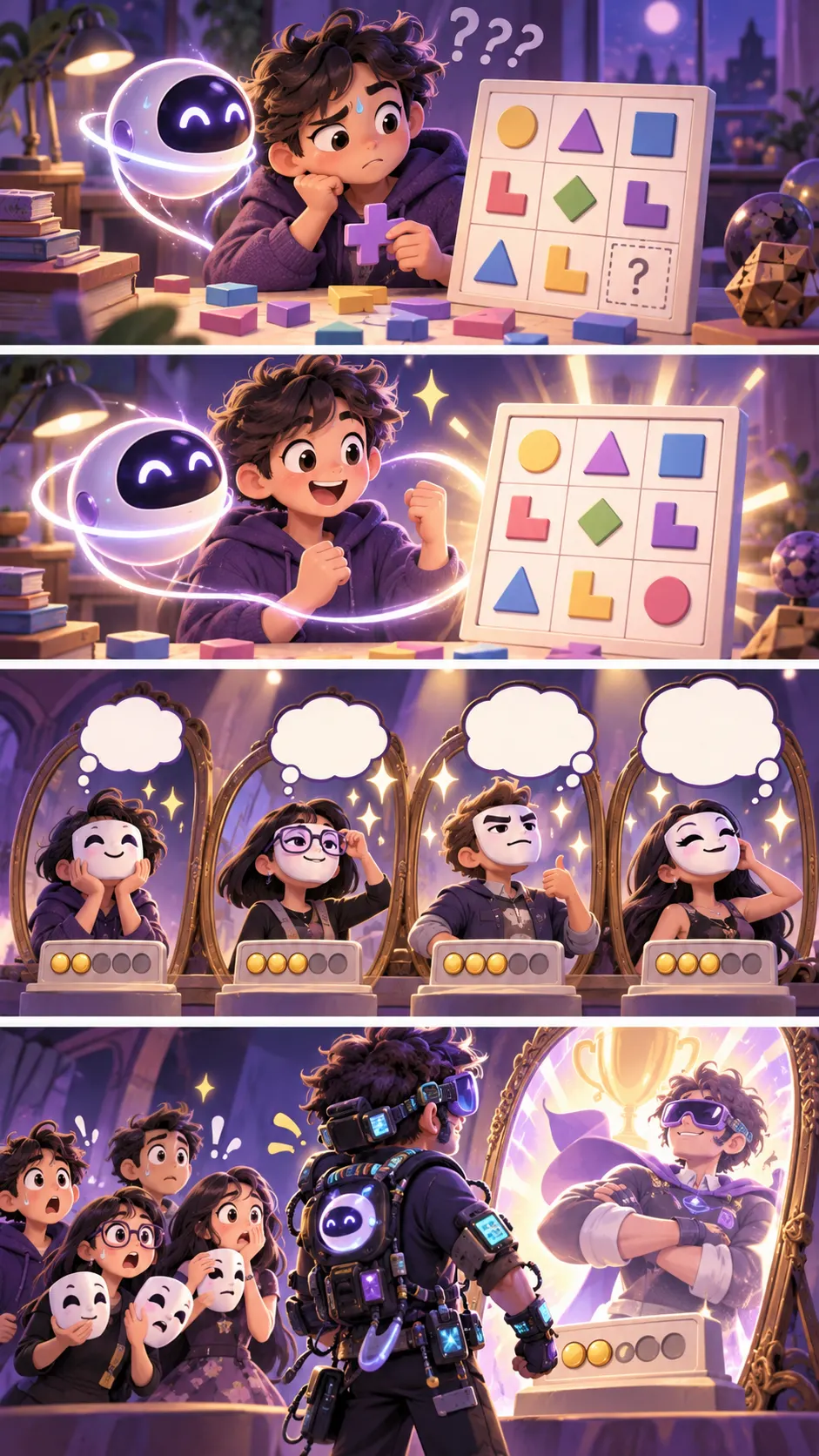
AIを使って論理クイズを解くと、点数は上がるのに「自分はもっとできた」と思い込みがちらしい。普段なら「できない人ほど自信過剰」になるダニング=クルーガー効果が消え、「AIに詳しい」と答えた人ほど見積もりがズレる傾向もあった。
押すと「マジかリスト」に保存されます
 出典・参考文献(3件)タップで表示
- Fernandes et al. (2026) AI makes you smarter but none the wiser: The disconnect between performance and metacognition, Computers in Human Behaviordoi.org
- Risko & Gilbert (2016) Cognitive Offloading, Trends in Cognitive Sciencesdoi.org
- Kruger & Dunning (1999) Unskilled and unaware of it, Journal of Personality and Social Psychologydoi.org

※本記事は上記の研究・公開資料をもとに、原田英語が独自の言葉で解説したものです。引用は著作権法第32条の範囲で行い、出典を明記しています。画像はすべてオリジナルのイメージです。研究結果には限界や個人差があります。誤りのご指摘は原田英語のお問い合わせフォームから。