
 動物・植物ビミョー
オウギワシの握力と大きさは? ナマケモノを木からさらう“最強クラスのワシ”の科学
 2026.10.02
 English Corner(A2〜B2・4択クイズ)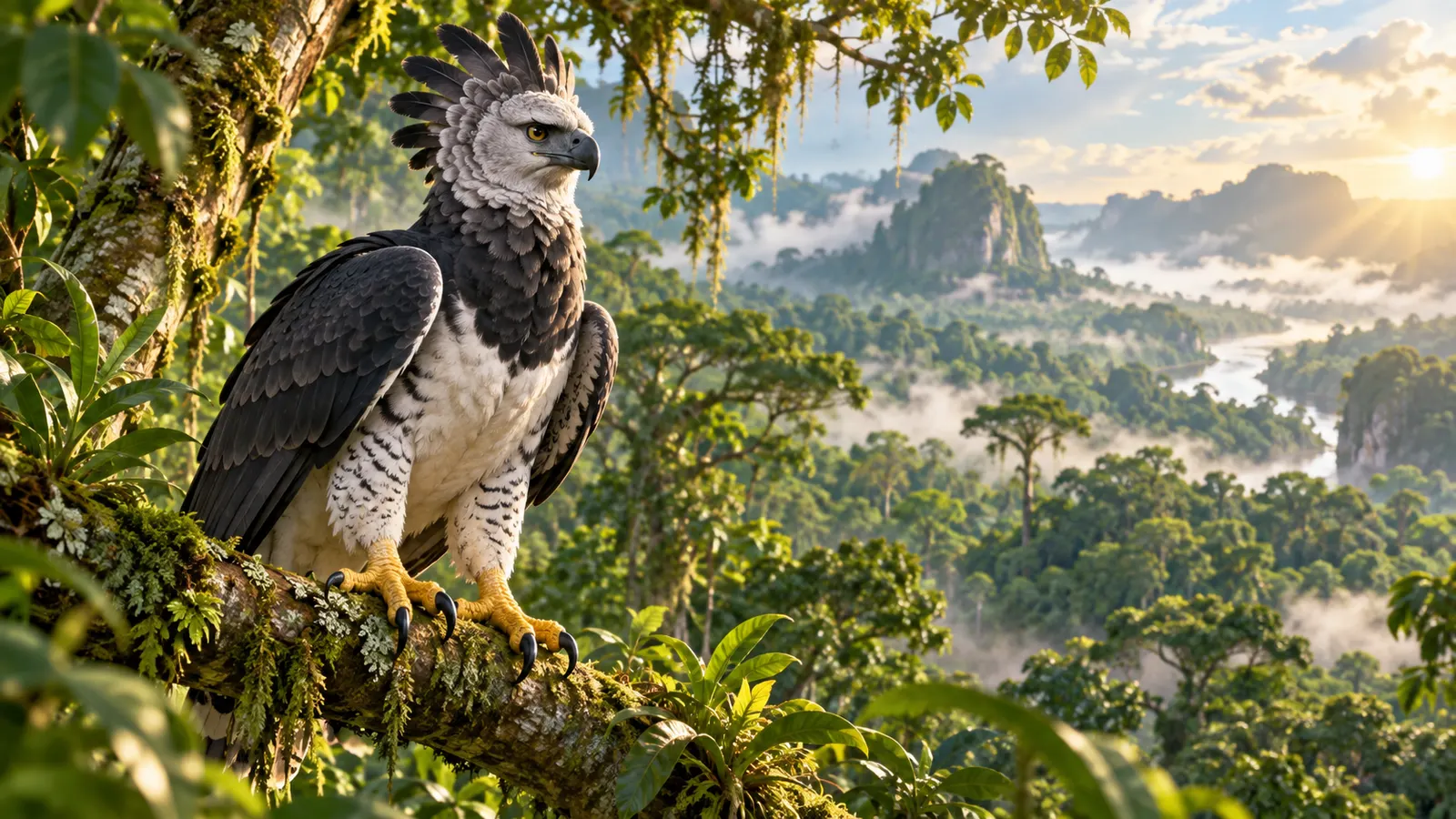
 読む前に予想してみよう!
オウギワシの握力は、野生の個体で測定されて正確な数字がわかっている
小型のタカやハヤブサでは測定例があるが、オウギワシの測定データは見つからなかった。
 研究カード(どんな研究?)
- 対象
- オウギワシ(アマゾンなどの野生個体)
- 規模
- 16巣・獲物306個体ほか
- 研究の種類
- 巣の観察・食べ残し調査と文献の集計
- 確かさ
- ★★★☆☆
オウギワシは体重4〜9kg、後ろ向きの指の爪は約8〜10cmの巨大なワシ。ナマケモノやサルを狩る。ただしネットで見かける「握力○kg」は、測定の根拠が見つからなかった。
ひとことで言うとナマケモノやサルをつかんで飛ぶ、最強クラスの森のワシ!
結論から言うと、オウギワシは体重およそ4〜9kg、翼を広げると約2mになる、世界最大級のワシです。足の後ろ向きの指には約8〜10cmもの爪があり、ナマケモノやサルを木の上からさらって食べます。
ただし、ネットでよく見かける「握力○○kg」という具体的な数字は、調べた範囲では測定にもとづく根拠が見つかりませんでした。この記事では、確かめられる事実だけで「最強クラスのワシ」の正体に迫ります。
01オウギワシとは? 大きさと見た目
オウギワシ(英名 Harpy eagle)は、メキシコ南部から南米の熱帯雨林にすむワシです。頭の冠羽を扇のように広げることが和名の由来とされます。
猛禽類の保護団体ペレグリン基金によると、体長は約1m、翼開長(翼を広げた幅)は最大約2m、体重は4〜9kg。メスはオスより大きく、体重が最大で2倍ほどになるのも特徴です。
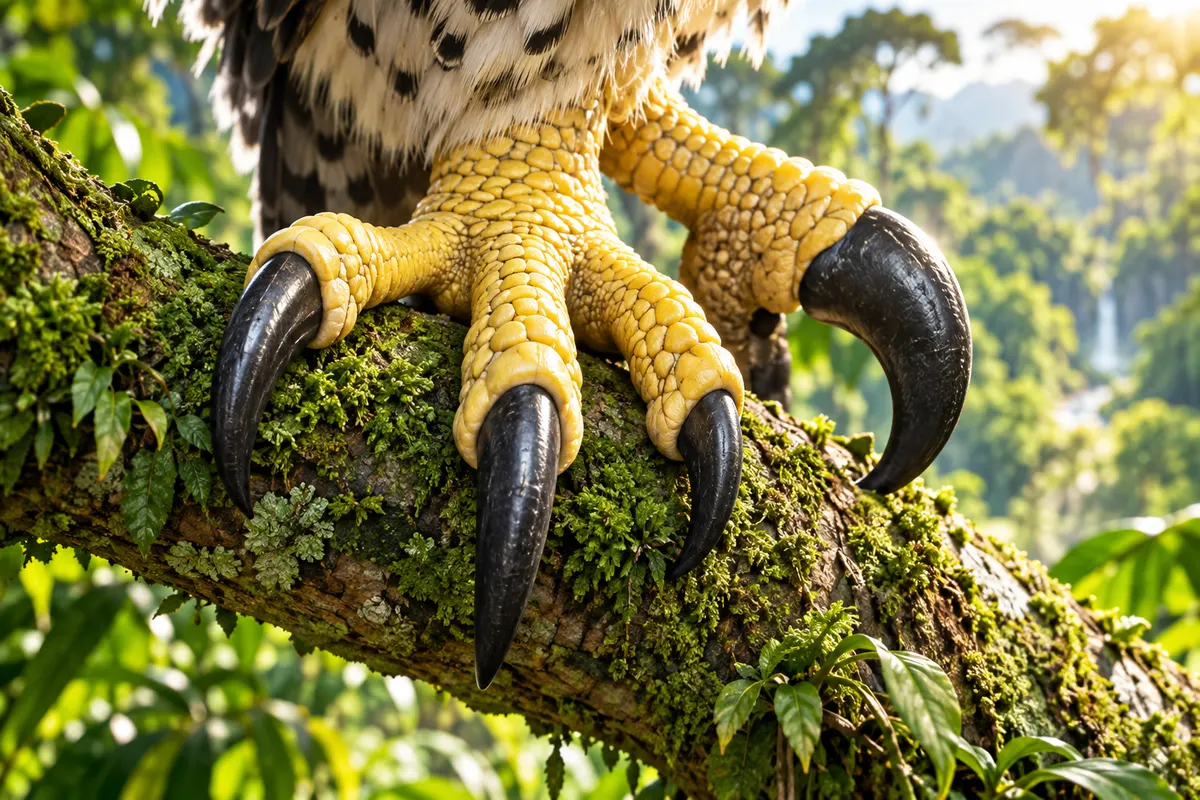
そして目を引くのが足。太い脚に、後ろ向きの指の爪が約3〜4インチ(約8〜10cm)。同団体は「ハイイログマの爪と同じくらい」と紹介しています。
02獲物の半分はナマケモノ
アマゾン中央部で5つのつがいを3年間調べた2014年の研究でも、エサは2種のナマケモノが中心でした。一方で、分布域全体では、これまでに69種の獲物が記録されています。ナマケモノやサルのように木の上で暮らす動物を狙う、「森の高いところの狩人」なのです。
03「握力○kg」は本当? 測った例は小型のタカ・ハヤブサだけ
猛禽類の握る力は、実際に測られたことがあります。2010年の研究では、北米のタカやハヤブサに力を測るセンサーをつかませて、生きた鳥の握力を記録しました。体重をそろえて比べると、足で獲物をしとめるタカのほうが、くちばしを使うハヤブサより握る力が強かったのです。
ただし、実際の鳥が出した力は、筋肉や骨の形から計算した予測値より一貫して低くなりました。つまり「体のつくりから計算した最大値」は、本物より大きく出がちです。
オウギワシについて、こうした実測データは見つかりませんでした。「人間の何倍」といった数字は、出典がたどれない限り話半分に聞くのが安全です。
04強さの正体は「足のつくり」
数字がなくても、オウギワシの強さは足の形が物語っています。2009年に猛禽類の爪を比べた研究によると、タカ・ワシの仲間は後ろ向きの指(第1趾)と内側の指(第2趾)の爪が特に大きいのが特徴。暴れる大きな獲物を押さえつけておくための形だと考えられています。
05まとめ:最強のワシを脅かすのは森の消失
オウギワシはIUCNで危急種(VU)とされています。2021年の研究では、森の半分以上が失われた地域では、親が十分なエサを運べず、巣立った若鳥が飢え死にした例も報告されました。開けた場所の獲物に切り替えることができなかったのです。
「握力○kg」より確かなのは、この巨大なワシが広い森なしには生きられないという事実でした。
この研究を英語で読もう原田英語の English CornerThe harpy eagle, which lives in tropical rainforests from southern Mexico to South America, is one of the… 音声
音声 4択クイズ9問A2・B1・B2タップして開く
原田英語の English Corner
この研究を英語で読もう
The harpy eagle lives in rainforests from southern Mexico to South America. It is one of the biggest eagles in the world. Its wings are about two meters wide, and it weighs four to nine kilograms.
The claw on its back toe is about 8 to 10 centimeters long. About half of its food is sloths. Some websites give a number for its grip, but we could not find anyone who has really measured it.
75 words ・ CEFR A2
和訳を見る
オウギワシは、メキシコ南部から南アメリカにかけての熱帯雨林にすんでいます。世界で最も大きいワシの一つです。翼を広げると約2メートルあり、体重は4〜9キログラムです。
後ろの指の爪は約8〜10センチメートルあります。エサの約半分はナマケモノです。握る力の数字を載せているウェブサイトもありますが、実際に測った人は見つかりませんでした。
4択リーディングクイズ
Q1. What is the passage mainly about?
熱帯雨林にすむ大きなワシ(オウギワシ)の紹介なので A。
Q2. What is about half of the eagle's food?
About half of its food is sloths. とあるので C。
Q3. In the passage, "measured" means ...
measure は「(道具などで)大きさや量を測る」。we could not find anyone who has really measured it は「実際に測った人は見つからなかった」なので D。
The harpy eagle, which lives in tropical rainforests from southern Mexico to South America, is one of the largest eagles on Earth. Females are much bigger than males, and the claw on the back toe can be 8 to 10 centimeters long. A 2015 review of diet studies found that sloths made up about half of its prey, both in number and in weight, while large monkeys came next.
Many websites give an exact number for the eagle's grip strength, but these figures do not seem to come from real measurements. The only grip force measurements we found come from smaller hawks and falcons, and those birds produced less force than the numbers calculated from their body shape.
118 words ・ CEFR B1
和訳を見る
メキシコ南部から南アメリカの熱帯雨林にすむオウギワシは、地球上で最大級のワシの一つです。メスはオスよりずっと大きく、後ろの指の爪は8〜10センチメートルにもなります。2015年に食性の研究をまとめた論文によると、ナマケモノは数でも重さでも獲物の約半分を占め、次に多いのは大型のサルでした。
多くのウェブサイトがこのワシの握力について正確な数字を示していますが、それらの数字は実際の測定にもとづいていないようです。見つかった握力の測定例は小型のタカやハヤブサのものだけで、それらの鳥が出した力は、体の形から計算した数値よりも小さかったのです。
4択リーディングクイズ
Q1. What is the main point of the passage?
巨大な森の狩人であること、そしてネットの握力の数字には測定の根拠がないことが中心なので B。
Q2. According to the 2015 review, what was the second most common prey?
sloths made up about half of its prey ... while large monkeys came next とあるので D。
Q3. What can we infer about grip numbers calculated from body shape?
実際の鳥は計算値より小さい力しか出さなかったので、計算値は実際より大きく出やすいと推測できる。正解は A。
Sloths make up roughly half of what a harpy eagle eats, whether the prey is counted or weighed. That figure comes from a 2015 synthesis of diet studies on this bird of the rainforest canopy, which ranges from southern Mexico to South America. Weighing four to nine kilograms, with a wingspan of about two meters, it is among the world's largest eagles.
Primates made up only about 20 percent of its prey by mass, and prey heavier than five kilograms was rare. Because most of the data come from remains collected at nests, prey eaten elsewhere may be missed. Popular figures for its grip strength, by contrast, appear to have no measured basis. When a 2010 study recorded the grip force of live hawks and falcons, the actual forces were consistently lower than values predicted from muscle and bone structure.
Numbers calculated from anatomy, then, tend to overstate what a bird can really do. Anatomy does explain how the harpy holds on. Like other hawks and eagles, it has especially large talons on the back and inner toes, for holding struggling prey. The bird's greatest threat is deforestation. In heavily cleared areas, pairs failed to raise young.
197 words ・ CEFR B2
和訳を見る
オウギワシが食べるもののおよそ半分はナマケモノで、これは獲物を数で数えても重さで量っても同じです。この数字は、メキシコ南部から南アメリカにかけての熱帯雨林の林冠にすむこの鳥について、食性研究を総合した2015年の論文によるものです。体重4〜9キログラム、翼開長約2メートルで、世界最大級のワシの一つです。
霊長類は獲物の重さの約20パーセントにすぎず、5キログラムを超える獲物はまれでした。データの大部分は巣で集められた食べ残しにもとづくため、巣以外で食べた獲物は見落とされているかもしれません。一方、このワシの握力についてよく言われる数字には、測定の根拠がないようです。2010年の研究で生きたタカやハヤブサの握る力を記録したところ、実際の力は筋肉や骨の構造から予測した値より一貫して低くなりました。
つまり、体のつくりから計算した数字は、鳥が実際に出せる力を大きく見せがちなのです。それでも、体のつくりはこのワシが獲物をどう押さえるかを説明してくれます。ほかのタカやワシの仲間と同じように、後ろの指と内側の指の爪が特に大きく、暴れる獲物を押さえるのに役立ちます。この鳥にとって最大の脅威は森林破壊です。森が大きく切り開かれた地域では、つがいがひなを育てきれませんでした。
4択リーディングクイズ
Q1. Which statement best summarizes the passage?
大型の捕食者であること、握力の数字に根拠がないこと、森林破壊が最大の脅威であることをまとめた C が正解。
Q2. Why might the diet data be biased?
Because most of the data come from remains collected at nests, prey eaten elsewhere may be missed. とあるので A。
Q3. What does the 2010 study imply about grip figures based on calculation?
実測値は予測値より一貫して低く、Numbers calculated from anatomy, then, tend to overstate what a bird can really do. とあるので B。
重要単語
- talonC1名詞(猛禽類の)かぎ爪The eagle grabbed the branch with its sharp talons.
 ふつうの爪は claw、猛禽類の鋭い爪は talon。複数形で使うことが多い。
 - raptorC1名詞猛禽類Eagles, hawks, and owls are all raptors. ラテン語 rapere(奪い取る)から。rapid(速い)や rapture と同じ語源。bird of prey とも言う。
- preyB2名詞獲物Sloths are the main prey of harpy eagles. pray(祈る)と同じ発音なので注意。predator(捕食者)と対で覚える。fall prey to ~「~の餌食になる」。
- canopyC1名詞林冠(森の上のほうの葉が茂る層)Harpy eagles hunt in the forest canopy. もとは「天蓋(ベッドの上の覆い)」。森を上から覆う葉の屋根のイメージ。
- deforestationB2名詞森林破壊Deforestation makes it hard for eagles to raise chicks. de-(取り除く)+forest+-ation。環境問題の英作文・長文で最頻出レベル。
- grip forceB1名詞(句)握る力Scientists measured the grip force of hawks with a sensor. grip strength とも言う。get a grip「しっかりしろ」という口語表現もある。
 入試に出る順の単語帳を印刷する →
 全5903語の「科学英単語カード」で復習する →
 公式・一次情報をチェック
- Harpy Eagle(The Peregrine Fund)peregrinefund.org
- 論文全文:Miranda et al. 2021 森林破壊とオウギワシ(NIH PubMed Central)pmc.ncbi.nlm.nih.gov
このネタ、誰かに教えたくなった?
中南米の森の王者オウギワシ。後ろ向きの指の爪はクマの爪なみの約8〜10cmで、獲物の約半分はナマケモノ。でもネットでよく見る「握力○kg」は、調べても測定データが見つからなかった。強さの正体は数字より“足のつくり”にあった。
押すと「マジかリスト」に保存されます
 出典・参考文献(5件)タップで表示
- Aguiar-Silva, Sanaiotti & Luz (2014) Food Habits of the Harpy Eagle, a Top Predator from the Amazonian Rainforest Canopy, Journal of Raptor Researchdoi.org
- Miranda (2015) Conservation implications of harpy eagle Harpia harpyja predation patterns, Endangered Species Researchdoi.org
- Miranda et al. (2021) Tropical deforestation induces thresholds of reproductive viability and habitat suitability in Earth's largest eagles, Scientific Reportsdoi.org
- Sustaita & Hertel (2010) In vivo bite and grip forces, morphology and prey-killing behavior of North American accipiters and falcons, Journal of Experimental Biologydoi.org
- Fowler, Freedman & Scannella (2009) Predatory Functional Morphology in Raptors: Interdigital Variation in Talon Size Is Related to Prey Restraint and Immobilisation Technique, PLoS ONEdoi.org

※本記事は上記の研究・公開資料をもとに、原田英語が独自の言葉で解説したものです。引用は著作権法第32条の範囲で行い、出典を明記しています。画像はすべてオリジナルのイメージです。研究結果には限界や個人差があります。誤りのご指摘は原田英語のお問い合わせフォームから。