
 ウソ?ホント?検証ビミョー
「食べてすぐ寝ると太る」はホント? 同じカロリーでも"時間"で体の反応が変わっていた
 2026.10.02
 English Corner(A2〜B2・4択クイズ)
 読む前に予想してみよう!
夕食の時間だけを遅らせても、食べる量が同じなら体への影響はまったく変わらない
同じ食事でも時間を遅らせると、血糖が上がりやすく脂肪が燃えにくくなった実験がある。
 研究カード(どんな研究?)
- 対象
- 肥満傾向の成人・健康な若者
- 規模
- 16〜82人
- 研究の種類
- ランダム化比較試験・同じ人が2つの食事時間を両方試す試験
- 確かさ
- ★★★☆☆
太るかどうかの主役は総カロリー。ただ同じ量でも遅い時間に食べると、空腹感が増えたり脂肪が燃えにくくなったりする実験がある。「すぐ寝る」は胃にも負担。
ひとことで言うと夜遅く食べると、体が「ためこみモード」になりやすいみたい。
「食べてすぐ寝ると牛になるよ」
子どものころ、こう言われた人は多いはず。もちろん人間は牛になりません。でも大人になると、今度は「食べてすぐ寝ると太る」という話が気になってきます。
残業のあとの遅い夕食。お腹いっぱいでそのままベッドへ。これ、本当に太りやすいのでしょうか?
01大前提:太るかどうかの主役は「総カロリー」
まず押さえておきたいのは、体重を決める一番の要素は食べた量と使った量のバランスだということ。夜に食べたカロリーだけが特別に脂肪になる、という単純な仕組みはありません。
食べる時間帯の影響は、食べる量の影響に比べると小さいと考えられています。ただし――「小さい」は「ゼロ」ではありませんでした。
02同じ食事を「4時間遅く」したら何が起きた?
アメリカのハーバード大学関連病院のチームが、とても丁寧な実験をしています。
睡眠時間・運動量・光の浴び方までそろえたうえでの結果です。「同じカロリーなら同じ」とは言い切れないことがわかります。
アメリカの別の研究では、健康な若者20人に夕食を18時と22時に食べてもらい、寝る時間は23時に固定しました。すると22時の夕食では、寝ている間の血糖値が高めになり、食事の脂肪が燃えにくかったと報告されています。
03ダイエット中の「夕食の時間」で差が出た
時間帯の影響は、実際の減量にも表れるのでしょうか。
イランの研究では、太り気味の女性82人を2グループに分け、同じ減量食で12週間過ごしてもらいました。夕食を19時ごろに食べたグループは、22時半ごろに食べたグループより体重が多く減りました(平均で約6.7kg対約4.8kg)。
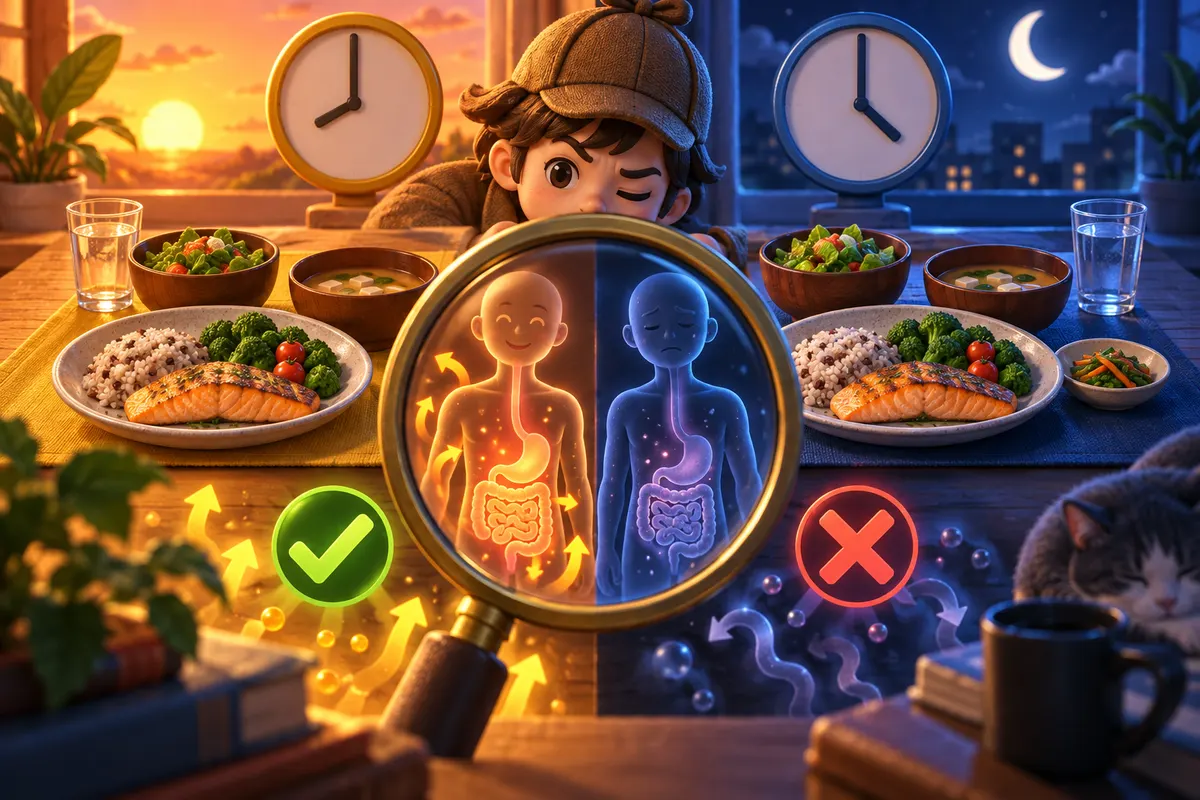
なぜ時間で差が出るのか。カギは体内時計です。私たちの体は、夜になると「休むモード」に切り替わり、血糖を処理する力も昼より落ちやすくなります。そこへ大量の食事が来ると、うまく処理しきれないのではないか、と考えられています。
04「すぐ寝る」には、胃の問題もある
体重とは別に、食べてすぐ横になることには、もっとはっきりした問題があります。
日本の研究で、夕食から寝るまでの時間が3時間未満の人は、胃酸が食道に逆流する胃食道逆流症(GERD)を抱えている割合が高いことが報告されています。横になると、重力の助けがなくなって胃の中身が戻りやすくなるのです。
「牛になる」という言い伝えは、もともとは食後すぐに寝転ぶ行儀の悪さを戒める言葉だと言われます。でも体の面から見ても、あながち的外れではなかったわけです。
05まとめ
- 太るかどうかの主役は、やっぱり1日の総カロリー
- ただし同じ食事でも、遅い時間に食べると脂肪が燃えにくく、空腹感も増えるという実験がある
- 食べてすぐ寝るのは、胸やけ・逆流の面でもおすすめできない
目安は「寝る2〜3時間前までに夕食を済ませる」。どうしても遅くなる日は、量を軽めにするだけでも違うかもしれません。
この研究を英語で読もう原田英語の English CornerDoes eating late really make you gain weight? 音声
音声 4択クイズ9問A2・B1・B2タップして開く
原田英語の English Corner
この研究を英語で読もう
Many people say, "If you eat and then go to bed, you will get fat." Is this true? The most important thing is how many calories you eat in a day.
But the time of your meal also matters a little. In one study, people ate the same meals early on some days and about four hours later on others. They felt hungrier and burned less energy. Also, lying down right after dinner can make stomach acid come back up.
80 words ・ CEFR A2
和訳を見る
「食べてすぐ寝ると太る」と多くの人が言います。これは本当でしょうか。いちばん大切なのは、1日に何カロリー食べるかです。
でも、食事の時間も少しは関係します。ある研究では、人々が同じ食事を、早い時間にとる日と約4時間遅くとる日がありました。すると、お腹がよりすくようになり、使うエネルギーが減りました。また、夕食のすぐ後に横になると、胃酸が逆流してくることがあります。
4択リーディングクイズ
Q1. What is the passage mainly about?
冒頭の「食べてすぐ寝ると太る」は本当か、という問いが全体のテーマなので B が正解。
Q2. In the study, how much later were the late meals?
本文に about four hours later on others とあるので D。
Q3. In this passage, "burned less energy" means the body ...
burn energy は「エネルギーを燃やす=消費する」。less がつくので「使うエネルギーが減った」となり A。
Does eating late really make you gain weight? Scientists agree that total calories are the main factor, but meal timing seems to matter too. In one careful experiment, 16 adults with overweight ate exactly the same meals on an early schedule and on a schedule about four hours later. When they ate late, they felt hungrier and used less energy while awake.
In another study from Iran, 82 women followed the same diet for 12 weeks. Those who had dinner around 7 p.m. lost more weight than those who ate around 10:30 p.m. One reason may be our body clock, which makes the body worse at handling food at night. Eating less than three hours before bed is also linked to acid reflux.
123 words ・ CEFR B1
和訳を見る
遅く食べると本当に太るのでしょうか。科学者たちは総カロリーが主な要因だという点で一致していますが、食事のタイミングも関係するようです。ある丁寧な実験では、太り気味の成人16人が、まったく同じ食事を早いスケジュールと約4時間遅いスケジュールで食べました。遅く食べたとき、彼らはより空腹を感じ、起きている間に使うエネルギーが少なくなりました。イランの別の研究では、82人の女性が12週間同じ減量食を続けました。
夕食を午後7時ごろに食べた人は、午後10時半ごろに食べた人より体重が多く減りました。理由の1つは体内時計かもしれません。体内時計のせいで、夜は体が食べ物をうまく処理できなくなるのです。また、寝る3時間前を切って食べると、胃酸の逆流が起きることもあります。
4択リーディングクイズ
Q1. What is the main idea of the passage?
total calories are the main factor, but meal timing seems to matter too が主旨。総カロリーが主役だが時間も関係する、なので B。
Q2. What happened in the study from Iran?
Those who had dinner around 7 p.m. lost more weight とあるので A。食事内容は同じだった点にも注意。
Q3. Why might the body handle food worse at night?
One reason may be our body clock, which makes the body worse at handling food at night とあるので B。
In one crossover trial, 16 adults with overweight tried two eating schedules. On one, they ate their meals early in the day. On the other, they ate exactly the same meals about four hours later. Sleep, physical activity and light exposure were tightly controlled, so only meal timing changed. The late schedule made the volunteers hungrier and lowered the energy they burned while awake, and gene activity in their fat tissue shifted toward storing fat.
A separate study found something similar in healthy young volunteers. When they ate dinner at 10 p.m. instead of 6 p.m., their blood sugar stayed higher during sleep and they burned less of the fat from their meal. These results fit what is known about circadian rhythms, which lower the body's ability to handle glucose at night. So eating late does seem to matter.
But the overall balance between calories eaten and calories burned is still the bigger factor in weight gain, and the crossover trial had only 16 people and did not follow their weight over months. There is another reason to leave a gap before bed. A Japanese study linked finishing dinner less than three hours before sleep with acid reflux.
198 words ・ CEFR B2
和訳を見る
ある交差試験で、太り気味の成人16人が2通りの食事スケジュールを試しました。一方では、1日の早い時間に食事をとりました。もう一方では、まったく同じ食事を約4時間遅らせてとりました。睡眠、体の活動量、光を浴びる量は厳密にそろえられたので、変わったのは食事の時間だけです。遅いスケジュールでは参加者の空腹感が増し、起きている間に消費するエネルギーが下がり、脂肪組織の遺伝子の働きが脂肪をためこむ方向に変化しました。
別の研究でも、健康な若い参加者で似た結果が出ました。夕食を午後6時ではなく午後10時に食べると、睡眠中の血糖値が高めに保たれ、食事に含まれる脂肪が燃えにくくなったのです。これらの結果は、夜になると体がブドウ糖を処理する能力を下げる概日リズムについて知られていることと一致します。つまり、遅い時間に食べることは確かに影響がありそうです。しかし、体重が増えるかどうかには、食べたカロリーと使ったカロリーの全体の収支のほうが大きく関わっています。
それに、この交差試験の参加者は16人だけで、何か月にもわたって体重を追ったわけでもありません。寝る前に時間をあける理由はもう一つあります。日本の研究では、寝る3時間前より後に夕食を終えることが、胃酸の逆流と結びついていました。
4択リーディングクイズ
Q1. Which statement best summarizes the author's view?
So eating late does seem to matter. と認めつつ、the overall balance between calories eaten and calories burned is still the bigger factor と述べているので C。
Q2. What was controlled in the crossover study?
Sleep, physical activity and light exposure were tightly controlled とあるので A。条件をそろえたことで食事時間の影響だけを取り出せた。
Q3. Which is mentioned as a limitation of the evidence?
the crossover trial had only 16 people and did not follow their weight over months と限界が明示されているので D。B は「まったく同じ食事」に反する。
重要単語
- meal timingB1名詞(句)食事のタイミングMeal timing may affect how your body uses energy.
 timing は「時機・タイミング」。the timing of ~ の形でも頻出。
 - circadian rhythmC1名詞(句)概日リズム(体内時計)Your circadian rhythm tells your body when to sleep. circa(およそ)+dies(日)=「約1日」のリズム。body clock と言い換えられる。
- energy expenditureC1名詞(句)エネルギー消費量Energy expenditure drops a little when we sleep. expend(費やす)の名詞。expenditure は「支出」の意味でも経済系長文に頻出。
- acid refluxC1名詞(句)胃酸の逆流Lying down after dinner can cause acid reflux. re-(後ろへ)+flux(流れ)で「逆流」。heartburn(胸やけ)とセットで覚える。
- isocaloricC1形容詞同じカロリーのThe two diets were isocaloric but timed differently. iso-(等しい)+caloric。isotope(同位体)の iso- と同じ。
- factorB1名詞要因Total calories are the main factor in weight gain. a key factor in ~「~の重要な要因」は入試頻出のコロケーション。
 入試に出る順の単語帳を印刷する →
 全5903語の「科学英単語カード」で復習する →
 公式・一次情報をチェック
 4コマでわかる
このネタ、誰かに教えたくなった?
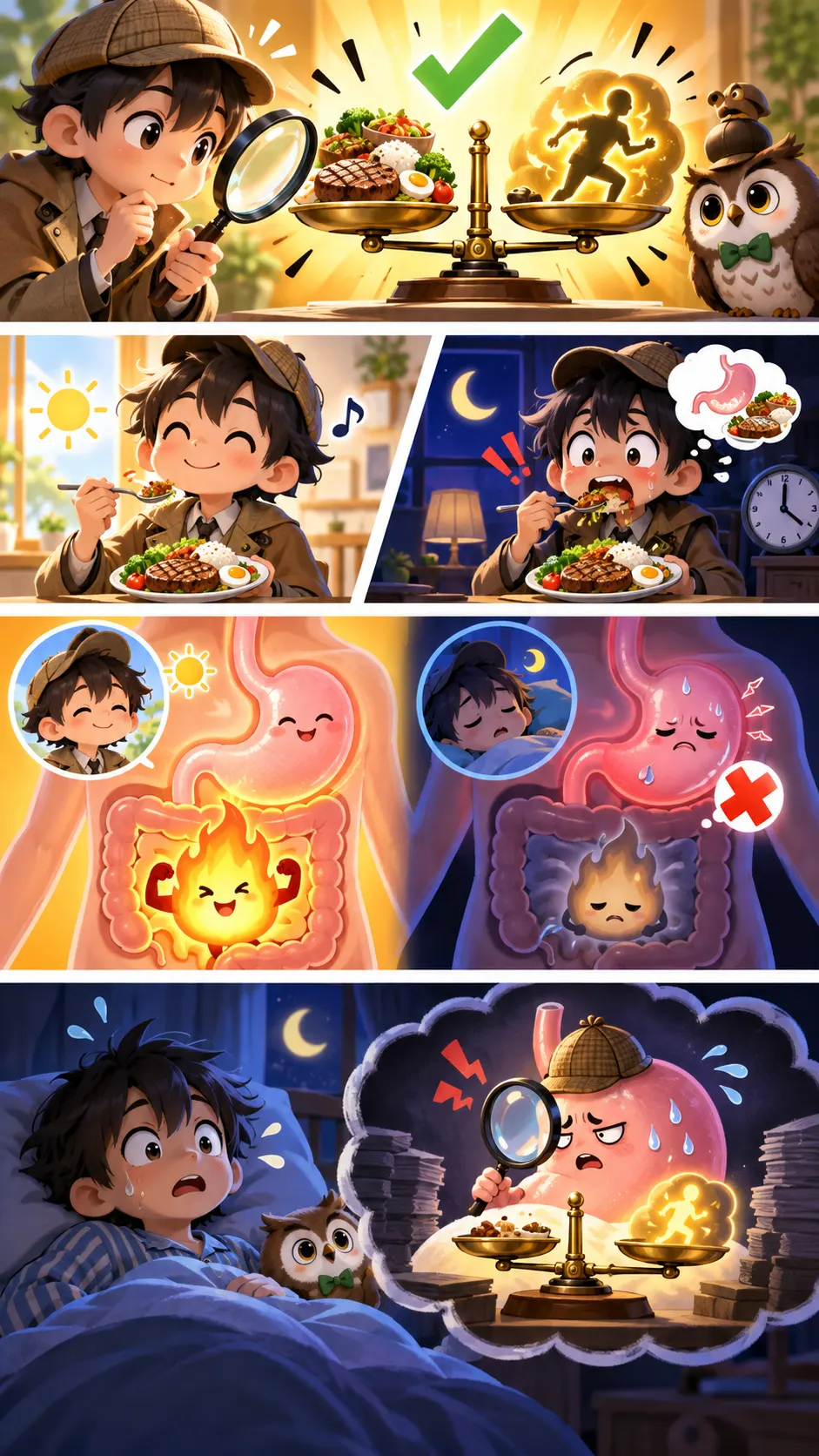
「食べてすぐ寝ると牛になる」は言い過ぎだけど、まったくのウソでもなかった。同じカロリーでも食事の時間を遅らせると、空腹感が増えて消費エネルギーが減った実験があるらしい。
押すと「マジかリスト」に保存されます
 出典・参考文献(4件)タップで表示
- Vujović et al. (2022) Late isocaloric eating increases hunger, decreases energy expenditure, and modifies metabolic pathways in adults with overweight and obesity, Cell Metabolismdoi.org
- Madjd et al. (2020) Effects of consuming later evening meal v. earlier evening meal on weight loss during a weight loss diet, British Journal of Nutritiondoi.org
- Gu et al. (2020) Metabolic Effects of Late Dinner in Healthy Volunteers—A Randomized Crossover Clinical Trial, Journal of Clinical Endocrinology & Metabolismdoi.org
- Fujiwara et al. (2005) Association Between Dinner-to-Bed Time and Gastro-Esophageal Reflux Disease, American Journal of Gastroenterologydoi.org

※本記事は上記の研究・公開資料をもとに、原田英語が独自の言葉で解説したものです。引用は著作権法第32条の範囲で行い、出典を明記しています。画像はすべてオリジナルのイメージです。研究結果には限界や個人差があります。誤りのご指摘は原田英語のお問い合わせフォームから。