原田英語の時事英語ジュニア|英語ニュース ワークシート(高校生レベル)
Class ____ No. ____ Name ____________________
学校でスマホを鍵つきポーチにしまうと?テストの点が少し上昇 約330万人の研究
Phone Pouches Linked to Small, Lasting Test Score Gains, Study Finds
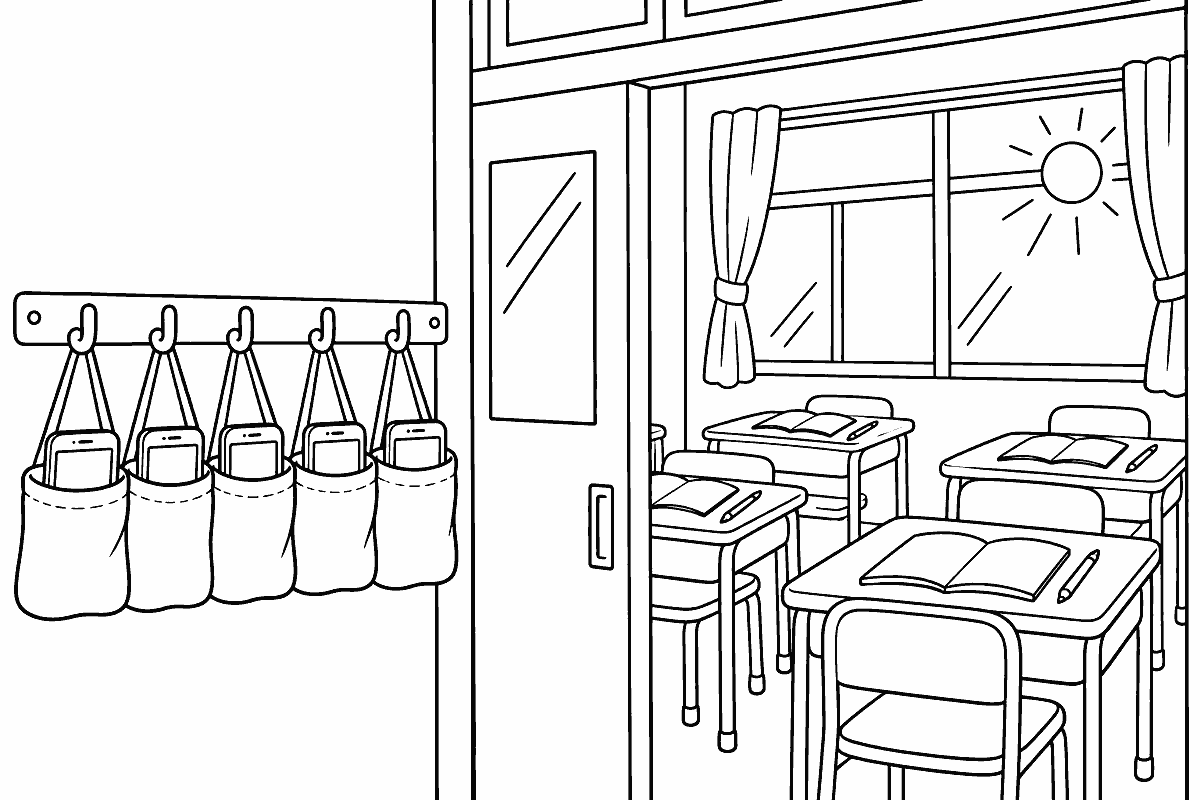
1Schools in the United States that lock away students' phones for the school day saw small test score gains that held steady, a new study has found. Researchers from Harvard University, Dartmouth College and the testing group NWEA released the findings on November 17. The study has not yet been reviewed by other scientists.
2The team used math and reading scores from about 3.3 million students in grades 4 to 10 at roughly 4,600 schools. It compared schools that began requiring students to keep their phones in lockable pouches with similar schools that had no ban. The pouches were made by a company called Yondr.
3Students at schools with the pouches gained the equivalent of one to two extra weeks of learning each year. That works out to about two extra minutes for every hour of class. The gains did not fade after the first year, and they appeared to last for at least three years. The results were similar in elementary, middle and high schools.
4The researchers admit that the effect is very small. Tom Kane, a Harvard economist who worked on the study, said the pouches were an inexpensive way to give students more learning time, at about 25 dollars per student. The team said these small gains could grow year after year, in the same way that U.S. test scores fell slowly from around 2013.
5Not everyone is convinced. An earlier national study whose authors included Thomas Dee of Stanford University and Brian Jacob of the University of Michigan found close to no effect on scores. Dee called the results of early studies on phone bans, including the new one, largely disappointing and said more research is needed. The new study also found that the pouches cut phone activity at schools by about 20 percent.
Words 単語
| held steadyB1 | 句 | 安定していた、変わらずに続いたstayed at the same level without falling |
| reviewedA1 | 動 | 審査された、点検されたchecked carefully by experts |
| requiringB1 | 動 | 求める、義務づけるsaying that someone must do something |
| banB2 | 名 | 禁止a rule that says people must not do something |
| equivalent外 | 名 | 同じ量・価値のもの、相当するものsomething that has the same amount or value |
| fadeB1 | 動 | 薄れる、だんだん消えるto slowly become weaker or less clear |
| admitA2 | 動 | 認めるto say that something is true, often unwillingly |
| economistB2 | 名 | 経済学者a person who studies money, jobs and trade |
| convincedB2 | 形 | 納得した、確信したsure that something is true |
| disappointingA2 | 形 | 期待はずれの、がっかりさせるnot as good as you hoped |
単語のレベル:CEFR-J(『CEFR-J Wordlist Version 1.6』 東京外国語大学投野由紀夫研究室. (URL: https://www.cefr-j.org/download.html より 2026年8月ダウンロード))
1. Reading Quiz 本文の内容に合うものを選ぼう
Which groups released the new study?
A. Stanford University and the University of MichiganB. Harvard University, Dartmouth College and NWEAC. Yondr and several schoolsD. The U.S. government
What did the researchers compare?
A. Schools in the U.S. and schools in JapanB. Students who had phones and students who had no phones at homeC. Schools that required phone pouches and similar schools with no banD. Math scores and reading scores of the same students
How much extra class time was the gain equal to?
A. About two extra minutes for every hour of classB. About 20 extra minutes for every hour of classC. About two extra hours every dayD. About one extra month every year
According to Tom Kane, about how much do the pouches cost?
A. About 2 dollars per studentB. About 250 dollars per studentC. About 25 dollars per schoolD. About 25 dollars per student
By about how much did the pouches cut phone activity at schools?
A. About 2 percentB. About 20 percentC. About 50 percentD. About 90 percent
2. True or False 正しければ T、違っていれば F
( ) Other scientists have already reviewed the new study.
( ) The gains seemed to last for at least three years.
( ) The results were much better in high schools than in elementary schools.
( ) Thomas Dee called the results of early studies on phone bans largely disappointing.
3. Fill in the Blanks 下の語から選んで空らんをうめよう(形を変えずに)
reviewedrequiringbansadmitfadeequivalent
Students at schools with the pouches gained the _____ of one to two extra weeks of learning each year.
The study has not yet been _____ by other scientists.
The gains did not _____ after the first year, and they appeared to last for at least three years.
The researchers _____ that the effect is very small.
It compared schools that began _____ students to keep their phones in lockable pouches with similar schools that had no ban.
Dee called the results of early studies on phone _____, including the new one, largely disappointing and said more research is needed.
4. Word Order 語を並べかえて正しい文にしよう
( were / made / pouches / by / Yondr / a / company / The / called ) .
( effect / small / researchers / the / The / very / admit / that / is ) .
( were / results / in / high / and / middle / The / elementary, / similar / schools ) .
5. Think and Write 英語で答えてみよう
Should schools in Japan make students lock away their phones during the school day? Give reasons.(日本の学校も、学校にいる間は生徒のスマホに鍵をかけてしまっておくべきだと思いますか?理由も挙げよう。)
The gain in this study was small. Do you think a small effect is still worth the cost? Why?(この研究の伸びは小さいものでした。小さな効果でも、お金をかける価値があると思いますか?なぜですか?)
Answers 解答
1. (1) B (2) C (3) A (4) D (5) B
2. (1) F (2) T (3) F (4) T
3. (1) equivalent (2) reviewed (3) fade (4) admit (5) requiring (6) bans
4.
- The pouches were made by a company called Yondr.
- The researchers admit that the effect is very small.
- The results were similar in elementary, middle and high schools.
全文訳
1学校にいる間、生徒のスマホに鍵をかけてしまっておくアメリカの学校では、テストの点数が少し伸び、その伸びが続いていたと、新しい研究が明らかにしました。ハーバード大学、ダートマス大学、テストを作る団体の NWEA の研究者たちが、11月17日にこの結果を発表しました。この研究は、まだほかの科学者による審査を受けていません。
2研究チームは、約4,600校の、日本の小4から高1にあたる学年の約330万人の生徒の、算数・数学と読解の点数を使いました。チームは、生徒にスマホを鍵のかかるポーチに入れるよう求めはじめた学校を、禁止のない似た学校とくらべました。ポーチは、ヨンダーという会社が作ったものでした。
3ポーチを使う学校の生徒は、毎年1〜2週間多く勉強したのに相当する伸びがありました。これは、授業1時間ごとに約2分多く勉強したのと同じくらいです。その伸びは1年目のあとも薄れず、少なくとも3年目までは続いていたようです。結果は、小学校、中学校、高校のどれでも同じようなものでした。
4研究者たちは、効果がとても小さいことを認めています。研究に加わったハーバード大学の経済学者トム・ケインさんは、ポーチは生徒1人あたり約25ドルで、生徒の勉強の時間をふやせる安い方法だと話しました。チームは、アメリカのテストの点数が2013年ごろから少しずつ下がってきたのと同じように、この小さな伸びも年ごとに大きくなっていく可能性があると述べました。
5だれもが納得しているわけではありません。スタンフォード大学のトーマス・ディーさんやミシガン大学のブライアン・ジェイコブさんらによる、全国を調べた前の研究では、点数への効果はほとんどありませんでした。ディーさんは、今回の研究もふくめた、スマホ禁止についての初期の研究の結果はおおむね期待はずれだとし、もっと研究が必要だと話しました。新しい研究では、ポーチによって学校でのスマホの使用が約20%減ったこともわかりました。
文法ポイント:現在完了の受け身(have / has been +過去分詞)
「(今までに)〜されている/まだ〜されていない」を表す。本文の The study has not yet been reviewed by other scientists. は「この研究はまだほかの科学者に審査されていない」。否定文では yet(まだ)がよくいっしょに使われる。
出典:Chalkbeat、The 74、NPR(OPB 掲載) ほか(記事は原田英語の時事英語ジュニアのオリジナル)|https://www.haradaeigo.com/jijieigo-junior/news/2026-11-18-phone-pouches-test-scores/