原田英語の時事英語ジュニア|英語ニュース ワークシート(高校生レベル)
Class ____ No. ____ Name ____________________
恐竜の血液が化石に残っていた?1億1500万年前の骨に赤血球のようなつぶ
A 115-Million-Year-Old Bone Holds the Best Evidence Yet of Dinosaur Blood Cells
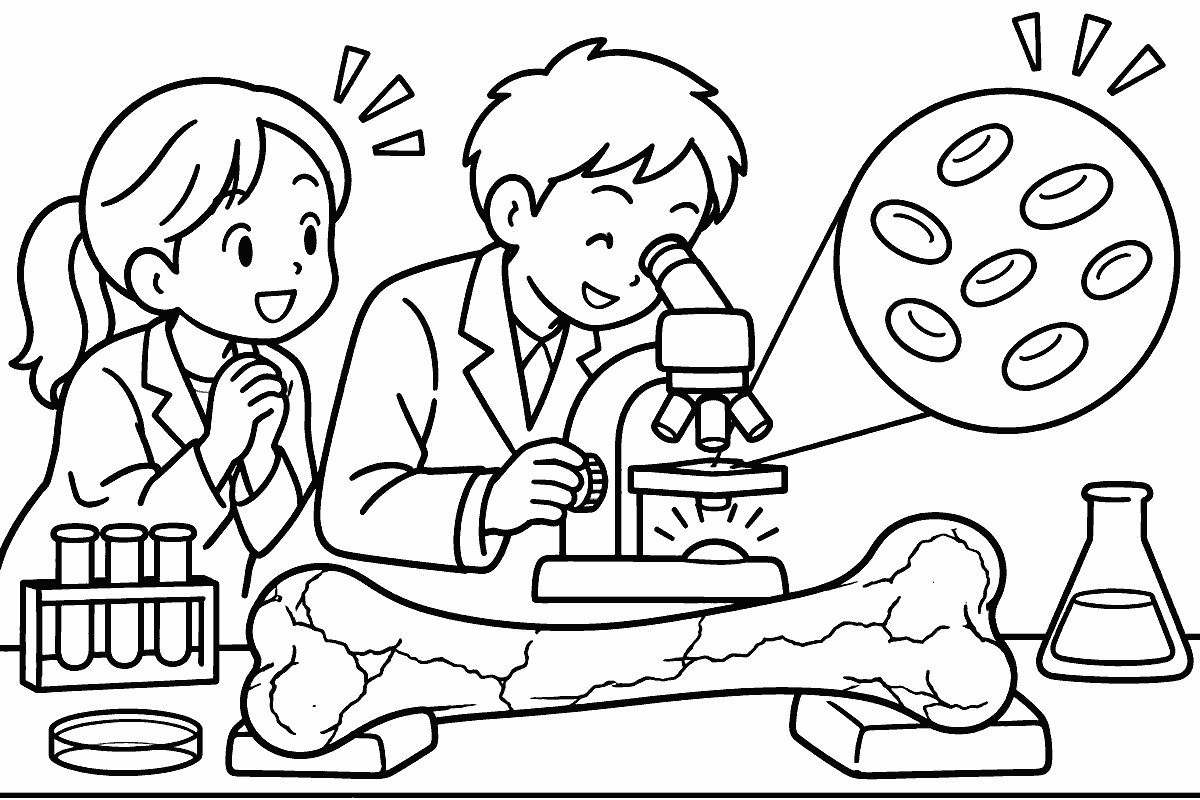
1Scientists say a 115-million-year-old dinosaur bone gives the strongest evidence so far that red blood cells can be kept in a fossil. The study, published on November 2 in the journal Proceedings of the National Academy of Sciences, examined a leg bone of Aratasaurus museunacionali. This meat-eating dinosaur lived about 115 million years ago in what is now Brazil.
2The animal walked on two legs and was about 3 meters long. Scientists think it was a young animal, about four years old, when it died. Its bones were dug up in 2008 at a gypsum mine in northeastern Brazil. Scientists think the still, low-oxygen water there slowed the decay of the body.
3Using new microscope images and chemical analysis, the team found many oval structures inside the canals that once carried blood through the bone. Inside those structures, they detected heme, the part of hemoglobin that holds iron. A mineral called hausmannite may have helped preserve the structures. Kliti Grice of Curtin University in Australia, who led the study, said the team does not think the mineral was part of the original cells.
4Not everyone is convinced. The structures are not the same size or shape as red blood cells in today's birds and crocodiles. Mary Schweitzer of North Carolina State University, who was not part of the study, said the results fall short of the accepted standards for identifying fossil blood cells.
5The research also does not show that dinosaur DNA has survived. The oldest DNA reported so far is about 2 million years old and came from sediment in Greenland. The team now plans to look at fossils of other animals and from other ages.
Words 単語
| preservedB1 | 形 | 保存された、残されたkept safe from damage for a long time |
| examinedB1 | 動 | 調べた(examine の過去形)looked at something very carefully |
| decayB2 | 名 | くさること、腐敗the slow breaking down of dead things |
| analysisB1 | 名 | 分析a careful study of something to understand it |
| structuresA2 | 名 | つくり、構造物(structure の複数形)things made of parts put together in a certain way |
| detectedB2 | 動 | 見つけ出した、検出した(detect の過去形)found something that is hard to notice |
| hemoglobin外 | 名 | ヘモグロビンthe part of blood that carries oxygen around the body |
| convincedB2 | 形 | 納得している、確信しているsure that something is true |
| mineralB1 | 名 | 鉱物a natural material found in rocks and soil |
| sediment外 | 名 | たい積物、地層の土や砂sand and mud that slowly gather in one place |
単語のレベル:CEFR-J(『CEFR-J Wordlist Version 1.6』 東京外国語大学投野由紀夫研究室. (URL: https://www.cefr-j.org/download.html より 2026年8月ダウンロード))
1. Reading Quiz 本文の内容に合うものを選ぼう
Which bone did the study look at?
A. A skull of a plant-eating dinosaurB. A leg bone of AratasaurusC. A tooth of a crocodileD. A wing bone of a bird
What may have helped keep the body from decaying quickly?
A. Hot sandB. Ice in GreenlandC. Still, low-oxygen waterD. Heme in the blood
Where were the oval structures found?
A. In canals that once carried blood through the boneB. On the outside of the boneC. In the soil near the mineD. In the dinosaur's teeth
Why is Mary Schweitzer doubtful about the findings?
A. She found the bone first.B. She thinks the bone is too young.C. She found DNA in the bone.D. She says the results fall short of the accepted standards for identifying fossil blood cells.
How old is the oldest DNA reported so far?
A. About 115 million years oldB. About 4 years oldC. About 2 million years oldD. About 2,008 years old
2. True or False 正しければ T、違っていれば F
( ) The bones of Aratasaurus were dug up in 2008.
( ) The structures are the same size and shape as red blood cells in today's birds.
( ) The research shows that dinosaur DNA has survived.
( ) The team plans to look at fossils of other animals.
3. Fill in the Blanks 下の語から選んで空らんをうめよう(形を変えずに)
analysispreservestructuresconvinceddecayexamined
Inside those _____, they detected heme, the part of hemoglobin that holds iron.
The study, published on November 2 in the journal Proceedings of the National Academy of Sciences, _____ a leg bone of Aratasaurus museunacionali.
Not everyone is _____.
Using new microscope images and chemical _____, the team found many oval structures inside the canals that once carried blood through the bone.
A mineral called hausmannite may have helped _____ the structures.
Scientists think the still, low-oxygen water there slowed the _____ of the body.
4. Word Order 語を並べかえて正しい文にしよう
( long / legs / two / about / animal / walked / and / was / meters / 3 / The / on ) .
( Not / convinced / is / everyone ) .
( also / that / dinosaur / does / survived / has / The / not / show / research / DNA ) .
5. Think and Write 英語で答えてみよう
Scientists often disagree about new discoveries. Why do you think this is important for science?(新しい発見について、科学者の意見が分かれることはよくあります。それが科学にとって大切なのはなぜだと思いますか?)
If scientists could one day bring back an extinct animal, should they do it? Give your reasons.(いつか科学者が絶滅した動物を生き返らせられるとしたら、そうすべきだと思いますか?理由も答えてください。)
Answers 解答
1. (1) B (2) C (3) A (4) D (5) C
2. (1) T (2) F (3) F (4) T
3. (1) structures (2) examined (3) convinced (4) analysis (5) preserve (6) decay
4.
- The animal walked on two legs and was about 3 meters long.
- Not everyone is convinced.
- The research also does not show that dinosaur DNA has survived.
全文訳
1科学者たちは、1億1500万年前の恐竜の骨が、化石の中に赤血球が残りうることを示す、これまででいちばん強い証拠だと話しています。11月2日に科学誌『米国科学アカデミー紀要(PNAS)』に発表された研究は、アラタサウルス・ムセウナシオナリの足の骨を調べました。この肉食の恐竜は、約1億1500万年前に、いまのブラジルにあたる場所で生きていました。
2この恐竜は2本の足で歩き、体長は約3メートルでした。死んだときは約4歳の若い個体だったと考えられています。骨は2008年、ブラジル北東部にある石こうの採掘場で掘り出されました。科学者たちは、そこの動かない、酸素の少ない水が、体がくさるのをおそくしたと考えています。
3研究チームは、新しい顕微鏡の画像と化学分析を使って、かつて骨の中に血を運んでいた管の中に、だ円形のつくりをたくさん見つけました。そのつくりの中からは、ヘモグロビンの中で鉄をもつ部分、ヘムが見つかりました。ハウスマン鉱という鉱物が、つくりを残すのを助けたかもしれません。研究をひきいたオーストラリアのカーティン大学のクリティ・グライスさんは、その鉱物はもとの細胞にふくまれていたものではないとチームは考えていると話しました。
4だれもが納得しているわけではありません。そのつくりは、いまの鳥やワニの赤血球とは大きさも形もちがいます。研究に加わっていないノースカロライナ州立大学のメアリー・シュバイツァーさんは、この結果は化石の血液細胞と認めるための基準にとどいていないと話しました。
5この研究は、恐竜のDNAが残っていることを示したわけでもありません。これまでに報告されたいちばん古いDNAは約200万年前のもので、グリーンランドの地層の土から見つかりました。研究チームは今後、ほかの動物やほかの時代の化石も調べる予定です。
文法ポイント:関係代名詞 who の非制限用法(, who ~,)
人の名前のあとにカンマをつけて〈, who + 動詞〉を置くと、その人について情報を付け足せる。本文の Mary Schweitzer of North Carolina State University, who was not part of the study, said … は「研究に加わっていないシュバイツァーさんは~と話した」。カンマがあるので「どのシュバイツァーさんか」をしぼるのではなく、説明を足しているだけ。
出典:Reuters(Yahoo News)、CNN(KIFI Local News 8) ほか(記事は原田英語の時事英語ジュニアのオリジナル)|https://www.haradaeigo.com/jijieigo-junior/news/2026-11-04-dinosaur-red-blood-cells-brazil/