原田英語の時事英語ジュニア|英語ニュース ワークシート(高校生レベル)
Class ____ No. ____ Name ____________________
果物を食べた恐竜?「地獄のニワトリ」はあごを前後に動かして実をつぶしていたらしい
A Turkey-Sized Dinosaur With a Taste for Fruit
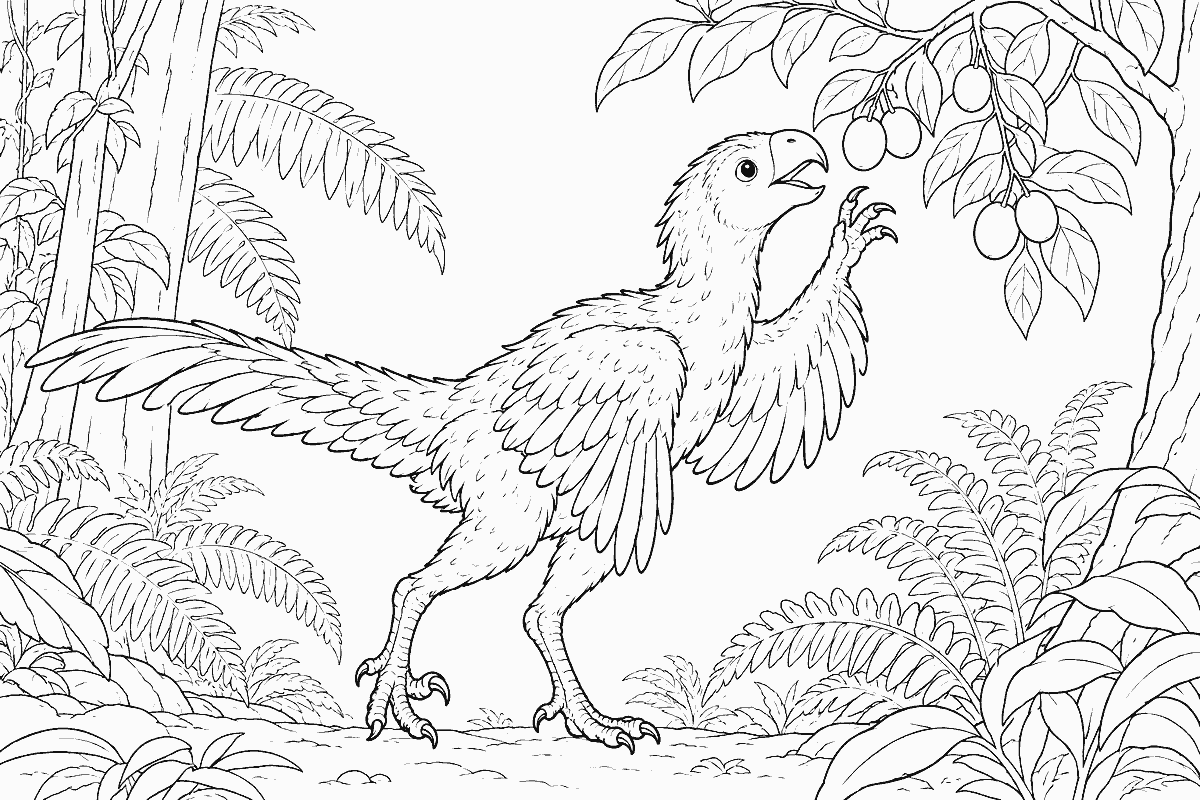
1A small, toothless dinosaur nicknamed the hell chicken probably fed on soft fruit, scientists reported in the journal Nature Communications. The study was led by Greg Funston of Stony Brook University in the United States. The university announced the findings on October 27. Researchers from Canada's Royal Ontario Museum were also part of the team.
2The name Infernogallus refers to Hell Creek, the area where its bones were dug up in 2011. The name joins inferno, meaning hell, and gallus, meaning chicken. The animal was a feathered, beaked dinosaur that was as big as a turkey and weighed about 12 kilograms. It lived about 66 million years ago, near the end of the age of dinosaurs.
3Its skull, which is small enough to hold in one hand, was partly crushed, so the team rebuilt it from CT scans. The bones of the roof of its mouth curved downward, and this changed the direction in which some jaw muscles pulled. As a result, the lower jaw slid forward and backward instead of simply snapping shut.
4The researchers think the dinosaur used this sliding motion to mash stone fruits, which have a hard pit inside soft flesh, like cherries and peaches. They say it may be the first dinosaur scientists know of that specialized in eating fruit. Funston said the find shows that dinosaurs like this one were even stranger than scientists had expected. He also said these dinosaurs did not necessarily eat only fruit.
Words 単語
| nicknamedB1 | 形 | ~というあだ名のgiven a fun extra name |
| findingsB1 | 名 | (研究の)結果、わかったことwhat people learn from a study |
| refersA2 | 動 | (refer to で)~を指す、~にちなむ(refer の3人称単数)points to or is about something |
| featheredA2 | 形 | 羽毛のあるcovered with the soft things birds have |
| crushedB1 | 形 | つぶれたpressed so hard that it lost its shape |
| directionA2 | 名 | 向き、方向the way something moves or points |
| musclesB1 | 名 | 筋肉(muscle の複数形)body parts that help you move |
| mashB1 | 動 | つぶすto press food until it is soft |
| specializedB1 | 動 | 特化した、専門にした(specialize の過去形)became very good at one thing only |
| necessarilyB2 | 副 | (not と使って)必ずしも~ないalways, in every case |
単語のレベル:CEFR-J(『CEFR-J Wordlist Version 1.6』 東京外国語大学投野由紀夫研究室. (URL: https://www.cefr-j.org/download.html より 2026年8月ダウンロード))
1. Reading Quiz 本文の内容に合うものを選ぼう
Who led the research team?
A. A teacher in JapanB. Greg Funston of Stony Brook UniversityC. A farmer in Hell CreekD. A zookeeper in Canada
When were the dinosaur's bones dug up?
A. In 2011B. In 2026C. 66 years agoD. On October 27
Why did the team rebuild the skull from CT scans?
A. Because the skull was lostB. Because the skull was too bigC. Because the skull was partly crushedD. Because the skull belonged to a parrot
Which fruits do the researchers name as examples?
A. Apples and orangesB. Bananas and grapesC. Strawberries and lemonsD. Cherries and peaches
What did Funston say about these dinosaurs?
A. They ate only meat.B. They did not necessarily eat only fruit.C. They could fly.D. They lived in Japan.
2. True or False 正しければ T、違っていれば F
( ) Part of the name, gallus, means chicken.
( ) The dinosaur's lower jaw only moved up and down.
( ) Researchers from the Royal Ontario Museum were part of the team.
( ) The dinosaur's skull was too large to hold in one hand.
3. Fill in the Blanks 下の語から選んで空らんをうめよう(形を変えずに)
featheredcrushednicknameddirectionrefersfindings
A small, toothless dinosaur _____ the hell chicken probably fed on soft fruit, scientists reported in the journal Nature Communications.
The bones of the roof of its mouth curved downward, and this changed the _____ in which some jaw muscles pulled.
The name Infernogallus _____ to Hell Creek, the area where its bones were dug up in 2011.
Its skull, which is small enough to hold in one hand, was partly _____, so the team rebuilt it from CT scans.
The animal was a _____, beaked dinosaur that was as big as a turkey and weighed about 12 kilograms.
The university announced the _____ on October 27.
4. Word Order 語を並べかえて正しい文にしよう
( gallus, / hell, / The / meaning / inferno, / chicken / and / name / meaning / joins ) .
( team / Ontario / were / Museum / part / Royal / also / Researchers / from / Canada's / the / of ) .
( necessarily / He / said / also / not / fruit / did / only / eat / dinosaurs / these ) .
5. Think and Write 英語で答えてみよう
Why do you think scientists study what dinosaurs ate?(科学者が恐竜の食べ物を調べるのはなぜだと思いますか?)
Do you think new tools like CT scans will change what we know about dinosaurs? Explain.(CTスキャンのような新しい道具で、恐竜について知られていることは変わると思いますか?説明してください。)
Answers 解答
1. (1) B (2) A (3) C (4) D (5) B
2. (1) T (2) F (3) T (4) F
3. (1) nicknamed (2) direction (3) refers (4) crushed (5) feathered (6) findings
4.
- The name joins inferno, meaning hell, and gallus, meaning chicken.
- Researchers from Canada's Royal Ontario Museum were also part of the team.
- He also said these dinosaurs did not necessarily eat only fruit.
全文訳
1「地獄のニワトリ」とよばれる、歯のない小さな恐竜は、やわらかい果物を食べていたらしいと、科学者たちが科学雑誌「ネイチャー・コミュニケーションズ」で発表しました。研究を率いたのは、アメリカのストーニーブルック大学のグレッグ・ファンストンさんです。大学は10月27日に研究の結果を発表しました。カナダのロイヤル・オンタリオ博物館の研究者も、チームに加わっていました。
2インフェルノガルスという名前は、2011年に骨がほり出されたヘルクリークという地域にちなんでいます。名前は、「地獄」を意味する inferno と、「ニワトリ」を意味する gallus を組み合わせたものです。この動物は、羽毛とくちばしをもつ恐竜で、大きさは七面鳥くらい、重さは約12キロでした。約6600万年前、恐竜の時代が終わるころに生きていました。
3頭の骨は片手で持てるほど小さく、一部がつぶれていたため、チームはCTスキャンの画像から形を組み立て直しました。口の天井の骨が下向きに曲がっていて、そのために、あごの筋肉のいくつかが引っぱる向きが変わっていました。その結果、下あごは、ただ上下にパクッと閉じるのではなく、前後にすべるように動いていました。
4研究者たちは、この恐竜が前後にすべるあごの動きで、サクランボやモモのように、かたい種のまわりにやわらかい実がついた果物をつぶしていたと考えています。果物を食べることに特化した恐竜としては、知られている中で初めてかもしれないそうです。ファンストンさんは、今回の発見で、こうした恐竜が科学者の予想よりもさらに変わっていたことがわかったと話しました。また、これらの恐竜が果物だけを食べていたとはかぎらないとも話しました。
文法ポイント:非制限用法の関係代名詞(, which)
名詞のあとにコンマ+which を置いて、説明を足す形。本文の Its skull, which is small enough to hold in one hand, was partly crushed(その頭の骨は、片手で持てるほど小さいが、一部がつぶれていた)や stone fruits, which have a hard pit inside soft flesh がその例。which は直前の名詞(skull・stone fruits)を指す。
出典:Stony Brook University(Newswise)、Popular Science、IFLScience、ThePrint ほか(記事は原田英語の時事英語ジュニアのオリジナル)|https://www.haradaeigo.com/jijieigo-junior/news/2026-11-01-hell-chicken-fruit-dinosaur/