原田英語の時事英語ジュニア|英語ニュース ワークシート(中学生レベル)
Class ____ No. ____ Name ____________________
授業中のスマホを箱に入れたら成績アップ インドの大学生約1.7万人の実験
No Phones in Class, Better Grades
1Students got better grades in classes without phones, a big study in India has found. The study was published in the journal Science in October.
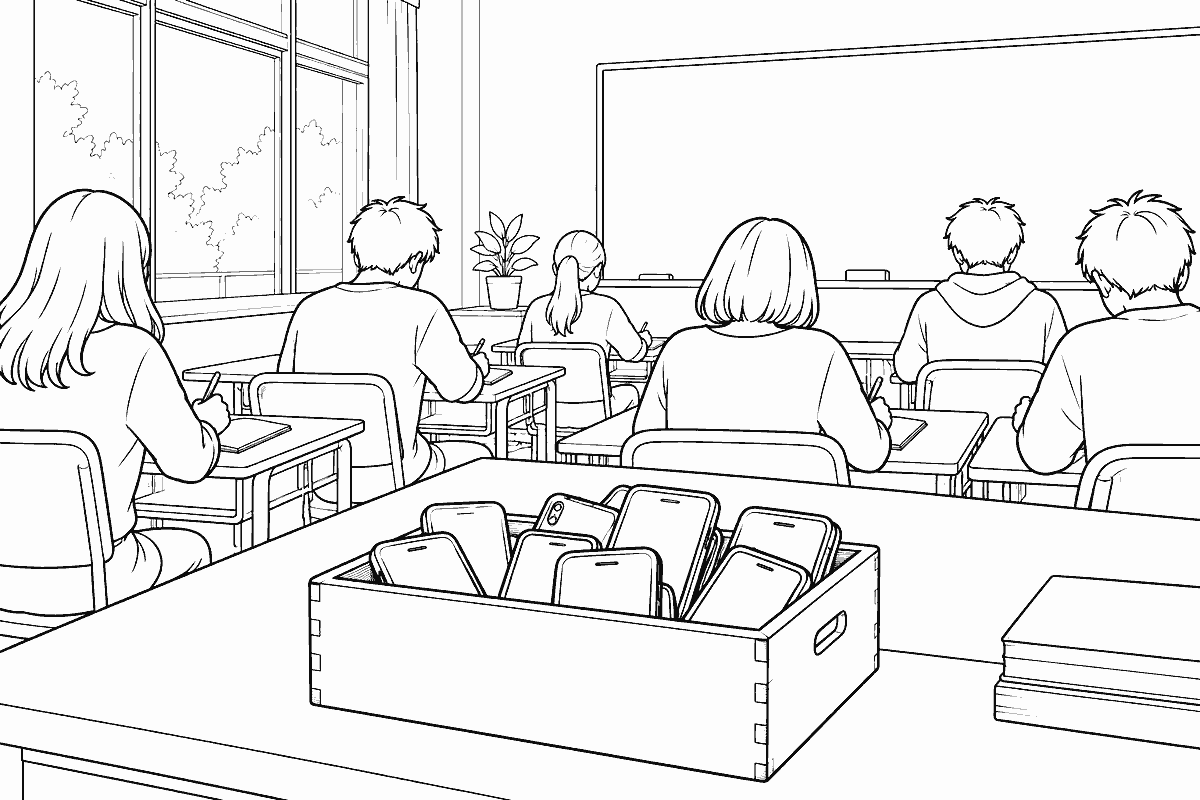
2Researchers studied 16,683 students at 10 colleges and universities in India. They chose some classes at random. In those classes, phones went into a box when each lesson started. Other classes did not change anything.
3After one semester, the phone-free classes had better grades on average. The change was small. But students with lower grades before the study gained the most. Because the classes were chosen at random, the study can show cause and effect.
4There was also less off-topic talk in the phone-free classes. Even the teachers used their phones less. After the study, students in the phone-free classes liked phone rules more than before.
5The researchers said more research is needed for younger students in schools.
Words 単語
| gradesA1 | 名 | 成績the scores you get for your school work |
| journalB1 | 名 | (学術)雑誌a magazine where scientists share their work |
| at randomA1 | 句 | 無作為に、でたらめにwithout any plan, like picking a card |
| semesterA2 | 名 | 学期one of the two parts of a school year |
| averageA2 | 名 | 平均the usual amount you get when you add and divide |
| gainedB1 | 動 | 伸びた、よくなったgot more of something good |
| cause and effectA2 | 句 | 原因と結果how one thing makes another thing happen |
| off-topic外 | 形 | (話題と)関係ないnot about the thing you are talking about |
単語のレベル:CEFR-J(『CEFR-J Wordlist Version 1.6』 東京外国語大学投野由紀夫研究室. (URL: https://www.cefr-j.org/download.html より 2026年8月ダウンロード))
1. Reading Quiz 本文の内容に合うものを選ぼう
How many students were in the study?
A. 10B. 1,683C. 16,683D. 166,830
What did students in the phone-free classes do?
A. Their phones went into a box when each lesson started.B. They left their phones at home.C. They gave their phones to their parents.D. They turned off their phones at night.
Which students gained the most?
A. Students with the best gradesB. TeachersC. Students who came to class moreD. Students with lower grades before the study
Why can the study show cause and effect?
A. Because the students were childrenB. Because the classes were chosen at randomC. Because the teachers liked phonesD. Because it was very short
2. True or False 正しければ T、違っていれば F
( ) The study was done in India.
( ) Grades in the phone-free classes went up a lot.
( ) Teachers used their phones less in the phone-free classes.
( ) The researchers said the results are already clear for younger students in schools.
3. Fill in the Blanks 下の語から選んで空らんをうめよう(形を変えずに)
gradessemesterjournalgainedoff-topic
The study was published in the _____ Science in October.
After one _____, the phone-free classes had better grades on average.
There was also less _____ talk in the phone-free classes.
Students got better _____ in classes without phones, a big study in India has found.
But students with lower grades before the study _____ the most.
4. Word Order 語を並べかえて正しい文にしよう
( random / classes / at / some / They / chose ) .
( before / the / study / with / most / the / gained / grades / students / But / lower ) .
( the / teachers / their / Even / used / phones / less ) .
5. Think and Write 英語で答えてみよう
Where do you put your phone when you study at home?(家で勉強するとき、あなたはスマホをどこに置いていますか?)
Would you like a phone box in your classroom? Why or why not?(あなたの教室にスマホを入れる箱があったらいいと思いますか?それはなぜですか?)
Answers 解答
1. (1) C (2) A (3) D (4) B
2. (1) T (2) F (3) T (4) F
3. (1) journal (2) semester (3) off-topic (4) grades (5) gained
4.
- They chose some classes at random.
- But students with lower grades before the study gained the most.
- Even the teachers used their phones less.
全文訳
1スマホのない授業では、学生の成績がよくなったことが、インドの大きな研究でわかりました。この研究は、10月に学術誌「サイエンス」に発表されました。
2研究者たちは、インドの10の大学などで、1万6,683人の学生を調べました。研究者たちは、いくつかのクラスを無作為に(くじびきのように)選びました。そのクラスでは、授業が始まるたびにスマホを箱に入れました。ほかのクラスは、何も変えませんでした。
31学期がたつと、スマホのないクラスのほうが、平均して成績がよくなっていました。その差は小さなものでした。でも、研究の前に成績が低めだった学生が、いちばん伸びました。クラスは無作為に選ばれたので、この研究は「原因と結果」を示すことができます。
4スマホのないクラスでは、授業と関係ないおしゃべりも減りました。先生たちまで、スマホを使うのが減りました。研究のあと、スマホを預けたクラスの学生たちは、前よりもスマホのルールに前向きになりました。
5研究者たちは、学校に通うもっと年下の子どもについては、さらに研究が必要だと話しています。
文法ポイント:受け身(be動詞 + 過去分詞)
「~される」を表す。本文の The study was published は「研究は発表された」、the classes were chosen at random は「クラスは無作為に選ばれた」という意味。だれがしたかより、何がされたかを言いたいときに使う。
出典:Phys.org(Niels Bohr Institute/University of Copenhagen)、The Educator K/12、Science、University of Birmingham ほか(記事は原田英語の時事英語ジュニアのオリジナル)|https://www.haradaeigo.com/jijieigo-junior/news/2026-10-22-phone-free-class-grades/