原田英語の時事英語ジュニア|英語ニュース ワークシート(中学生レベル)
Class ____ No. ____ Name ____________________
鬼界カルデラの噴火で縄文人はどうなった? 九州北部では人が増え続けていた
What Happened After a Huge Eruption in Japan?
1About 7,300 years ago, a huge volcano erupted under the sea south of Kyushu. The volcano is known as the Kikai caldera. The eruption was one of the biggest on Earth in the last 11,700 years. A new study says the eruption did not affect everyone in the same way.
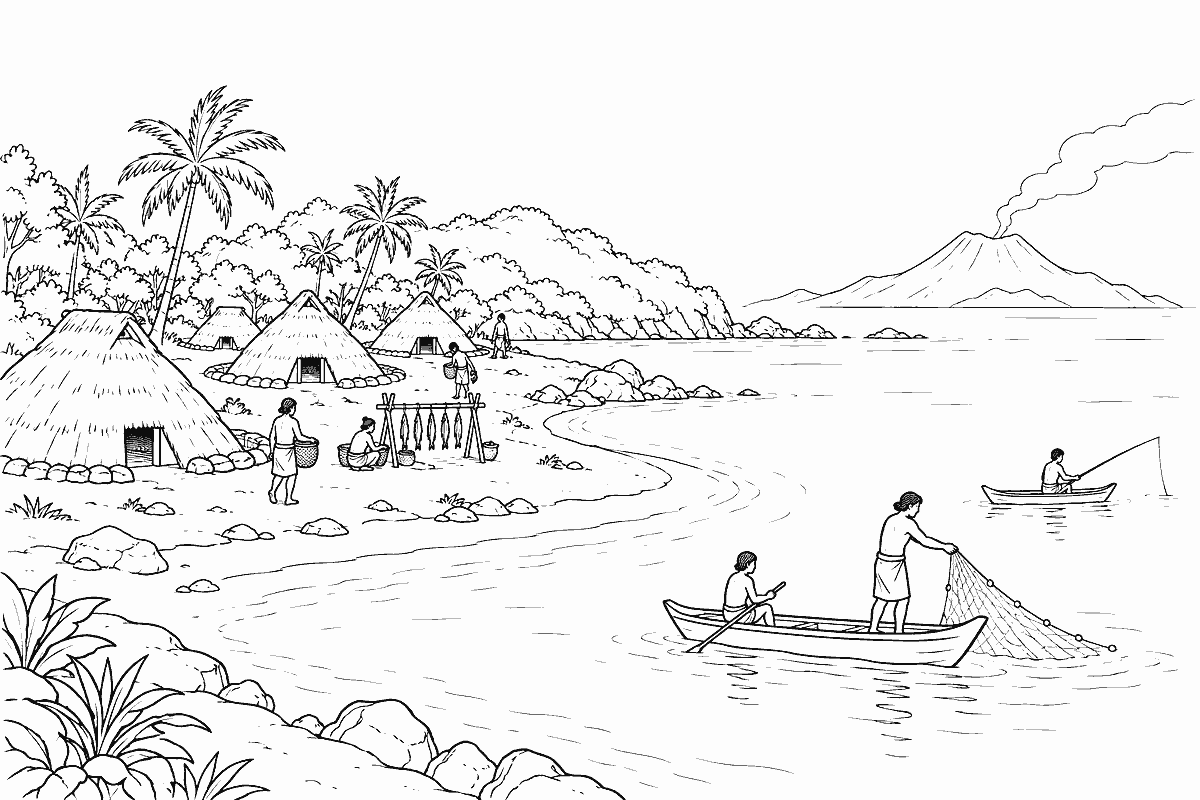
2At that time, Jomon people lived in Japan. They hunted animals and gathered food. The eruption brought earthquakes, tsunamis and thick ash.
3Researchers, including scientists in England and Sweden, studied old data from across Japan. In southern Kyushu, the number of people was already going down before the eruption. But in northern Kyushu, the number kept growing, even after the eruption. People who left the south may have moved there.
4In some areas far from the volcano, the number of people stopped growing after the eruption. One possible cause is damage to the teeth of deer and wild boars. Eating plants with ash on them may have worn down their teeth. The Jomon people needed these animals for food.
Words 単語
| eruptedB2 | 動 | 噴火したsent out fire, rock and smoke |
| volcanoB1 | 名 | 火山a mountain that can send out hot rock |
| affectB1 | 動 | 影響をあたえるto make a change in something |
| huntedB1 | 動 | 狩りをしたchased and caught wild animals |
| gatheredA2 | 動 | 集めたpicked up things and put them together |
| ashB2 | 名 | 灰gray powder left after something burns |
| dataB2 | 名 | データfacts and numbers people collect |
| damageB1 | 名 | いたみ、損傷harm that makes something weaker or broken |
単語のレベル:CEFR-J(『CEFR-J Wordlist Version 1.6』 東京外国語大学投野由紀夫研究室. (URL: https://www.cefr-j.org/download.html より 2026年8月ダウンロード))
1. Reading Quiz 本文の内容に合うものを選ぼう
When did the volcano erupt?
A. About 730 years agoB. About 7,300 years agoC. About 11,700 years agoD. Last year
How did Jomon people get food?
A. They bought it at shops.B. They grew rice in big fields.C. They hunted animals and gathered food.D. They got it from other countries.
What happened in northern Kyushu?
A. The number of people kept growing.B. Everyone left.C. The volcano erupted again.D. The number of people went down before the eruption.
What may have worn down the teeth of deer and wild boars?
A. Cold waterB. Hard nutsC. Other animalsD. Eating plants with ash on them
2. True or False 正しければ T、違っていれば F
( ) The volcano erupted under the sea.
( ) The eruption affected everyone in the same way.
( ) In southern Kyushu, the number of people was going up before the eruption.
( ) In some areas far from the volcano, the number of people stopped growing after the eruption.
3. Fill in the Blanks 下の語から選んで空らんをうめよう(形を変えずに)
volcanoeruptedhunteddataaffectash
The _____ is known as the Kikai caldera.
Researchers, including scientists in England and Sweden, studied old _____ from across Japan.
They _____ animals and gathered food.
The eruption brought earthquakes, tsunamis and thick _____.
A new study says the eruption did not _____ everyone in the same way.
About 7,300 years ago, a huge volcano _____ under the sea south of Kyushu.
4. Word Order 語を並べかえて正しい文にしよう
( time, / that / lived / Japan / Jomon / in / people / At ) .
( They / gathered / animals / food / and / hunted ) .
( animals / people / needed / these / for / The / food / Jomon ) .
5. Think and Write 英語で答えてみよう
If a big disaster happened in your town, where would you go?(もし住んでいる町で大きな災害が起きたら、あなたはどこへ行きますか。)
What would you like to know about the Jomon people?(縄文の人々について、どんなことを知りたいですか。)
Answers 解答
1. (1) B (2) C (3) A (4) D
2. (1) T (2) F (3) F (4) T
3. (1) volcano (2) data (3) hunted (4) ash (5) affect (6) erupted
4.
- At that time, Jomon people lived in Japan.
- They hunted animals and gathered food.
- The Jomon people needed these animals for food.
全文訳
1約7300年前、九州の南の海の底で、巨大な火山が噴火しました。この火山は「鬼界カルデラ」とよばれています。その噴火は、この1万1700年で地球でもっとも大きな噴火の一つでした。新しい研究によると、この噴火の影響は、どこでも同じだったわけではありません。
2そのころ、日本には縄文の人々が住んでいました。人々は動物をとったり、食べ物を集めたりしてくらしていました。噴火は、地震や津波、厚い火山灰をもたらしました。
3イギリスやスウェーデンの研究者をふくむチームが、日本の各地の昔のデータを調べました。九州の南部では、噴火の前から人の数がすでに減っていました。ところが九州の北部では、噴火のあとも人の数が増え続けました。南からにげてきた人たちが、北部へ移り住んだのかもしれません。
4火山から遠い地方の中には、噴火のあと人の数が増えなくなったところもありました。原因の一つとして考えられるのは、シカやイノシシの歯がいたんだことです。灰のついた草を食べたせいで、歯がすり減ったのかもしれません。縄文の人々にとって、これらの動物は大切な食べ物でした。
文法ポイント:may have + 過去分詞(~したのかもしれない)
〈may have+過去分詞〉で、過去のことを「~したのかもしれない」と推量する。本文の People who left the south may have moved there. は「南を出た人たちが、そこへ移り住んだのかもしれない」。
出典:Phys.org(ルンド大学の発表)、ScienceDaily(ルンド大学の発表)、IFLScience、科学技術振興機構 サイエンスポータル ほか(記事は原田英語の時事英語ジュニアのオリジナル)|https://www.haradaeigo.com/jijieigo-junior/news/2026-10-19-kikai-eruption-jomon-people/