原田英語の時事英語ジュニア|英語ニュース ワークシート(高校生レベル)
Class ____ No. ____ Name ____________________
ポモドーロ勉強法で勉強ははかどる?休けいの取り方3つを比べた研究
Fixed Study Breaks No Better Than Choosing Your Own, Dutch Study Finds
1Breaks on a fixed schedule did not help university students get more done than breaks they chose themselves, a Dutch study has found. Researchers at Maastricht University published the study in the journal Behavioral Sciences in June 2025.
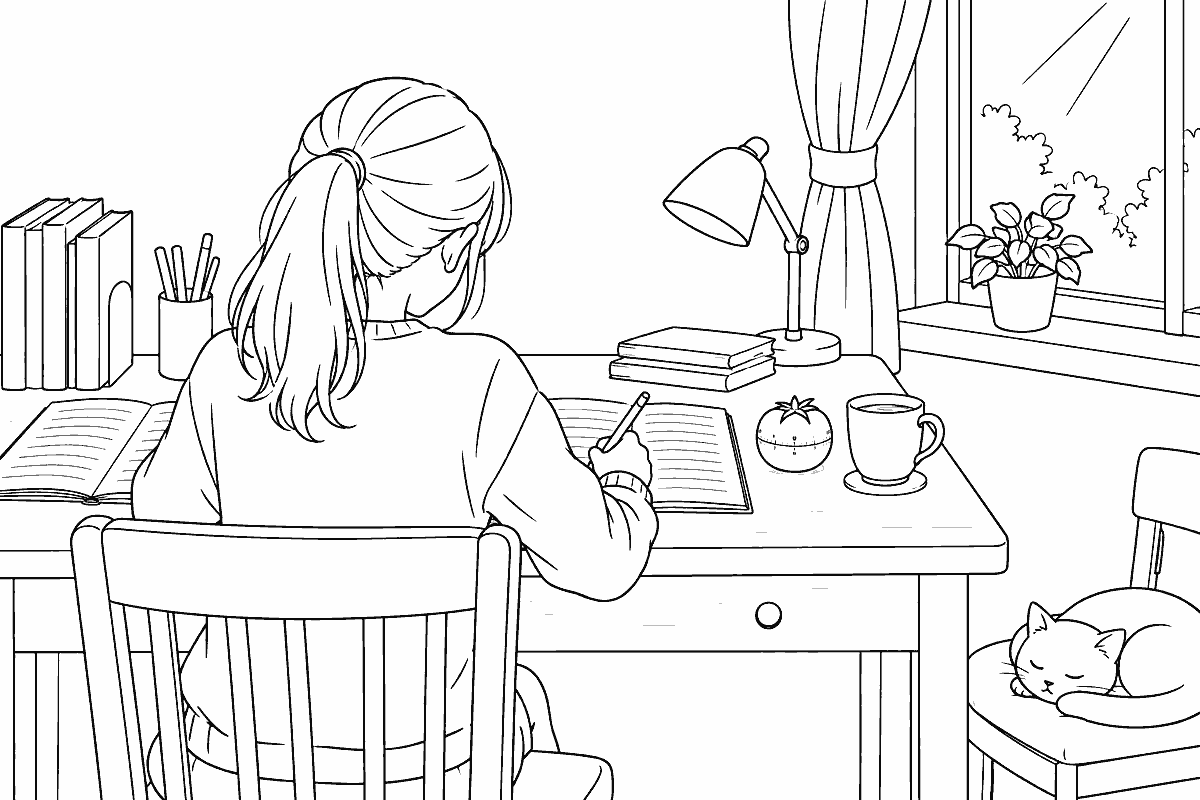
2In the Pomodoro Technique, people work for 25 minutes and rest for five, with a longer break after four rounds. Francesco Cirillo began developing the method in the 1980s, when he was a university student, using a tomato-shaped kitchen timer. Pomodoro is the Italian word for tomato.
3The researchers randomly placed 94 university students into three groups. Each student studied online for two hours with their own materials. The Pomodoro group studied in four 25-minute blocks, each followed by a five-minute break. A second group rested whenever and for as long as they wanted. The third group used Flowtime, in which students study until they lose focus and then rest. Under its rules, 25 minutes of study or less earned a five-minute break, and more than 50 minutes earned 10 minutes.
4All three groups completed similar shares of their planned tasks, between about 67 and 70 percent. There were no clear differences in how productive students felt or in flow, the state of being fully absorbed in a task. In the Pomodoro group, tiredness rose faster during the session and motivation fell faster than in the group that chose its own breaks. However, overall levels of tiredness and motivation did not differ, and the researchers said some results should be treated with caution.
5The researchers said a two-hour session may have been too short to reveal differences. Most participants were female psychology students, so the results may not apply to everyone. The team did not recommend any one technique over the others.
6In a 2023 study with some of the same researchers, 87 Dutch university students spent a day studying. Those given fixed breaks said they felt more focused and motivated than those who chose their own breaks.
Words 単語
| scheduleA2 | 名 | 予定、時間割a plan that shows when things will happen |
| randomly外 | 副 | 無作為に、でたらめにby chance, without any plan or order |
| sessionB1 | 名 | (ある活動の)ひとまとまりの時間a period of time spent doing one activity |
| productiveB1 | 形 | はかどる、生産的なgetting a lot of work done |
| absorbedB1 | 形 | 夢中になった、没頭したso interested that you forget other things |
| motivationB1 | 名 | やる気、意欲the wish to do something and work hard |
| cautionB1 | 名 | 用心、慎重さgreat care to avoid mistakes or danger |
| revealA2 | 動 | 明らかにする、表すto show something that was hidden |
| participantsB1 | 名 | 参加者(participant の複数形)people who take part in something |
| recommendB1 | 動 | 勧めるto tell someone that something is good to try |
単語のレベル:CEFR-J(『CEFR-J Wordlist Version 1.6』 東京外国語大学投野由紀夫研究室. (URL: https://www.cefr-j.org/download.html より 2026年8月ダウンロード))
1. Reading Quiz 本文の内容に合うものを選ぼう
When was the study published?
A. In March 2023B. In June 2025C. In January 2024D. In October 2026
How long was each break in the Pomodoro group?
A. Three minutesB. Ten minutesC. Fifteen minutesD. Five minutes
What share of their planned tasks did the groups complete?
A. Between about 67 and 70 percentB. Less than 20 percentC. About 87 percentD. All of them
Why might the study have shown no clear differences?
A. The students did not study at all.B. The timers did not work.C. The session may have been too short.D. The groups used the same rules.
In the 2023 study, how did students with fixed breaks feel?
A. More tired and boredB. More focused and motivatedC. Less interested in their studiesD. The same as the other students
2. True or False 正しければ T、違っていれば F
( ) The students were randomly placed into groups.
( ) The Pomodoro group finished far more tasks than the other two groups.
( ) Cirillo began developing the Pomodoro Technique in the 2000s.
( ) Most of the participants were female psychology students.
3. Fill in the Blanks 下の語から選んで空らんをうめよう(形を変えずに)
schedulesessionproductivemotivationrandomlyreveal
In the Pomodoro group, tiredness rose faster during the _____ and motivation fell faster than in the group that chose its own breaks.
There were no clear differences in how _____ students felt or in flow, the state of being fully absorbed in a task.
The researchers said a two-hour session may have been too short to _____ differences.
The researchers _____ placed 94 university students into three groups.
However, overall levels of tiredness and _____ did not differ, and the researchers said some results should be treated with caution.
Breaks on a fixed _____ did not help university students get more done than breaks they chose themselves, a Dutch study has found.
4. Word Order 語を並べかえて正しい文にしよう
( is / tomato / for / Pomodoro / word / Italian / the ) .
( 94 / into / groups / three / placed / university / researchers / randomly / students / The ) .
( student / with / online / Each / two / their / for / materials / studied / own / hours ) .
5. Think and Write 英語で答えてみよう
Which works better for you: breaks on a timer or breaks when you feel tired? Explain why.(あなたに合うのは、タイマーで決めた休けいと、疲れたときに取る休けいのどちらですか?理由を説明しよう。)
This study only looked at a two-hour session. How would you design a better study about study breaks?(この研究は2時間の勉強だけを調べました。勉強の休けいについて、あなたならどんな研究をしますか?)
Answers 解答
1. (1) B (2) D (3) A (4) C (5) B
2. (1) T (2) F (3) F (4) T
3. (1) session (2) productive (3) reveal (4) randomly (5) motivation (6) schedule
4.
- Pomodoro is the Italian word for tomato.
- The researchers randomly placed 94 university students into three groups.
- Each student studied online for two hours with their own materials.
全文訳
1決まった間隔で休けいしても、自分で休むタイミングを決めた場合より大学生の勉強がはかどるわけではなかった、とオランダの研究でわかりました。マーストリヒト大学の研究者たちが、2025年6月に学術誌「ビヘイビオラル・サイエンシズ」でこの研究を発表しました。
2ポモドーロ・テクニックでは、25分作業して5分休み、4回くり返したら長めの休けいを取ります。フランチェスコ・シリロさんが1980年代、大学生だったころに、トマトの形をした台所用タイマーを使ってこのやり方を考え始めました。ポモドーロは、イタリア語で「トマト」のことです。
3研究者たちは、94人の大学生を無作為に3つのグループに分けました。学生はそれぞれ、自分の教材を使ってオンラインで2時間勉強しました。ポモドーロのグループは、25分の勉強を4回行い、それぞれのあとに5分休みました。2つ目のグループは、休みたいときに、休みたいだけ休けいしました。3つ目のグループは「フロータイム」を使いました。これは、集中が切れるまで勉強してから休むやり方です。そのルールでは、勉強が25分以下なら休けいは5分、50分を超えたら10分でした。
43つのグループとも、予定していた課題を終えた割合は同じくらいで、約67〜70%でした。どれだけはかどったと感じたかや、課題にすっかり没頭した状態である「フロー」にも、はっきりした差はありませんでした。勉強の途中では、ポモドーロのグループのほうが、自分で休けいを決めたグループより疲れが早く増え、やる気も早く下がりました。ただし、全体としての疲れややる気の度合いには差がなく、研究者たちは一部の結果は慎重に受け止めるべきだとしています。
5研究者たちは、2時間の勉強では短すぎて差が表れなかったのかもしれない、と述べています。参加者の大半は心理学を学ぶ女性だったため、結果がすべての人に当てはまるとは限りません。研究チームは、どれか1つのやり方をほかより勧めることはしませんでした。
6同じ研究者の一部が関わった2023年の研究では、オランダの大学生87人が1日、自分の勉強に取り組みました。決まった休けいを取った学生は、自分で休けいを決めた学生より、集中できて、やる気も高かったと答えました。
文法ポイント:前置詞 + 関係代名詞(in which)
関係代名詞 which の前に前置詞を置いて、「その中で~する」と説明を加える形。本文の Flowtime, in which students study until they lose focus は「フロータイム、つまりその中で(=そのやり方では)学生が集中が切れるまで勉強するもの」。in which は where に近い意味になる。
出典:Behavioral Sciences(MDPI)/PubMed Central、Maastricht University、Maastricht University、Francesco Cirillo(ポモドーロ・テクニック公式サイト) ほか(記事は原田英語の時事英語ジュニアのオリジナル)|https://www.haradaeigo.com/jijieigo-junior/news/2026-10-13-pomodoro-breaks-study/