原田英語の時事英語ジュニア|英語ニュース ワークシート(高校生レベル)
Class ____ No. ____ Name ____________________
勉強のツボは本当に効く?テスト前のツボ押しと不安を調べた2つの研究
Acupressure Eased Test Anxiety in Two Small Trials
1Students who had points on their body pressed before an exam reported less test anxiety in two small randomized trials. The studies, carried out at universities in Cyprus and Iran, appeared in BMC Psychology in 2025 and BMC Medical Education in 2023.
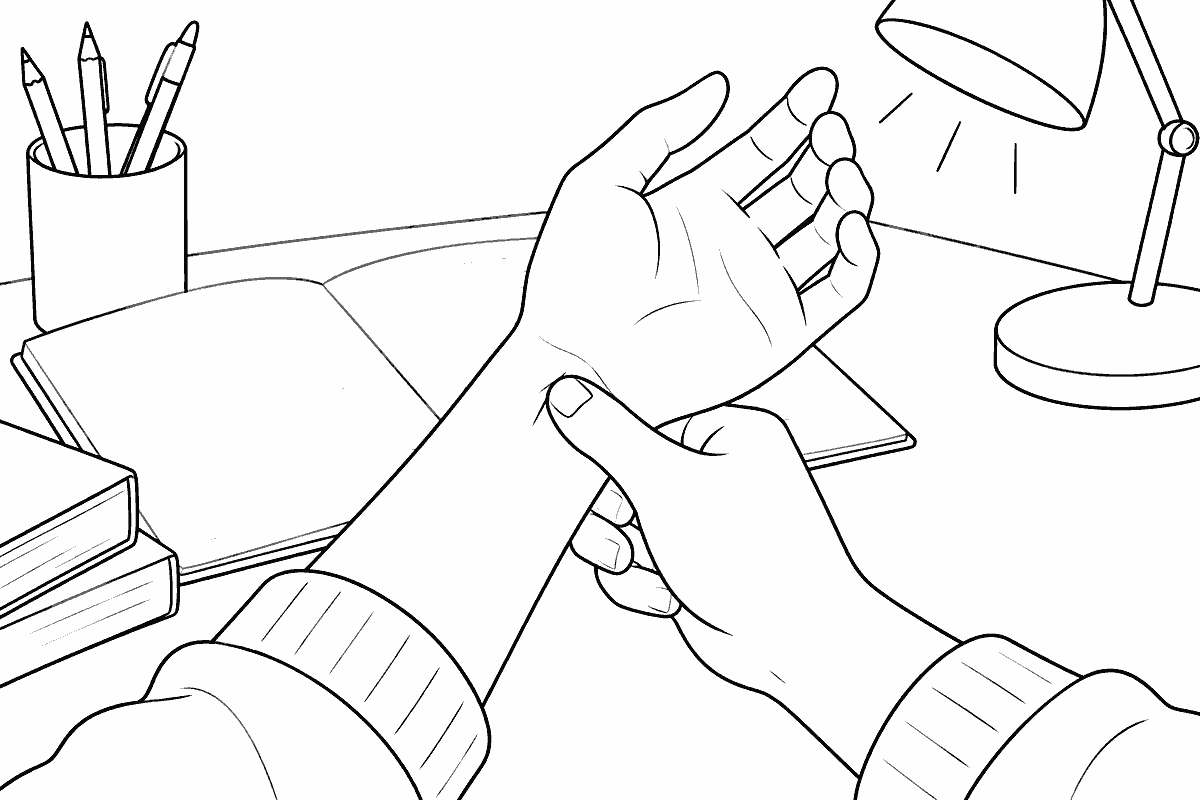
2The technique, known as acupressure, is based on traditional Chinese medicine. Instead of inserting needles, as in acupuncture, a person presses specific points with the fingertips. The Iranian researchers said it is still unclear how acupressure might work.
3In the newer study, researchers at Eastern Mediterranean University randomly divided 118 second-year nursing students into two equal groups. On the day of an exam, one group received acupressure on three points: on the inner arm near the wrist, between the eyebrows and in the ear. The other group received no therapy and simply waited. In the acupressure group, the average score on a test anxiety questionnaire fell from about 53 to 39, while the other group's score rose slightly from about 49 to 52. The acupressure group's average heart rate also dropped from about 98 to 89 beats per minute.
4The earlier study, at Kermanshah University of Medical Sciences in Iran, involved 114 medical students. An hour before a test, half of them had a point in the upper ear, called Shen Men, pressed for 10 minutes. The other half had a spot on the earlobe pressed as a fake treatment. Anxiety scores fell in the first group but stayed the same in the second. In the first group, the share of students with severe anxiety dropped from 31.6 percent to 10.5 percent.
5Both trials were small, and each took place at a single university. All the participants were university students, and the anxiety results came from questionnaires in which they rated their own feelings. The Cyprus team said the placebo effect may have played a role, and the Iranian team called for more research using objective measures. Neither trial measured whether students got higher test scores.
Words 単語
| randomized外 | 形 | ランダム化した(くじで組分けした)with groups chosen by chance, not by people |
| techniqueB1 | 名 | 方法、技術a special way of doing something |
| acupuncture外 | 名 | 鍼(はり)治療a treatment using thin needles put into the skin |
| inserting外 | 動 | 差しこむ(insert の ing 形)putting something into another thing |
| therapyB2 | 名 | 治療、施術care that helps a person feel better |
| questionnaireB1 | 名 | 質問票、アンケートa list of questions that people answer |
| severeB1 | 形 | (程度が)ひどい、強いvery bad or very strong |
| participantsB1 | 名 | 参加者(participant の複数形)people who take part in something |
| placebo effectA2 | 名 | プラセボ効果(思いこみの効果)feeling better because you believe a treatment works |
| objectiveB1 | 形 | 客観的なbased on facts, not on feelings |
単語のレベル:CEFR-J(『CEFR-J Wordlist Version 1.6』 東京外国語大学投野由紀夫研究室. (URL: https://www.cefr-j.org/download.html より 2026年8月ダウンロード))
1. Reading Quiz 本文の内容に合うものを選ぼう
How is acupressure different from acupuncture?
A. It uses fingertips instead of needles.B. It uses only the ears.C. It uses heat instead of hands.D. It needs a computer.
In the 2025 study, what did the group without acupressure do?
A. They had the ear pressed.B. They took a nap.C. They received no therapy and waited.D. They listened to music.
What happened to the acupressure group's average heart rate in the 2025 study?
A. It rose from 89 to 98.B. It dropped from about 98 to 89.C. It stayed the same.D. It dropped from about 53 to 39.
What did the second group in the Iran study have pressed?
A. A point between the eyebrowsB. A point near the wristC. A point called Shen MenD. A spot on the earlobe
What did the Iranian team call for?
A. More research using objective measuresB. Acupressure for all studentsC. Longer examsD. Fewer questionnaires in schools
2. True or False 正しければ T、違っていれば F
( ) The 2025 study divided 118 nursing students into two equal groups.
( ) In the Iran study, anxiety scores fell in both groups.
( ) Some of the participants were junior high school students.
( ) Both trials measured whether students got higher test scores.
3. Fill in the Blanks 下の語から選んで空らんをうめよう(形を変えずに)
techniqueacupunctureseveretherapyrandomizedquestionnaire
In the first group, the share of students with _____ anxiety dropped from 31.6 percent to 10.5 percent.
The _____, known as acupressure, is based on traditional Chinese medicine.
Instead of inserting needles, as in _____, a person presses specific points with the fingertips.
The other group received no _____ and simply waited.
In the acupressure group, the average score on a test anxiety _____ fell from about 53 to 39, while the other group's score rose slightly from about 49 to 52.
Students who had points on their body pressed before an exam reported less test anxiety in two small _____ trials.
4. Word Order 語を並べかえて正しい文にしよう
( The / received / other / waited / simply / no / therapy / group / and ) .
( were / trials / and / each / took / Both / place / single / university / a / small, / at ) .
( scores / trial / measured / Neither / students / got / whether / test / higher ) .
5. Think and Write 英語で答えてみよう
Do you think a small study is enough reason to try something new before a test? Explain your answer.(小さな研究の結果だけで、テストの前に新しいことを試す理由になると思いますか?考えを説明しよう。)
Why is it important for a study to have a group that gets a fake treatment? Give your ideas.(研究に「にせの施術」を受けるグループを作るのは、なぜ大事なのでしょう?考えを書こう。)
Answers 解答
1. (1) A (2) C (3) B (4) D (5) A
2. (1) T (2) F (3) F (4) F
3. (1) severe (2) technique (3) acupuncture (4) therapy (5) questionnaire (6) randomized
4.
- The other group received no therapy and simply waited.
- Both trials were small, and each took place at a single university.
- Neither trial measured whether students got higher test scores.
全文訳
1試験の前に体のツボを押してもらった学生は、テストへの不安が小さくなったと答えました。2つの小さなランダム化試験(くじで組分けする実験)の結果です。研究はキプロスとイランの大学で行われ、2025年に学術誌「BMCサイコロジー」、2023年に「BMCメディカル・エデュケーション」に掲載されました。
2この方法は指圧(ツボ押し)と呼ばれ、中国の伝統医学の考え方にもとづいています。鍼(はり)のように針を刺すのではなく、決まった場所を指先で押します。イランの研究者たちは、ツボ押しがどんなしくみで働きうるのかは、まだよくわかっていないと述べています。
3新しいほうの研究では、東地中海大学の研究者たちが、看護学科の2年生118人をくじで同じ人数の2つのグループに分けました。試験の日、一方のグループは3つのツボを押してもらいました。手首に近い腕の内側、まゆとまゆの間、そして耳の中のツボです。もう一方のグループは何の施術も受けず、ただ待っていました。ツボ押しのグループでは、テスト不安を測る質問票の平均点が約53から39に下がり、もう一方のグループは約49から52へ少し上がりました。ツボ押しのグループは、平均の心拍数も1分あたり約98回から89回に下がりました。
4先に出た研究は、イランのケルマンシャー医科大学で、医学部の学生114人が参加しました。テストの1時間前、半分の学生は「神門(しんもん)」と呼ばれる耳の上のほうのツボを10分間押してもらいました。残りの半分は、にせの施術として、耳たぶの別の場所を押してもらいました。不安の点数は、最初のグループでは下がり、2つめのグループでは変わりませんでした。最初のグループでは、強い不安がある学生の割合が31.6%から10.5%に減りました。
5どちらの研究も規模が小さく、それぞれ1つの大学だけで行われました。参加者はみな大学生で、不安の結果は、自分の気持ちを自分で答える質問票から出たものです。キプロスのチームは「思いこみの効果(プラセボ効果)」が影響したかもしれないと述べ、イランのチームは、客観的な方法を使ったさらなる研究が必要だとしました。どちらの研究も、学生のテストの点数が上がったかどうかは調べていません。
文法ポイント:have + 物 + 過去分詞(~を…してもらう)
「(人に)~を…してもらう・される」を表す。本文の half of them had a point in the upper ear ... pressed は「半分の学生は耳の上のほうのツボを押してもらった」。押したのは学生本人ではなく施術者なので、have + a point + pressed(過去分詞)になる。第1段落の Students who had points on their body pressed も同じ形。
出典:BMC Psychology(PubMed Central)、ClinicalTrials.gov(米国国立医学図書館)、BMC Medical Education(PubMed Central) ほか(記事は原田英語の時事英語ジュニアのオリジナル)|https://www.haradaeigo.com/jijieigo-junior/news/2026-10-13-acupressure-test-anxiety/