原田英語の時事英語ジュニア|英語ニュース ワークシート(高校生レベル)
Class ____ No. ____ Name ____________________
オリオン座流星群は10月22日に極大!ハレー彗星のかけらが流れ星に
Halley's Comet Debris Brings the Orionids Back This Month
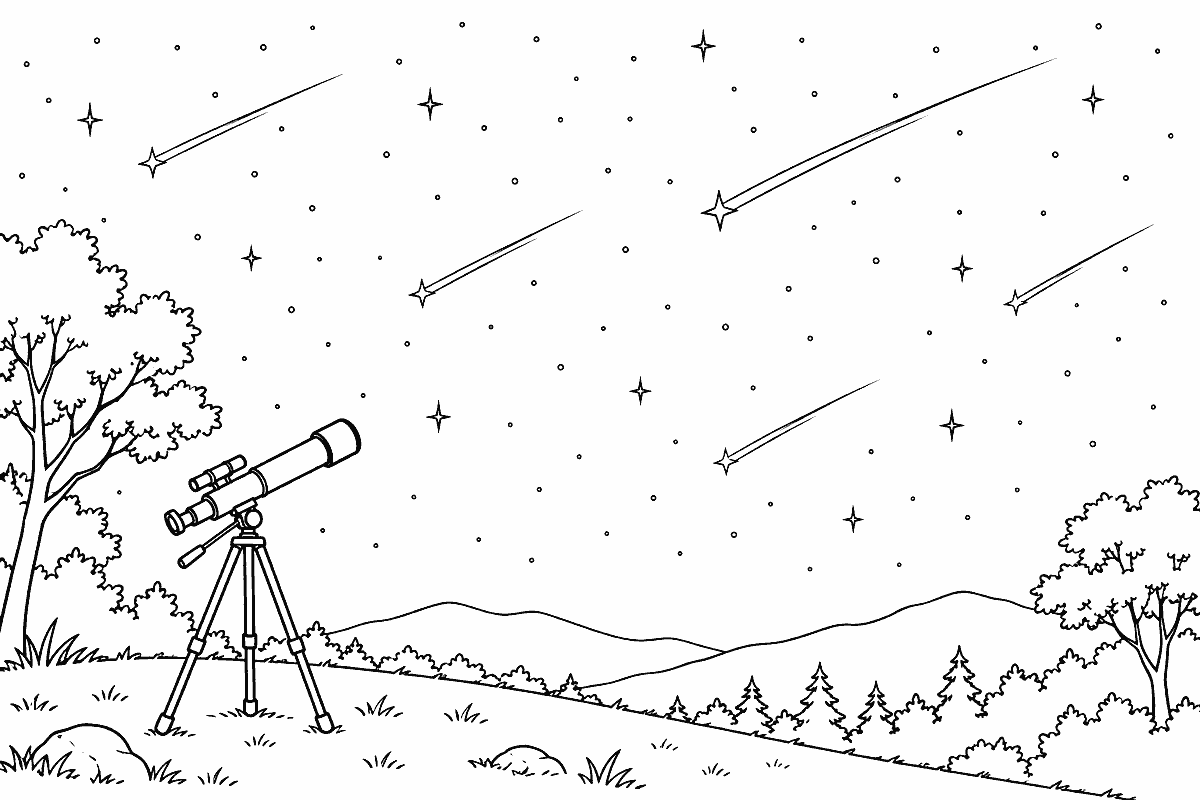
1The annual Orionid meteor shower will peak later this month. Japan's National Astronomical Observatory (NAOJ) lists the peak for October 22, while NASA gives October 21 for observers in the United States. Meteors can usually be seen for several days around the peak.
2The shower is created by debris that Halley's Comet shed long ago. Each year, Earth passes through this trail of dust, and the tiny particles burn up as they enter the atmosphere. The meteors appear to come from a point near the constellation Orion, which is why the shower carries its name.
3How many meteors people see depends heavily on where they are. NAOJ says observers under a dark sky may spot around five to 10 an hour, but city lights can cut that number to a fraction. NASA estimates three to six an hour from suburban areas.
4This year, the Moon will be a problem early in the night. Around the peak, a bright waxing gibbous Moon will wash out fainter meteors until it sets in the early morning. Both NASA and NAOJ recommend watching after moonset and before dawn, when the sky is darkest and Orion is high.
5Skywatchers will have other targets this month as well. According to NAOJ, Saturn can be seen almost all night, and Jupiter shines brightly in the eastern sky before sunrise. The month's full moon, sometimes called the Hunter's Moon, comes on October 26.
Words 単語
| annualB1 | 形 | 毎年の、年1回のhappening once every year |
| observersB2 | 名 | 観測する人people who watch something carefully |
| debrisB1 | 名 | 破片、ちりsmall broken pieces left after something breaks |
| particlesB2 | 名 | 粒子、小さな粒extremely small pieces of something |
| atmosphereB1 | 名 | 大気the air around a planet |
| constellation外 | 名 | 星座a group of stars that forms a shape |
| fraction外 | 名 | ほんの一部、分数a small part of a whole amount |
| waxing gibbousB1 | 形 | (月が)満月に近づいている、十三夜ごろのmore than half full and getting bigger each night |
| wash outA1 | 熟 | (光で)かき消す、見えにくくするto make something hard to see because of light |
| recommendB1 | 動 | すすめるto say that something is a good idea |
単語のレベル:CEFR-J(『CEFR-J Wordlist Version 1.6』 東京外国語大学投野由紀夫研究室. (URL: https://www.cefr-j.org/download.html より 2026年8月ダウンロード))
1. Reading Quiz 本文の内容に合うものを選ぼう
Which date does NAOJ list for the peak in Japan?
A. October 21B. October 26C. October 22D. October 5
What creates the Orionid meteor shower?
A. Debris from Halley's CometB. Ice from Saturn's ringsC. Light from Orion's starsD. Dust from the Moon
According to NASA, how many meteors can people see from suburban areas?
A. Five to 10B. About 100C. One or twoD. Three to six
Why will fainter meteors be hard to see early in the night?
A. Because of cloudsB. Because a bright Moon is in the skyC. Because Orion has not risenD. Because of a storm
When is the Hunter's Moon this month?
A. October 26B. October 21C. October 22D. October 31
2. True or False 正しければ T、違っていれば F
( ) Meteors can usually be seen for several days around the peak.
( ) The shower is named after a comet.
( ) City lights can reduce the number of meteors people see.
( ) Saturn can only be seen for a short time before sunrise.
3. Fill in the Blanks 下の語から選んで空らんをうめよう(形を変えずに)
annualparticlesdebrisfractionconstellationobservers
Japan's National Astronomical Observatory (NAOJ) lists the peak for October 22, while NASA gives October 21 for _____ in the United States.
NAOJ says observers under a dark sky may spot around five to 10 an hour, but city lights can cut that number to a _____.
The shower is created by _____ that Halley's Comet shed long ago.
Each year, Earth passes through this trail of dust, and the tiny _____ burn up as they enter the atmosphere.
The meteors appear to come from a point near the _____ Orion, which is why the shower carries its name.
The _____ Orionid meteor shower will peak later this month.
4. Word Order 語を並べかえて正しい文にしよう
( the / be / year, / problem / Moon / a / in / will / This / the / night / early ) .
( an / three / estimates / six / suburban / areas / NASA / to / hour / from ) .
( Skywatchers / well / as / have / this / other / targets / month / will ) .
5. Think and Write 英語で答えてみよう
Light pollution makes it hard to see stars in cities. What could towns do to reduce it?(光害のせいで、街では星が見えにくくなっています。町はそれを減らすために何ができるでしょうか。)
Many people still enjoy watching meteor showers. Why do you think the night sky interests people so much?(今でも多くの人が流星群を楽しみにしています。夜空がこれほど人をひきつけるのはなぜだと思いますか。)
Answers 解答
1. (1) C (2) A (3) D (4) B (5) A
2. (1) T (2) F (3) T (4) F
3. (1) observers (2) fraction (3) debris (4) particles (5) constellation (6) annual
4.
- This year, the Moon will be a problem early in the night.
- NASA estimates three to six an hour from suburban areas.
- Skywatchers will have other targets this month as well.
全文訳
1毎年この時期に見られるオリオン座流星群が、今月後半に極大をむかえます。国立天文台は日本での極大を10月22日とし、NASAはアメリカの観測者に向けて10月21日としています。流れ星は、極大の前後数日間なら、ふつうは見ることができます。
2この流星群のもとは、ハレー彗星がずっと昔に残していったちりです。毎年、地球がこのちりの帯を通り抜けると、小さな粒が大気に飛びこんで燃え、光ります。流れ星はオリオン座の近くの一点から飛び出すように見えるため、この名前がついています。
3見える流れ星の数は、どこで見るかによって大きく変わります。国立天文台によると、暗い空なら1時間に5〜10個ほど見えますが、街明かりの中ではその数分の1になることがあります。NASAは、郊外では1時間に3〜6個ほどと見積もっています。
4今年は、夜の早い時間は月が邪魔になります。極大のころは満月に近い明るい月が出ていて、明け方に沈むまでは暗い流れ星を見えにくくします。NASAも国立天文台も、空がいちばん暗く、オリオン座が高く昇る、月が沈んだあとから夜明け前までに見ることをすすめています。
5今月は、ほかにも見どころがあります。国立天文台によると、土星はほぼ一晩中見え、木星は日の出前の東の空で明るく輝いています。「ハンターズ・ムーン」と呼ばれることもある今月の満月は、10月26日です。
文法ポイント:関係副詞 when(非制限用法)
コンマ + when で、前の「時」に説明を足す。本文の ... after moonset and before dawn, when the sky is darkest and Orion is high は「月が沈んだあと夜明け前、つまり空がいちばん暗く、オリオン座が高い時間」という意味。
出典:NASA、国立天文台、ScienceDaily ほか(記事は原田英語の時事英語ジュニアのオリジナル)|https://www.haradaeigo.com/jijieigo-junior/news/2026-10-05-orionid-meteor-shower-peak/