原田英語の時事英語ジュニア|英語ニュース ワークシート(高校生レベル)
Class ____ No. ____ Name ____________________
新型補給機HTV-X1が宇宙ステーションに到着 H3ロケットで打ち上げ
HTV-X1 Opens a New Chapter for Japan's Space Deliveries
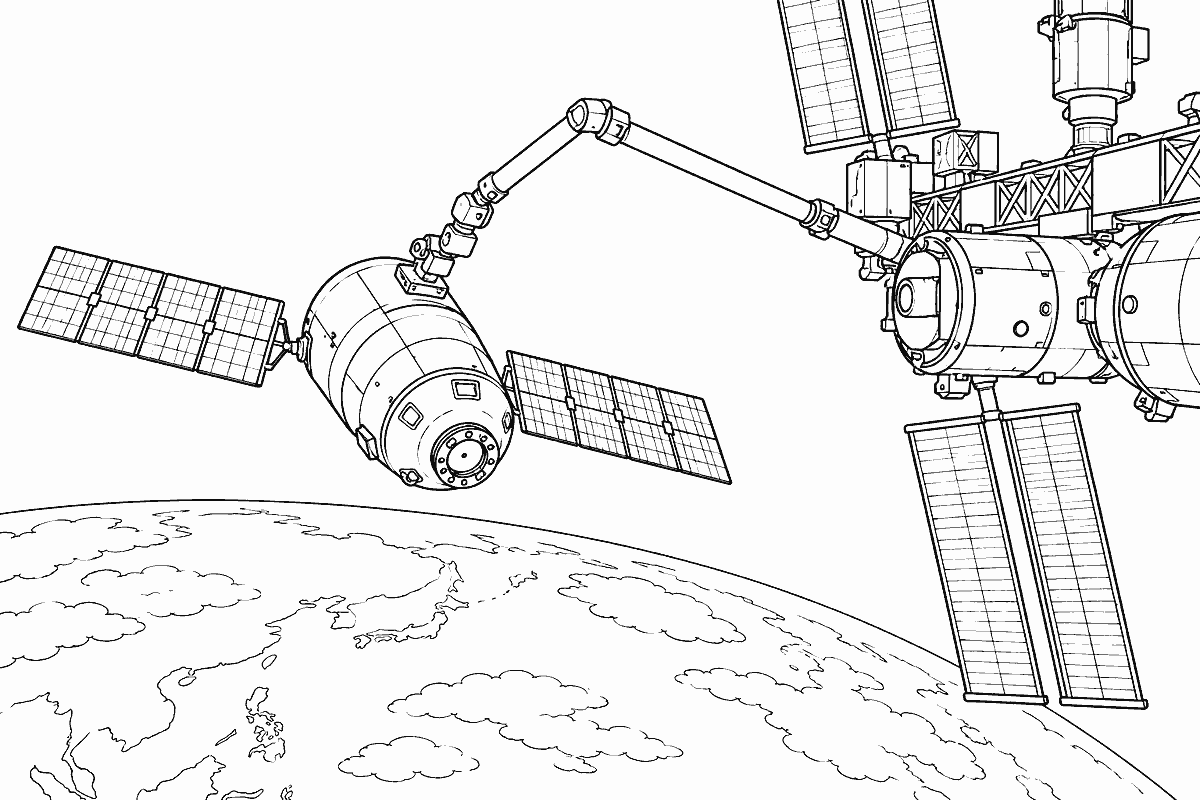
1Japan's new cargo spacecraft, HTV-X1, arrived at the International Space Station (ISS) on October 30, 2025, Japan time. Japanese astronaut Kimiya Yui used the station's robotic arm, Canadarm2, to capture the spacecraft at 12:58 a.m. At 8:10 p.m., the spacecraft was attached to the station.
2HTV-X1 lifted off at 9 a.m. on October 26 on the seventh flight of the H3 rocket. The launch took place at the Tanegashima Space Center in Kagoshima Prefecture. The spacecraft separated from the rocket about 14 minutes after liftoff. No Japanese spacecraft had reached the ISS for five years.
3HTV-X replaces Kounotori, also known as HTV, which made nine trips to the station before retiring in 2020. The new model can carry about 6,000 kilograms of cargo, roughly the same as Kounotori.
4The cargo included fresh food and daily supplies for the crew, along with materials for experiments in Japan's Kibo module. HTV-X1 also brought equipment to test a new way of removing carbon dioxide from the station's air.
5Unlike Kounotori, HTV-X is designed to keep working after it leaves the station. It can stay at the ISS for up to six months and then fly on its own for up to 18 months. During that time, JAXA plans to use it as a platform for testing new space technology. When the tests are finished, JAXA will guide the spacecraft back into Earth's atmosphere.
Words 単語
| captureB1 | 動 | とらえる、つかまえるto catch and hold something |
| attachedB2 | 動 | 取りつけられた(attach の過去分詞)joined or fixed to something else |
| lifted offB1 | 熟 | (ロケットが)打ち上がったleft the ground and went up into the sky |
| separatedA2 | 動 | 分かれた、切り離された(separate の過去形)came apart from something it was joined to |
| replacesA2 | 動 | ~に取って代わる、~の後を継ぐtakes the place of something older |
| platformB1 | 名 | (何かを行うための)場、基盤a place or system used for doing some work |
| suppliesB1 | 名 | 必需品、物資food and other things that people need every day |
| carbon dioxideB2 | 名 | 二酸化炭素a gas that people and animals breathe out |
| designedA1 | 動 | 設計された(design の過去分詞)planned and made for a special purpose |
| atmosphereB1 | 名 | 大気the air that covers the Earth |
単語のレベル:CEFR-J(『CEFR-J Wordlist Version 1.6』 東京外国語大学投野由紀夫研究室. (URL: https://www.cefr-j.org/download.html より 2026年8月ダウンロード))
1. Reading Quiz 本文の内容に合うものを選ぼう
What did Kimiya Yui use to capture HTV-X1?
A. A netB. The station's robotic arm, Canadarm2C. A small rocketD. The Harmony module
How long after liftoff did the spacecraft separate from the rocket?
A. About 4 minutesB. About 40 minutesC. About 14 minutesD. About four days
How long can HTV-X stay at the ISS?
A. Up to six weeksB. Up to six monthsC. Up to 18 monthsD. Up to five years
What will the equipment brought by HTV-X1 test?
A. A new way to grow plantsB. A new robot armC. A new rocket engineD. A new way to remove carbon dioxide from the air
How long can HTV-X fly on its own after leaving the ISS?
A. Up to 18 monthsB. Up to 18 daysC. Up to five yearsD. Up to 14 minutes
2. True or False 正しければ T、違っていれば F
( ) HTV-X1 was launched on the seventh flight of the H3 rocket.
( ) Kounotori never reached the ISS.
( ) HTV-X can carry about the same amount as Kounotori.
( ) HTV-X1 will return to Earth and be used again.
3. Fill in the Blanks 下の語から選んで空らんをうめよう(形を変えずに)
suppliesseparatedattachedcapturereplacesplatform
Japanese astronaut Kimiya Yui used the station's robotic arm, Canadarm2, to _____ the spacecraft at 12:58 a.m.
During that time, JAXA plans to use it as a _____ for testing new space technology.
HTV-X _____ Kounotori, also known as HTV, which made nine trips to the station before retiring in 2020.
The spacecraft _____ from the rocket about 14 minutes after liftoff.
At 8:10 p.m., the spacecraft was _____ to the station.
The cargo included fresh food and daily _____ for the crew, along with materials for experiments in Japan's Kibo module.
4. Word Order 語を並べかえて正しい文にしよう
( rocket / The / about / 14 / separated / spacecraft / from / the / minutes / liftoff / after ) .
( No / had / years / for / ISS / spacecraft / Japanese / reached / five / the ) .
( the / At / station / the / attached / p.m., / was / to / 8:10 / spacecraft ) .
5. Think and Write 英語で答えてみよう
Japan uses its cargo ships for experiments after they leave the ISS. Do you think this is a good idea? Why?(日本は補給機をISSから離れたあとも実験に使います。これはよい考えだと思う?なぜ?)
What kind of technology do you think people will need to live on the Moon or Mars? Explain your idea.(人が月や火星で暮らすにはどんな技術が必要だと思う?考えを説明しよう。)
Answers 解答
1. (1) B (2) C (3) B (4) D (5) A
2. (1) T (2) F (3) T (4) F
3. (1) capture (2) platform (3) replaces (4) separated (5) attached (6) supplies
4.
- The spacecraft separated from the rocket about 14 minutes after liftoff.
- No Japanese spacecraft had reached the ISS for five years.
- At 8:10 p.m., the spacecraft was attached to the station.
全文訳
1日本の新しい補給機HTV-X1が、日本時間2025年10月30日、国際宇宙ステーション(ISS)に到着しました。日本人宇宙飛行士の油井亀美也さんが、ステーションのロボットアーム「カナダアーム2」を使い、午前0時58分に補給機をキャッチしました。午後8時10分、補給機はステーションに取りつけられました。
2HTV-X1は10月26日午前9時、H3ロケット7号機で打ち上げられました。打ち上げは鹿児島県の種子島宇宙センターで行われました。補給機は打ち上げから約14分後にロケットから切り離されました。日本の宇宙船がISSに到着したのは5年ぶりでした。
3HTV-Xは、2020年まで9回ステーションへ物資を運んだ「こうのとり(HTV)」の後継機です。新しいモデルは約6000キログラムの物資を運ぶことができ、こうのとりとほぼ同じです。
4積み荷には、乗組員のための新鮮な食料や日用品のほか、日本の実験棟「きぼう」で使う実験の材料がありました。HTV-X1は、ステーションの空気から二酸化炭素を取りのぞく新しい方法を試すための装置も運びました。
5こうのとりとちがって、HTV-Xはステーションを離れたあとも活動を続けられるように作られています。ISSには最長6か月とどまり、そのあと単独で最長18か月飛ぶことができます。その間、JAXAは新しい宇宙技術を試す場としてこの補給機を使う計画です。試験が終わると、JAXAは補給機を地球の大気圏へと誘導して再突入させます。
文法ポイント:関係代名詞の非制限用法(, which ~)
名詞のあとに「, which ~」を置いて、その名詞に説明をつけ加える。本文の Kounotori, also known as HTV, which made nine trips to the station ... は「こうのとり(HTV)、それは9回ステーションへ物資を運んだ」と補足している。
出典:JAXA、JAXA、JAXA 有人宇宙技術部門、collectSPACE ほか(記事は原田英語の時事英語ジュニアのオリジナル)|https://www.haradaeigo.com/jijieigo-junior/news/2025-10-30-htv-x1-arrives-at-iss/